Editorial Technical Reference

Main Processor Unit

This page explains how Main Processor Unit is classified within Machinery and Equipment Manufacturing. Technical values and manufacturer relationships are research references; confirm the current specification and supplier evidence for each order.

Technical Definition & Core Assembly

The central computing component of a CNC control system that executes machine instructions and coordinates operations.
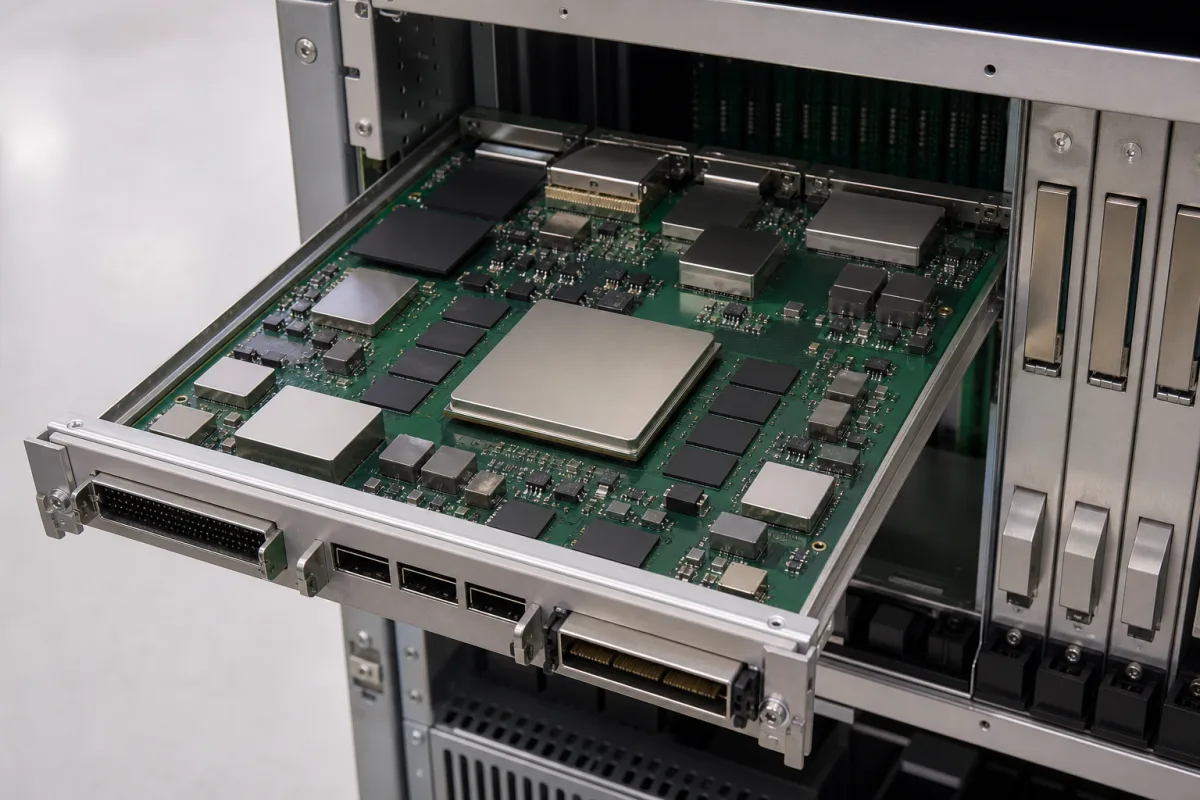
Representative product image. Confirm appearance and specifications with the manufacturer.

Product Specifications

Technical details and manufacturing context for Main Processor Unit

Definition
The Main Processor Unit (MPU) is the computational core of a Computer Numerical Control (CNC) control system. It interprets G-code programs, performs real-time calculations for motion control, manages input/output signals, and coordinates all subsystems to ensure precise machining operations. The MPU receives programmed instructions, processes them through specialized algorithms to calculate tool paths and motion parameters, sends control signals to servo drives and actuators, monitors feedback from sensors, and manages system timing and synchronization. Typical specifications include a processor clock speed of 1.2–2.0 GHz, support for 4–8 axes, interpolation accuracy of ±0.001 mm (per ISO 230-1), servo update rate of 1–4 kHz, memory capacity of 512–2048 MB, input voltage of 24 V DC ±10% (per IEC 61131-2), power consumption of 15–60 W, operating temperature range of -40 to 85 °C (per IEC 60068-2-1/2), humidity range of 10–90% RH (non-condensing, per IEC 60068-2-78), ingress protection rating of IP54–IP65 (per IEC 60529), and weight of 2.5–8.0 kg. The MPU is typically constructed with a printed circuit board, semiconductor chips (CPU/FPGA), and heat sink materials. These values are reference ranges; actual specifications must be confirmed with the legal manufacturer or supplier for the specific model and application. The MPU is a component intended for integration into CNC systems by machinery manufacturers or system integrators. It is not a standalone product and requires proper enclosure, cooling, and power supply. Verification of compliance with relevant standards and performance parameters is the responsibility of the buyer or integrator.
Working Principle
The MPU receives G-code instructions from the CNC program. It decodes these instructions and uses interpolation algorithms to calculate precise tool paths and motion parameters. The processor then sends control signals to servo drives and actuators, which move the machine axes accordingly. Simultaneously, the MPU monitors feedback from sensors (e.g., encoders) to verify actual positions and adjust for errors. It manages system timing and synchronization to ensure coordinated operation of all axes and auxiliary functions. The MPU also handles input/output signals for functions like coolant control, tool changers, and safety interlocks. Its real-time operating system ensures deterministic response to events, critical for precise machining.
Common Materials
Printed Circuit Board (PCB), Semiconductor chips (CPU/FPGA), Heat sink materials
Technical Parameters
ParameterTypical rangeNotes & selection driver
Processor Clock Speed1.2–2.0 GHzHigher speed improves interpolation and servo update rates.
Number of Axes4–8More axes allow complex multi-axis machining.
Interpolation Accuracy±0.001 mmTighter tolerance for high-precision parts.ISO 230-1
Servo Update Rate1–4 kHzHigher rate improves dynamic response.
Memory Capacity512–2048 MBLarger memory for complex programs and tool data.
Input Voltage24 ±10% V DCStable supply required; outside range may cause malfunction.IEC 61131-2
Power Consumption15–60 WAffects cooling and power supply sizing.
Operating Temperature-40–85 °COutside range may cause thermal shutdown or damage.IEC 60068-2-1/2
Humidity Range10–90 % RHNon-condensing; high humidity may cause corrosion.IEC 60068-2-78
Ingress ProtectionIP54–IP65Higher IP for dusty or wet environments.IEC 60529
Weight2.5–8.0 kgAffects mounting and structural requirements.

Ranges are indicative industry figures for RFQ preparation, not a supplier commitment. Confirm every value and standard with the legal manufacturer before ordering.

Components / BOM
  • Central Processing Unit (CPU)
    Executes program instructions and performs calculations
    Material: Semiconductor silicon
  • Memory Module
    Stores program data and temporary variables
    Material: Semiconductor memory chips
  • Input/Output Interface
    Connects to sensors, actuators, and peripheral devices
    Material: Copper connectors, PCB traces
  • Cooling System
    Dissipates heat generated during operation
    Material: Aluminum heat sink, thermal paste

Applied To / Applications

This component is essential for the following industrial systems and equipment:

Industrial Ecosystem & Supply Chain Structure

Complementary Systems
Downstream Applications
Specialized Tooling

Application Fit & Sizing Matrix

Operational Limits
pressure: N/A (electronic component)
other spec: Humidity: 10-90% non-condensing, Vibration: 5-2000 Hz at 2G max
temperature: -40°C to +85°C
Media Compatibility
✓ Industrial control cabinets ✓ CNC machine enclosures ✓ Factory automation environments
Unsuitable: High-concentration metal dust or conductive particulate environments
Sizing Data Required
  • Required I/O count (digital/analog)
  • Maximum program memory size (MB)
  • Required communication protocols (EtherCAT, PROFINET, etc.)

Reliability & Engineering Risk Analysis

Failure Mode & Root Cause
Overheating-induced thermal throttling
Cause: Dust accumulation on heatsinks/fans, degraded thermal paste, or inadequate cooling system design leading to sustained high temperatures beyond operational limits
Electrolytic capacitor degradation
Cause: Prolonged exposure to high temperatures, voltage spikes, or manufacturing defects causing electrolyte evaporation, increased ESR, and eventual short/open circuits
Maintenance Indicators
  • Intermittent system crashes or blue screens under load, accompanied by audible fan speed fluctuations or grinding noises
  • Visible bulging/leaking capacitors on the motherboard or abnormal LED error codes indicating voltage regulation faults
Engineering Tips
  • Implement predictive maintenance via continuous temperature monitoring with infrared sensors and scheduled compressed air cleaning of cooling components every 3-6 months
  • Use surge protectors with voltage regulation, maintain ambient temperature below 25°C, and replace electrolytic capacitors proactively every 5-7 years based on manufacturer MTBF data

Indicative industry ranges for design and RFQ preparation. Confirm the exact figures and applicable standard with the manufacturer before specifying.

Compliance & Manufacturing Standards

Applicable Standards
CE Marking (EU Compliance for Electronic Equipment) IEC 61000-6-2 (Electromagnetic Compatibility for Industrial Environments)

Quoted from the published standard.

Manufacturing Precision
  • Thermal Interface Flatness: ≤0.05mm
  • Mounting Hole Position: ±0.1mm
Quality Inspection
  • Thermal Cycling Test (-40°C to +85°C, 1000 cycles)
  • Electromagnetic Interference (EMI) Shielding Effectiveness Test

Manufacturers of Main Processor Unit

Manufacturer profiles associated with Main Processor Unit.

Sourcing Main Processor Unit from China?
Tell us your specification and target quantity — we will match it against manufacturer records and come back with the factories that fit.
Request manufacturers We manufacture this

Manufacturer listings support early research and capability understanding. They are not certification, ranking, or transaction guarantees.

Technical documentation
Request current drawings, revision history, and a signed specification sheet.
Manufacturing capability
Verify equipment lists, process limits, capacity, and representative production evidence.
Inspection readiness
Confirm test methods, calibrated equipment, sampling plans, and traceable reports.
Supplier transparency
Check the legal entity, factory address, ownership, certifications, and direct contacts.

CNFX does not score or rank suppliers. Buyers must verify all claims and documents with the legal manufacturer before ordering.

Supply Chain Compatible Machinery & Devices

Heavy-Duty CNC Plasma Cutting Machine

The Heavy-Duty CNC Plasma Cutting Machine is a standalone industrial device designed for cutting conductive metals such as steel, stainless steel, aluminum, and copper alloys.

Explore Specs →
Automated Powder Coating System

Integrated industrial system for applying dry powder coatings to metal substrates.

Explore Specs →
Centrifugal Pump Impeller

The centrifugal pump impeller is a critical rotating component that converts mechanical energy from the motor into kinetic energy in fluid systems.

Explore Specs →
High-Precision CNC Laser Cutting Machine

Computer-controlled industrial machine using focused laser beams to cut sheet metal with micron-level accuracy.

Explore Specs →

Frequently Asked Questions

What is the role of the Main Processor Unit in a CNC system?

The MPU is the central computing component that interprets G-code programs, performs real-time calculations for motion control, manages input/output signals, and coordinates all subsystems to ensure precise machining operations.

What are the typical specifications for a Main Processor Unit?

Typical reference ranges include processor clock speed 1.2–2.0 GHz, 4–8 axes, interpolation accuracy ±0.001 mm, servo update rate 1–4 kHz, memory 512–2048 MB, input voltage 24 V DC ±10%, power consumption 15–60 W, operating temperature -40 to 85 °C, humidity 10–90% RH, ingress protection IP54–IP65, and weight 2.5–8.0 kg. These are reference values; confirm with the manufacturer.

How does the Main Processor Unit ensure precise machining?

It uses interpolation algorithms to calculate tool paths, sends control signals to servo drives, monitors feedback from sensors, and manages timing and synchronization. This closed-loop control minimizes errors and ensures accurate positioning.

What standards are relevant for verifying the Main Processor Unit?

Relevant standards include ISO 230-1 for interpolation accuracy, IEC 61131-2 for input voltage, IEC 60068-2-1/2 for temperature, IEC 60068-2-78 for humidity, and IEC 60529 for ingress protection. These are verification references; actual compliance must be confirmed with the supplier.

Data Basis

Editorial classification, named public sources where available, and source-reviewed manufacturer records.

Preliminary Technical Classification
This page supports structured research, RFQ preparation, and supplier evaluation. It does not replace buyer-led supplier qualification, standards review, or technical approval.
Buyer enquiry

Request manufacturing insight for Main Processor Unit

Ask for use case, specification boundaries, supplier type, and RFQ preparation information for this product.

Where it goes
Straight to the CNFX editorial desk, and to the manufacturer if this product is linked to a claimed profile. Nothing is broadcast to a supplier list.
Your details stay here
We do not sell or rent enquiry data, and we do not add you to a mailing list. Used only to answer this request.
No commission, no middleman
CNFX is a directory. We take no cut of any order and never negotiate on a supplier's behalf.
What we don't claim
A listing is not an endorsement. Qualify every supplier and verify every figure yourself before ordering.

Your business information is used only to process this request.

Thank you! Your message has been sent. We'll respond within 1–3 business days.
Sorry, we couldn't send your message. Please try again, or email us at contact@cnfx.com.

Need to Manufacture Main Processor Unit?

Compare manufacturer profiles with relevant product and process capability.

Previous Product
Z-axis Ram/Spindle
Last Product
Get QuotesChat