Editorial Technical Reference

Regulating Valve Body

This page explains how Regulating Valve Body is classified within Machinery and Equipment Manufacturing. Technical values and manufacturer relationships are research references; confirm the current specification and supplier evidence for each order.

Technical Definition & Core Assembly

The main structural housing of a regulating valve that contains and supports internal flow control components.
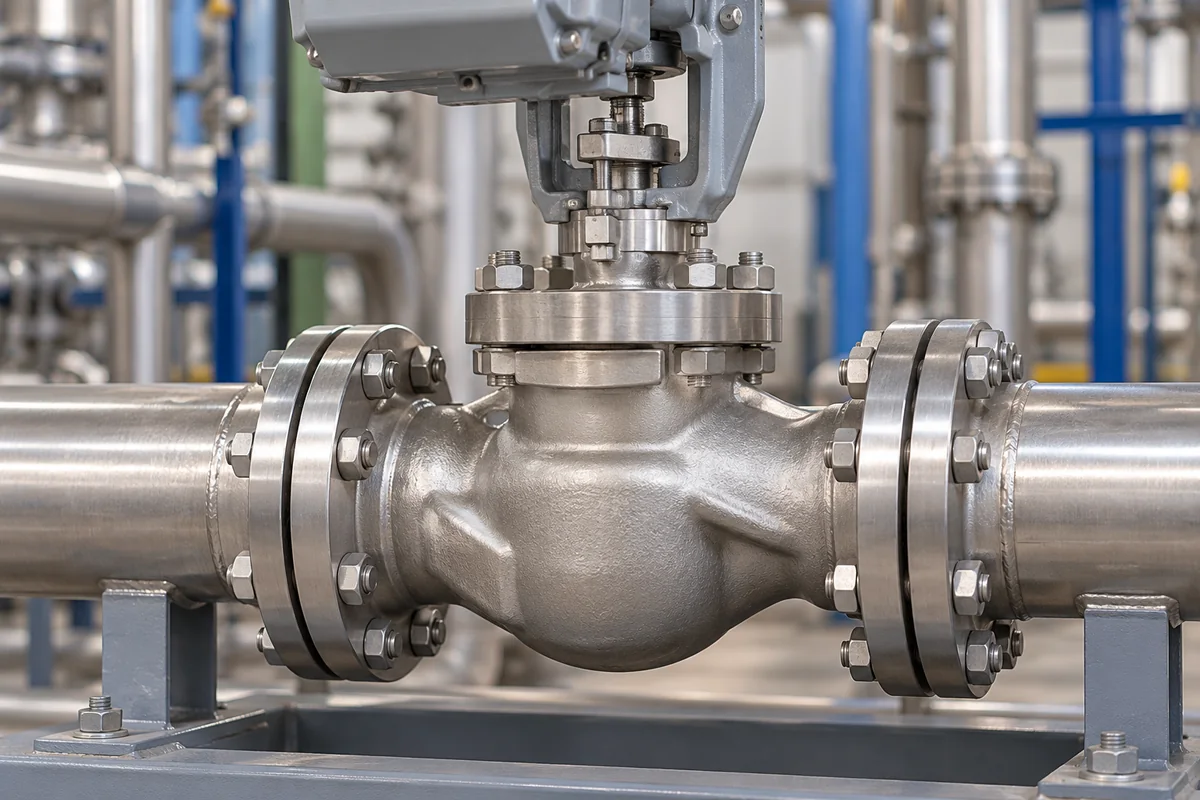
Regulating Valve Body in a manufacturing environment
Representative product image. Confirm appearance and specifications with the manufacturer.

Product Specifications

Technical details and manufacturing context for Regulating Valve Body

Definition
The regulating valve body is the primary structural component of a flow regulator that houses the valve seat, disc, stem, and other internal parts. It provides the pressure boundary for the fluid system, directs flow through the valve, and connects to piping via flanges or threaded connections. As part of the flow regulator assembly, it ensures proper alignment and operation of the control mechanism. This directory entry covers valve bodies intended for use in regulating valves, typically applied in industrial piping systems to control fluid flow. The body is designed to withstand system pressure and temperature while maintaining structural integrity. It is available in materials such as stainless steel, carbon steel, cast iron, and bronze, with body material grades ranging from WCB to CF8M per ASTM A216/A351. Nominal diameters range from 15 to 300 mm (ISO 6708), with a pressure rating of PN16 to PN40 (ISO 7005-1). Operating temperatures range from -40 to 85 °C, limited by seal material. Flow coefficients (Cv) range from 2.5 to 1200 US gal/min (IEC 60534-2-1), and leakage classes are IV to VI (IEC 60534-4). End connections include raised face to ring joint flanges (ASME B16.5), and face-to-face lengths range from 130 to 600 mm (ISO 5752). Weight varies from 5 to 150 kg depending on size and material. These values are reference ranges for directory purposes; actual specifications must be confirmed with the legal manufacturer or supplier for a specific model and application. The valve body is a component, not a standalone valve, and its selection depends on system requirements such as pressure, temperature, media, and piping standards. Verification of compliance with relevant standards is the responsibility of the purchaser.
Working Principle
The valve body serves as a pressure vessel that contains the fluid medium while providing a controlled pathway for flow regulation. It withstands system pressure and temperature while maintaining structural integrity to support the valve's opening, closing, and modulating functions through its internal geometry and connection points. The body's internal passages direct fluid flow, and its mounting surfaces ensure proper alignment of internal components. The body must be selected based on the operating pressure, temperature, and media compatibility, and it must be properly connected to the piping system to ensure leak-tight operation. Regular inspection for corrosion, erosion, or cracking is necessary to maintain safe operation.
Common Materials
Stainless Steel, Carbon Steel, Cast Iron, Bronze
Technical Parameters
ParameterTypical rangeNotes & selection driver
Nominal Diameter15–300 mmStandard pipe sizes for valve connection.ISO 6708
Operating Temperature-40–85 °CSeal material limits the upper temperature.
Flow Coefficient (Cv)2.5–1200 US gal/minDetermines flow capacity at full open.IEC 60534-2-1
Leakage ClassIV–VIClass VI for tight shutoff.IEC 60534-4
Body MaterialWCB–CF8MCarbon steel to 316 stainless steel.ASTM A216/A351
End ConnectionRF–RTJRaised face to ring joint flanges.ASME B16.5
Face-to-Face Length130–600 mmMust match piping layout.ISO 5752
Weight5–150 kgDepends on size and material.
Pressure RatingPN16–PN40Higher rating for severe service.ISO 7005-1

Ranges are indicative industry figures for RFQ preparation, not a supplier commitment. Confirm every value and standard with the legal manufacturer before ordering.

Components / BOM
  • Flange Faces Part
    Provide sealing surfaces for connection to piping systems
    Material: Steel
  • Body Cavity Part
    Houses internal valve components and directs fluid flow
    Material: Cast Iron/Steel
  • Bonnet Connection Part
    Interface for attaching the valve bonnet/cover assembly
    Material: Steel

Application & selection

Application Fit & Sizing Matrix

Operational Limits
pressure: Up to 600 psi
flow rate: 0.5 to 500 GPM
temperature: -20°C to 200°C
Media Compatibility
✓ Water/Steam ✓ Oil/Hydraulic Fluids ✓ Chemical Process Fluids
Unsuitable: Hydrofluoric Acid or High-Chloride Environments
Sizing Data Required
  • Required Flow Rate (GPM)
  • Pressure Drop (psi)
  • Pipe Size (inches)

Risk, maintenance & compliance

Reliability & Engineering Risk Analysis

Failure Mode & Root Cause
Cavitation damage
Cause: Rapid pressure drop across valve causing vapor bubble formation and implosion, eroding metal surfaces
Stem packing leakage
Cause: Worn or degraded packing material due to thermal cycling, improper installation, or lack of lubrication
Maintenance Indicators
  • Excessive noise or vibration during operation (indicating cavitation or flow instability)
  • Visible external leakage around stem or body connections
Engineering Tips
  • Install pressure gauges upstream and downstream to monitor pressure differential and prevent cavitation conditions
  • Implement regular packing adjustment and lubrication schedule using manufacturer-recommended materials and procedures

Indicative industry ranges for design and RFQ preparation. Confirm the exact figures and applicable standard with the manufacturer before specifying.

Compliance & Manufacturing Standards

Applicable Standards
ISO 5208:2015 (Industrial valves - Pressure testing of valves) ANSI/ASME B16.34 (Valves - Flanged, Threaded, and Welding End) DIN EN 12516-1 (Industrial valves - Shell design strength)

Quoted from the published standard.

Manufacturing Precision
  • Bore diameter: +/-0.025mm
  • Flange flatness: 0.05mm per 100mm diameter
Quality Inspection
  • Hydrostatic pressure test (shell test)
  • Dye penetrant test (surface defect detection)
Technical documentation
Request current drawings, revision history, and a signed specification sheet.
Manufacturing capability
Verify equipment lists, process limits, capacity, and representative production evidence.
Inspection readiness
Confirm test methods, calibrated equipment, sampling plans, and traceable reports.
Supplier transparency
Check the legal entity, factory address, ownership, certifications, and direct contacts.

Compare the published product scope and source details, then include your specifications and quantity in an enquiry.

Manufacturers of Regulating Valve Body

2 companies list this product among what they make. Company figures are quoted from each company's own website; every card states where the relationship came from.

Ningbo Zhenhai Finotek Machinery Co., Ltd.
Zhejiang, CN
Listed on the company's own website · profile compiled by CNFX from public sources
Listed there as: “Cartridge Valve Housings”
View source page ↗ finotek.com · recorded 2026-08-29
Saroit Hydraulics
Zhejiang, CN
Listed on the company's own website · profile compiled by CNFX from public sources
Listed there as: “Standard Manifold Valve Housing”
View source page ↗ saroit.com · recorded 2026-08-29

Explore company information and manufacturing capabilities, then discuss the scope of your project with a relevant supplier.

Buyer enquiry

Request manufacturing insight for Regulating Valve Body

Ask for use case, specification boundaries, supplier type, and RFQ preparation information for this product.

Where it goes
Straight to the CNFX editorial desk, and to the manufacturer if this product is linked to a claimed profile. Nothing is broadcast to a supplier list.
Your details stay here
We do not sell or rent enquiry data, and we do not add you to a mailing list. Used only to answer this request.
No commission, no middleman
CNFX is a directory. We take no cut of any order and never negotiate on a supplier's behalf.
What to include
Share your product specifications, quantity, destination and target delivery date.

Your business information is used only to process this request.

Thank you! Your message has been sent. We'll respond within 1–3 business days.
Sorry, we couldn't send your message. Please try again, or email us at [email protected].

Frequently Asked Questions

What materials are available for regulating valve bodies?

According to the directory, materials on file include stainless steel, carbon steel, cast iron, and bronze. Body material grades range from WCB to CF8M per ASTM A216/A351. The actual material must be confirmed with the manufacturer for the specific application.

What are the typical pressure and temperature ranges?

The directory lists a pressure rating of PN16 to PN40 (ISO 7005-1). Operating temperature range is -40 to 85 °C, limited by seal material. These are reference ranges; verify with the manufacturer.

How do I select the correct valve body size?

Selection is based on nominal diameter (15–300 mm per ISO 6708), face-to-face length (130–600 mm per ISO 5752), and flow coefficient (Cv 2.5–1200 US gal/min per IEC 60534-2-1). These must match piping and system requirements. Always confirm with the supplier.

What standards apply to regulating valve bodies?

Relevant standards listed include ISO 6708 for nominal diameter, ISO 5208 for pressure testing, IEC 60534-2-1 for flow coefficient, IEC 60534-4 for leakage class, ASTM A216/A351 for body material, ASME B16.5 for end connections, ISO 5752 for face-to-face length, and ISO 7005-1 for pressure rating. Compliance must be verified with the manufacturer.

Related equipment

Applied To / Applications

This component is essential for the following industrial systems and equipment:

Industry Taxonomies & Aliases

Commonly used trade names and technical identifiers for Regulating Valve Body.

Data Basis

Editorial classification, named public sources where available, and source-reviewed manufacturer records.

Preliminary Technical Classification
This page supports structured research, RFQ preparation, and supplier evaluation. It does not replace buyer-led supplier qualification, standards review, or technical approval.

Need to Manufacture Regulating Valve Body?

Compare manufacturer profiles with relevant product and process capability.

Previous Product
Z-axis Ram/Spindle
Last Product
Get QuotesChat