Industry-Verified Manufacturing Data (2026)

Torque Adjustment Mechanism

Based on aggregated insights from multiple verified factory profiles within the CNFX directory, the standard Torque Adjustment Mechanism used in the Machinery and Equipment Manufacturing sector typically supports operational capacities ranging from standard industrial configurations to heavy-duty production requirements.

Technical Definition & Core Assembly

A canonical Torque Adjustment Mechanism is characterized by the integration of Adjustment Dial/Knob and Torque Limiting Clutch. In industrial production environments, manufacturers listed on CNFX commonly emphasize Alloy Steel construction to support stable, high-cycle operation across diverse manufacturing scenarios.

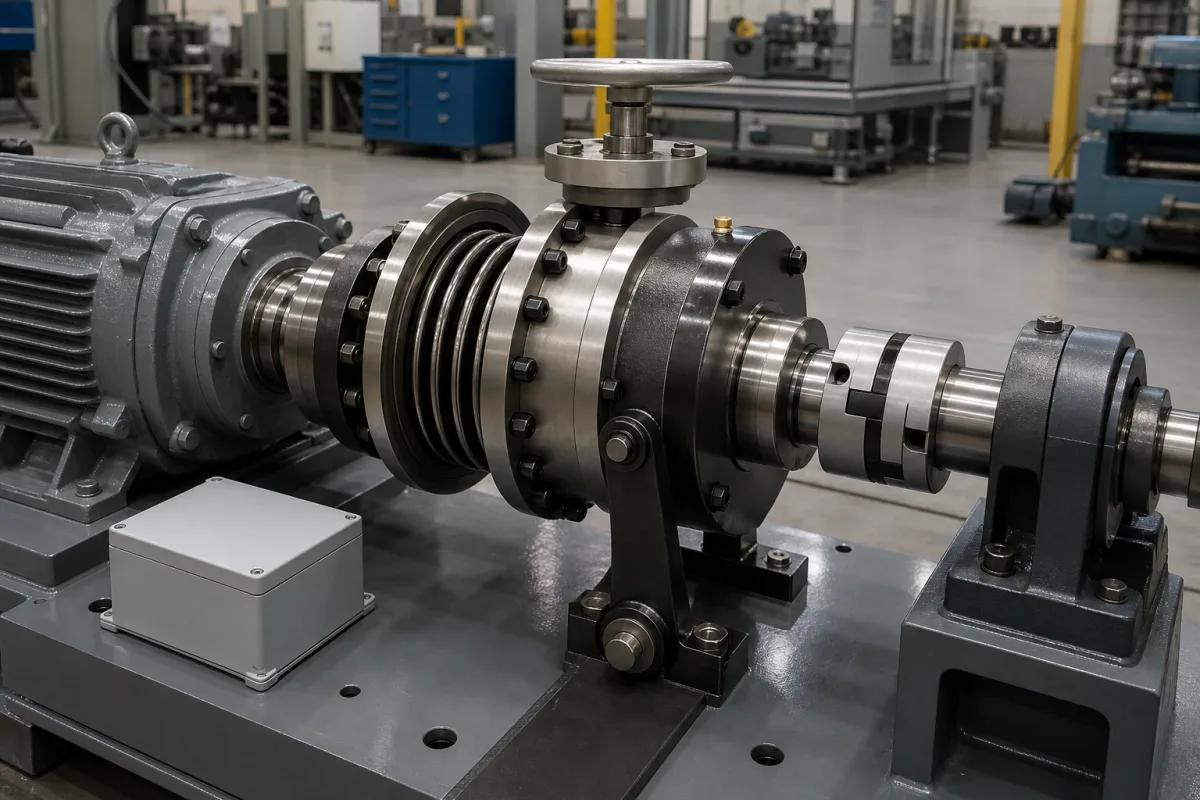
A mechanical or electromechanical component within a capping head that precisely controls and adjusts the rotational force applied during container sealing operations.
Product Specifications

Technical details and manufacturing context for Torque Adjustment Mechanism

Definition
The torque adjustment mechanism is a critical sub-assembly of a capping head, responsible for regulating the tightening force (torque) applied to caps, lids, or closures on containers. It ensures consistent and precise sealing to prevent under-tightening (leading to leaks) or over-tightening (causing damage to containers, caps, or threads). This mechanism directly interfaces with the drive system and the chuck or spindle that grips the cap.
Working Principle
The mechanism typically functions by allowing an operator or automated control system to adjust a setting that limits the maximum torque output. In mechanical versions, this may involve adjusting a spring-loaded clutch, a friction plate assembly, or a shear pin setting. In more advanced electromechanical or servo-driven systems, torque is controlled and monitored via sensors and programmable logic controllers (PLCs), which can adjust motor current or use torque transducers to achieve the desired setpoint. When the preset torque limit is reached during the capping cycle, the mechanism disengages or signals the drive to stop.
Common Materials
Alloy Steel, Stainless Steel, Hardened Tool Steel, Engineering Polymers (e.g., POM, PA)
Technical Parameters
  • The adjustable torque range, typically from a fraction of a Newton-meter for small containers to several dozen N·m for large industrial closures. (N·m) Standard Spec
Components / BOM
  • Adjustment Dial/Knob
    Provides manual interface for setting the desired torque value; often includes a calibrated scale.
    Material: Aluminum Alloy or Plastic
  • Torque Limiting Clutch
    The core mechanical element that slips or disengages upon reaching the preset torque, preventing over-tightening.
    Material: Hardened Steel, Bronze
  • Calibration Spring
    Provides the opposing force in a mechanical clutch system; its compression determines the torque setpoint.
    Material: Spring Steel
  • Torque Sensor (if equipped)
    Measures the actual torque being applied and provides feedback to the control system.
    Material: Strain Gauges on Steel Alloy
  • Mounting Flange/Bracket
    Secures the mechanism to the main body of the capping head.
    Material: Steel or Aluminum
Engineering Reasoning
0.5-12.0 N·m
15.0 N·m shear stress on internal worm gear teeth
Design Rationale: Hertzian contact stress exceeding 1.2 GPa at gear tooth interface, causing subsurface fatigue cracks that propagate to surface spalling
Risk Mitigation (FMEA)
Trigger Lubricant viscosity breakdown at 150°C operating temperature
Mode: Worm gear tooth galling and seizure
Strategy: Integrate PTFE-coated gear teeth with forced-air cooling maintaining 80°C maximum
Trigger Encoder feedback signal loss exceeding 200ms duration
Mode: Torque overshoot to 18.0 N·m during closed-loop failure
Strategy: Implement redundant Hall-effect sensors with 50ms failover logic

Industry Taxonomies & Aliases

Commonly used trade names and technical identifiers for Torque Adjustment Mechanism.

Applied To / Applications

This component is essential for the following industrial systems and equipment:

Industrial Ecosystem & Supply Chain DNA

Complementary Systems
Downstream Applications
Specialized Tooling

Application Fit & Sizing Matrix

Operational Limits
pressure: 0 to 10 bar
other spec: Torque range: 0.1 to 50 Nm, Speed: 10 to 3000 RPM
temperature: -10°C to 80°C
Media Compatibility
✓ Food-grade lubricants ✓ Compressed air systems ✓ Plastic/glass container sealing
Unsuitable: High-viscosity slurry or abrasive particulate environments
Sizing Data Required
  • Container diameter and thread type
  • Required sealing torque specification
  • Production line speed (containers per minute)

Reliability & Engineering Risk Analysis

Failure Mode & Root Cause
Thread wear and galling
Cause: Insufficient lubrication, improper torque application (over-tightening or under-tightening), or misalignment leading to uneven load distribution on threads.
Spring fatigue or loss of tension
Cause: Cyclic loading beyond design limits, exposure to high temperatures causing material degradation, or corrosion from environmental contaminants.
Maintenance Indicators
  • Audible clicking or grinding noises during adjustment, indicating worn or damaged internal components.
  • Visible misalignment or wobble in the adjustment handle or indicator, suggesting loose or failed fasteners.
Engineering Tips
  • Implement a torque verification program using calibrated tools and follow manufacturer-specified torque values to prevent over-stressing components.
  • Apply appropriate anti-seize or lubricant to threaded parts during assembly and re-lubricate at scheduled intervals to reduce friction and wear.

Compliance & Manufacturing Standards

Reference Standards
ISO 6789-1:2017 (Assembly tools for screws and nuts - Torque tools - Part 1: Requirements and test methods for design conformance testing and quality conformance testing) ANSI/ASME B107.300-2018 (Torque Tools - Hand Torque Wrenches) DIN 3121 (Wrenches and wrencheads - Torque wrenches)
Manufacturing Precision
  • Torque calibration accuracy: +/-3% of reading
  • Thread pitch tolerance: +/-0.05mm per 25mm length
Quality Inspection
  • Torque calibration verification test (using certified torque analyzer)
  • Hardness testing (Rockwell C scale) of ratchet mechanism components

Factories Producing Torque Adjustment Mechanism

Verified manufacturers with capability to produce this product in China

✓ 97% Supplier Capability Match Found

P Project Engineer from Canada Feb 10, 2026
★★★★★
"The technical documentation for this Torque Adjustment Mechanism is very thorough, especially regarding technical reliability."
Technical Specifications Verified
S Sourcing Manager from United States Feb 07, 2026
★★★★★
"Reliable performance in harsh Machinery and Equipment Manufacturing environments. No issues with the Torque Adjustment Mechanism so far."
Technical Specifications Verified
P Procurement Specialist from United Arab Emirates Feb 04, 2026
★★★★★
"Testing the Torque Adjustment Mechanism now; the technical reliability results are within 1% of the laboratory datasheet."
Technical Specifications Verified
Verification Protocol

“Feedback is collected from verified sourcing managers during RFQ (Request for Quote) and factory evaluation processes on CNFX. These reports represent historical performance data and technical audit summaries from our B2B manufacturing network.”

15 sourcing managers are analyzing this specification now. Last inquiry for Torque Adjustment Mechanism from Thailand (32m ago).

Supply Chain Compatible Machinery & Devices

Heavy-Duty CNC Plasma Cutting Machine

Industrial machine for precision metal cutting using plasma arc technology

Explore Specs →
Automated Assembly Line System

Integrated production system for sequential component assembly operations

Explore Specs →
Automated Powder Coating System

Integrated industrial system for applying dry powder coatings to metal substrates.

Explore Specs →
Centrifugal Pump Impeller

Rotating component that transfers energy to fluid in centrifugal pumps.

Explore Specs →

Frequently Asked Questions

What materials are used in torque adjustment mechanisms for durability?

Torque adjustment mechanisms are typically constructed from durable materials like alloy steel, stainless steel, hardened tool steel, or engineering polymers (e.g., POM, PA) to withstand high-stress industrial environments and ensure long-term reliability.

How does a torque adjustment mechanism improve container sealing operations?

It precisely controls the rotational force applied during capping, ensuring consistent seal tightness, preventing overtightening or undertightening, reducing product waste, and maintaining packaging integrity across production runs.

What components are included in a typical torque adjustment mechanism BOM?

A standard bill of materials includes an adjustment dial/knob for control, calibration spring for force regulation, mounting flange/bracket for installation, torque limiting clutch for protection, and optionally a torque sensor for precise monitoring and feedback.

Can I contact factories directly on CNFX?

CNFX is an open directory, not a transaction platform. Each factory profile provides direct contact information and production details to help you initiate direct inquiries with Chinese suppliers.

Get Quote for Torque Adjustment Mechanism

Request technical pricing, lead times, or customized specifications for Torque Adjustment Mechanism directly from verified manufacturing units.

Your business information is encrypted and only shared with verified Torque Adjustment Mechanism suppliers.

Thank you! Your message has been sent. We'll respond within 1–3 business days.

Need to Manufacture Torque Adjustment Mechanism?

Connect with verified factories specializing in this product category

Add Your Factory Contact Us
Previous Product
Top Roll
Next Product
Torque Clutch or Servo Drive