Editorial Technical Reference

Precision LED Encapsulation Machine

This page explains how Precision LED Encapsulation Machine is classified within Manufacture of Lighting Equipment. Technical values and manufacturer relationships are research references; confirm the current specification and supplier evidence for each order.

Technical Definition & Core Assembly

Industrial machine for automated LED chip encapsulation with protective materials
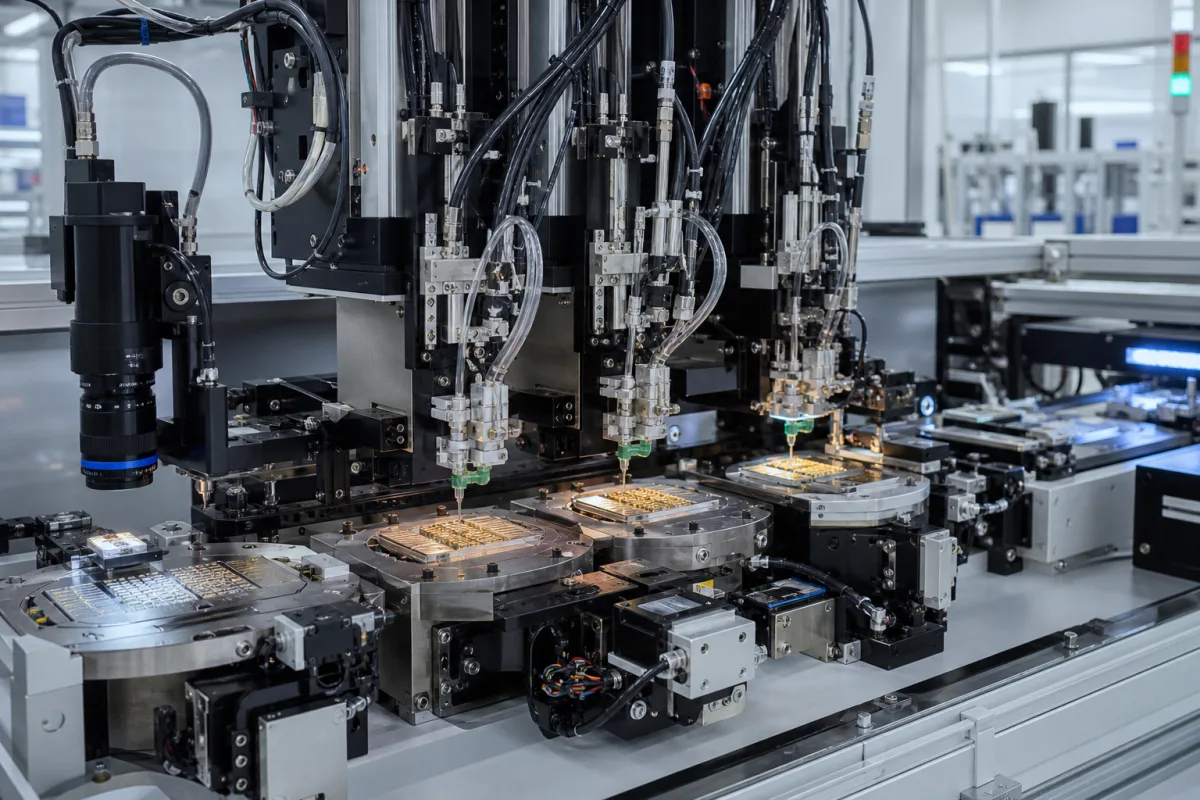
Representative product image. Confirm appearance and specifications with the manufacturer.

Product Specifications

Technical details and manufacturing context for Precision LED Encapsulation Machine

Definition
The Precision LED Encapsulation Machine is a standalone industrial device used in the manufacture of lighting equipment. It automates the encapsulation of LED chips with protective materials such as epoxy resin or silicone. The machine precisely dispenses liquid encapsulant onto individual LED chips or small arrays, then cures it through controlled thermal or UV processes to form solid protective domes. This encapsulation provides electrical insulation, thermal management, and optical performance, safeguarding delicate semiconductor components from environmental factors while maintaining light output efficiency. The machine operates as a single station within a production line, handling individual units or small arrays with high repeatability. Key parameters include dispensing volume accuracy of ±0.5% (μL), cycle time of 2–5 seconds, curing time of 5–30 seconds, positioning repeatability of ±0.02 mm, and maximum LED array size of 300×300 mm. Dispensing speed ranges from 10–50 mm/s, heating temperature range is 20–150 °C with temperature control accuracy of ±1 °C, and operating pressure is 0.4–0.6 MPa. The machine requires a three-phase 220/380 V AC power supply (50/60 Hz), rated power of 3–5 kW, and weighs 800–1200 kg. Its footprint is 1500×1200×1800 mm (L×W×H), and it has an ingress protection rating of IP54–IP65 (IEC 60529). Constructed from stainless steel, aluminum alloy, and polycarbonate, the machine is designed for durability and precision. For procurement, verify model-specific values and standards with the legal manufacturer or supplier, as these are reference ranges.
Working Principle
The machine operates by first positioning the LED chip or array on a worktable. A precision dispensing system then applies a controlled volume of liquid encapsulant onto the chip, with accuracy of ±0.5%. The dispensing speed is adjustable between 10–50 mm/s to suit different materials and geometries. After dispensing, the machine initiates a curing cycle using either thermal heating (20–150 °C) or UV light, depending on the encapsulant type. The curing time ranges from 5–30 seconds, during which the material solidifies into a protective dome. Throughout the process, the machine maintains positioning repeatability of ±0.02 mm to ensure consistent placement. The entire cycle takes 2–5 seconds per unit, enabling high-throughput production. The machine's control system monitors temperature, pressure, and dispensing parameters to ensure uniform curing and quality.
Common Materials
Stainless Steel, Aluminum Alloy, Polycarbonate
Technical Parameters
ParameterTypical rangeNotes & selection driver
Dispensing Volume AccuracyRequired±0.5% μLPrecision of liquid encapsulant volume dispensed per cycle
Cycle TimeRequired2–5 secondsTime required for complete encapsulation cycle per unit
Curing TimeRequired5–30 secondsDuration required for complete material curing
Positioning RepeatabilityRequired±0.02 μmConsistency of component positioning between cycles
Maximum LED Array Size300×300 mmLargest LED array dimension the machine can process
Dispensing Speed10–50 mm/sAffects cycle time and accuracy
Heating Temperature Range20–150 °CFor preheating and curing stages
Temperature Control Accuracy±1 °CEnsures uniform curing
Operating Pressure0.4–0.6 MPaFor pneumatic dispensing systemISO 5208
Power Supply220/380 V ACThree-phase, 50/60 Hz
Rated Power3–5 kWDepends on heating and motion systems
Machine Weight800–1200 kgRequires reinforced floor
Footprint (L×W×H)1500×1200×1800 mmAllow clearance for maintenance
Ingress Protection RatingIP54–IP65Protects against dust and water splashesIEC 60529

Ranges are indicative industry figures for RFQ preparation, not a supplier commitment. Confirm every value and standard with the legal manufacturer before ordering.

Components / BOM
  • Precision Dispensing Head
    Accurately meters and deposits liquid encapsulant onto LED chips
    Material: Stainless Steel with ceramic nozzle
  • XYZ Positioning Stage
    Provides precise three-axis movement for component positioning
    Material: Aluminum Alloy with linear guides
  • UV Curing Module Optional
    Provides ultraviolet light for photopolymerization of encapsulants
    Material: Quartz glass, aluminum housing
  • Thermal Curing Chamber Optional
    Provides controlled heat environment for thermal curing processes
    Material: Insulated stainless steel

Industry Taxonomies & Aliases

Commonly used trade names and technical identifiers for Precision LED Encapsulation Machine.

Industrial Ecosystem & Supply Chain Structure

Complementary Systems
Downstream Applications
Specialized Tooling

Application Fit & Sizing Matrix

Operational Limits
pressure: 0.1-0.8 MPa (dispensing pressure), 0.5-1.2 MPa (curing pressure)
flow rate: 0.01-5.0 ml/min (dispensing precision)
cycle time: 0.5-10 seconds per unit
temperature: 15-35°C (operating environment), 20-80°C (material processing range)
positioning accuracy: ±0.01 mm
slurry concentration: 40-85% solids by weight (viscosity range: 500-5000 cP)
Media Compatibility
✓ Silicone encapsulants (optical/thermal grade) ✓ Epoxy resins (LED-specific formulations) ✓ Phosphor-silicone blends for color conversion
Unsuitable: Corrosive chemical environments or conductive metallic slurries (risk of electrical shorting)
Sizing Data Required
  • Required production throughput (units/hour)
  • LED chip dimensions and encapsulation geometry
  • Material viscosity and curing characteristics

Reliability & Engineering Risk Analysis

Failure Mode & Root Cause
LED Encapsulant Dispensing Nozzle Clogging
Cause: Accumulation of cured or semi-cured encapsulant material due to improper cleaning cycles, material contamination, or extended idle periods without purging.
Precision Positioning System Drift/Inaccuracy
Cause: Wear or contamination of linear guides/ball screws, thermal expansion of mechanical components due to inadequate environmental control, or degradation of encoder feedback signals.
Maintenance Indicators
  • Visible inconsistency in LED dome shape or size during encapsulation, indicating potential nozzle issues or pressure fluctuations.
  • Audible grinding, clicking, or irregular servo motor sounds from the positioning axes, suggesting mechanical wear or misalignment.
Engineering Tips
  • Implement a strict preventive maintenance schedule for the dispensing system, including regular nozzle inspection/cleaning and verification of material viscosity and pot life to prevent curing in the lines.
  • Maintain a controlled environment with stable temperature and low particulate levels, and perform regular laser alignment checks and backlash compensation on the positioning system to ensure micron-level accuracy.

Indicative industry ranges for design and RFQ preparation. Confirm the exact figures and applicable standard with the manufacturer before specifying.

Compliance & Manufacturing Standards

Applicable Standards
CE Marking (Machinery Directive 2006/42/EC)

Quoted from the published standard.

Manufacturing Precision
  • Dispensing Volume Accuracy: +/-0.5%
  • Positioning Repeatability: +/-0.01mm
Quality Inspection
  • Vision System Alignment Verification
  • Encapsulation Cure Hardness Test (Shore D Scale)

Manufacturers of Precision LED Encapsulation Machine

Manufacturer profiles associated with Precision LED Encapsulation Machine.

Sourcing Precision LED Encapsulation Machine from China?
Tell us your specification and target quantity — we will match it against manufacturer records and come back with the factories that fit.
Request manufacturers We manufacture this

Manufacturer listings support early research and capability understanding. They are not certification, ranking, or transaction guarantees.

Technical documentation
Request current drawings, revision history, and a signed specification sheet.
Manufacturing capability
Verify equipment lists, process limits, capacity, and representative production evidence.
Inspection readiness
Confirm test methods, calibrated equipment, sampling plans, and traceable reports.
Supplier transparency
Check the legal entity, factory address, ownership, certifications, and direct contacts.

CNFX does not score or rank suppliers. Buyers must verify all claims and documents with the legal manufacturer before ordering.

Frequently Asked Questions

What materials can be used for encapsulation?

The machine is designed to work with protective materials such as epoxy resin and silicone. The specific material choice depends on the application requirements for electrical insulation, thermal management, and optical performance. Always confirm material compatibility with the manufacturer.

What is the maximum LED array size the machine can handle?

The maximum LED array size is 300×300 mm. This dimension refers to the largest substrate or array that can be processed in a single cycle. For larger arrays, alternative equipment or multiple passes may be required.

How does the machine ensure curing uniformity?

The machine uses a controlled heating system with temperature control accuracy of ±1 °C, ensuring uniform curing across the encapsulant. The curing time is adjustable from 5 to 30 seconds, and the system monitors temperature to maintain consistency.

What are the power and installation requirements?

The machine requires a three-phase 220/380 V AC power supply at 50/60 Hz, with a rated power of 3–5 kW. It weighs between 800 and 1200 kg and has a footprint of 1500×1200×1800 mm. A reinforced floor is recommended to support the machine's weight.

Data Basis

Editorial classification, named public sources where available, and source-reviewed manufacturer records.

Preliminary Technical Classification
This page supports structured research, RFQ preparation, and supplier evaluation. It does not replace buyer-led supplier qualification, standards review, or technical approval.
Buyer enquiry

Request manufacturing insight for Precision LED Encapsulation Machine

Ask for use case, specification boundaries, supplier type, and RFQ preparation information for this product.

Where it goes
Straight to the CNFX editorial desk, and to the manufacturer if this product is linked to a claimed profile. Nothing is broadcast to a supplier list.
Your details stay here
We do not sell or rent enquiry data, and we do not add you to a mailing list. Used only to answer this request.
No commission, no middleman
CNFX is a directory. We take no cut of any order and never negotiate on a supplier's behalf.
What we don't claim
A listing is not an endorsement. Qualify every supplier and verify every figure yourself before ordering.

Your business information is used only to process this request.

Thank you! Your message has been sent. We'll respond within 1–3 business days.
Sorry, we couldn't send your message. Please try again, or email us at contact@cnfx.com.

Need to Manufacture Precision LED Encapsulation Machine?

Compare manufacturer profiles with relevant product and process capability.

Previous Product
Automated Lighting Fixture Assembly System
Next Product
Precision LED Lens Molding Machine
Get QuotesChat