Industry-Verified Manufacturing Data (2026)

Drain & Recovery System

Based on aggregated insights from multiple verified factory profiles within the CNFX directory, the standard Drain & Recovery System used in the Basic Metal Manufacturing sector typically supports operational capacities ranging from standard industrial configurations to heavy-duty production requirements.

Technical Definition & Core Assembly

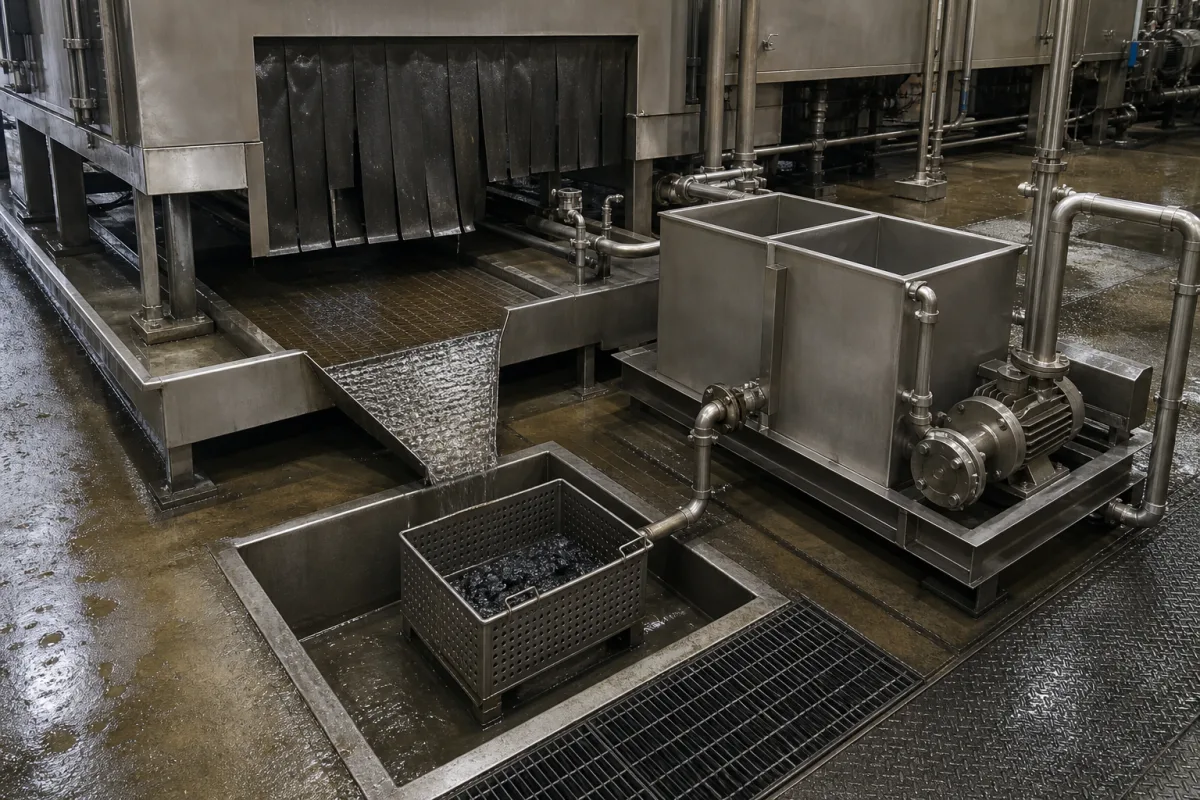
A canonical Drain & Recovery System is characterized by the integration of Collection Trough and Drain Pump. In industrial production environments, manufacturers listed on CNFX commonly emphasize Stainless Steel construction to support stable, high-cycle operation across diverse manufacturing scenarios.

A system designed to collect, drain, and recover fluids from quenching processes
Product Specifications

Technical details and manufacturing context for Drain & Recovery System

Definition
The Drain & Recovery System is a critical component within quenching systems that manages the removal of quenching fluids (typically water, oil, or polymer solutions) from the quenching area. It collects spent quenching media, separates contaminants, and facilitates recovery or proper disposal, ensuring efficient operation and environmental compliance in heat treatment processes.
Working Principle
The system operates through gravity flow or pumping mechanisms to collect quenching fluids from the quenching tank or chamber. Collected fluids pass through filtration or separation units to remove scale, debris, and contaminants. Clean fluids may be recirculated back to the quenching system, while waste is directed to appropriate disposal channels. Temperature monitoring and flow control ensure optimal performance.
Common Materials
Stainless Steel, Carbon Steel, Polypropylene
Technical Parameters
  • Maximum flow rate capacity for fluid drainage and recovery (L/min) Per Request
Components / BOM
  • Collection Trough
    Channels quenching fluids from the quenching area to the drainage system
    Material: Stainless Steel
  • Drain Pump
    Moves collected fluids through the recovery system
    Material: Cast Iron/Stainless Steel
  • Filtration Unit
    Removes solid contaminants from the quenching fluid
    Material: Stainless Steel/Polypropylene
  • Recovery Tank
    Stores cleaned fluids for recirculation or disposal
    Material: Carbon Steel/Stainless Steel
Engineering Reasoning
0.5-3.0 bar differential pressure, 20-95°C fluid temperature, 5-50 L/min flow rate
4.2 bar differential pressure (pump cavitation threshold), 120°C fluid temperature (seal degradation point), 0.2 L/min flow rate (sediment accumulation threshold)
Design Rationale: Cavitation at 4.2 bar due to vapor pressure drop below 0.023 bar absolute at 20°C, thermal degradation of EPDM seals above 120°C exceeding Arrhenius activation energy of 85 kJ/mol, laminar flow sedimentation below Reynolds number 2000
Risk Mitigation (FMEA)
Trigger Particulate contamination exceeding 25 μm diameter at 100 particles/mL
Mode: Pump impeller erosion leading to 15% efficiency loss within 200 operating hours
Strategy: Install 10 μm absolute filtration with differential pressure monitoring at 0.5 bar trigger
Trigger Thermal cycling between 20-120°C at 5 cycles/hour exceeding 10,000 cycles
Mode: 304 stainless steel pipe weld fatigue cracking at stress concentration factor of 3.2
Strategy: Replace with seamless 316L stainless steel piping with stress relief annealing at 1050°C

Industry Taxonomies & Aliases

Commonly used trade names and technical identifiers for Drain & Recovery System.

Applied To / Applications

This component is essential for the following industrial systems and equipment:

Industrial Ecosystem & Supply Chain DNA

Complementary Systems
Downstream Applications
Specialized Tooling

Application Fit & Sizing Matrix

Operational Limits
pressure: Up to 10 bar (145 psi) maximum operating pressure
flow rate: 5-500 L/min (1.3-132 GPM) typical range
temperature: Ambient to 150°C (302°F) continuous operation
slurry concentration: Up to 20% solids by weight, particle size <500 microns
Media Compatibility
✓ Water-based quenchants ✓ Polymer quench oils ✓ Mineral oil quench media
Unsuitable: Highly acidic or caustic solutions (pH <4 or >10)
Sizing Data Required
  • Maximum fluid flow rate (L/min or GPM)
  • Required fluid recovery efficiency (%)
  • Available installation footprint (length × width × height)

Reliability & Engineering Risk Analysis

Failure Mode & Root Cause
Corrosion-induced leakage
Cause: Exposure to corrosive fluids (acids, salts, or high-pH chemicals) without proper material selection or protective coatings, leading to wall thinning and pitting.
Blockage or reduced flow
Cause: Accumulation of debris, scale, or sediment due to inadequate filtration, infrequent cleaning, or improper system design causing flow restrictions.
Maintenance Indicators
  • Unusual gurgling or surging sounds indicating air entrainment or partial blockage
  • Visible leaks, dampness, or corrosion stains at joints, valves, or low points in the system
Engineering Tips
  • Implement routine ultrasonic thickness testing on critical components to monitor corrosion rates and schedule proactive replacements before failure.
  • Install duplex strainers or filters with differential pressure monitoring to catch debris early and enable cleaning without system shutdown.

Compliance & Manufacturing Standards

Reference Standards
ISO 11296-4: Plastics piping systems for renovation of underground drainage and sewerage networks ANSI/ASME B16.34: Valves - Flanged, Threaded, and Welding End DIN 19534: Drainage systems for buildings and outside areas
Manufacturing Precision
  • Pipe diameter: +/-0.5% of nominal diameter
  • Surface flatness of flange connections: 0.1mm maximum deviation
Quality Inspection
  • Hydrostatic pressure test: 1.5 times maximum operating pressure for 30 minutes
  • Dimensional verification using coordinate measuring machine (CMM) for critical components

Factories Producing Drain & Recovery System

Verified manufacturers with capability to produce this product in China

✓ 96% Supplier Capability Match Found

P Procurement Specialist from Australia Jan 31, 2026
★★★★★
"Testing the Drain & Recovery System now; the technical reliability results are within 1% of the laboratory datasheet."
Technical Specifications Verified
T Technical Director from Singapore Jan 28, 2026
★★★★★
"Impressive build quality. Especially the technical reliability is very stable during long-term operation."
Technical Specifications Verified
P Project Engineer from Germany Jan 25, 2026
★★★★★
"As a professional in the Basic Metal Manufacturing sector, I confirm this Drain & Recovery System meets all ISO standards."
Technical Specifications Verified
Verification Protocol

“Feedback is collected from verified sourcing managers during RFQ (Request for Quote) and factory evaluation processes on CNFX. These reports represent historical performance data and technical audit summaries from our B2B manufacturing network.”

7 sourcing managers are analyzing this specification now. Last inquiry for Drain & Recovery System from Thailand (1h ago).

Supply Chain Compatible Machinery & Devices

Vacuum Induction Melting Furnace

Industrial furnace for melting metals under vacuum using electromagnetic induction

Explore Specs →
Electroslag Remelting Furnace

Secondary refining furnace for high-quality metal ingots

Explore Specs →
Molten Metal Flow Control Valve

Precision valve for regulating molten metal flow in casting and pouring operations.

Explore Specs →
Molten Metal Temperature Measurement System

Automated system for continuous temperature monitoring of molten metals during processing.

Explore Specs →

Frequently Asked Questions

What materials are available for the Drain & Recovery System?

The system is available in stainless steel for corrosion resistance, carbon steel for durability, and polypropylene for chemical compatibility with various quenching fluids.

How does the system handle different types of quenching fluids?

The integrated filtration unit separates contaminants from quenching fluids, allowing for recovery and reuse of clean fluids while maintaining process efficiency and reducing waste.

What maintenance is required for the Drain & Recovery System?

Regular maintenance includes cleaning the collection trough, inspecting the drain pump, replacing filtration media as needed, and monitoring the recovery tank for optimal performance.

Can I contact factories directly on CNFX?

CNFX is an open directory, not a transaction platform. Each factory profile provides direct contact information and production details to help you initiate direct inquiries with Chinese suppliers.

Get Quote for Drain & Recovery System

Request technical pricing, lead times, or customized specifications for Drain & Recovery System directly from verified manufacturing units.

Your business information is encrypted and only shared with verified Drain & Recovery System suppliers.

Thank you! Your message has been sent. We'll respond within 1–3 business days.

Need to Manufacture Drain & Recovery System?

Connect with verified factories specializing in this product category

Add Your Factory Contact Us
Previous Product
Downcoiler
Next Product
Drying Oven