Editorial Technical Reference

Electrode Arm & Holder

This page explains how Electrode Arm & Holder is classified within Basic Metal Manufacturing. Technical values and manufacturer relationships are research references; confirm the current specification and supplier evidence for each order.

Technical Definition & Core Assembly

A structural assembly that positions, supports, and conducts electrical current to the electrodes in an electric arc furnace.
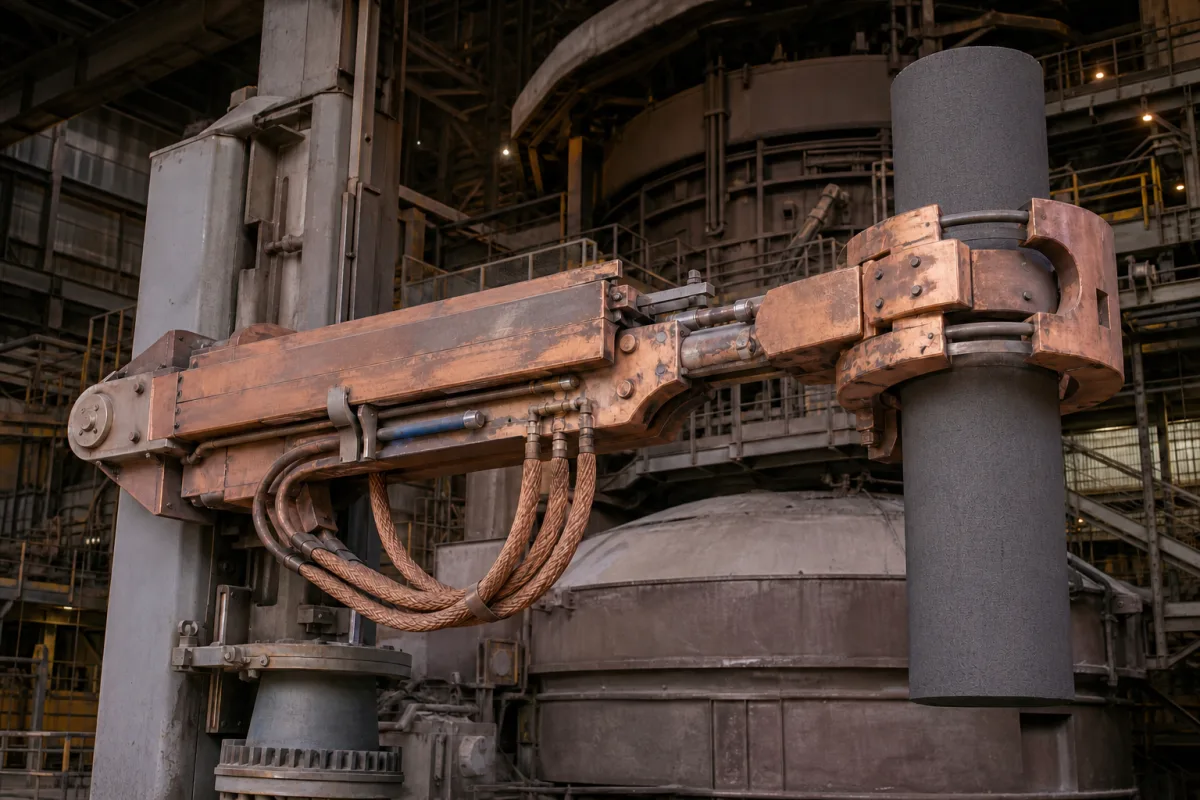
Electrode Arm & Holder in a manufacturing environment
Representative product image. Confirm appearance and specifications with the manufacturer.

Product Specifications

Technical details and manufacturing context for Electrode Arm & Holder

Definition
The electrode arm and holder is a critical component of an electric arc furnace (EAF) system, responsible for precisely positioning the graphite electrodes above the molten metal bath. It provides mechanical support, vertical movement capability for electrode regulation, and serves as the primary electrical conductor, transferring high-current electricity from the power supply to the electrodes to generate the arc for melting scrap metal. The assembly typically consists of a water-cooled copper-clad steel arm extending horizontally from the furnace superstructure, and a clamping mechanism (the holder) that grips the electrode. The entire assembly can be raised or lowered by a hydraulic or electromechanical drive system to control arc length and position. Electrical current flows from the bus tubes through the arm and holder into the electrode. Materials commonly used include copper-clad steel for the arm, high-strength steel for structural parts, copper alloy (e.g., CuCrZr) for contact surfaces, and refractory insulation for thermal and electrical isolation. Key parameters include rated current (10–60 kA), electrode diameter range (75–610 mm), contact pressure (2.5–4.0 MPa), cooling water flow rate (20–60 L/min), cooling water pressure (0.3–0.6 MPa), maximum operating temperature (200–300 °C), insulation resistance (≥10 MΩ at 500 V DC), tilt angle (0–15°), arm length (2–8 m), weight (500–5000 kg), material grade (CuCrZr per ASTM B187), and surface finish (Ra 1.6–3.2 μm per ISO 1302). These values are reference ranges and must be verified for the specific model and application. The electrode arm and holder is essential for efficient and safe EAF operation, and its design directly affects arc stability, energy efficiency, and electrode consumption. Proper maintenance, including monitoring cooling water flow and pressure, contact surface condition, and insulation resistance, is critical to prevent failures such as overheating, electrical losses, or mechanical fatigue. Always confirm model-specific values and standards with the legal manufacturer or supplier.
Working Principle
The arm, typically a water-cooled copper-clad steel structure, extends horizontally from the furnace superstructure. It holds the electrode via a clamping mechanism (the holder). The entire assembly can be raised or lowered by a hydraulic or electromechanical drive system to control the arc length and position. Electrical current flows from the bus tubes through the arm and holder into the electrode. The holder applies controlled contact pressure to ensure low electrical resistance at the interface. Cooling water circulates through the arm and holder to manage heat generated by high current and furnace radiation. The tilt mechanism allows angular adjustment for precise electrode positioning. The system operates within specified temperature and pressure limits to maintain performance and integrity.
Common Materials
Copper-clad steel, High-strength steel, Copper alloy (for contact surfaces), Refractory insulation
Technical Parameters
ParameterTypical rangeNotes & selection driver
Rated Current10–60 kAContinuous current capacity for electrode arm and holder assembly.IEC 60694
Electrode Diameter Range75–610 mmAccommodates common electrode sizes for EAF.
Contact Pressure2.5–4.0 MPaEnsures low electrical resistance at the electrode holder interface.
Cooling Water Flow Rate20–60 L/minRequired for thermal management of the arm and holder.
Cooling Water Pressure0.3–0.6 MPaMaintains adequate cooling without exceeding component limits.
Maximum Operating Temperature200–300 °CUpper limit for continuous operation of the arm and holder.
Insulation Resistance≥10 Measured at 500 V DC between current-carrying parts and ground.IEC 60243
Tilt Angle0–15 °Adjustable tilt for electrode positioning.
Arm Length2–8 mDetermines electrode reach and furnace geometry.
Weight500–5000 kgDepends on size and material; affects handling and installation.
Material GradeCuCrZrCopper alloy for high conductivity and strength.ASTM B187
Surface FinishRa 1.6–3.2 μmCritical for contact surfaces to minimize electrical losses.ISO 1302

Ranges are indicative industry figures for RFQ preparation, not a supplier commitment. Confirm every value and standard with the legal manufacturer before ordering.

Components / BOM
  • Arm Structure
    Provides rigid support and houses water cooling channels and electrical conductors.
    Material: Copper-clad steel
  • Electrode Holder (Clamp) Part
    Mechanically grips the electrode and provides the electrical contact interface.
    Material: Copper alloy / forged steel
  • Lifting Mechanism
    Hydraulic cylinder or motor-driven system to raise/lower the arm assembly.
    Material: Steel
  • Contact Pads/Shoes Part
    Replaceable copper alloy components that make direct electrical contact with the electrode surface.
    Material: Copper-chromium-zirconium alloy
  • Tilt Mechanism
    Swings the arm through a small angle so the electrode can be aimed precisely.

Applied To / Applications

This component is essential for the following industrial systems and equipment:

Industrial Ecosystem & Supply Chain Structure

Complementary Systems
Downstream Applications
Specialized Tooling

Application Fit & Sizing Matrix

Operational Limits
pressure: Atmospheric to 1.5 bar (typical furnace pressure)
temperature: Up to 1800°C (operating), 2000°C (peak)
mechanical load: Up to 5000 kg (electrode + assembly weight)
cooling water flow: 20-200 L/min (based on heat load)
electrical current: 10-100 kA (depending on furnace size)
Media Compatibility
✓ Graphite electrodes ✓ Copper contact surfaces ✓ High-temperature steel alloys
Unsuitable: Chlorine-rich environments (risk of corrosion and electrical degradation)
Sizing Data Required
  • Furnace capacity (tonnage)
  • Electrode diameter and type
  • Required current carrying capacity

Reliability & Engineering Risk Analysis

Failure Mode & Root Cause
Thermal fatigue cracking
Cause: Repeated heating and cooling cycles from arc furnace operations cause thermal expansion and contraction stresses, leading to crack initiation and propagation in the arm and holder materials.
Electrical contact degradation
Cause: Oxidation, pitting, and contamination at electrical contact surfaces due to high current arcing, improper clamping force, or inadequate cooling, resulting in increased resistance and localized overheating.
Maintenance Indicators
  • Visible cracks or discoloration (blue/brown oxidation) on the electrode holder surface indicating overheating
  • Unusual arcing sounds, sparking, or erratic electrode movement during operation suggesting poor electrical contact or mechanical instability
Engineering Tips
  • Implement regular infrared thermography inspections to detect abnormal temperature gradients and hotspots before catastrophic failure occurs
  • Establish a preventive maintenance schedule for cleaning, tightening, and replacing contact surfaces, and ensure proper alignment and clamping force according to manufacturer specifications

Indicative industry ranges for design and RFQ preparation. Confirm the exact figures and applicable standard with the manufacturer before specifying.

Compliance & Manufacturing Standards

Applicable Standards
ISO 5821:2009 - Resistance welding equipment - Electrode holders ANSI/AWS C5.7:2013 - Recommended Practices for Electrode Maintenance and Welding DIN 32525:2007 - Resistance welding - Electrode holders and electrode adapters

Quoted from the published standard.

Manufacturing Precision
  • Bore concentricity: +/-0.05mm
  • Electrode contact surface flatness: 0.1mm
Quality Inspection
  • Dye Penetrant Test for surface cracks
  • Electrical resistance measurement for conductivity verification

Manufacturers of Electrode Arm & Holder

Manufacturer profiles associated with Electrode Arm & Holder.

Sourcing Electrode Arm & Holder from China?
Tell us your specification and target quantity — we will match it against manufacturer records and come back with the factories that fit.
Request manufacturers We manufacture this

Manufacturer listings support early research and capability understanding. They are not certification, ranking, or transaction guarantees.

Share this page
Technical documentation
Request current drawings, revision history, and a signed specification sheet.
Manufacturing capability
Verify equipment lists, process limits, capacity, and representative production evidence.
Inspection readiness
Confirm test methods, calibrated equipment, sampling plans, and traceable reports.
Supplier transparency
Check the legal entity, factory address, ownership, certifications, and direct contacts.

CNFX does not score or rank suppliers. Buyers must verify all claims and documents with the legal manufacturer before ordering.

Supply Chain Compatible Machinery & Devices

Continuous Casting Machine

Industrial machine for solidifying molten metal into continuous billets/blooms/slabs.

Explore Specs →
Vacuum Induction Melting Furnace

Industrial furnace for melting metals under vacuum using electromagnetic induction

Explore Specs →
Electroslag Remelting Furnace

An industrial furnace used in basic metal manufacturing for secondary refining of alloys through the electroslag remelting (ESR) process.

Explore Specs →
Molten Metal Temperature Measurement System

Automated system for continuous temperature monitoring of molten metals during processing.

Explore Specs →

Frequently Asked Questions

What is the function of the electrode arm and holder in an EAF?

The electrode arm and holder positions and supports the graphite electrodes, allows vertical movement for arc regulation, and conducts high electrical current from the power supply to the electrodes to generate the melting arc.

What materials are commonly used for the electrode arm and holder?

Typical materials include copper-clad steel for the arm, high-strength steel for structural parts, copper alloy (e.g., CuCrZr) for contact surfaces, and refractory insulation for thermal and electrical isolation.

What are typical rated current and electrode diameter ranges?

The rated current range is 10–60 kA, and the electrode diameter range is 75–610 mm, but these are reference values that must be confirmed for the specific model and application.

Why is cooling water important for the electrode arm and holder?

Cooling water circulates through the arm and holder to manage heat generated by high current and furnace radiation, preventing overheating and maintaining component integrity. Flow rate and pressure must be monitored.

Data Basis

Editorial classification, named public sources where available, and source-reviewed manufacturer records.

Preliminary Technical Classification
This page supports structured research, RFQ preparation, and supplier evaluation. It does not replace buyer-led supplier qualification, standards review, or technical approval.
Buyer enquiry

Request manufacturing insight for Electrode Arm & Holder

Ask for use case, specification boundaries, supplier type, and RFQ preparation information for this product.

Where it goes
Straight to the CNFX editorial desk, and to the manufacturer if this product is linked to a claimed profile. Nothing is broadcast to a supplier list.
Your details stay here
We do not sell or rent enquiry data, and we do not add you to a mailing list. Used only to answer this request.
No commission, no middleman
CNFX is a directory. We take no cut of any order and never negotiate on a supplier's behalf.
What we don't claim
A listing is not an endorsement. Qualify every supplier and verify every figure yourself before ordering.

Your business information is used only to process this request.

Thank you! Your message has been sent. We'll respond within 1–3 business days.
Sorry, we couldn't send your message. Please try again, or email us at [email protected].

Need to Manufacture Electrode Arm & Holder?

Compare manufacturer profiles with relevant product and process capability.

Previous Product
Work Rolls
Last Product
Get QuotesChat