Industry-Verified Manufacturing Data (2026)

Electrode Feeding Mechanism

Based on aggregated insights from multiple verified factory profiles within the CNFX directory, the standard Electrode Feeding Mechanism used in the Basic Metal Manufacturing sector typically supports operational capacities ranging from standard industrial configurations to heavy-duty production requirements.

Technical Definition & Core Assembly

A canonical Electrode Feeding Mechanism is characterized by the integration of Feed Roller Assembly and Tension Control System. In industrial production environments, manufacturers listed on CNFX commonly emphasize Stainless Steel construction to support stable, high-cycle operation across diverse manufacturing scenarios.

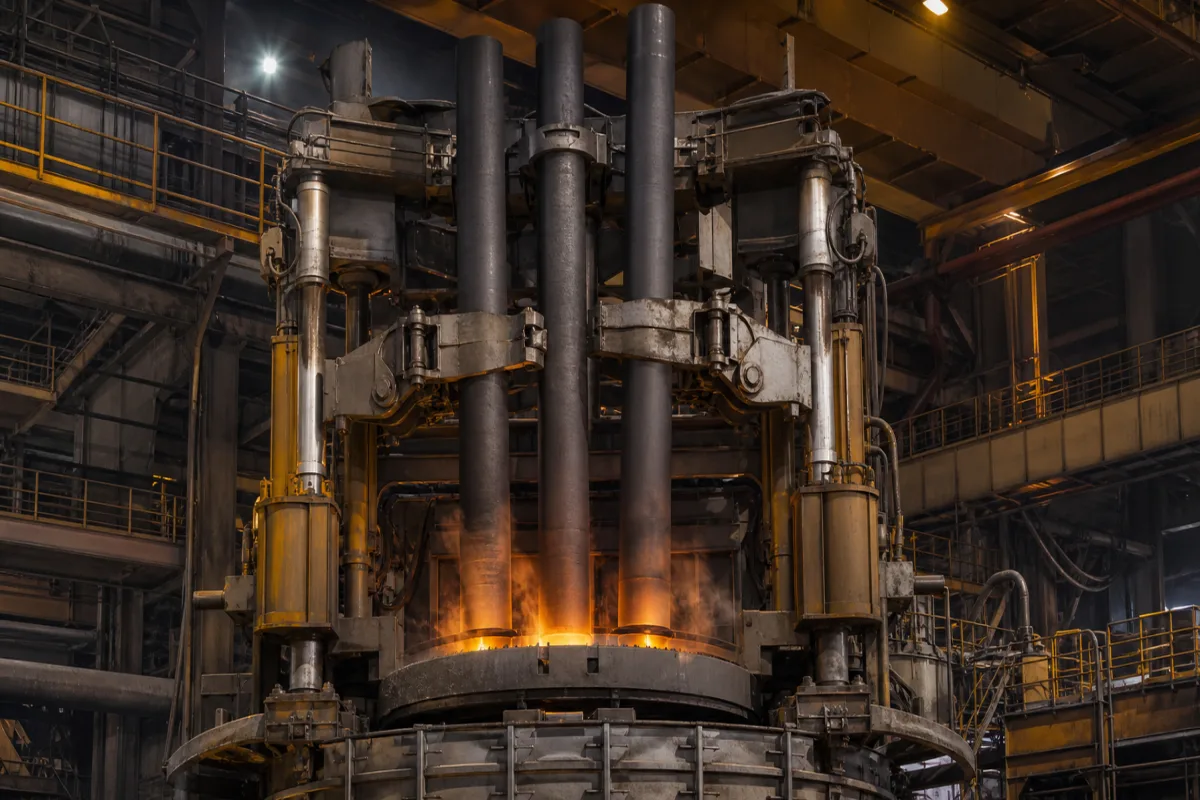
A mechanical system responsible for precisely delivering and positioning electrodes within an industrial system.

Product Specifications

Technical details and manufacturing context for Electrode Feeding Mechanism

Definition
The Electrode Feeding Mechanism is a critical component within industrial systems that require controlled electrode delivery, such as welding, electrochemical processing, or material deposition systems. It ensures accurate positioning, consistent feed rates, and proper alignment of electrodes to maintain process quality and efficiency.
Working Principle
The mechanism typically employs a combination of motor-driven rollers, belts, or linear actuators to grip and advance electrode material from a supply spool or magazine. It incorporates sensors to monitor feed position and tension, with control systems adjusting speed and force to maintain precise delivery according to process requirements. Some designs include cutting or shearing elements to separate electrodes at predetermined lengths.
Common Materials
Stainless Steel, Aluminum Alloy, Engineering Plastics
Technical Parameters
  • Feed rate of electrode material (mm/s) Per Request
Components / BOM
  • Feed Roller Assembly
    Grips and advances electrode material through controlled rotation
    Material: Hardened Steel with Rubber Coating
  • Tension Control System
    Maintains consistent tension on electrode material to prevent slack or breakage
    Material: Spring Steel, Sensors
  • Position Sensor
    Detects electrode position and provides feedback for control system
    Material: Optical or Magnetic Sensors, Aluminum Housing
  • Cutting Mechanism Optional
    Optional component that severs electrode at predetermined lengths
    Material: Tool Steel
Engineering Reasoning
0.1-5.0 mm positioning accuracy, 0.5-10.0 N feed force, 0.01-1.0 m/s feed velocity
Positioning error exceeding ±0.15 mm, feed force dropping below 0.3 N or exceeding 12.0 N, velocity deviation beyond ±0.02 m/s from setpoint
Design Rationale: Servo motor cogging torque exceeding 0.05 N·m at low speeds (0.01-0.1 m/s) due to magnetic slot harmonics, causing position overshoot beyond PID controller compensation capability of ±0.1 mm
Risk Mitigation (FMEA)
Trigger Lead screw thermal expansion coefficient mismatch (steel screw: 11.0×10⁻⁶/°C, aluminum nut: 23.6×10⁻⁶/°C) causing 0.08 mm positioning drift per 50°C ΔT
Mode: Electrode misalignment exceeding ±0.2 mm tolerance, resulting in arc instability and weld penetration depth variation of ±1.5 mm
Strategy: Implementing Invar 36 alloy (1.6×10⁻⁶/°C) compensation rods with thermal expansion matching to maintain positioning within ±0.05 mm across 0-150°C operating range
Trigger Ball screw preload loss due to 0.01 mm axial play from bearing wear after 2×10⁶ cycles at 5.0 N feed force
Mode: Backlash-induced position hysteresis of 0.12 mm during direction reversal, causing inconsistent electrode gap maintenance of 1.5±0.3 mm instead of 1.5±0.1 mm
Strategy: Integrating piezoelectric ceramic actuators (PZT-5H, d₃₃=650×10⁻¹² m/V) with 0.001 mm resolution for real-time backlash compensation via closed-loop control with 1 kHz sampling rate

Industry Taxonomies & Aliases

Commonly used trade names and technical identifiers for Electrode Feeding Mechanism.

Applied To / Applications

This component is essential for the following industrial systems and equipment:

Industrial Ecosystem & Supply Chain DNA

Complementary Systems
Downstream Applications
Specialized Tooling

Application Fit & Sizing Matrix

Operational Limits
pressure: 0 to 10 bar
other spec: Electrode diameter range: 2-20 mm, Feed rate: 0.1-100 mm/min, Positioning accuracy: ±0.05 mm
temperature: -20°C to 80°C
Media Compatibility
✓ Molten metals (e.g., aluminum, copper) ✓ Conductive slurries (e.g., graphite-based) ✓ Solid metal electrodes (e.g., steel, tungsten)
Unsuitable: Highly corrosive acidic environments (e.g., concentrated sulfuric acid)
Sizing Data Required
  • Electrode diameter and material
  • Required feed rate and positioning accuracy
  • System operating pressure and temperature

Reliability & Engineering Risk Analysis

Failure Mode & Root Cause
Electrode jamming or misalignment
Cause: Accumulation of debris, wear on guide rollers, or improper tensioning leading to inconsistent feeding and potential damage to electrodes or mechanism components.
Motor or drive system failure
Cause: Overloading due to excessive friction, electrical issues (e.g., voltage spikes, overheating), or mechanical wear in gears/bearings, resulting in loss of feeding control or complete stoppage.
Maintenance Indicators
  • Irregular or jerky electrode movement during operation, indicating potential jamming or drive issues.
  • Unusual grinding, clicking, or whining noises from the feeding mechanism, suggesting mechanical wear or misalignment.
Engineering Tips
  • Implement regular cleaning and inspection schedules for guide rollers and pathways to prevent debris buildup and ensure smooth electrode travel.
  • Use condition monitoring (e.g., vibration analysis, thermal imaging) on motors and drives to detect early signs of wear or electrical faults before catastrophic failure.

Compliance & Manufacturing Standards

Reference Standards
ISO 9001:2015 - Quality Management Systems ANSI B11.19 - Performance Requirements for Safeguarding CE Marking - Machinery Directive 2006/42/EC
Manufacturing Precision
  • Feed Roller Diameter: +/-0.05mm
  • Linear Feed Accuracy: +/-0.1mm per 1000mm travel
Quality Inspection
  • Dimensional Verification with CMM
  • Functional Safety Test with Load Simulation

Factories Producing Electrode Feeding Mechanism

Verified manufacturers with capability to produce this product in China

✓ 97% Supplier Capability Match Found

P Procurement Specialist from Canada Feb 24, 2026
★★★★★
"Testing the Electrode Feeding Mechanism now; the technical reliability results are within 1% of the laboratory datasheet."
Technical Specifications Verified
T Technical Director from United States Feb 21, 2026
★★★★★
"Impressive build quality. Especially the technical reliability is very stable during long-term operation."
Technical Specifications Verified
P Project Engineer from United Arab Emirates Feb 18, 2026
★★★★★
"As a professional in the Basic Metal Manufacturing sector, I confirm this Electrode Feeding Mechanism meets all ISO standards."
Technical Specifications Verified
Verification Protocol

“Feedback is collected from verified sourcing managers during RFQ (Request for Quote) and factory evaluation processes on CNFX. These reports represent historical performance data and technical audit summaries from our B2B manufacturing network.”

16 sourcing managers are analyzing this specification now. Last inquiry for Electrode Feeding Mechanism from Brazil (21m ago).

Supply Chain Commonly Integrated Components

Purge Air System

A system that provides controlled airflow to clear optical paths and protect sensors in molten metal temperature measurement applications.

Explore Specs →
Degassing Chamber

A specialized vessel within a molten metal degassing system where dissolved gases are removed from molten metal through controlled processes.

Explore Specs →
Gas Control System

A system that regulates and controls the flow, pressure, and composition of gases used in molten metal degassing processes.

Explore Specs →
Burner Assembly

A combustion system component that generates controlled flame for heating applications in industrial preheating stations.

Explore Specs →

Frequently Asked Questions

What materials are used in the electrode feeding mechanism construction?

Our electrode feeding mechanism is constructed from durable stainless steel, lightweight aluminum alloy, and high-performance engineering plastics for optimal strength and corrosion resistance in industrial metal manufacturing environments.

How does the tension control system improve electrode feeding precision?

The integrated tension control system maintains consistent electrode tension throughout the feeding process, preventing slippage or over-tightening that could compromise positioning accuracy in critical metal manufacturing operations.

What maintenance is required for the feed roller assembly?

The feed roller assembly requires periodic inspection for wear and cleaning to remove metal particulates. Stainless steel construction minimizes corrosion, while sealed bearings extend service intervals in demanding metal manufacturing applications.

Can I contact factories directly on CNFX?

CNFX is an open directory, not a transaction platform. Each factory profile provides direct contact information and production details to help you initiate direct inquiries with Chinese suppliers.

Get Quote for Electrode Feeding Mechanism

Request technical pricing, lead times, or customized specifications for Electrode Feeding Mechanism directly from verified manufacturing units.

Your business information is encrypted and only shared with verified Electrode Feeding Mechanism suppliers.

Thank you! Your message has been sent. We'll respond within 1–3 business days.

Need to Manufacture Electrode Feeding Mechanism?

Connect with verified factories specializing in this product category

Add Your Factory Contact Us
Previous Product
Electrode Arm & Holder
Next Product
Electrode Holding Mechanism