Editorial Technical Reference

Electrode Holding Mechanism

This page explains how Electrode Holding Mechanism is classified within Basic Metal Manufacturing. Technical values and manufacturer relationships are research references; confirm the current specification and supplier evidence for each order.

Technical Definition & Core Assembly

A mechanical assembly that securely grips and positions electrodes within an electric arc furnace manipulator system.
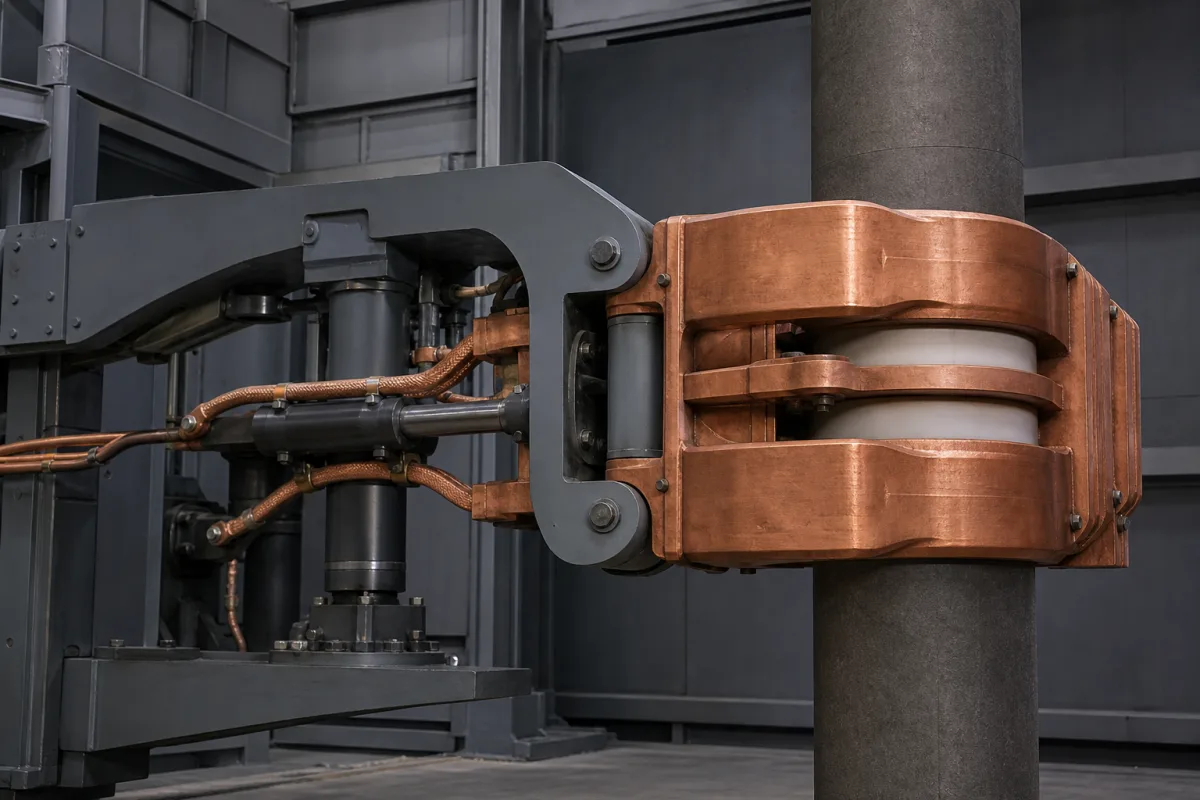
Representative product image. Confirm appearance and specifications with the manufacturer.

Product Specifications

Technical details and manufacturing context for Electrode Holding Mechanism

Definition
The electrode holding mechanism is a critical component of the electric arc furnace electrode manipulator, responsible for securely clamping the graphite electrodes during furnace operation. It ensures precise positioning, maintains electrical contact, and withstands extreme thermal and mechanical stresses while allowing for controlled vertical movement and rotation of the electrodes during the steelmaking process. The mechanism typically uses hydraulic or pneumatic clamping systems with jaws or collets that apply uniform pressure around the electrode circumference. It interfaces with the manipulator's lifting and rotating systems to position the electrode at the correct depth in the molten metal bath, maintaining optimal arc stability and electrical conductivity throughout the melting cycle. Key parameters include a clamping force of 150–300 kN, accommodating electrode diameters from 200 to 700 mm, and a clamping stroke of 50–120 mm. Positioning accuracy is ±0.5 mm, and the mechanism can withstand electrode temperatures up to 3000 °C. Cooling water flow rates of 20–40 L/min at pressures of 0.3–0.6 MPa prevent overheating. Electrical insulation resistance is at least 10 MΩ per IEC 60243-1, and ingress protection is rated IP54–IP65 per IEC 60529. The mechanism weighs 800–1500 kg and is constructed from high-strength alloy steel, heat-resistant steel alloys, and copper alloys for electrical contacts. Material grades referenced include ASTM A36 for structural steel. Operating pressure ranges from 1.0 to 1.6 MPa. These values are reference ranges and must be verified for the specific model and application with the legal manufacturer or supplier.
Working Principle
The mechanism uses hydraulic or pneumatic clamping systems with jaws or collets that apply uniform pressure around the electrode circumference. It interfaces with the manipulator's lifting and rotating systems to position the electrode at the correct depth in the molten metal bath, maintaining optimal arc stability and electrical conductivity throughout the melting cycle. The clamping force is adjustable within 150–300 kN to accommodate thermal expansion and electrode wear. Cooling water circulates through internal channels to dissipate heat, and electrical insulation prevents current leakage to the furnace structure.
Common Materials
High-strength alloy steel, Heat-resistant steel alloys, Copper alloys (for electrical contact components)
Technical Parameters
ParameterTypical rangeNotes & selection driver
Clamping Force150–300 kNRequired to maintain electrode grip under thermal expansion
Electrode Diameter Range200–700 mmAccommodates standard graphite electrode sizes
Clamping Stroke50–120 mmEnsures full engagement over electrode wear
Positioning Accuracy±0.5 mmCritical for consistent arc stability
Max Electrode Temperature3000 °CWithstands radiant heat from arc
Cooling Water Flow Rate20–40 L/minPrevents overheating of clamping components
Cooling Water Pressure0.3–0.6 MPaMaintains adequate cooling flow
Electrical Insulation Resistance≥10 Prevents current leakage to furnace structureIEC 60243-1
Ingress Protection RatingIP54–IP65Dust and water spray protection for industrial environmentIEC 60529
Material GradeASTM A36Structural steel for frame; copper alloy for contactsASTM A36
Weight800–1500 kgInfluences manipulator arm design

Ranges are indicative industry figures for RFQ preparation, not a supplier commitment. Confirm every value and standard with the legal manufacturer before ordering.

Components / BOM
  • Clamping Jaws Part
    Direct contact surfaces that grip the electrode with uniform pressure
    Material: Heat-resistant steel with copper inserts
  • Hydraulic/Pneumatic Actuator
    Provides the mechanical force for opening and closing the clamping mechanism
    Material: Stainless steel
  • Mounting Frame Part
    Structural support that connects the holding mechanism to the manipulator arm
    Material: High-strength alloy steel
  • Electrical Contact Assembly Part
    Ensures proper electrical conductivity between the electrode and power supply
    Material: Copper alloy
  • Water Cooling Channels
    Carry cooling water through the holder to take away the heat radiated from the bath.
  • Electrical Insulation
    Blocks electrode current from leaking into the furnace structure through the holder.

Industrial Ecosystem & Supply Chain Structure

Complementary Systems
Downstream Applications
Specialized Tooling

Application Fit & Sizing Matrix

Operational Limits
pressure: Up to 15 MPa clamping force
other spec: Electrode diameter range: 300-800 mm, Positioning accuracy: ±2 mm, Cycle life: 10,000+ operations
temperature: Up to 1200°C (continuous), 1500°C (peak)
Media Compatibility
✓ Graphite electrodes ✓ Carbon composite electrodes ✓ Copper-clad electrodes
Unsuitable: Submerged arc environments with high slag splashing
Sizing Data Required
  • Electrode diameter and weight
  • Required clamping force and positioning precision
  • Furnace manipulator interface specifications

Reliability & Engineering Risk Analysis

Failure Mode & Root Cause
Thermal fatigue cracking
Cause: Repeated heating and cooling cycles during electrode operation cause expansion/contraction stresses, leading to crack initiation and propagation in the clamping components.
Contact surface degradation
Cause: Electrical arcing, oxidation, and contamination buildup at the electrode-contact interface, increasing electrical resistance and reducing holding force.
Maintenance Indicators
  • Visible arcing or sparking at the electrode connection point during operation
  • Abnormal temperature rise detected via thermal imaging or discoloration of holding components
Engineering Tips
  • Implement regular torque verification and re-tightening schedules using calibrated tools to maintain proper clamping force
  • Apply high-temperature anti-seize compound to threads and contact surfaces to prevent galling and ensure consistent electrical contact

Indicative industry ranges for design and RFQ preparation. Confirm the exact figures and applicable standard with the manufacturer before specifying.

Compliance & Manufacturing Standards

Applicable Standards
ANSI B5.54-2005 - Methods for Performance Evaluation of Computer Numerically Controlled Machining Centers DIN 8580:2003-09 - Manufacturing processes - Terms and definitions, division

Quoted from the published standard.

Manufacturing Precision
  • Bore diameter: +/-0.01mm
  • Parallelism of clamping surfaces: 0.05mm
Quality Inspection
  • Dimensional Verification using CMM (Coordinate Measuring Machine)
  • Hardness Testing (Rockwell C scale)

Manufacturers of Electrode Holding Mechanism

Manufacturer profiles associated with Electrode Holding Mechanism.

Sourcing Electrode Holding Mechanism from China?
Tell us your specification and target quantity — we will match it against manufacturer records and come back with the factories that fit.
Request manufacturers We manufacture this

Manufacturer listings support early research and capability understanding. They are not certification, ranking, or transaction guarantees.

Technical documentation
Request current drawings, revision history, and a signed specification sheet.
Manufacturing capability
Verify equipment lists, process limits, capacity, and representative production evidence.
Inspection readiness
Confirm test methods, calibrated equipment, sampling plans, and traceable reports.
Supplier transparency
Check the legal entity, factory address, ownership, certifications, and direct contacts.

CNFX does not score or rank suppliers. Buyers must verify all claims and documents with the legal manufacturer before ordering.

Supply Chain Compatible Machinery & Devices

Electroslag Remelting Furnace

An industrial furnace used in basic metal manufacturing for secondary refining of alloys through the electroslag remelting (ESR) process.

Explore Specs →
Molten Metal Temperature Measurement System

Automated system for continuous temperature monitoring of molten metals during processing.

Explore Specs →
Molten Metal Degassing System

The Molten Metal Degassing System is an industrial system used in basic metal manufacturing to remove dissolved hydrogen, oxygen, and nitrogen from molten aluminum, steel, and other non-ferrous metals.

Explore Specs →
Molten Metal Level Control System

Automated system for precise molten metal level monitoring and control in furnaces and vessels.

Explore Specs →

Frequently Asked Questions

What is the function of the electrode holding mechanism?

It securely clamps and positions graphite electrodes in an electric arc furnace manipulator, ensuring precise depth and rotation for stable arc and electrical contact during steelmaking.

What materials are used in the electrode holding mechanism?

High-strength alloy steel, heat-resistant steel alloys, and copper alloys for electrical contact components. Structural steel may be ASTM A36, but verify with manufacturer.

What are the key parameters to verify before selection?

Clamping force (150–300 kN), electrode diameter range (200–700 mm), clamping stroke (50–120 mm), positioning accuracy (±0.5 mm), cooling water flow and pressure, and ingress protection rating.

How does the mechanism handle thermal expansion?

The clamping force range accommodates thermal expansion, and cooling water systems prevent overheating. Always confirm the specific model's capabilities with the supplier.

Data Basis

Editorial classification, named public sources where available, and source-reviewed manufacturer records.

Preliminary Technical Classification
This page supports structured research, RFQ preparation, and supplier evaluation. It does not replace buyer-led supplier qualification, standards review, or technical approval.
Buyer enquiry

Request manufacturing insight for Electrode Holding Mechanism

Ask for use case, specification boundaries, supplier type, and RFQ preparation information for this product.

Where it goes
Straight to the CNFX editorial desk, and to the manufacturer if this product is linked to a claimed profile. Nothing is broadcast to a supplier list.
Your details stay here
We do not sell or rent enquiry data, and we do not add you to a mailing list. Used only to answer this request.
No commission, no middleman
CNFX is a directory. We take no cut of any order and never negotiate on a supplier's behalf.
What we don't claim
A listing is not an endorsement. Qualify every supplier and verify every figure yourself before ordering.

Your business information is used only to process this request.

Thank you! Your message has been sent. We'll respond within 1–3 business days.
Sorry, we couldn't send your message. Please try again, or email us at contact@cnfx.com.

Need to Manufacture Electrode Holding Mechanism?

Compare manufacturer profiles with relevant product and process capability.

Previous Product
Work Rolls
Last Product
Get QuotesChat