Industry-Verified Manufacturing Data (2026)

Emission Control System

Based on aggregated insights from multiple verified factory profiles within the CNFX directory, the standard Emission Control System used in the Basic Metal Manufacturing sector typically supports operational capacities ranging from standard industrial configurations to heavy-duty production requirements.

Technical Definition & Core Assembly

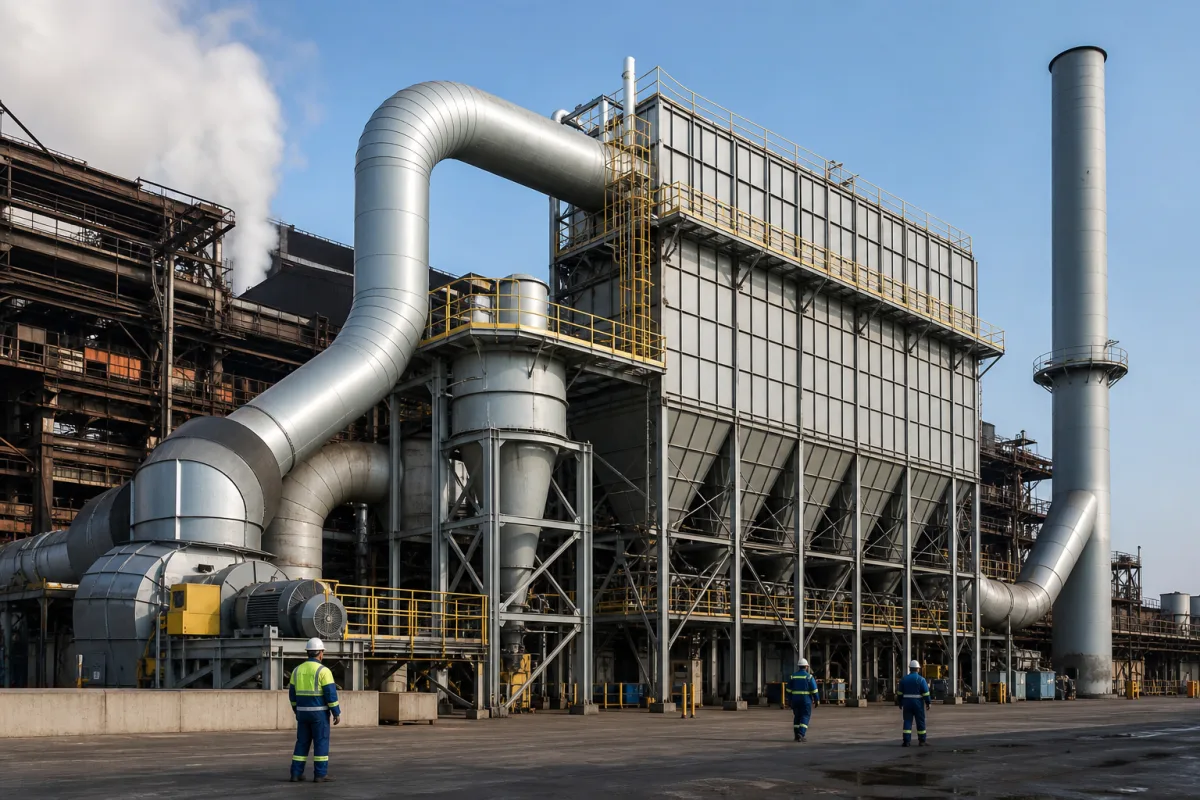
A canonical Emission Control System is characterized by the integration of Dust Collector and Scrubber Unit. In industrial production environments, manufacturers listed on CNFX commonly emphasize Stainless Steel construction to support stable, high-cycle operation across diverse manufacturing scenarios.

A system designed to capture, treat, and reduce harmful emissions generated during non-ferrous metal smelting and casting processes.

Product Specifications

Technical details and manufacturing context for Emission Control System

Definition
The Emission Control System is a critical component of the Integrated Non-Ferrous Metal Smelting and Casting System, responsible for managing and mitigating air pollutants such as particulate matter (PM), sulfur oxides (SOx), nitrogen oxides (NOx), volatile organic compounds (VOCs), and heavy metal fumes. It ensures compliance with environmental regulations and protects worker health by treating exhaust gases before release into the atmosphere.
Working Principle
The system typically operates by capturing emissions at source points (e.g., furnaces, casting lines), transporting them via ductwork to treatment units (such as baghouses, electrostatic precipitators, scrubbers, or catalytic converters), where pollutants are removed or neutralized, and finally exhausting cleaned gases through a stack.
Common Materials
Stainless Steel
Technical Parameters
  • Design flow rate of exhaust gas to be treated (m³/h) Customizable
Components / BOM
  • Dust Collector
    Removes particulate matter from exhaust gas stream
    Material: Carbon Steel
  • Scrubber Unit
    Uses liquid spray to absorb and neutralize acid gases and soluble pollutants
    Material: FRP (Fiber Reinforced Plastic)
  • Exhaust Fan
    Provides necessary airflow to move gases through the treatment system
    Material: Stainless Steel
  • Ductwork
    Channels exhaust gases from emission sources to treatment units
    Material: Galvanized Steel
Engineering Reasoning
0.5-2.0 bar differential pressure across filter media
3.5 bar differential pressure across filter media
Design Rationale: Filter media structural failure due to excessive pressure differential exceeding tensile strength of ceramic fiber matrix (3.5 MPa yield strength)
Risk Mitigation (FMEA)
Trigger Thermal cycling between 200°C and 800°C during process interruptions
Mode: Catalyst substrate thermal fatigue cracking
Strategy: Graded thermal expansion coefficient ceramic substrate with 8.5×10⁻⁶/°C CTE matching catalyst coating
Trigger Sulfuric acid condensation at duct temperatures below 150°C
Mode: Corrosion-induced perforation of stainless steel ductwork (316L, 3mm thickness)
Strategy: Maintain duct temperature above dew point (180°C minimum) with electric trace heating at 40 W/m

Industry Taxonomies & Aliases

Commonly used trade names and technical identifiers for Emission Control System.

Industrial Ecosystem & Supply Chain DNA

Complementary Systems
Downstream Applications
Specialized Tooling

Application Fit & Sizing Matrix

Operational Limits
pressure: Up to 1.5 bar (g) with standard construction, higher available
flow rate: 500-50,000 Nm³/h (customizable based on furnace size)
temperature: 150-400°C (typical operating range for smelting off-gases)
slurry concentration: Up to 30% solids by weight in scrubber systems
Media Compatibility
✓ SO2/SO3 laden gases from copper smelting ✓ Particulate matter from aluminum casting ✓ Acidic off-gases from zinc processing
Unsuitable: Chlorine-rich environments (requires specialized corrosion-resistant materials)
Sizing Data Required
  • Maximum gas flow rate (Nm³/h)
  • Inlet pollutant concentrations (mg/Nm³ for particulates, ppm for gases)
  • Required outlet emission limits (regulatory compliance targets)

Reliability & Engineering Risk Analysis

Failure Mode & Root Cause
Catalyst Deactivation
Cause: Thermal degradation from excessive exhaust temperatures, poisoning by sulfur or phosphorus in fuel/lubricants, or physical damage from vibration/impact.
Sensor Drift/Failure
Cause: Contamination by soot/oil deposits, exposure to moisture/corrosive gases, or electrical connection degradation due to vibration/thermal cycling.
Maintenance Indicators
  • Sudden increase in exhaust opacity or visible smoke during operation
  • Illuminated check engine light with diagnostic trouble codes (DTCs) related to emission components (e.g., P0420 catalyst efficiency)
Engineering Tips
  • Implement regular exhaust gas temperature monitoring and establish operating limits to prevent thermal runaway and catalyst sintering
  • Use only specified low-sulfur fuels and certified lubricants, and maintain proper air-fuel ratio control through scheduled sensor calibration/replacement

Compliance & Manufacturing Standards

Reference Standards
ISO 16183:2002 (Heavy-duty engines - Measurement of gaseous emissions) ANSI/SAE J1939 (Communication network for on-highway equipment) DIN 70020 (Automotive engineering - Emission control systems)
Manufacturing Precision
  • Catalyst substrate cell density: +/- 5 cells per square inch
  • Exhaust gas temperature sensor accuracy: +/- 2.5% of reading
Quality Inspection
  • Pressure decay leak test (system integrity)
  • X-ray fluorescence (XRF) analysis (catalyst precious metal loading verification)

Factories Producing Emission Control System

Verified manufacturers with capability to produce this product in China

✓ 92% Supplier Capability Match Found

P Procurement Specialist from United States Jan 03, 2026
★★★★★
"As a professional in the Basic Metal Manufacturing sector, I confirm this Emission Control System meets all ISO standards."
Technical Specifications Verified
T Technical Director from United Arab Emirates Dec 31, 2025
★★★★★
"Standard OEM quality for Basic Metal Manufacturing applications. The Emission Control System arrived with full certification."
Technical Specifications Verified
P Project Engineer from Australia Dec 28, 2025
★★★★★
"Great transparency on the Emission Control System components. Essential for our Basic Metal Manufacturing supply chain."
Technical Specifications Verified
Verification Protocol

“Feedback is collected from verified sourcing managers during RFQ (Request for Quote) and factory evaluation processes on CNFX. These reports represent historical performance data and technical audit summaries from our B2B manufacturing network.”

6 sourcing managers are analyzing this specification now. Last inquiry for Emission Control System from Turkey (57m ago).

Supply Chain Compatible Machinery & Devices

Continuous Casting Machine

Industrial machine for solidifying molten metal into continuous billets/blooms/slabs.

Explore Specs →
Electromagnetic Induction Heater

Industrial heating device using electromagnetic induction for metal processing

Explore Specs →
Vacuum Induction Melting Furnace

Industrial furnace for melting metals under vacuum using electromagnetic induction

Explore Specs →
Electroslag Remelting Furnace

Secondary refining furnace for high-quality metal ingots

Explore Specs →

Frequently Asked Questions

How does this emission control system reduce pollutants in non-ferrous metal manufacturing?

The system captures emissions at source through ductwork, filters particulate matter via the dust collector, uses the scrubber unit to neutralize chemical pollutants, and exhausts treated air safely with industrial-grade fans.

Why is stainless steel used for the emission control system components?

Stainless steel provides corrosion resistance against acidic emissions, withstands high temperatures from smelting processes, ensures durability in harsh industrial environments, and maintains compliance with emission regulations.

What maintenance is required for the dust collector and scrubber unit?

Regular filter replacement in the dust collector, periodic inspection of scrubber chemical levels, cleaning of ductwork to prevent buildup, and fan motor maintenance to ensure optimal airflow and emission capture efficiency.

Can I contact factories directly on CNFX?

CNFX is an open directory, not a transaction platform. Each factory profile provides direct contact information and production details to help you initiate direct inquiries with Chinese suppliers.

Get Quote for Emission Control System

Request technical pricing, lead times, or customized specifications for Emission Control System directly from verified manufacturing units.

Your business information is encrypted and only shared with verified Emission Control System suppliers.

Thank you! Your message has been sent. We'll respond within 1–3 business days.

Need to Manufacture Emission Control System?

Connect with verified factories specializing in this product category

Add Your Factory Contact Us
Previous Product
Electroslag Remelting Furnace
Next Product
Extrusion Die