Industry-Verified Manufacturing Data (2026)

Stack

Based on aggregated insights from multiple verified factory profiles within the CNFX directory, the standard Stack used in the Basic Metal Manufacturing sector typically supports operational capacities ranging from standard industrial configurations to heavy-duty production requirements.

Technical Definition & Core Assembly

A canonical Stack is characterized by the integration of Refractory Lining and Steel Shell/Casing. In industrial production environments, manufacturers listed on CNFX commonly emphasize Refractory Lined Steel construction to support stable, high-cycle operation across diverse manufacturing scenarios.

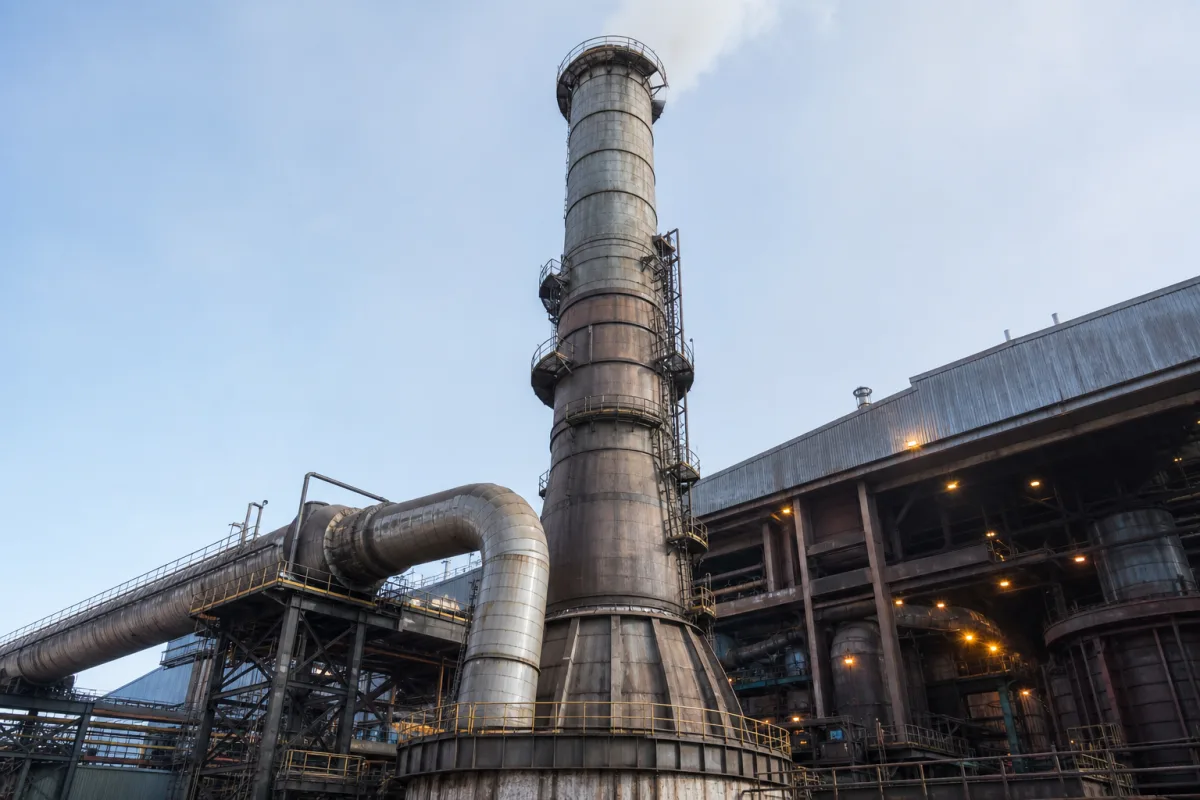
The vertical exhaust structure of a blast furnace that channels hot waste gases and particulates away from the furnace interior and working environment.
Product Specifications

Technical details and manufacturing context for Stack

Definition
In a blast furnace structure, the stack is the tall, cylindrical component that serves as the primary exhaust and ventilation system. It is positioned above the furnace proper and is responsible for safely venting the high-temperature gases (primarily carbon monoxide, carbon dioxide, and nitrogen) produced during the smelting process, along with fine dust and particulates (flue dust). Its design is critical for maintaining proper furnace pressure, ensuring efficient combustion, and directing emissions to gas cleaning systems.
Working Principle
Hot gases and flue dust, generated from the combustion of coke and chemical reactions in the furnace hearth and bosh, rise due to convection and pressure differentials. The stack provides a controlled, vertical pathway for this gas stream. Its height creates natural draft (chimney effect), aiding in gas flow. The gases exit the top of the stack, often directed to downstream equipment for heat recovery (in stoves) and gas cleaning before release or reuse.
Common Materials
Refractory Lined Steel
Technical Parameters
  • The internal height and diameter of the stack are critical design parameters influencing draft, gas velocity, and overall furnace capacity. (m) Customizable
Components / BOM
  • Refractory Lining
    Protects the steel shell from extreme heat and chemical corrosion of the hot gases and abrasion from particulates.
    Material: Fireclay, High-Alumina, or Silicon Carbide Refractories
  • Steel Shell/Casing
    Provides the primary structural support and containment for the stack and its refractory lining.
    Material: Carbon Steel or Low-Alloy Steel Plate
  • Gas Offtake
    The opening or duct at the top of the stack where gases exit to the downcomer and gas cleaning system.
    Material: Refractory Lined Steel
Engineering Reasoning
0.1-0.3 bar differential pressure, 150-350°C gas temperature, 0.5-2.0 m/s gas velocity
Structural collapse at 0.5 bar differential pressure, material degradation at 450°C sustained temperature, resonance failure at 2.5 m/s gas velocity
Design Rationale: Thermal fatigue from cyclic heating (150-350°C) causing creep deformation, stress corrosion cracking from sulfur compounds in exhaust gases, vortex-induced vibration at critical gas velocities
Risk Mitigation (FMEA)
Trigger Sulfuric acid condensation below 150°C dew point
Mode: Corrosion-induced wall thinning below 6mm thickness
Strategy: Install external insulation maintaining stack wall temperature above 160°C
Trigger Thermal expansion mismatch between refractory lining and steel shell
Mode: Refractory spalling creating 50mm gaps
Strategy: Implement expansion joints with 25mm movement capacity at 10m intervals

Industry Taxonomies & Aliases

Commonly used trade names and technical identifiers for Stack.

Applied To / Applications

This component is essential for the following industrial systems and equipment:

Industrial Ecosystem & Supply Chain DNA

Complementary Systems
Downstream Applications
Specialized Tooling

Application Fit & Sizing Matrix

Operational Limits
pressure: Near atmospheric (0-5 kPa gauge), negative pressure to prevent gas escape
flow rate: 50-500 m³/s depending on furnace size
temperature: 200-500°C (typical), up to 700°C with refractory lining
slurry concentration: Not applicable - handles dry particulates and gases only
Media Compatibility
✓ Hot blast furnace gases (CO, CO2, N2) ✓ Iron oxide dust and particulates ✓ Refractory-lined steel construction
Unsuitable: Chlorine-containing gases or acidic condensates (causes corrosion)
Sizing Data Required
  • Furnace production capacity (tonnes/day)
  • Required gas velocity (m/s) for particulate transport
  • Available plot space and height restrictions

Reliability & Engineering Risk Analysis

Failure Mode & Root Cause
Thermal fatigue cracking
Cause: Cyclic thermal stresses from startup/shutdown cycles or uneven temperature distribution, leading to crack initiation and propagation in metal components.
Corrosion-induced thinning
Cause: Exposure to corrosive flue gases (e.g., sulfur compounds, moisture) and acidic condensate, resulting in material degradation and loss of structural integrity.
Maintenance Indicators
  • Visible cracks, warping, or discoloration on stack exterior surfaces
  • Unusual vibrations, rattling noises, or excessive swaying during operation
Engineering Tips
  • Implement regular external/internal inspections using NDT methods (ultrasonic thickness testing, thermography) to monitor corrosion rates and detect early cracking.
  • Maintain proper draft control and ensure adequate insulation to minimize thermal gradients and prevent condensation formation inside the stack.

Compliance & Manufacturing Standards

Reference Standards
ISO 9001:2015 ANSI B18.2.1 DIN 912
Manufacturing Precision
  • Thread pitch: +/-0.05mm
  • Head height: +/-0.1mm
Quality Inspection
  • Torque testing
  • Dimensional verification

Factories Producing Stack

Verified manufacturers with capability to produce this product in China

✓ 92% Supplier Capability Match Found

S Sourcing Manager from United States Feb 05, 2026
★★★★★
"The Stack we sourced perfectly fits our Basic Metal Manufacturing production line requirements."
Technical Specifications Verified
P Procurement Specialist from United Arab Emirates Feb 02, 2026
★★★★☆
"Found 44+ suppliers for Stack on CNFX, but this spec remains the most cost-effective. (Delivery took slightly longer than expected, but technical support was excellent.)"
Technical Specifications Verified
T Technical Director from Australia Jan 30, 2026
★★★★★
"The technical documentation for this Stack is very thorough, especially regarding technical reliability."
Technical Specifications Verified
Verification Protocol

“Feedback is collected from verified sourcing managers during RFQ (Request for Quote) and factory evaluation processes on CNFX. These reports represent historical performance data and technical audit summaries from our B2B manufacturing network.”

6 sourcing managers are analyzing this specification now. Last inquiry for Stack from India (52m ago).

Supply Chain Compatible Machinery & Devices

Continuous Casting Machine

Industrial machine for solidifying molten metal into continuous billets/blooms/slabs.

Explore Specs →
Electromagnetic Induction Heater

Industrial heating device using electromagnetic induction for metal processing

Explore Specs →
Vacuum Induction Melting Furnace

Industrial furnace for melting metals under vacuum using electromagnetic induction

Explore Specs →
Electroslag Remelting Furnace

Secondary refining furnace for high-quality metal ingots

Explore Specs →

Frequently Asked Questions

What is the primary function of a stack in basic metal manufacturing?

The stack serves as the vertical exhaust structure that safely channels hot waste gases, fumes, and particulates away from the blast furnace interior and the surrounding working environment, maintaining operational safety and efficiency.

What materials are used in constructing a blast furnace stack?

Blast furnace stacks are typically constructed with a steel shell or casing for structural integrity, lined internally with refractory materials to withstand extreme temperatures and corrosive gases, and include components like gas offtakes.

Why is refractory lining important in a stack?

Refractory lining is crucial because it protects the steel structure from the extreme heat (often exceeding 1000°C) and corrosive nature of hot waste gases, ensuring durability, preventing structural failure, and maintaining efficient gas flow.

Can I contact factories directly on CNFX?

CNFX is an open directory, not a transaction platform. Each factory profile provides direct contact information and production details to help you initiate direct inquiries with Chinese suppliers.

Get Quote for Stack

Request technical pricing, lead times, or customized specifications for Stack directly from verified manufacturing units.

Your business information is encrypted and only shared with verified Stack suppliers.

Thank you! Your message has been sent. We'll respond within 1–3 business days.

Need to Manufacture Stack?

Connect with verified factories specializing in this product category

Add Your Factory Contact Us
Previous Product
Smelting Furnace Module
Next Product
Stopper Rod (Stopper Rod System)