Industry-Verified Manufacturing Data (2026)

Stopper Rod (Stopper Rod System)

Based on aggregated insights from multiple verified factory profiles within the CNFX directory, the standard Stopper Rod (Stopper Rod System) used in the Basic Metal Manufacturing sector typically supports operational capacities ranging from standard industrial configurations to heavy-duty production requirements.

Technical Definition & Core Assembly

A canonical Stopper Rod (Stopper Rod System) is characterized by the integration of Steel Shank/Core and Refractory Sleeve or Tip. In industrial production environments, manufacturers listed on CNFX commonly emphasize Steel Core (e.g., low-carbon steel) construction to support stable, high-cycle operation across diverse manufacturing scenarios.

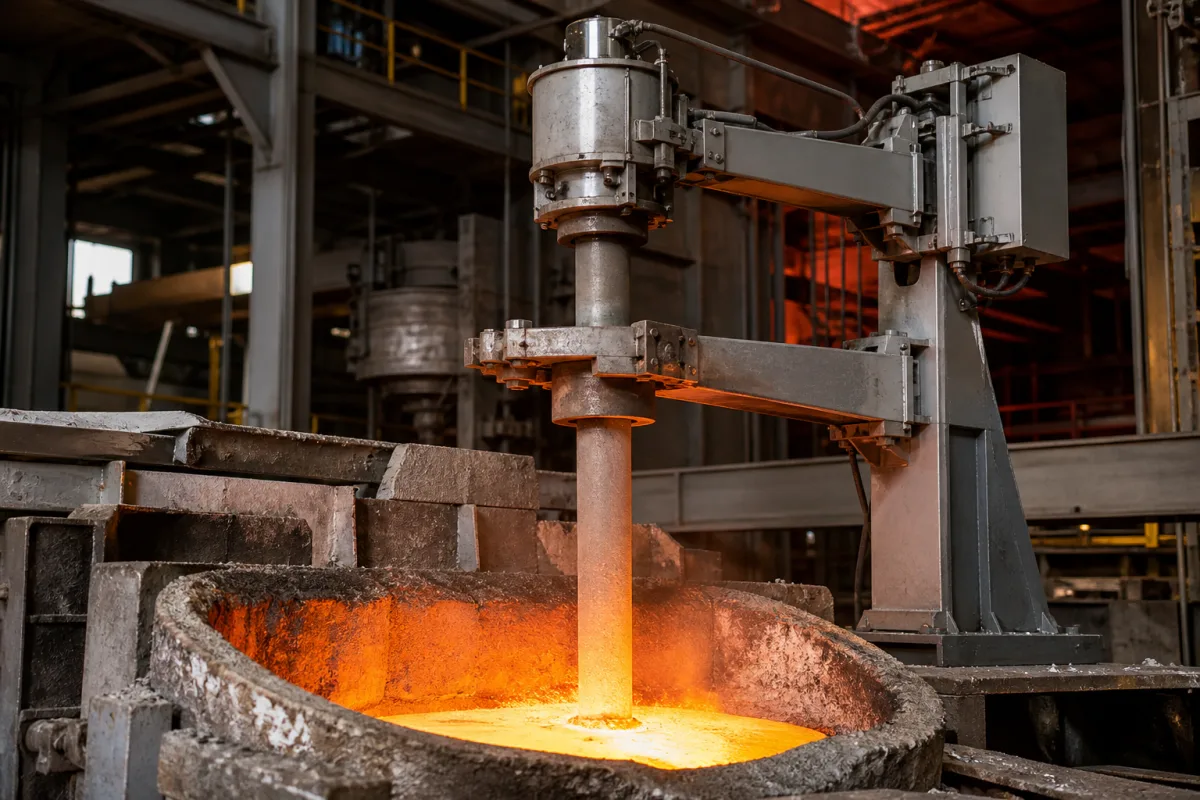
A refractory-lined rod used to control the flow of molten metal from a ladle or tundish in continuous casting operations.
Product Specifications

Technical details and manufacturing context for Stopper Rod (Stopper Rod System)

Definition
A stopper rod is a critical component within a stopper rod system, which itself is a type of flow control device used in steelmaking and other metal casting processes. It consists of a steel rod with a refractory tip that is inserted into the nozzle of a ladle or tundish. By raising or lowering the rod, operators can precisely regulate the flow rate of molten metal into the mold, ensuring a stable and controlled casting process.
Working Principle
The stopper rod operates on a simple vertical sliding mechanism. It is positioned above the outlet nozzle (typically in a ladle or tundish). To start or increase the flow of molten metal, the rod is lifted, creating a gap between its refractory tip and the nozzle seat. To stop or decrease the flow, the rod is lowered, pressing its tip against the nozzle seat to seal the opening. This mechanical action provides direct, positive shut-off control.
Common Materials
Steel Core (e.g., low-carbon steel), Refractory Sleeve/Tip (e.g., alumina-graphite, zirconia)
Technical Parameters
  • The outer diameter of the stopper rod's refractory working end, which must match the bore of the nozzle it seals against. (mm) Customizable
Components / BOM
  • Steel Shank/Core
    Provides the structural strength and connection point to the lifting mechanism of the stopper rod system.
    Material: steel
  • Refractory Sleeve or Tip
    The wear-resistant part that makes direct contact with molten metal and seals against the nozzle. It withstands extreme thermal and chemical conditions.
    Material: alumina-graphite, zirconia, or other advanced ceramics
  • Connection Head/Thread
    The interface (often threaded) that connects the rod to the lifting arm or mechanism of the stopper rod system.
    Material: steel
Engineering Reasoning
0-1500°C refractory surface temperature, 0-2.5 MPa hydraulic pressure, 0-50 mm/min linear actuation speed
Refractory erosion exceeding 15 mm thickness loss, thermal shock exceeding 200°C/min temperature gradient, hydraulic pressure drop below 0.7 MPa for actuation
Design Rationale: Thermal fatigue from cyclic heating (20-1500°C) causing refractory microcracking, followed by molten steel penetration (Fe-C alloy at 1550°C) leading to structural degradation via oxidation-reduction reactions at the refractory-steel interface
Risk Mitigation (FMEA)
Trigger Refractory thermal conductivity mismatch between zirconia lining (2.5 W/m·K) and steel shell (45 W/m·K) creating 1200°C thermal gradient
Mode: Refractory spalling and detachment during thermal cycling, exposing steel rod to 1550°C molten steel
Strategy: Graded refractory design with intermediate alumina layer (8 W/m·K) and controlled cooling rate below 100°C/min
Trigger Hydraulic fluid contamination exceeding ISO 4406 18/16/13 cleanliness level causing servo valve stiction
Mode: Rod positioning error exceeding ±1.5 mm from setpoint, leading to uncontrolled metal flow rate variation of ±15%
Strategy: Dual redundant filtration system with 3 μm absolute filters and continuous particle monitoring with automatic bypass at 20 mg/L contamination

Industry Taxonomies & Aliases

Commonly used trade names and technical identifiers for Stopper Rod (Stopper Rod System).

Applied To / Applications

This component is essential for the following industrial systems and equipment:

Industrial Ecosystem & Supply Chain DNA

Complementary Systems
Downstream Applications
Specialized Tooling

Application Fit & Sizing Matrix

Operational Limits
pressure: 0.1-0.5 MPa (ladle/tundish pressure)
flow rate: 1-6 tons/min (continuous casting flow)
temperature: 1500-1700°C (typical steel casting range)
slurry concentration: Not applicable (handles molten metal only)
Media Compatibility
✓ Molten steel ✓ Molten iron ✓ Molten copper alloys
Unsuitable: Corrosive slag environments (high sulfur/phosphorus content)
Sizing Data Required
  • Ladle/tundish nozzle diameter (mm)
  • Required flow control precision (%)
  • Casting sequence duration (minutes)

Reliability & Engineering Risk Analysis

Failure Mode & Root Cause
Thermal fatigue cracking
Cause: Repeated thermal cycling from molten steel contact and cooling water flow, leading to stress concentration and crack initiation at critical sections like the tip or joint areas.
Erosion and corrosion wear
Cause: Combined action of high-velocity molten steel flow (erosive wear) and chemical attack from slag or oxidizing elements (corrosive wear), particularly at the stopper rod tip and bore surfaces.
Maintenance Indicators
  • Visible cracks, spalling, or excessive wear on the stopper rod tip or body during inspection
  • Abnormal or inconsistent steel flow control during casting, such as erratic pouring or difficulty maintaining desired flow rate
Engineering Tips
  • Implement proper preheating and controlled cooling procedures to minimize thermal shock and reduce thermal stress gradients during operation.
  • Use high-quality refractory materials with enhanced thermal shock resistance and erosion-corrosion properties, and ensure precise alignment and installation to avoid mechanical stress concentrations.

Compliance & Manufacturing Standards

Reference Standards
ISO 9001:2015 Quality Management Systems ASTM A297/A297M-23 Standard Specification for Steel Castings, Iron-Chromium and Iron-Chromium-Nickel, Heat Resistant, for General Application CE Marking (EU Machinery Directive 2006/42/EC)
Manufacturing Precision
  • Bore Diameter: +/-0.05mm
  • Surface Flatness: 0.1mm per 300mm length
Quality Inspection
  • Dye Penetrant Testing (PT) for surface defects
  • Ultrasonic Testing (UT) for internal integrity

Factories Producing Stopper Rod (Stopper Rod System)

Verified manufacturers with capability to produce this product in China

✓ 92% Supplier Capability Match Found

P Project Engineer from United States Feb 14, 2026
★★★★★
"The Stopper Rod (Stopper Rod System) we sourced perfectly fits our Basic Metal Manufacturing production line requirements."
Technical Specifications Verified
S Sourcing Manager from United Arab Emirates Feb 11, 2026
★★★★★
"Found 15+ suppliers for Stopper Rod (Stopper Rod System) on CNFX, but this spec remains the most cost-effective."
Technical Specifications Verified
P Procurement Specialist from Australia Feb 08, 2026
★★★★★
"The technical documentation for this Stopper Rod (Stopper Rod System) is very thorough, especially regarding technical reliability."
Technical Specifications Verified
Verification Protocol

“Feedback is collected from verified sourcing managers during RFQ (Request for Quote) and factory evaluation processes on CNFX. These reports represent historical performance data and technical audit summaries from our B2B manufacturing network.”

9 sourcing managers are analyzing this specification now. Last inquiry for Stopper Rod (Stopper Rod System) from Brazil (32m ago).

Supply Chain Compatible Machinery & Devices

Continuous Casting Machine

Industrial machine for solidifying molten metal into continuous billets/blooms/slabs.

Explore Specs →
Electromagnetic Induction Heater

Industrial heating device using electromagnetic induction for metal processing

Explore Specs →
Vacuum Induction Melting Furnace

Industrial furnace for melting metals under vacuum using electromagnetic induction

Explore Specs →
Electroslag Remelting Furnace

Secondary refining furnace for high-quality metal ingots

Explore Specs →

Frequently Asked Questions

What are the main advantages of alumina-graphite refractory sleeves in stopper rods?

Alumina-graphite refractory sleeves offer excellent thermal shock resistance, high erosion resistance to molten steel, and extended service life in continuous casting operations.

How often should stopper rods be replaced in continuous casting systems?

Replacement frequency depends on casting conditions, but typically ranges from 8-24 hours of continuous use. Regular inspection for refractory wear and thermal fatigue is recommended.

What factors determine the choice between zirconia and alumina-graphite refractory tips?

Zirconia tips are preferred for higher temperature applications and more aggressive steel grades, while alumina-graphite offers better thermal shock resistance and is cost-effective for standard casting conditions.

Can I contact factories directly on CNFX?

CNFX is an open directory, not a transaction platform. Each factory profile provides direct contact information and production details to help you initiate direct inquiries with Chinese suppliers.

Get Quote for Stopper Rod (Stopper Rod System)

Request technical pricing, lead times, or customized specifications for Stopper Rod (Stopper Rod System) directly from verified manufacturing units.

Your business information is encrypted and only shared with verified Stopper Rod (Stopper Rod System) suppliers.

Thank you! Your message has been sent. We'll respond within 1–3 business days.

Need to Manufacture Stopper Rod (Stopper Rod System)?

Connect with verified factories specializing in this product category

Add Your Factory Contact Us
Previous Product
Stack
Next Product
Submerged Entry Nozzle (SEN)