Industry-Verified Manufacturing Data (2026)

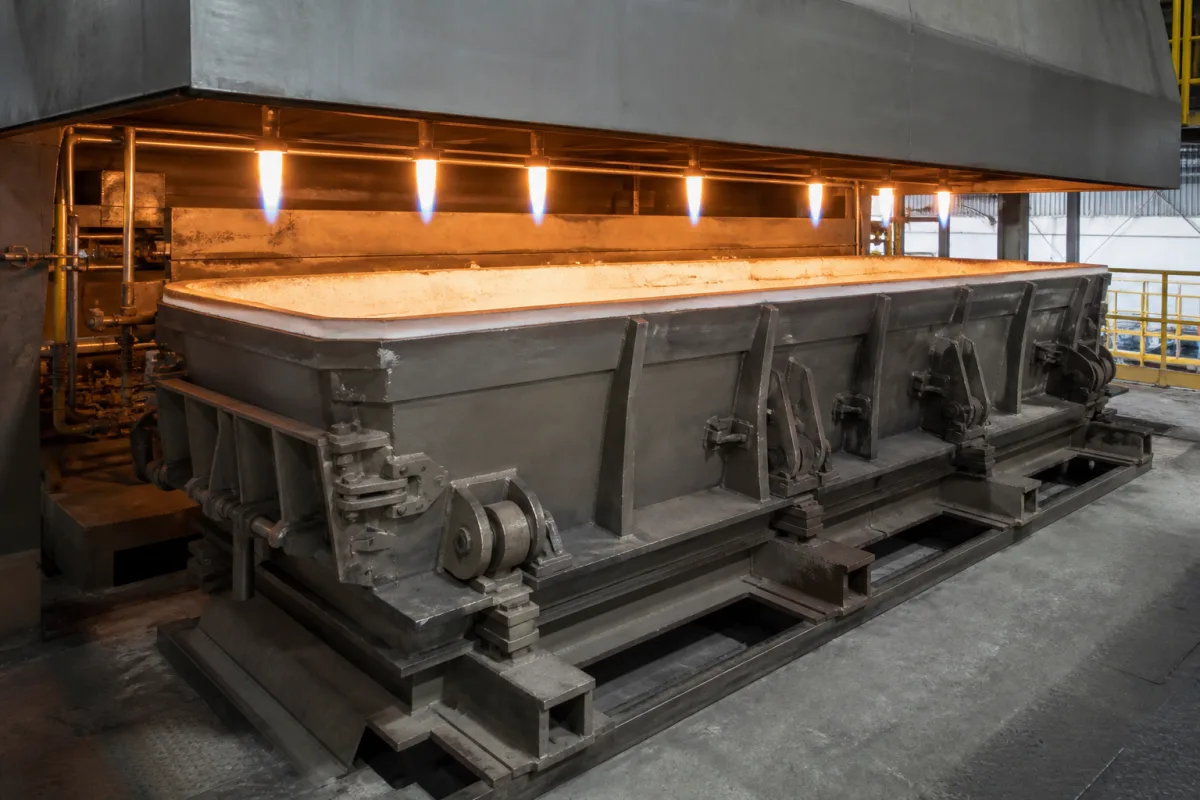
Tundish with Pre-Heating

Based on aggregated insights from multiple verified factory profiles within the CNFX directory, the standard Tundish with Pre-Heating used in the Basic Metal Manufacturing sector typically supports operational capacities ranging from standard industrial configurations to heavy-duty production requirements.

Technical Definition & Core Assembly

A canonical Tundish with Pre-Heating is characterized by the integration of Refractory Lining and Heating Element Bank. In industrial production environments, manufacturers listed on CNFX commonly emphasize Refractory Lining (e.g., alumina, magnesia) construction to support stable, high-cycle operation across diverse manufacturing scenarios.

A specialized tundish equipped with integrated heating elements to maintain optimal metal temperature during continuous casting of non-ferrous alloys.
Product Specifications

Technical details and manufacturing context for Tundish with Pre-Heating

Definition
A critical component within the Smart Continuous Casting System for Non-Ferrous Alloys, the Tundish with Pre-Heating serves as a temperature-controlled reservoir that receives molten metal from the ladle and distributes it to the mold. Its integrated pre-heating system prevents premature solidification and thermal shock, ensuring consistent metal fluidity, uniform microstructure, and high-quality cast products by maintaining precise temperature profiles throughout the casting process.
Working Principle
The tundish receives molten non-ferrous alloy from the ladle. Integrated electric or gas-fired heating elements, controlled by a temperature feedback system, actively maintain the metal within a narrow target temperature range. This prevents heat loss during transfer, reduces temperature gradients, and ensures the metal remains at the optimal viscosity for smooth, controlled flow into the mold, which is crucial for defect-free casting.
Common Materials
Refractory Lining (e.g., alumina, magnesia), Steel Shell, Heating Elements (e.g., silicon carbide, molybdenum disilicide)
Technical Parameters
  • Internal dimensions (length, width, depth) defining the molten metal capacity and flow characteristics. (mm) Per Request
Components / BOM
  • Refractory Lining
    Provides thermal insulation and protects the steel shell from molten metal corrosion and erosion.
    Material: Alumina, Magnesia, or other ceramic refractories
  • Heating Element Bank
    Generates heat to maintain the molten metal at the target temperature; typically embedded in or surrounding the lining.
    Material: Silicon Carbide, Molybdenum Disilicide, or resistance alloys
  • Thermocouple Assembly
    Monitors the real-time temperature of the molten metal for feedback control of the heating system.
    Material: Sheathed thermocouple (e.g., Type K, Type S)
  • Steel Shell/Casing
    Provides structural support and containment for the refractory lining and internal components.
    Material: Carbon Steel or Low-Alloy Steel
Engineering Reasoning
650-720°C for aluminum alloys, 950-1050°C for copper alloys
Thermal gradient exceeding 150°C/cm across refractory lining thickness
Design Rationale: Thermal stress-induced cracking due to coefficient of thermal expansion mismatch between Inconel 600 heating elements (13.3 μm/m·K) and alumina-silica refractory (5.8 μm/m·K)
Risk Mitigation (FMEA)
Trigger Ceramic fiber insulation degradation below 80% density retention
Mode: Heat loss rate increase from 15 kW/m² to 45 kW/m²
Strategy: Install dual-layer insulation with 25 mm Pyro-Bloc 2300 backed by 50 mm Kaowool 2600
Trigger Moisture ingress exceeding 0.5% by volume in refractory lining
Mode: Steam explosion causing refractory spalling at 2.3 MPa internal pressure
Strategy: Implement nitrogen purge system maintaining 0.02 MPa positive pressure during idle periods

Industry Taxonomies & Aliases

Commonly used trade names and technical identifiers for Tundish with Pre-Heating.

Industrial Ecosystem & Supply Chain DNA

Complementary Systems
Downstream Applications
Specialized Tooling

Application Fit & Sizing Matrix

Operational Limits
pressure: Atmospheric to 0.5 bar gauge (non-pressurized operation)
flow rate: 5-50 tons/hour (continuous casting throughput)
temperature: Ambient to 1200°C (pre-heating range: 200-800°C)
slurry concentration: Not applicable (handles molten metal only)
Media Compatibility
✓ Aluminum alloys (e.g., 3000/5000 series) ✓ Copper-based alloys (e.g., brass, bronze) ✓ Zinc alloys (e.g., ZA series)
Unsuitable: Ferrous metals (steel/iron) due to higher melting points and slag chemistry differences
Sizing Data Required
  • Required metal throughput (tons/hour)
  • Casting sequence duration (hours)
  • Tundish capacity needed for ladle changeovers (tons)

Reliability & Engineering Risk Analysis

Failure Mode & Root Cause
Thermal fatigue cracking
Cause: Cyclic heating and cooling during pre-heating cycles, leading to expansion/contraction stresses that exceed material limits, often exacerbated by rapid temperature changes or uneven heating.
Refractory lining degradation
Cause: Chemical attack from molten metal/slag, thermal shock from improper pre-heating rates, or mechanical wear from material flow, resulting in thinning, spalling, or erosion of the refractory lining.
Maintenance Indicators
  • Visible cracks or discoloration on the tundish exterior, indicating potential refractory failure or structural compromise.
  • Abnormal temperature readings or hot spots detected via thermal imaging during pre-heating, suggesting uneven heating or lining issues.
Engineering Tips
  • Implement controlled pre-heating protocols with gradual temperature ramps and uniform heating to minimize thermal stresses and prevent refractory spalling.
  • Conduct regular refractory inspections and thickness measurements using non-destructive testing (e.g., ultrasonic testing) to monitor lining wear and schedule timely repairs before failure occurs.

Compliance & Manufacturing Standards

Reference Standards
ISO 9001:2015 - Quality Management Systems ASTM A36/A36M - Standard Specification for Carbon Structural Steel CE Marking - EU Directive 2014/68/EU for Pressure Equipment
Manufacturing Precision
  • Flatness: +/- 0.5mm per meter
  • Wall Thickness: +/- 10% of nominal thickness
Quality Inspection
  • Hydrostatic Pressure Test
  • Visual and Dimensional Inspection

Factories Producing Tundish with Pre-Heating

Verified manufacturers with capability to produce this product in China

✓ 92% Supplier Capability Match Found

P Procurement Specialist from United States Jan 31, 2026
★★★★★
"Found 29+ suppliers for Tundish with Pre-Heating on CNFX, but this spec remains the most cost-effective."
Technical Specifications Verified
T Technical Director from United Arab Emirates Jan 28, 2026
★★★★★
"The technical documentation for this Tundish with Pre-Heating is very thorough, especially regarding technical reliability."
Technical Specifications Verified
P Project Engineer from Australia Jan 25, 2026
★★★★★
"Reliable performance in harsh Basic Metal Manufacturing environments. No issues with the Tundish with Pre-Heating so far."
Technical Specifications Verified
Verification Protocol

“Feedback is collected from verified sourcing managers during RFQ (Request for Quote) and factory evaluation processes on CNFX. These reports represent historical performance data and technical audit summaries from our B2B manufacturing network.”

7 sourcing managers are analyzing this specification now. Last inquiry for Tundish with Pre-Heating from Thailand (1h ago).

Supply Chain Compatible Machinery & Devices

Vacuum Induction Melting Furnace

Industrial furnace for melting metals under vacuum using electromagnetic induction

Explore Specs →
Electroslag Remelting Furnace

Secondary refining furnace for high-quality metal ingots

Explore Specs →
Molten Metal Flow Control Valve

Precision valve for regulating molten metal flow in casting and pouring operations.

Explore Specs →
Molten Metal Temperature Measurement System

Automated system for continuous temperature monitoring of molten metals during processing.

Explore Specs →

Frequently Asked Questions

What are the benefits of pre-heating in a tundish for non-ferrous alloy casting?

Pre-heating maintains consistent metal temperature, preventing premature solidification, reducing thermal shock to refractories, improving flow characteristics, and minimizing defects in the final cast product.

Which heating elements are most suitable for tundish applications in basic metal manufacturing?

Silicon carbide and molybdenum disilicide heating elements are commonly used due to their high temperature resistance, durability in harsh environments, and efficient heat transfer capabilities for maintaining optimal metal temperatures.

How does the refractory lining affect tundish performance and longevity?

High-quality alumina or magnesia refractory linings provide thermal insulation, resist chemical erosion from molten metals, minimize heat loss, and extend service life by protecting the steel shell from extreme temperatures.

Can I contact factories directly on CNFX?

CNFX is an open directory, not a transaction platform. Each factory profile provides direct contact information and production details to help you initiate direct inquiries with Chinese suppliers.

Get Quote for Tundish with Pre-Heating

Request technical pricing, lead times, or customized specifications for Tundish with Pre-Heating directly from verified manufacturing units.

Your business information is encrypted and only shared with verified Tundish with Pre-Heating suppliers.

Thank you! Your message has been sent. We'll respond within 1–3 business days.

Need to Manufacture Tundish with Pre-Heating?

Connect with verified factories specializing in this product category

Add Your Factory Contact Us
Previous Product
Tundish
Next Product
Tungsten Carbide Nozzles