Industry-Verified Manufacturing Data (2026)

Water-Cooled Mold

Based on aggregated insights from multiple verified factory profiles within the CNFX directory, the standard Water-Cooled Mold used in the Basic Metal Manufacturing sector typically supports operational capacities ranging from standard industrial configurations to heavy-duty production requirements.

Technical Definition & Core Assembly

A canonical Water-Cooled Mold is characterized by the integration of Cooling Channel Network and Inlet/Outlet Manifold. In industrial production environments, manufacturers listed on CNFX commonly emphasize Tool Steel (e.g., P20, H13) construction to support stable, high-cycle operation across diverse manufacturing scenarios.

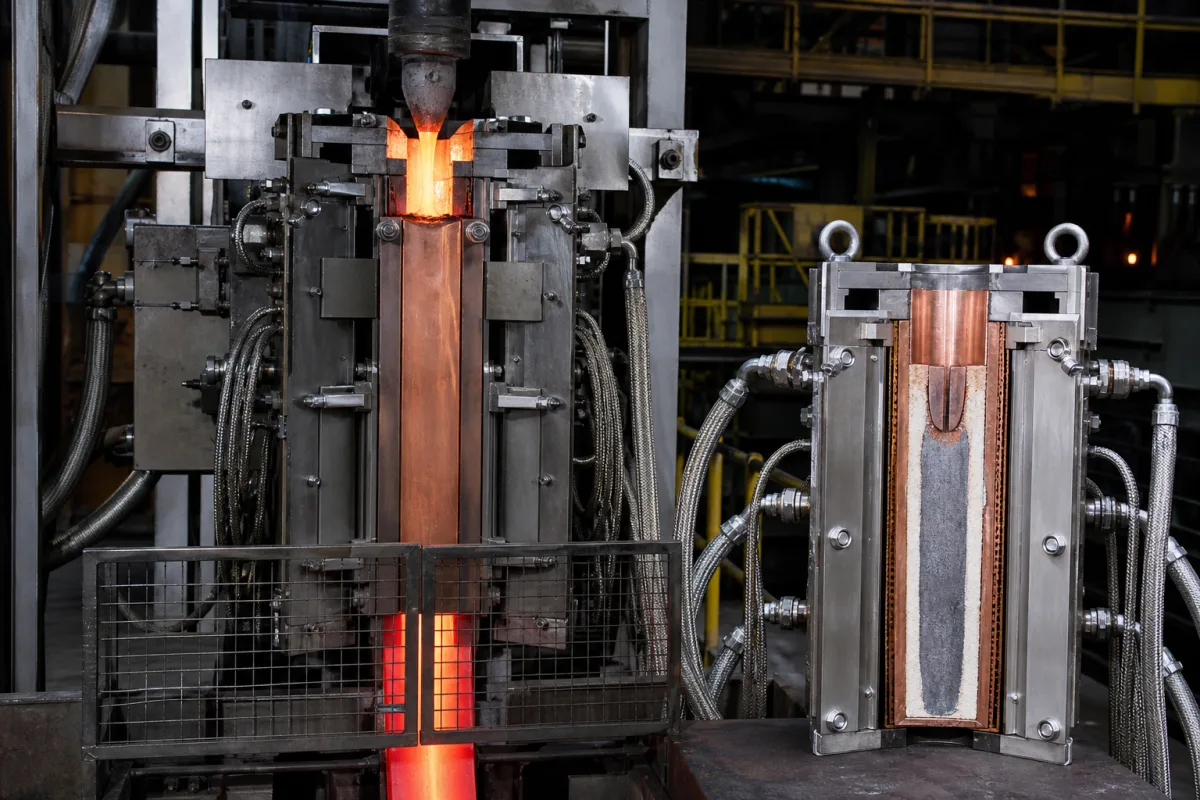
A mold component that uses circulating water to remove heat from the mold cavity during industrial processes.
Product Specifications

Technical details and manufacturing context for Water-Cooled Mold

Definition
A specialized mold component within an Industrial System designed to regulate temperature by circulating cooling water through internal channels. It actively extracts heat from the mold cavity or the material being processed, enabling precise thermal control, faster cycle times, and prevention of material degradation or defects caused by excessive heat buildup.
Working Principle
The Water-Cooled Mold operates by having a network of internal channels or passages machined into or attached to the mold body. A coolant (typically water) is pumped through these channels, absorbing thermal energy from the hot mold surfaces or the processed material in direct contact with the mold cavity. The heated water is then circulated out to a cooling system (like a chiller or cooling tower) where it dissipates the heat before being recirculated, creating a continuous closed-loop cooling cycle.
Common Materials
Tool Steel (e.g., P20, H13), Copper Alloy, Stainless Steel
Technical Parameters
  • The critical dimension of the mold cavity that defines the final product shape. (mm) Customizable
Components / BOM
  • Cooling Channel Network
    A system of internal passages that distributes cooling water throughout the mold body to absorb heat.
    Material: Same as mold base (e.g., Tool Steel)
  • Inlet/Outlet Manifold
    Distributes incoming coolant to multiple channels and collects heated coolant for return.
    Material: Stainless Steel or Brass
  • Seals/Gaskets
    Prevents coolant leakage at connection points between mold plates and external piping.
    Material: Synthetic Rubber (e.g., Viton, EPDM)
Engineering Reasoning
2.0-6.0 bar (water pressure), 5-25°C (inlet water temperature), 0.5-3.0 m/s (flow velocity)
Water pressure <1.5 bar (insufficient cooling), >8.0 bar (seal failure), water temperature >35°C (heat transfer coefficient drops below 500 W/m²·K), flow velocity <0.3 m/s (laminar flow regime)
Design Rationale: Thermal fatigue from cyclic temperature gradients exceeding 150°C/mm, calcium carbonate scaling at Langelier Saturation Index >0.5, galvanic corrosion at dissimilar metal interfaces with >0.25V potential difference
Risk Mitigation (FMEA)
Trigger Cooling water pH <6.5 or >8.5
Mode: Accelerated corrosion of copper alloy cooling channels at >0.1 mm/year penetration rate
Strategy: Install pH monitoring with automatic chemical dosing system maintaining 7.0-7.5 pH range
Trigger Particulate contamination >50 mg/L in cooling water
Mode: Channel blockage reducing heat transfer coefficient by >40%
Strategy: Dual-stage filtration system with 25μm pre-filter and 5μm final filter with differential pressure monitoring

Industry Taxonomies & Aliases

Commonly used trade names and technical identifiers for Water-Cooled Mold.

Applied To / Applications

This component is essential for the following industrial systems and equipment:

Industrial Ecosystem & Supply Chain DNA

Complementary Systems
Downstream Applications
Specialized Tooling

Application Fit & Sizing Matrix

Operational Limits
pressure: Max 10 bar (operating pressure)
flow rate: 10-100 L/min (typical cooling circuit)
temperature: 5°C to 95°C (inlet water temperature)
slurry concentration: Not applicable - designed for clean water systems
Media Compatibility
✓ Deionized water ✓ Industrial glycol-water mixtures (up to 30% glycol) ✓ Corrosion-inhibited closed-loop cooling fluids
Unsuitable: Abrasive slurry environments or corrosive chemical media
Sizing Data Required
  • Required heat removal capacity (kW)
  • Mold cavity surface area (m²)
  • Available cooling water supply pressure (bar)

Reliability & Engineering Risk Analysis

Failure Mode & Root Cause
Corrosion-induced leakage
Cause: Chemical attack from coolant impurities or improper pH levels, leading to pitting and eventual breach of mold channels.
Scale and fouling buildup
Cause: Mineral deposits from hard water or inadequate water treatment, reducing heat transfer efficiency and causing localized overheating.
Maintenance Indicators
  • Visible external water seepage or rust stains around mold seams or connections
  • Audible hissing or gurgling sounds indicating air entrapment or flow restriction in cooling channels
Engineering Tips
  • Implement a closed-loop cooling system with proper water treatment (corrosion inhibitors, biocides) and maintain pH between 7.5-9.0
  • Install inline filters and conduct regular flow rate and temperature differential monitoring to detect fouling early

Compliance & Manufacturing Standards

Reference Standards
ISO 9001:2015 - Quality Management Systems ASTM A240/A240M - Standard Specification for Chromium and Chromium-Nickel Stainless Steel Plate, Sheet, and Strip for Pressure Vessels and for General Applications CE Marking - Conformity with EU Directives for Pressure Equipment (PED 2014/68/EU)
Manufacturing Precision
  • Bore Diameter: +/-0.02mm
  • Flatness of Sealing Surfaces: 0.1mm
Quality Inspection
  • Hydrostatic Pressure Test
  • Dye Penetrant Test

Factories Producing Water-Cooled Mold

Verified manufacturers with capability to produce this product in China

✓ 97% Supplier Capability Match Found

P Project Engineer from Canada Jan 09, 2026
★★★★★
"As a professional in the Basic Metal Manufacturing sector, I confirm this Water-Cooled Mold meets all ISO standards."
Technical Specifications Verified
S Sourcing Manager from United States Jan 06, 2026
★★★★★
"Standard OEM quality for Basic Metal Manufacturing applications. The Water-Cooled Mold arrived with full certification."
Technical Specifications Verified
P Procurement Specialist from United Arab Emirates Jan 03, 2026
★★★★★
"Great transparency on the Water-Cooled Mold components. Essential for our Basic Metal Manufacturing supply chain."
Technical Specifications Verified
Verification Protocol

“Feedback is collected from verified sourcing managers during RFQ (Request for Quote) and factory evaluation processes on CNFX. These reports represent historical performance data and technical audit summaries from our B2B manufacturing network.”

14 sourcing managers are analyzing this specification now. Last inquiry for Water-Cooled Mold from USA (1h ago).

Supply Chain Commonly Integrated Components

Infrared Pyrometer

A non-contact temperature measurement device that detects infrared radiation emitted by objects to determine their surface temperature.

Explore Specs →
Signal Processor

Electronic device that conditions, amplifies, filters, and converts raw sensor signals into standardized outputs for temperature measurement systems

Explore Specs →
Purge Air System

A system that provides controlled airflow to clear optical paths and protect sensors in molten metal temperature measurement applications.

Explore Specs →
Degassing Chamber

A specialized vessel within a molten metal degassing system where dissolved gases are removed from molten metal through controlled processes.

Explore Specs →

Frequently Asked Questions

What are the benefits of using a water-cooled mold in basic metal manufacturing?

Water-cooled molds provide efficient heat removal from the mold cavity, reducing cycle times, preventing thermal stress on the mold material, and improving product quality by minimizing defects like warping or uneven cooling in metal castings.

Which materials are best for water-cooled molds in high-temperature applications?

For high-temperature applications, tool steels like H13 offer excellent heat resistance and durability, while copper alloys provide superior thermal conductivity for faster cooling. Stainless steel is preferred for corrosion resistance in certain environments.

How do I maintain the cooling efficiency of a water-cooled mold over time?

Regular maintenance includes inspecting and cleaning cooling channels to prevent mineral buildup or blockages, checking seals and gaskets for leaks, and monitoring water flow rates and temperatures to ensure consistent heat removal performance.

Can I contact factories directly on CNFX?

CNFX is an open directory, not a transaction platform. Each factory profile provides direct contact information and production details to help you initiate direct inquiries with Chinese suppliers.

Get Quote for Water-Cooled Mold

Request technical pricing, lead times, or customized specifications for Water-Cooled Mold directly from verified manufacturing units.

Your business information is encrypted and only shared with verified Water-Cooled Mold suppliers.

Thank you! Your message has been sent. We'll respond within 1–3 business days.

Need to Manufacture Water-Cooled Mold?

Connect with verified factories specializing in this product category

Add Your Factory Contact Us
Previous Product
Water-Cooled Crucible
Next Product
Weighing System