Industry-Verified Manufacturing Data (2026)

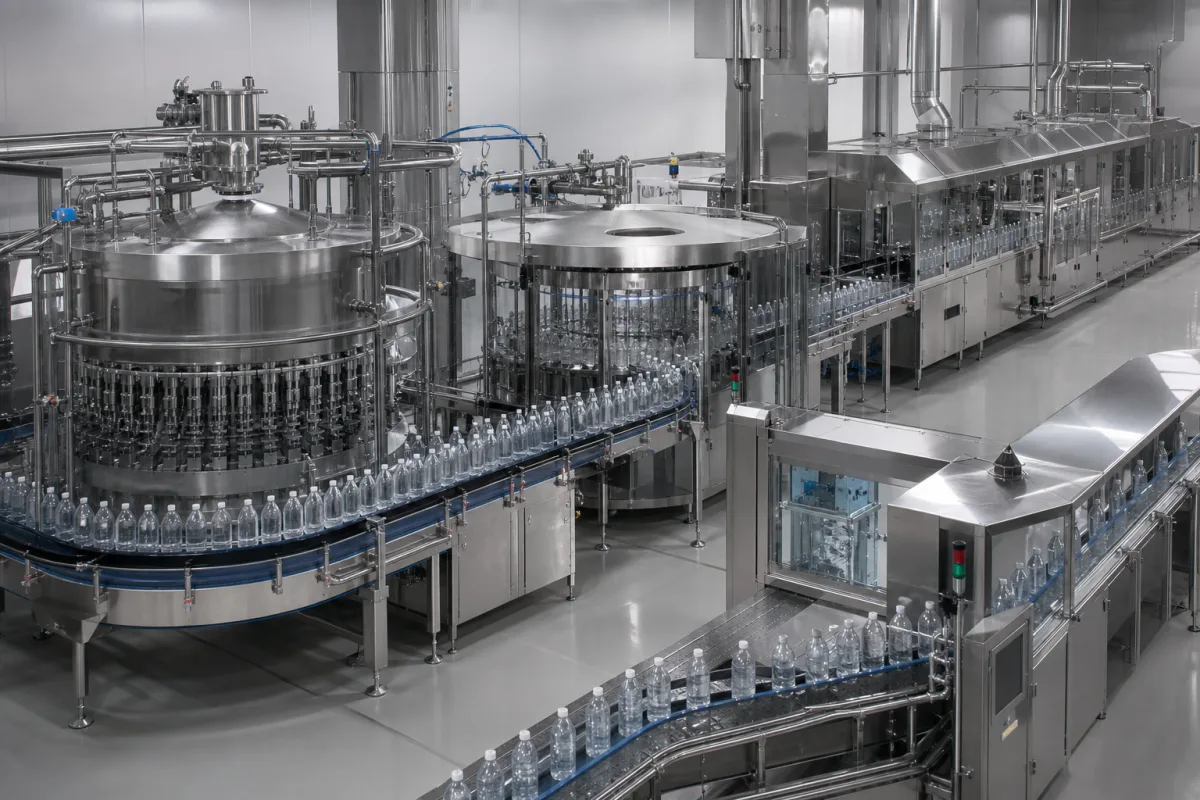
Aseptic Cold-Fill Beverage Production System

Based on aggregated insights from multiple verified factory profiles within the CNFX directory, the standard Aseptic Cold-Fill Beverage Production System used in the Beverage Manufacturing sector typically supports operational capacities ranging from standard industrial configurations to heavy-duty production requirements.

Technical Definition & Core Assembly

A canonical Aseptic Cold-Fill Beverage Production System is characterized by the integration of UHT Sterilization Unit and Aseptic Filling Valve Block. In industrial production environments, manufacturers listed on CNFX commonly emphasize Stainless Steel 316L construction to support stable, high-cycle operation across diverse manufacturing scenarios.

Integrated industrial system for sterile filling of non-alcoholic beverages without heat treatment.

Product Specifications

Technical details and manufacturing context for Aseptic Cold-Fill Beverage Production System

Definition
A complete, coordinated production line designed for the high-volume manufacturing of non-alcoholic beverages like juices, soft drinks, and bottled water using aseptic cold-fill technology. This system integrates modules for product preparation, ultra-high temperature (UHT) sterilization, sterile cooling, aseptic filling, and capping within a controlled sterile environment. It is a critical B2B industrial solution for beverage manufacturers seeking to preserve product freshness, nutritional value, and flavor while ensuring extended shelf life without chemical preservatives. The system enables efficient, large-scale production for supply chains requiring distribution to supermarkets, convenience stores, and food service providers.
Working Principle
The system operates by sterilizing the liquid beverage via UHT treatment, then rapidly cooling it to ambient filling temperature. The beverage and packaging (bottles, caps) are sterilized separately. The filling and capping processes occur within a sterile, pressurized chamber filled with sterile air or gas (like HEPA-filtered air or nitrogen), preventing microbial contamination during the final packaging stage.
Common Materials
Stainless Steel 316L, Food-Grade Elastomers, High-Clarity PET, Aluminum
Technical Parameters
  • Maximum system throughput under standard operating conditions (liters/hour) Customizable
  • Log reduction of target microorganisms, typically expressed as a probability of non-sterile unit (SAL) Customizable
Components / BOM
  • UHT Sterilization Unit
    Raises beverage temperature to 135-150°C for 2-8 seconds to destroy microorganisms, then cools product for filling
    Material: Stainless Steel 316L with sanitary fittings
  • Aseptic Filling Valve Block
    Precisely dispenses sterilized beverage into pre-sterilized containers within the sterile chamber
    Material: Stainless Steel 316L, PTFE seals
  • Sterile Chamber & Tunnel
    Provides a sealed, positively pressurized environment with sterile air for the filling and capping processes
    Material: Stainless Steel 304/316, polycarbonate viewing panels
  • Bottle Sterilizer (e.g., Hydrogen Peroxide Rinser)
    Applies and removes chemical sterilant (e.g., H2O2) or uses physical methods (e.g., UV, plasma) to decontaminate empty containers before entry into the aseptic zone
    Material: Stainless Steel 316L
  • Aseptic Capping Unit
    Applies and torques pre-sterilized caps onto filled containers within the sterile environment
    Material: Stainless Steel, anodized aluminum parts
  • Sterile Air Generation System
    Generates, filters (HEPA/ULPA), and regulates the flow of sterile air or inert gas into the aseptic chamber
    Material: Stainless Steel housing, HEPA/ULPA filter media
Engineering Reasoning
0.5-6.0 bar (filling pressure), 0.1-0.3 bar (sterile air overpressure in filling zone), 4-20°C (product temperature during filling)
Filling pressure exceeds 8.0 bar causing seal deformation >0.5mm, sterile air overpressure drops below 0.05 bar allowing microbial ingress, product temperature rises above 25°C initiating microbial growth
Design Rationale: Seal failure due to excessive hoop stress exceeding 15 MPa yield strength of EPDM elastomer, laminar flow disruption in sterile air curtain creating turbulent eddies with Reynolds number >2300, Arrhenius equation microbial growth rate doubling per 10°C temperature increase
Risk Mitigation (FMEA)
Trigger Peristaltic pump tube wall thinning to <1.5mm thickness
Mode: Sterility breach through micro-perforations allowing 0.3μm particle penetration
Strategy: Integrated thickness monitoring with 0.1mm resolution ultrasonic sensors triggering automatic tube replacement
Trigger H₂O₂ vapor concentration decay below 35% v/v in sterilization tunnel
Mode: Bacillus subtilis spore survival rate exceeding 10⁻⁶ CFU/ml
Strategy: Real-time FTIR spectroscopy with 1% v/v resolution controlling vapor injection via PID loop

Industry Taxonomies & Aliases

Commonly used trade names and technical identifiers for Aseptic Cold-Fill Beverage Production System.

Industrial Ecosystem & Supply Chain DNA

Complementary Systems
Downstream Applications
Specialized Tooling

Application Fit & Sizing Matrix

Operational Limits
pressure: 0.5-3.0 bar (filling pressure)
flow rate: 5-100 m³/h (system capacity)
temperature: 2-25°C (product temperature during filling)
sterility hold time: 30-120 seconds (aseptic zone residence)
container size range: 100ml-2L (bottle/carton capacity)
slurry concentration: 0-15% solids (max for particulate beverages)
Media Compatibility
✓ fruit juices and nectars ✓ dairy-alternative beverages (soy/almond milk) ✓ sports/energy drinks
Unsuitable: high-viscosity products with particulates >2mm (e.g., pulpy smoothies with seeds)
Sizing Data Required
  • Required production capacity (bottles/hour)
  • Beverage viscosity and particulate size
  • Available floor space and utility connections (power, water, compressed air)

Reliability & Engineering Risk Analysis

Failure Mode & Root Cause
Cavitation in CIP/COP pumps
Cause: Insufficient NPSH due to filter clogging, improper pump sizing, or high fluid temperatures causing vapor formation during cleaning cycles
Gasket/seal degradation in aseptic zones
Cause: Chemical attack from aggressive sanitizers (peracetic acid, hydrogen peroxide) combined with thermal cycling during SIP processes
Maintenance Indicators
  • Audible high-frequency vibration or 'knocking' from centrifugal pumps indicating cavitation or bearing failure
  • Visible product residue or moisture accumulation around sterile barrier gaskets during production runs
Engineering Tips
  • Implement predictive maintenance with vibration analysis on critical rotating equipment and ultrasonic leak detection on sterile barriers
  • Establish strict chemical concentration monitoring and temperature controls for CIP/SIP fluids to prevent accelerated material degradation

Compliance & Manufacturing Standards

Reference Standards
ISO 22000:2018 - Food safety management systems ANSI/ASME BPE-2019 - Bioprocessing equipment DIN 11864-1 - Aseptic fittings and connections
Manufacturing Precision
  • Surface finish: Ra ≤ 0.8 μm for product contact surfaces
  • Dimensional tolerance: Pipe alignment ±0.5 mm at connection points
Quality Inspection
  • Sterility validation test (media fill trials)
  • Leak detection test (pressure decay method)

Factories Producing Aseptic Cold-Fill Beverage Production System

Verified manufacturers with capability to produce this product in China

✓ 98% Supplier Capability Match Found

P Procurement Specialist from Singapore Jan 03, 2026
★★★★★
"As a professional in the Beverage Manufacturing sector, I confirm this Aseptic Cold-Fill Beverage Production System meets all ISO standards."
Technical Specifications Verified
T Technical Director from Germany Dec 31, 2025
★★★★★
"Standard OEM quality for Beverage Manufacturing applications. The Aseptic Cold-Fill Beverage Production System arrived with full certification."
Technical Specifications Verified
P Project Engineer from Brazil Dec 28, 2025
★★★★★
"Great transparency on the Aseptic Cold-Fill Beverage Production System components. Essential for our Beverage Manufacturing supply chain."
Technical Specifications Verified
Verification Protocol

“Feedback is collected from verified sourcing managers during RFQ (Request for Quote) and factory evaluation processes on CNFX. These reports represent historical performance data and technical audit summaries from our B2B manufacturing network.”

8 sourcing managers are analyzing this specification now. Last inquiry for Aseptic Cold-Fill Beverage Production System from Turkey (1h ago).

Supply Chain Commonly Integrated Components

Central Control Unit (PLC)

The programmable logic controller that serves as the central processing and control unit for the automated beverage batch blending system.

Explore Specs →
Precision Metering Pump Assembly

A precision fluid handling component designed to accurately measure and dispense specific volumes of liquid ingredients within an automated beverage blending system.

Explore Specs →
Sanitary Flow Meter

A precision instrument designed to measure the volumetric or mass flow rate of liquids in hygienic processing environments, featuring smooth surfaces and cleanable designs to prevent contamination.

Explore Specs →
Ingredient Inlet Valve Manifold

A multi-port valve assembly that controls and directs the flow of liquid ingredients into an automated beverage blending system.

Explore Specs →

Frequently Asked Questions

How does this aseptic system maintain sterility without heat treatment?

The system uses a combination of hydrogen peroxide bottle sterilization, sterile air generation with micron filtration, and maintained positive pressure in the aseptic zone to achieve sterility without thermal processing.

What is the typical OEE (Overall Equipment Effectiveness) for this cold-fill system?

Designed for high efficiency, the system targets OEE above 85% through rapid changeover times (minutes), precise filling accuracy (±ml), and maximum speeds up to containers/minute with minimal downtime.

Which beverage types is this aseptic cold-fill system suitable for?

Ideal for sensitive non-alcoholic beverages like juices, dairy alternatives, functional drinks, and teas that require sterile filling without heat degradation, using materials like PET, aluminum, and food-grade elastomers.

Can I contact factories directly on CNFX?

CNFX is an open directory, not a transaction platform. Each factory profile provides direct contact information and production details to help you initiate direct inquiries with Chinese suppliers.

Get Quote for Aseptic Cold-Fill Beverage Production System

Request technical pricing, lead times, or customized specifications for Aseptic Cold-Fill Beverage Production System directly from verified manufacturing units.

Your business information is encrypted and only shared with verified Aseptic Cold-Fill Beverage Production System suppliers.

Thank you! Your message has been sent. We'll respond within 1–3 business days.

Need to Manufacture Aseptic Cold-Fill Beverage Production System?

Connect with verified factories specializing in this product category

Add Your Factory Contact Us
Previous Product
Aseptic Chamber with Laminar Flow
Next Product
Aseptic Filling Valve Assembly