Editorial Technical Reference

Cooling Fan Assembly

This page explains how Cooling Fan Assembly is classified within Beverage Manufacturing. Technical values and manufacturer relationships are research references; confirm the current specification and supplier evidence for each order.

Technical Definition & Core Assembly

A cooling system component that dissipates heat from critical areas of the foil sealing machine to maintain optimal operating temperatures.

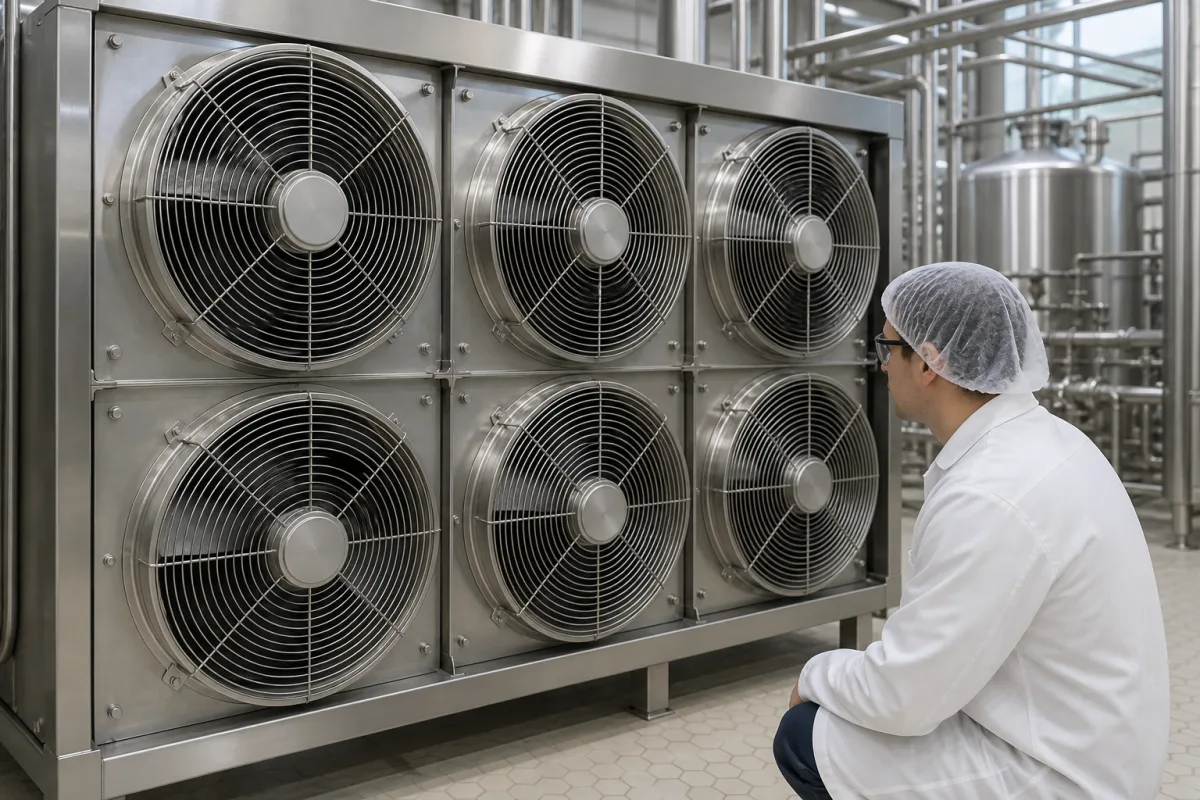
Representative product image. Confirm appearance and specifications with the manufacturer.

Product Specifications

Technical details and manufacturing context for Cooling Fan Assembly

Definition
The Cooling Fan Assembly is an essential thermal management component within the Automated Beverage Container Foil Sealing Machine. It actively removes excess heat generated during the foil sealing process, particularly from the heating elements, motor drives, and control electronics, ensuring consistent sealing quality, preventing thermal damage to components, and maintaining machine reliability during continuous operation. The assembly typically consists of an electric motor-driven fan that draws ambient air across heat-generating components. The airflow increases convective heat transfer, carrying thermal energy away from the machine's critical zones. It may operate continuously or be controlled by a thermostat to activate when temperatures exceed a set threshold. The assembly is designed for integration into the machine's cooling system, with a frame size of 120×120×38 mm and a weight of 0.5–0.8 kg. It operates at a rated voltage of 24 V DC (±10%), consuming 15–30 W of power. The fan delivers an airflow of 80–120 CFM at a static pressure of 0.2–0.5 in H2O, with a speed of 2500–3500 RPM. The noise level ranges from 40–55 dBA, and the operating temperature range is -20 to 70 °C. The assembly features ball bearings for extended life, with a lifetime of 50,000–70,000 hours at 40 °C ambient. The IP rating is IP54–IP65, providing protection against dust and water splashes. Materials used include aluminum alloy or plastic for the housing and blades, steel for the motor shaft and bearings, and copper for the motor windings. These specifications are reference ranges for directory purposes; actual values must be confirmed with the legal manufacturer or supplier for the specific model and application. The assembly is a component, not a standalone product, and its performance is verified through integration testing within the sealing machine.
Working Principle
The assembly uses an electric motor to spin a fan, which draws ambient air across heat-generating components. The airflow increases convective heat transfer, carrying thermal energy away from the machine's critical zones. It may operate continuously or be controlled by a thermostat to activate when temperatures exceed a set threshold. The fan's performance is characterized by airflow, static pressure, and speed, which are selected based on the machine's thermal load and airflow path restrictions. The assembly is designed to operate within specified voltage and temperature ranges, and its bearings and materials are chosen for durability. Proper installation and maintenance, including regular cleaning and bearing checks, are necessary to maintain cooling efficiency and prevent premature failure.
Common Materials
Aluminum alloy (housing/blades), Steel (motor shaft/bearings), Plastic (housing/blades - alternative), Copper (motor windings)
Technical Parameters
ParameterTypical rangeNotes & selection driver
Airflow80–120 CFMRequired to maintain cooling efficiency
Static Pressure0.2–0.5 in H2OEnsures adequate flow through restricted paths
Rated Voltage24 ±10% V DCStandard for industrial control systems
Power Consumption15–30 WAffects energy efficiency and heat load
Speed2500–3500 RPMBalances airflow and noise
Noise Level40–55 dBAMust comply with workplace noise limits
Operating Temperature-20–70 °CExceeding range may cause bearing failure
IP RatingIP54–IP65Protects against dust and water splashesIEC 60529
Bearing TypeBallBall bearings offer longer life
Frame Size120×120×38 mmStandard size for easy replacement
Weight0.5–0.8 kgAffects mounting and handling
Lifetime50000–70000 hAt 40°C ambient, MTBF

Ranges are indicative industry figures for RFQ preparation, not a supplier commitment. Confirm every value and standard with the legal manufacturer before ordering.

Components / BOM
  • Fan Blade/Impeller Part
    Generates airflow by rotating and displacing air
    Material: Aluminum alloy or plastic
  • Electric Motor
    Provides rotational power to drive the fan blades
    Material: Steel, copper, magnets
  • Fan Housing/Shroud Part
    Directs airflow and protects internal components
    Material: Aluminum alloy or plastic
  • Mounting Bracket Part
    Secures the assembly to the machine frame
    Material: Steel or aluminum
  • Thermostat Optional
    Switches the fan on only above a set temperature, on thermostatically controlled versions.

Applied To / Applications

This component is essential for the following industrial systems and equipment:

Industrial Ecosystem & Supply Chain Structure

Complementary Systems
Downstream Applications
Specialized Tooling

Application Fit & Sizing Matrix

Operational Limits
pressure: Atmospheric pressure operation only, not for pressurized systems
temperature: Ambient to 80°C operating environment, dissipates heat from 40-70°C source zones
air flow rate: 50-300 CFM depending on model, adjustable via speed control
vibration tolerance: Max 2.5 mm/s RMS vibration in mounting plane
Media Compatibility
✓ Clean dry air environments ✓ Food-grade lubricated machinery areas ✓ Electronics cooling applications with minimal particulate
Unsuitable: High moisture or corrosive chemical atmospheres (e.g., chlorine, acid vapors)
Sizing Data Required
  • Heat load to dissipate (Watts)
  • Available mounting space dimensions (LxWxH)
  • Required airflow velocity at critical zones (m/s)

Reliability & Engineering Risk Analysis

Failure Mode & Root Cause
Bearing fatigue failure
Cause: Inadequate lubrication, contamination ingress, or excessive vibration leading to spalling, brinelling, or overheating of bearings
Blade fatigue cracking
Cause: Cyclic stress from aerodynamic loads, resonance, or imbalance causing material fatigue and eventual fracture
Maintenance Indicators
  • Unusual grinding or scraping noises indicating bearing degradation or foreign object contact
  • Excessive vibration or wobble visible during operation suggesting imbalance or structural damage
Engineering Tips
  • Implement condition-based monitoring with vibration analysis and infrared thermography to detect early degradation
  • Establish preventive maintenance schedule for bearing lubrication and blade cleaning to prevent contamination buildup

Indicative industry ranges for design and RFQ preparation. Confirm the exact figures and applicable standard with the manufacturer before specifying.

Compliance & Manufacturing Standards

Applicable Standards
ISO 5801:2017 - Industrial fans - Performance testing using standardized airways ANSI/AMCA 210-07 - Laboratory Methods of Testing Fans for Certified Aerodynamic Performance Rating DIN EN ISO 1461 - Hot dip galvanized coatings on fabricated iron and steel articles - Specifications and test methods

Quoted from the published standard.

Manufacturing Precision
  • Bore diameter: +/-0.02mm
  • Impeller blade tip clearance: +/-0.1mm
Quality Inspection
  • Vibration analysis test (ISO 10816-3)
  • Electrical safety test (IEC 60335-1 for household/commercial fans)

Manufacturers of Cooling Fan Assembly

Manufacturer profiles associated with Cooling Fan Assembly.

Sourcing Cooling Fan Assembly from China?
Tell us your specification and target quantity — we will match it against manufacturer records and come back with the factories that fit.
Request manufacturers We manufacture this

Manufacturer listings support early research and capability understanding. They are not certification, ranking, or transaction guarantees.

Technical documentation
Request current drawings, revision history, and a signed specification sheet.
Manufacturing capability
Verify equipment lists, process limits, capacity, and representative production evidence.
Inspection readiness
Confirm test methods, calibrated equipment, sampling plans, and traceable reports.
Supplier transparency
Check the legal entity, factory address, ownership, certifications, and direct contacts.

CNFX does not score or rank suppliers. Buyers must verify all claims and documents with the legal manufacturer before ordering.

Supply Chain Compatible Machinery & Devices

Automated Beverage Container Integrity Testing System

Automated system for non-destructive testing of beverage container seals and structural integrity.

Explore Specs →
Automated Beverage Container Pressure Testing System

Automated system for testing beverage container pressure resistance and seal integrity.

Explore Specs →
Automated Beverage Container Leak Detection System

The Automated Beverage Container Leak Detection System is an industrial device designed for integration into bottling or canning lines.

Explore Specs →
Automated Beverage Container Depalletizing Machine

Industrial machine that automatically removes beverage containers from pallets for production line feeding

Explore Specs →

Frequently Asked Questions

What is the typical airflow range for this cooling fan assembly?

The airflow range is 80–120 CFM, as listed in the directory. However, the actual airflow required depends on the specific machine configuration and thermal load. Always verify the exact specification with the legal manufacturer or supplier for your model.

What is the operating temperature range?

The operating temperature range is -20 to 70 °C. Exceeding this range may cause bearing failure or other damage. Ensure the fan is installed in an environment within this range and that adequate ventilation is provided.

What IP rating does this fan have?

The IP rating is IP54–IP65, according to IEC 60529. This indicates protection against dust and water splashes. The actual rating for a specific unit should be confirmed with the manufacturer, as it may vary based on the enclosure and sealing.

How long is the expected lifetime of this fan?

The lifetime is listed as 50,000–70,000 hours at 40°C ambient temperature, based on MTBF. This is a reference range; actual lifespan depends on operating conditions, maintenance, and environmental factors. Regular cleaning and bearing inspection can help extend service life.

Data Basis

Editorial classification, named public sources where available, and source-reviewed manufacturer records.

Preliminary Technical Classification
This page supports structured research, RFQ preparation, and supplier evaluation. It does not replace buyer-led supplier qualification, standards review, or technical approval.
Buyer enquiry

Request manufacturing insight for Cooling Fan Assembly

Ask for use case, specification boundaries, supplier type, and RFQ preparation information for this product.

Where it goes
Straight to the CNFX editorial desk, and to the manufacturer if this product is linked to a claimed profile. Nothing is broadcast to a supplier list.
Your details stay here
We do not sell or rent enquiry data, and we do not add you to a mailing list. Used only to answer this request.
No commission, no middleman
CNFX is a directory. We take no cut of any order and never negotiate on a supplier's behalf.
What we don't claim
A listing is not an endorsement. Qualify every supplier and verify every figure yourself before ordering.

Your business information is used only to process this request.

Thank you! Your message has been sent. We'll respond within 1–3 business days.
Sorry, we couldn't send your message. Please try again, or email us at contact@cnfx.com.

Need to Manufacture Cooling Fan Assembly?

Compare manufacturer profiles with relevant product and process capability.

Previous Product
Vacuum Gripper End-Effector
Last Product
Get QuotesChat