Industry-Verified Manufacturing Data (2026)

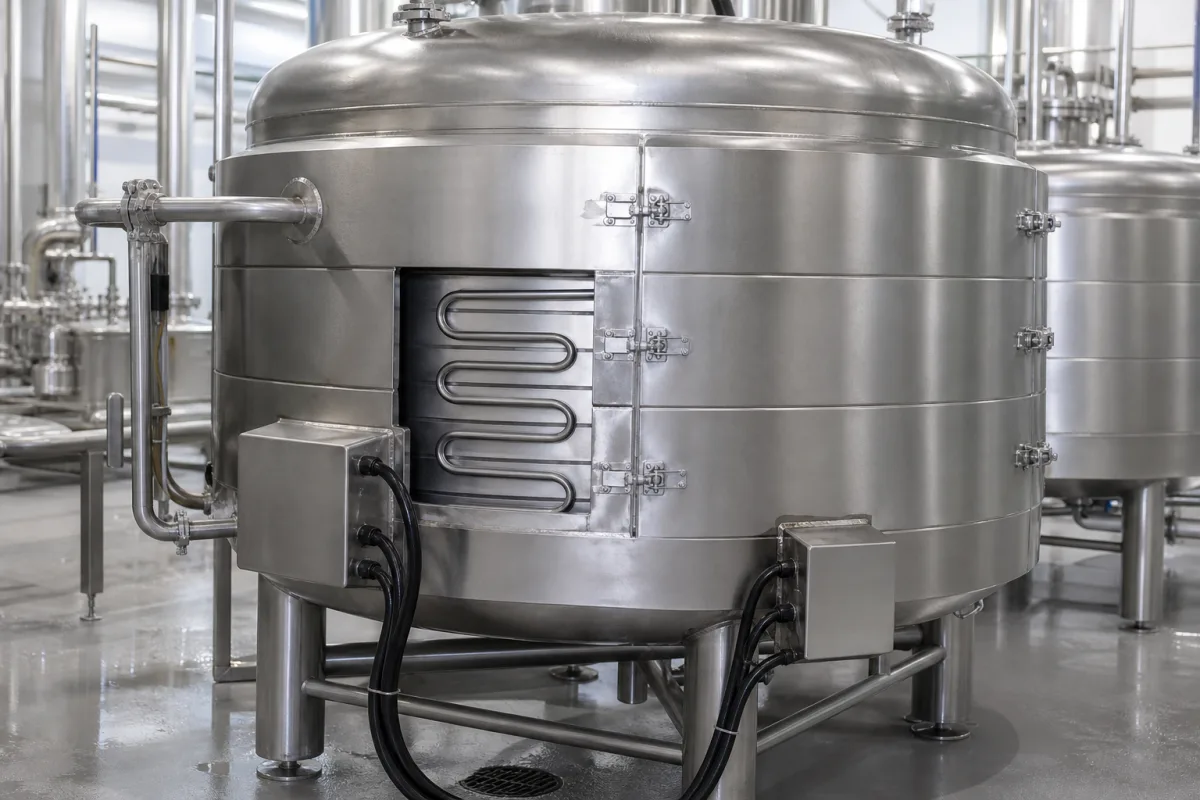
Heating Jacket/Element

Based on aggregated insights from multiple verified factory profiles within the CNFX directory, the standard Heating Jacket/Element used in the Beverage Manufacturing sector typically supports operational capacities ranging from standard industrial configurations to heavy-duty production requirements.

Technical Definition & Core Assembly

A canonical Heating Jacket/Element is characterized by the integration of Heating Element and Insulation Layer. In industrial production environments, manufacturers listed on CNFX commonly emphasize Stainless Steel 316L construction to support stable, high-cycle operation across diverse manufacturing scenarios.

A heating component that provides controlled thermal energy to the syrup preparation vessel for temperature regulation and heating processes.
Product Specifications

Technical details and manufacturing context for Heating Jacket/Element

Definition
The heating jacket/element is an integral component of syrup preparation vessels, designed to deliver precise and uniform heat to the vessel's contents. It enables controlled heating for processes such as dissolving sugars, maintaining optimal syrup temperatures, preventing crystallization, and ensuring consistent viscosity. This component is critical for achieving proper syrup consistency, flavor development, and microbial safety in beverage manufacturing.
Working Principle
The heating jacket/element operates by converting electrical energy into thermal energy through resistance heating elements or by circulating heated fluids (in jacket systems). It transfers heat to the vessel walls through conduction, creating a controlled thermal environment for the syrup. Temperature sensors and controllers regulate the heating output to maintain precise temperature setpoints throughout the syrup preparation process.
Common Materials
Stainless Steel 316L, Incoloy heating elements, Ceramic insulation
Technical Parameters
  • Heating power capacity (kW) Standard Spec
Components / BOM
  • Heating Element
    Converts electrical energy to thermal energy through resistance
    Material: Incoloy/Nickel-Chromium alloy
  • Insulation Layer
    Minimizes heat loss and improves energy efficiency
    Material: Ceramic fiber/Mineral wool
  • Thermal Sensor
    Monitors temperature for control system feedback
    Material: Stainless Steel with PTFE coating
  • Electrical Terminal Box
    Provides safe connection points for power supply
    Material: Stainless Steel 304
Engineering Reasoning
0-150°C with 0.5°C control accuracy, 220-240V AC at 50Hz, 1.5-3.0kW power rating
Thermal stress exceeding 180°C causes insulation breakdown, exceeding 250°C initiates element oxidation, exceeding 10MPa tensile stress causes sheath fracture
Design Rationale: Differential thermal expansion between Incoloy 800 sheath (α=14.2×10⁻⁶/K) and MgO insulation (α=13.5×10⁻⁶/K) creates cyclic stress exceeding 207MPa yield strength, leading to fatigue cracking and moisture ingress
Risk Mitigation (FMEA)
Trigger PID controller integral windup causing 300°C overshoot
Mode: MgO insulation dehydration and dielectric breakdown at 15kV/mm
Strategy: Implement anti-windup algorithm with 2°C deadband and thermal fuse rated at 165°C
Trigger Galvanic corrosion at stainless steel flange-Incoloy junction in 20% sucrose solution
Mode: Pitting corrosion penetration exceeding 0.5mm/year reduces sheath thickness below 1.0mm minimum
Strategy: Apply 150μm PTFE coating and install sacrificial zinc anode with 2.5V protection potential

Industry Taxonomies & Aliases

Commonly used trade names and technical identifiers for Heating Jacket/Element.

Applied To / Applications

This component is essential for the following industrial systems and equipment:

Industrial Ecosystem & Supply Chain DNA

Complementary Systems
Downstream Applications
Specialized Tooling

Application Fit & Sizing Matrix

Operational Limits
pressure: Atmospheric to 2 bar (29 psi) maximum, suitable for open or lightly pressurized vessels
other spec: Slurry concentration up to 70% solids by weight, viscosity ≤ 5000 cP, requires agitation for uniform heating
temperature: Ambient to 150°C (302°F) operating range, with typical setpoint control ±2°C
Media Compatibility
✓ Food-grade syrups (corn, maple, sugar) ✓ Pharmaceutical solutions and suspensions ✓ Chemical process fluids (non-corrosive)
Unsuitable: Highly corrosive media (e.g., strong acids, chlorides) or explosive atmospheres (ATEX Zone 0)
Sizing Data Required
  • Required heating power (kW) based on syrup volume and temperature rise
  • Vessel dimensions and jacket contact surface area (m²)
  • Process cycle time and maximum allowable heat-up rate (°C/min)

Reliability & Engineering Risk Analysis

Failure Mode & Root Cause
Insulation breakdown
Cause: Thermal cycling and moisture ingress degrading electrical insulation, leading to short circuits or ground faults.
Heating element burnout
Cause: Localized overheating due to poor thermal contact, fouling, or voltage surges, causing element failure.
Maintenance Indicators
  • Visible discoloration, blistering, or charring on the jacket surface indicating overheating.
  • Audible arcing, buzzing, or intermittent operation suggesting electrical faults or loose connections.
Engineering Tips
  • Implement regular thermal imaging inspections to detect hot spots and ensure even heat distribution before failures occur.
  • Use proper thermal interface materials and secure mounting to maintain optimal thermal contact and prevent mechanical stress on elements.

Compliance & Manufacturing Standards

Reference Standards
IEC 60335-2-45: Household and similar electrical appliances - Safety - Particular requirements for heating jackets and heating elements ASTM B193-20: Standard Test Method for Resistivity of Electrical Conductor Materials EN 60335-2-45: Household and similar electrical appliances - Safety - Particular requirements for heating jackets and heating elements (CE marking reference)
Manufacturing Precision
  • Resistance tolerance: +/-5% of specified value
  • Insulation thickness: +/-0.1mm
Quality Inspection
  • Dielectric strength test: 1500V AC for 1 minute
  • Insulation resistance test: >100 MΩ at 500V DC

Factories Producing Heating Jacket/Element

Verified manufacturers with capability to produce this product in China

✓ 98% Supplier Capability Match Found

P Project Engineer from Singapore Jan 17, 2026
★★★★★
"Impressive build quality. Especially the technical reliability is very stable during long-term operation."
Technical Specifications Verified
S Sourcing Manager from Germany Jan 14, 2026
★★★★★
"As a professional in the Beverage Manufacturing sector, I confirm this Heating Jacket/Element meets all ISO standards."
Technical Specifications Verified
P Procurement Specialist from Brazil Jan 11, 2026
★★★★★
"Standard OEM quality for Beverage Manufacturing applications. The Heating Jacket/Element arrived with full certification."
Technical Specifications Verified
Verification Protocol

“Feedback is collected from verified sourcing managers during RFQ (Request for Quote) and factory evaluation processes on CNFX. These reports represent historical performance data and technical audit summaries from our B2B manufacturing network.”

7 sourcing managers are analyzing this specification now. Last inquiry for Heating Jacket/Element from UAE (1h ago).

Supply Chain Compatible Machinery & Devices

Automated Beverage Batch Blending System

Automated system for precise multi-ingredient beverage batch preparation.

Explore Specs →
Automated Beverage Container Sterilization System

Automated system for sterilizing beverage containers before filling.

Explore Specs →
Automated Beverage Labeling and Coding System

Integrated system for applying labels and printing codes on beverage containers.

Explore Specs →
Automated Beverage Ingredient Dispensing System

Automated system for precise dispensing of beverage ingredients into production lines.

Explore Specs →

Frequently Asked Questions

What makes this heating jacket suitable for beverage syrup preparation?

The 316L stainless steel construction resists corrosion from sugary syrups, while Incoloy heating elements and ceramic insulation provide precise, consistent heating critical for syrup quality and viscosity control.

How does the thermal sensor improve syrup heating processes?

The integrated thermal sensor enables real-time temperature monitoring and feedback, allowing automated control systems to maintain optimal heating levels, prevent overheating, and ensure consistent syrup batch quality.

What maintenance is required for the heating jacket components?

The 316L stainless steel requires routine cleaning for hygiene; Incoloy elements are durable with minimal maintenance; ceramic insulation is long-lasting; electrical terminals need periodic inspection for safety compliance.

Can I contact factories directly on CNFX?

CNFX is an open directory, not a transaction platform. Each factory profile provides direct contact information and production details to help you initiate direct inquiries with Chinese suppliers.

Get Quote for Heating Jacket/Element

Request technical pricing, lead times, or customized specifications for Heating Jacket/Element directly from verified manufacturing units.

Your business information is encrypted and only shared with verified Heating Jacket/Element suppliers.

Thank you! Your message has been sent. We'll respond within 1–3 business days.

Need to Manufacture Heating Jacket/Element?

Connect with verified factories specializing in this product category

Add Your Factory Contact Us
Previous Product
Gas Purging Station
Next Product
Heating Section