Industry-Verified Manufacturing Data (2026)

Observation Port

Based on aggregated insights from multiple verified factory profiles within the CNFX directory, the standard Observation Port used in the Chemical Manufacturing sector typically supports operational capacities ranging from standard industrial configurations to heavy-duty production requirements.

Technical Definition & Core Assembly

A canonical Observation Port is characterized by the integration of Viewing window and Sealing gasket. In industrial production environments, manufacturers listed on CNFX commonly emphasize Tempered glass construction to support stable, high-cycle operation across diverse manufacturing scenarios.

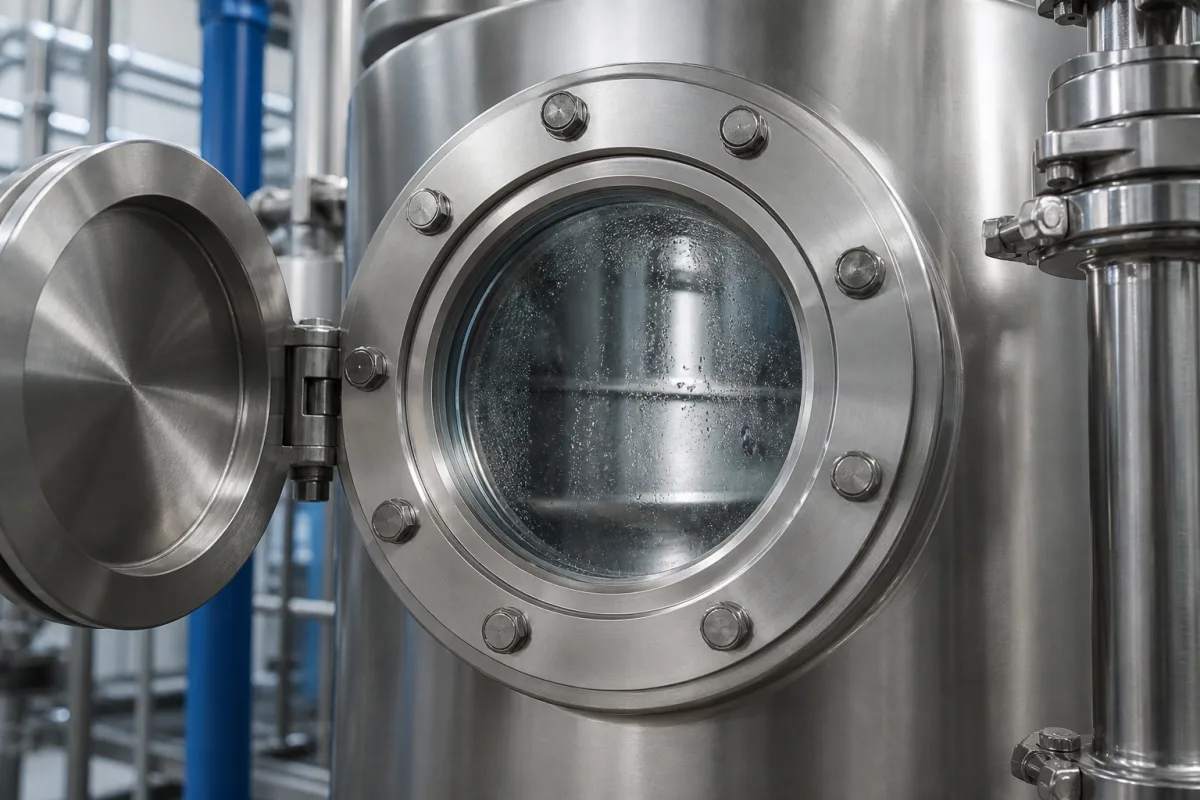
A transparent window or opening in a degassing chamber that allows visual monitoring of the internal process.
Product Specifications

Technical details and manufacturing context for Observation Port

Definition
An observation port is a critical component of a degassing chamber, typically consisting of a transparent, pressure-resistant window (often made of tempered glass or polycarbonate) mounted in a sealed frame. It enables operators to visually inspect the degassing process, monitor material flow, check for foam formation, verify vacuum levels, and ensure proper equipment operation without opening the chamber and disrupting the controlled environment.
Working Principle
The observation port provides a sealed, transparent interface between the interior of the degassing chamber (which may be under vacuum or contain specific atmospheres) and the external environment. It allows light to pass through so operators can see inside while maintaining the chamber's integrity, pressure, and containment of gases or materials.
Common Materials
Tempered glass, Polycarbonate, Stainless steel (frame)
Technical Parameters
  • Diameter or dimensions of the viewable area (mm) Per Request
Components / BOM
  • Viewing window
    Transparent element that allows visual inspection
    Material: Tempered glass or polycarbonate
  • Sealing gasket
    Creates airtight seal between window and chamber
    Material: Silicone or Viton
  • Mounting flange
    Secures the observation port to the chamber wall
    Material: Stainless steel
  • Protective cover
    Optional cover to protect window from damage
    Material: Polycarbonate or metal
Engineering Reasoning
0-2.5 bar differential pressure
3.0 bar differential pressure or 250°C sustained temperature
Design Rationale: Brittle fracture due to thermal stress exceeding borosilicate glass yield strength (35 MPa) at ΔT > 150°C or pressure-induced tensile failure at hoop stress > 28 MPa
Risk Mitigation (FMEA)
Trigger Thermal shock from rapid temperature change exceeding 100°C/min
Mode: Radial crack propagation from edge defects
Strategy: Annealed borosilicate glass with controlled cooling rate of 2°C/min and edge polishing to Ra 0.4 μm
Trigger Chemical attack by hydrofluoric acid vapor concentration > 0.1%
Mode: Surface etching reducing transparency below 70% transmittance
Strategy: Sapphire coating with 50 μm thickness and hermetic silicone gasket rated for pH 1-14

Industry Taxonomies & Aliases

Commonly used trade names and technical identifiers for Observation Port.

Applied To / Applications

This component is essential for the following industrial systems and equipment:

Industrial Ecosystem & Supply Chain DNA

Complementary Systems
Downstream Applications
Specialized Tooling

Application Fit & Sizing Matrix

Operational Limits
pressure: Up to 10 bar (vacuum to positive pressure)
other spec: Slurry concentration: Up to 40% solids by weight, Flow rate: N/A (static observation)
temperature: -20°C to 200°C (depending on gasket and window material)
Media Compatibility
✓ Polymer slurries (e.g., PVC, polyethylene) ✓ Aqueous chemical solutions (pH 2-12) ✓ Food-grade media (e.g., dairy, beverage processing)
Unsuitable: Hydrofluoric acid or highly abrasive slurries with hardness >7 Mohs
Sizing Data Required
  • Chamber diameter/port opening size (mm)
  • Required field of view/observation angle (degrees)
  • Window thickness based on pressure rating (mm)

Reliability & Engineering Risk Analysis

Failure Mode & Root Cause
Corrosion and pitting
Cause: Chemical attack from process fluids, moisture ingress, or incompatible material selection leading to localized material degradation and loss of structural integrity.
Seal or gasket failure
Cause: Thermal cycling, over-torquing during installation, material aging, or chemical incompatibility causing leaks, contamination, or loss of pressure containment.
Maintenance Indicators
  • Visible leaks, weeping, or moisture around the observation port seal or body
  • Hissing or whistling audible sounds indicating pressure loss or seal compromise
Engineering Tips
  • Implement regular visual inspections and non-destructive testing (e.g., ultrasonic thickness gauging) to monitor wall thickness and detect early corrosion or wear
  • Use proper torque specifications and compatible sealing materials during installation/replacement, and consider protective coatings or material upgrades for harsh environments

Compliance & Manufacturing Standards

Reference Standards
ISO 4021:1992 (Pressure-sensitive leak detection) ANSI/ASME B16.5 (Pipe flanges and flanged fittings) DIN 25413 (Flanges for observation windows in radiation protection)
Manufacturing Precision
  • Window flatness: 0.05mm across visible area
  • Mounting flange perpendicularity: +/-0.1° relative to viewing axis
Quality Inspection
  • Pressure integrity test (hydrostatic/pneumatic)
  • Visual inspection for clarity and surface defects per ASTM F2156

Factories Producing Observation Port

Verified manufacturers with capability to produce this product in China

✓ 95% Supplier Capability Match Found

P Procurement Specialist from Brazil Jan 20, 2026
★★★★★
"Found 41+ suppliers for Observation Port on CNFX, but this spec remains the most cost-effective."
Technical Specifications Verified
T Technical Director from Canada Jan 17, 2026
★★★★★
"The technical documentation for this Observation Port is very thorough, especially regarding technical reliability."
Technical Specifications Verified
P Project Engineer from United States Jan 14, 2026
★★★★★
"Reliable performance in harsh Chemical Manufacturing environments. No issues with the Observation Port so far."
Technical Specifications Verified
Verification Protocol

“Feedback is collected from verified sourcing managers during RFQ (Request for Quote) and factory evaluation processes on CNFX. These reports represent historical performance data and technical audit summaries from our B2B manufacturing network.”

17 sourcing managers are analyzing this specification now. Last inquiry for Observation Port from Germany (1h ago).

Supply Chain Compatible Machinery & Devices

Automated Batch Crystallization System

Automated system for controlled crystallization of chemical compounds in batch processes.

Explore Specs →
Automated pH Monitoring and Dosing System

Automated system for continuous pH monitoring and chemical dosing in process streams.

Explore Specs →
Automated Powder Dispensing and Blending System

Automated system for precise dispensing and homogeneous blending of powdered chemicals.

Explore Specs →
Automated Solvent Recovery and Purification System

Automated system for recovering and purifying industrial solvents.

Explore Specs →

Frequently Asked Questions

What materials are best for observation ports in corrosive chemical environments?

For corrosive environments, tempered glass offers excellent chemical resistance, while polycarbonate provides impact resistance. Both are housed in stainless steel frames for durability and corrosion protection.

How do observation ports maintain safety during degassing operations?

Observation ports feature sealed gaskets and protective covers to prevent leaks and contain pressure, while allowing visual monitoring without direct exposure to hazardous degassing byproducts.

What maintenance is required for degassing chamber observation ports?

Regular inspection of sealing gaskets for wear, cleaning of viewing surfaces to maintain clarity, and checking mounting flange integrity to ensure proper sealing and safety compliance.

Can I contact factories directly on CNFX?

CNFX is an open directory, not a transaction platform. Each factory profile provides direct contact information and production details to help you initiate direct inquiries with Chinese suppliers.

Get Quote for Observation Port

Request technical pricing, lead times, or customized specifications for Observation Port directly from verified manufacturing units.

Your business information is encrypted and only shared with verified Observation Port suppliers.

Thank you! Your message has been sent. We'll respond within 1–3 business days.

Need to Manufacture Observation Port?

Connect with verified factories specializing in this product category

Add Your Factory Contact Us
Previous Product
Neutralization Reactor
Next Product
Operator Interface Panel