Editorial Technical Reference

Precision Metering Pump Module

This page explains how Precision Metering Pump Module is classified within Chemical Manufacturing. Technical values and manufacturer relationships are research references; confirm the current specification and supplier evidence for each order.

Technical Definition & Core Assembly

A precision fluid delivery component for controlled reagent addition in continuous flow chemical synthesis.

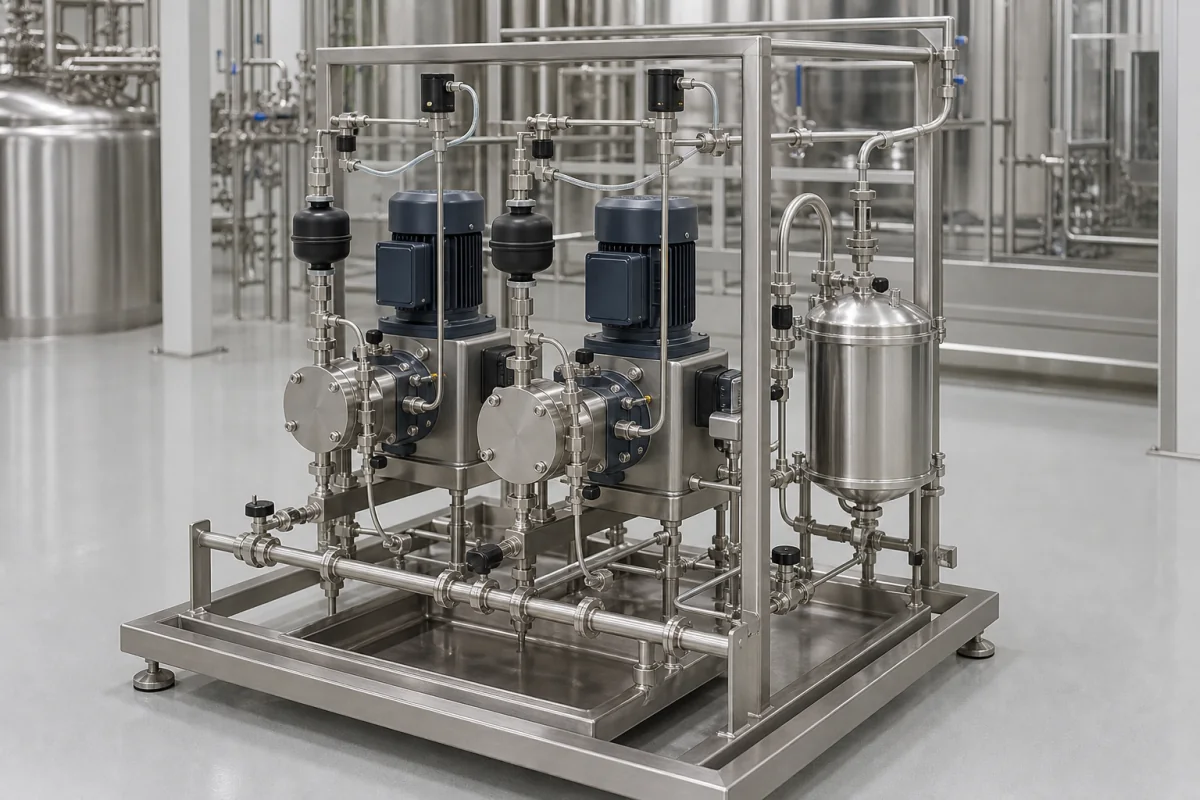
Representative product image. Confirm appearance and specifications with the manufacturer.

Product Specifications

Technical details and manufacturing context for Precision Metering Pump Module

Definition
The Precision Metering Pump Module is a component-level unit designed for use within a Continuous Flow Chemical Synthesis System. Its primary function is to accurately and consistently meter precise volumes of liquid reagents into the continuous flow stream, ensuring controlled reaction stoichiometry, repeatability, and process stability. The module delivers fluids at defined flow rates with high accuracy, making it suitable for applications where precise reagent addition is critical.

The module operates on a positive displacement principle, typically employing a syringe, diaphragm, or peristaltic pump mechanism. A precision stepper or servo motor drives the mechanism, and a control system regulates the motor based on set flow rate parameters. This translates rotational or linear motion into precise volumetric displacement of fluid from a reservoir into the main flow path.

Key parameters include a flow rate range of 0.1–100 mL/min (adjustable via stroke length and frequency), accuracy of ±0.5% of setpoint under steady conditions, and repeatability of ±0.25% under constant operating conditions. The operating pressure range is 1.0–1.6 MPa, with a maximum differential pressure of 0.8 MPa. Operating temperature ranges from -10 to 80 °C, and ambient humidity should be ≤85% RH (non-condensing). Power supply is 24 V DC (±10%), with optional 110/230 V AC adapter, and power consumption is ≤15 W at max stroke and frequency. Ingress protection is rated IP54–IP65 (per IEC 60529), and weight ranges from 2.5 to 3.5 kg depending on configuration.

Wetted materials include Stainless Steel (316L), PTFE (Teflon), Ceramic, Sapphire, and FKM/Viton Elastomer, with PTFE and 316L listed as standard options (per ASTM A240). Other materials are available on request.

For proper selection, users must verify model-specific values, including flow rate, pressure, temperature, and material compatibility, with the legal manufacturer or supplier. The module is not a standalone product but a component intended for integration into a larger system. Verification questions should address the specific chemical compatibility, required flow accuracy, and environmental conditions of the intended application. Maintenance signals include deviations in flow rate accuracy, unusual noise, or leakage, which may indicate wear or seal failure. Failure boundaries include operation outside the specified pressure, temperature, or differential pressure limits, which could cause cavitation.
Working Principle
The module uses a positive displacement mechanism, such as a syringe, diaphragm, or peristaltic pump, driven by a precision stepper or servo motor. A control system regulates the motor based on set flow rate parameters, translating rotational or linear motion into precise volumetric displacement of fluid from a reservoir into the main flow path. This ensures accurate and consistent reagent delivery.
Common Materials
Stainless Steel (316L), PTFE (Teflon), Ceramic, Sapphire, FKM/Viton Elastomer
Technical Parameters
ParameterTypical rangeNotes & selection driver
Flow Rate0.1–100 mL/minAdjustable via stroke length and frequency
Accuracy±0.5 %Of setpoint under steady conditions
Repeatability±0.25 %Under constant operating conditions
Max Differential Pressure0.8 MPaHigher pressure may cause cavitation
Operating Temperature-10–80 °CFor media temperature; higher requires cooling
Ambient Humidity≤85 % RHNon-condensing
Power Supply24 ±10% V DCOptional 110/230 V AC with adapter
Power Consumption≤15 WAt max stroke and frequency
Ingress ProtectionIP54–IP65IP65 for washdown environmentsIEC 60529
Wetted MaterialsPTFE, 316LOther materials on requestASTM A240
Weight2.5–3.5 kgDepending on configuration

Ranges are indicative industry figures for RFQ preparation, not a supplier commitment. Confirm every value and standard with the legal manufacturer before ordering.

Components / BOM
  • Pump Head
    The fluid-end assembly that creates the positive displacement and contains the wetted parts.
    Material: Stainless Steel / PTFE / Ceramic
  • Drive Motor
    Provides the precise mechanical motion (linear or rotary) to actuate the pump head.
    Material: Metal Alloys / Electronics
  • Control Electronics
    Interprets user-set parameters and regulates motor speed/position to achieve the desired flow rate.
    Material: PCB, Electronic Components
  • Fluid Reservoir / Inlet
    Holds the reagent supply and provides a sealed interface to the pump head inlet.
    Material: Glass / PTFE / Stainless Steel

Industrial Ecosystem & Supply Chain Structure

Complementary Systems
Downstream Applications
Specialized Tooling

Application Fit & Sizing Matrix

Operational Limits
pressure: 0 to 10 bar
flow rate: 0.1 to 100 mL/min
temperature: -10°C to +80°C
slurry concentration: Up to 20% solids by weight
Media Compatibility
✓ Aqueous solutions ✓ Organic solvents (e.g., DMF, THF) ✓ Corrosive acids (e.g., HCl, H2SO4) with compatible wetted materials
Unsuitable: Highly viscous slurries (>500 cP) or abrasive particle suspensions
Sizing Data Required
  • Required flow rate (mL/min)
  • System pressure (bar)
  • Fluid viscosity (cP)

Reliability & Engineering Risk Analysis

Failure Mode & Root Cause
Diaphragm fatigue cracking
Cause: Cyclic stress from high-pressure pulsation exceeding material endurance limit, often accelerated by chemical incompatibility or temperature extremes.
Check valve seat wear/leakage
Cause: Abrasive particles in fluid causing erosion, or cavitation-induced pitting from improper suction conditions or vapor entrainment.
Maintenance Indicators
  • Audible knocking or irregular pulsation indicating valve malfunction or air ingress
  • Visible fluid leakage at diaphragm housing or valve assembly, especially with pressure drop
Engineering Tips
  • Implement proactive diaphragm replacement based on stroke cycles rather than time, using manufacturer's S-N curve data for the specific material-fluid combination
  • Install dual suction strainers with differential pressure monitoring and automatic backflush to prevent particulate ingress while maintaining flow stability

Indicative industry ranges for design and RFQ preparation. Confirm the exact figures and applicable standard with the manufacturer before specifying.

Compliance & Manufacturing Standards

Applicable Standards
ISO 5199:2016 (Technical specifications for centrifugal pumps) ANSI/HI 7.1-7.5 (Rotodynamic pumps for nomenclature and definitions) DIN EN 809 (Pumps and pump units for liquids - Common safety requirements)

Quoted from the published standard.

Manufacturing Precision
  • Flow rate accuracy: +/- 0.5% of setpoint
  • Dosing volume repeatability: +/- 0.1%
Quality Inspection
  • Hydrostatic pressure test (1.5x maximum working pressure)
  • Flow calibration verification against NIST-traceable standards

Manufacturers of Precision Metering Pump Module

Manufacturer profiles associated with Precision Metering Pump Module.

Sourcing Precision Metering Pump Module from China?
Tell us your specification and target quantity — we will match it against manufacturer records and come back with the factories that fit.
Request manufacturers We manufacture this

Manufacturer listings support early research and capability understanding. They are not certification, ranking, or transaction guarantees.

Technical documentation
Request current drawings, revision history, and a signed specification sheet.
Manufacturing capability
Verify equipment lists, process limits, capacity, and representative production evidence.
Inspection readiness
Confirm test methods, calibrated equipment, sampling plans, and traceable reports.
Supplier transparency
Check the legal entity, factory address, ownership, certifications, and direct contacts.

CNFX does not score or rank suppliers. Buyers must verify all claims and documents with the legal manufacturer before ordering.

Supply Chain Compatible Machinery & Devices

Continuous Flow Reactor System

A modular, automated chemical processing system designed for continuous flow synthesis of chemical products.

Explore Specs →
Automated Batch Crystallization System

Automated system for controlled crystallization of chemical compounds in batch processes.

Explore Specs →
Automated pH Monitoring and Dosing System

Automated system for continuous pH monitoring and chemical dosing in process streams.

Explore Specs →
Automated Powder Dispensing and Blending System

Automated system for precise dispensing and homogeneous blending of powdered chemicals.

Explore Specs →

Frequently Asked Questions

What is the flow rate range of this module?

The flow rate range is 0.1–100 mL/min, adjustable via stroke length and frequency. Confirm the exact range for your specific model with the manufacturer.

What materials are wetted?

Wetted materials include Stainless Steel (316L), PTFE, Ceramic, Sapphire, and FKM/Viton Elastomer. Standard options are PTFE and 316L, but other materials may be available on request.

What is the operating pressure limit?

The operating pressure range is 1.0–1.6 MPa. Above 1.6 MPa is not specified. Also, the maximum differential pressure is 0.8 MPa.

What power supply is required?

The module requires 24 V DC (±10%) power, with an optional 110/230 V AC adapter. Power consumption is ≤15 W at maximum stroke and frequency.

Data Basis

Editorial classification, named public sources where available, and source-reviewed manufacturer records.

Preliminary Technical Classification
This page supports structured research, RFQ preparation, and supplier evaluation. It does not replace buyer-led supplier qualification, standards review, or technical approval.
Buyer enquiry

Request manufacturing insight for Precision Metering Pump Module

Ask for use case, specification boundaries, supplier type, and RFQ preparation information for this product.

Where it goes
Straight to the CNFX editorial desk, and to the manufacturer if this product is linked to a claimed profile. Nothing is broadcast to a supplier list.
Your details stay here
We do not sell or rent enquiry data, and we do not add you to a mailing list. Used only to answer this request.
No commission, no middleman
CNFX is a directory. We take no cut of any order and never negotiate on a supplier's behalf.
What we don't claim
A listing is not an endorsement. Qualify every supplier and verify every figure yourself before ordering.

Your business information is used only to process this request.

Thank you! Your message has been sent. We'll respond within 1–3 business days.
Sorry, we couldn't send your message. Please try again, or email us at contact@cnfx.com.

Need to Manufacture Precision Metering Pump Module?

Compare manufacturer profiles with relevant product and process capability.

Previous Product
Precision Liquid Fertilizer Injection System
Next Product
Pressure Vessel Shell
Get QuotesChat