Industry-Verified Manufacturing Data (2026)

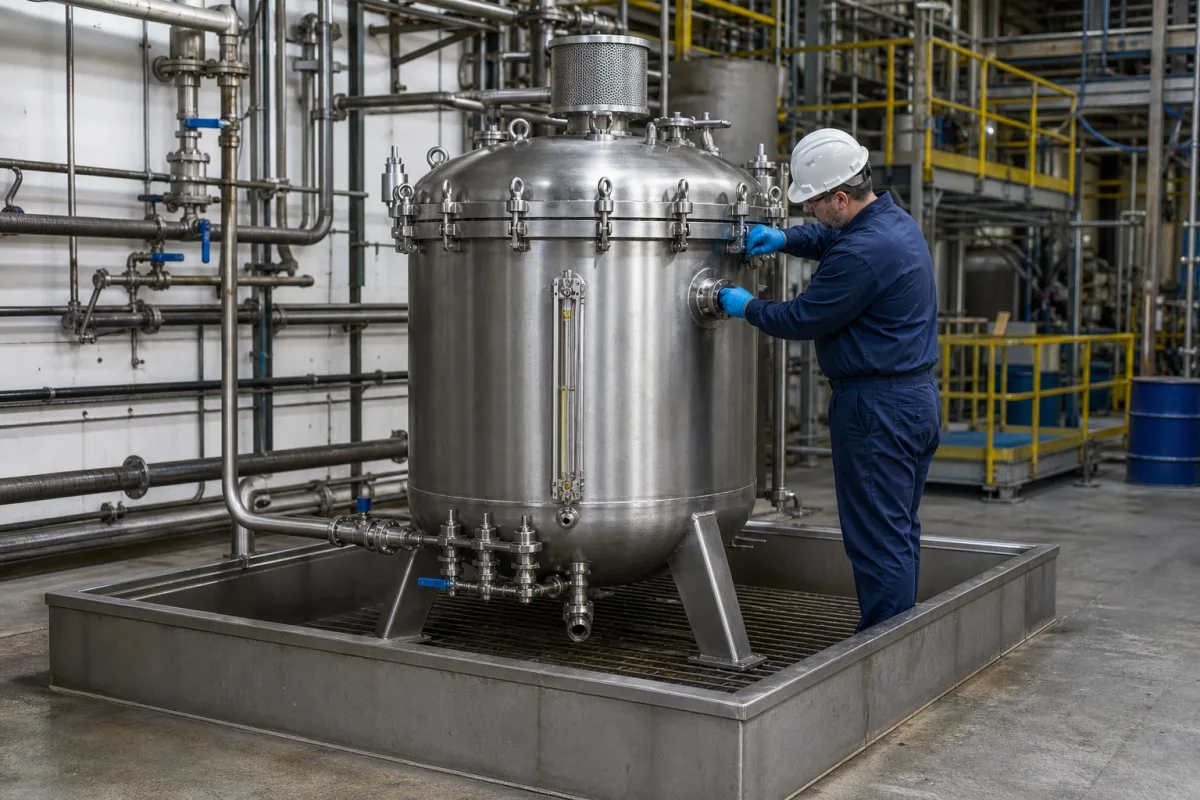
Waste Collection Vessel

Based on aggregated insights from multiple verified factory profiles within the CNFX directory, the standard Waste Collection Vessel used in the Chemical Manufacturing sector typically supports operational capacities ranging from standard industrial configurations to heavy-duty production requirements.

Technical Definition & Core Assembly

A canonical Waste Collection Vessel is characterized by the integration of Vessel Body and Inlet Port with Valve. In industrial production environments, manufacturers listed on CNFX commonly emphasize Stainless Steel (e.g., 316L) construction to support stable, high-cycle operation across diverse manufacturing scenarios.

A container designed to safely collect and store waste solvents and by-products from the Automated Solvent Recovery and Purification System.
Product Specifications

Technical details and manufacturing context for Waste Collection Vessel

Definition
The Waste Collection Vessel is an essential safety and containment component within the Automated Solvent Recovery and Purification System. It serves as the final repository for waste solvents, residues, and impurities that are separated and removed during the recovery and purification processes. Its primary function is to ensure the safe, contained, and compliant storage of hazardous or non-recoverable liquid waste before proper disposal or further treatment, preventing environmental contamination and facilitating operational safety.
Working Principle
The vessel operates on a simple containment principle. It is connected to the system's waste discharge lines. As the purification process separates impurities or spent solvents, these waste liquids are directed via gravity or pump pressure into the sealed vessel. The vessel is designed to be chemically resistant and may include features like level sensors, pressure relief valves, and secure fittings to safely contain the collected waste until it is emptied.
Common Materials
Stainless Steel (e.g., 316L), High-Density Polyethylene (HDPE), PTFE (for seals/gaskets)
Technical Parameters
  • The total volumetric capacity of the Waste Collection Vessel. (Liters) Customizable
Components / BOM
  • Vessel Body
    The main containment structure for the waste liquid.
    Material: Stainless Steel or HDPE
  • Inlet Port with Valve
    Connection point for the waste feed line from the purification system, includes a valve for flow control.
    Material: Stainless Steel with PTFE seals
  • Drain/Outlet Port with Valve
    Connection point for emptying the collected waste, includes a valve.
    Material: Stainless Steel with PTFE seals
  • Pressure Relief Valve
    A safety device that opens to vent excess pressure, preventing vessel rupture.
    Material: Stainless Steel
  • Level Sensor
    Monitors the fill level of the vessel to prevent overfilling and trigger alarms or system shutdowns.
    Material: Sensor: Various (e.g., capacitive, ultrasonic); Housing: Stainless Steel
Engineering Reasoning
0.1-2.0 bar internal pressure, -20°C to 80°C temperature
3.5 bar internal pressure (burst pressure), 120°C temperature (polymer softening point)
Design Rationale: Polymer creep deformation at elevated temperatures combined with hoop stress exceeding yield strength (σ_θ = P·r/t > σ_yield)
Risk Mitigation (FMEA)
Trigger Solvent mixture exothermic reaction (ΔH = -150 kJ/mol)
Mode: Thermal runaway leading to vessel overpressure
Strategy: Integrated cooling jacket with PID-controlled glycol circulation (T_setpoint = 25°C ±2°C)
Trigger Chlorinated solvent permeation (Fick's Law diffusion coefficient D = 8.3×10^-12 m²/s)
Mode: Polymer embrittlement and stress corrosion cracking
Strategy: Multilayer construction: HDPE inner liner (2 mm) + PVDF barrier layer (1 mm) + FRP structural shell (5 mm)

Industry Taxonomies & Aliases

Commonly used trade names and technical identifiers for Waste Collection Vessel.

Applied To / Applications

This component is essential for the following industrial systems and equipment:

Industrial Ecosystem & Supply Chain DNA

Complementary Systems
Downstream Applications
Specialized Tooling

Application Fit & Sizing Matrix

Operational Limits
pressure: Atmospheric to 2 bar
flow rate: Up to 50 L/min
temperature: -20°C to 80°C
slurry concentration: Up to 40% solids by weight
Media Compatibility
✓ Waste solvents (acetone, IPA, toluene) ✓ Aqueous by-products with pH 4-10 ✓ Non-reactive chemical mixtures
Unsuitable: Highly corrosive acids (e.g., concentrated sulfuric acid) or strong oxidizers
Sizing Data Required
  • Maximum daily waste volume (L/day)
  • Waste density and viscosity
  • Required safety factor for vapor space

Reliability & Engineering Risk Analysis

Failure Mode & Root Cause
Corrosion and pitting
Cause: Exposure to corrosive waste materials (acids, salts, organic compounds) and moisture, leading to material degradation, especially in seams and welds where protective coatings may be compromised.
Structural fatigue cracking
Cause: Cyclic loading from repeated filling, compaction, and unloading operations, combined with stress concentrations at weld joints, corners, or attachment points, leading to crack initiation and propagation.
Maintenance Indicators
  • Visible leaks or weeping from seams, welds, or valves, indicating material failure or seal degradation.
  • Unusual noises during compaction or unloading, such as grinding, scraping, or knocking, suggesting mechanical wear, loose components, or structural issues.
Engineering Tips
  • Implement a regular inspection and coating maintenance program, focusing on internal surfaces and weld areas, using corrosion-resistant materials or liners suited to the waste stream.
  • Use strain gauges or vibration monitoring at high-stress points to detect early fatigue or structural issues, and schedule downtime for reinforcement or repair before failure occurs.

Compliance & Manufacturing Standards

Reference Standards
ISO 9001:2015 - Quality management systems EN 1501-1:2011 - Refuse collection vehicles and their associated lifting devices ASTM A240/A240M - Standard Specification for Chromium and Chromium-Nickel Stainless Steel Plate, Sheet, and Strip for Pressure Vessels
Manufacturing Precision
  • Wall thickness: +/-0.5mm
  • Weld seam alignment: +/-1.5mm
Quality Inspection
  • Hydrostatic pressure test
  • Visual and dimensional inspection of welds

Factories Producing Waste Collection Vessel

Verified manufacturers with capability to produce this product in China

✓ 98% Supplier Capability Match Found

P Project Engineer from Singapore Jan 09, 2026
★★★★★
"Reliable performance in harsh Chemical Manufacturing environments. No issues with the Waste Collection Vessel so far."
Technical Specifications Verified
S Sourcing Manager from Germany Jan 06, 2026
★★★★★
"Testing the Waste Collection Vessel now; the Capacity (L) results are within 1% of the laboratory datasheet."
Technical Specifications Verified
P Procurement Specialist from Brazil Jan 03, 2026
★★★★★
"Impressive build quality. Especially the Capacity (L) is very stable during long-term operation."
Technical Specifications Verified
Verification Protocol

“Feedback is collected from verified sourcing managers during RFQ (Request for Quote) and factory evaluation processes on CNFX. These reports represent historical performance data and technical audit summaries from our B2B manufacturing network.”

14 sourcing managers are analyzing this specification now. Last inquiry for Waste Collection Vessel from USA (1h ago).

Supply Chain Compatible Machinery & Devices

Continuous Flow Reactor System

Automated chemical synthesis system for continuous production.

Explore Specs →
Modular Distillation Column System

Pre-engineered modular system for continuous separation of chemical mixtures via distillation.

Explore Specs →
Automated Batch Crystallization System

Automated system for controlled crystallization of chemical compounds in batch processes.

Explore Specs →
Automated pH Monitoring and Dosing System

Automated system for continuous pH monitoring and chemical dosing in process streams.

Explore Specs →

Frequently Asked Questions

What materials are suitable for corrosive chemical waste storage?

Our vessels use 316L stainless steel for general corrosion resistance, HDPE for acidic/alkaline wastes, and PTFE seals for maximum chemical compatibility with aggressive solvents.

How does the level sensor prevent overfilling?

The integrated level sensor provides real-time monitoring and can trigger automatic shutoff valves or alarms when reaching safe capacity limits, preventing spills and overpressure situations.

What pressure ratings are available for waste collection vessels?

Vessels are engineered with pressure relief valves and reinforced construction to handle varying working pressures, typically specified in bar units based on your process requirements and waste volatility.

Can I contact factories directly on CNFX?

CNFX is an open directory, not a transaction platform. Each factory profile provides direct contact information and production details to help you initiate direct inquiries with Chinese suppliers.

Get Quote for Waste Collection Vessel

Request technical pricing, lead times, or customized specifications for Waste Collection Vessel directly from verified manufacturing units.

Your business information is encrypted and only shared with verified Waste Collection Vessel suppliers.

Thank you! Your message has been sent. We'll respond within 1–3 business days.

Need to Manufacture Waste Collection Vessel?

Connect with verified factories specializing in this product category

Add Your Factory Contact Us
Previous Product
Vessel/Container
Next Product
Waste Heat Boiler