Editorial Technical Reference

Torque Motor / Solenoid

This page explains how Torque Motor / Solenoid is classified within Machinery and Equipment Manufacturing. Technical values and manufacturer relationships are research references; confirm the current specification and supplier evidence for each order.

Technical Definition & Core Assembly

Electromechanical actuator converting electrical signals into precise mechanical torque/force for valve positioning.
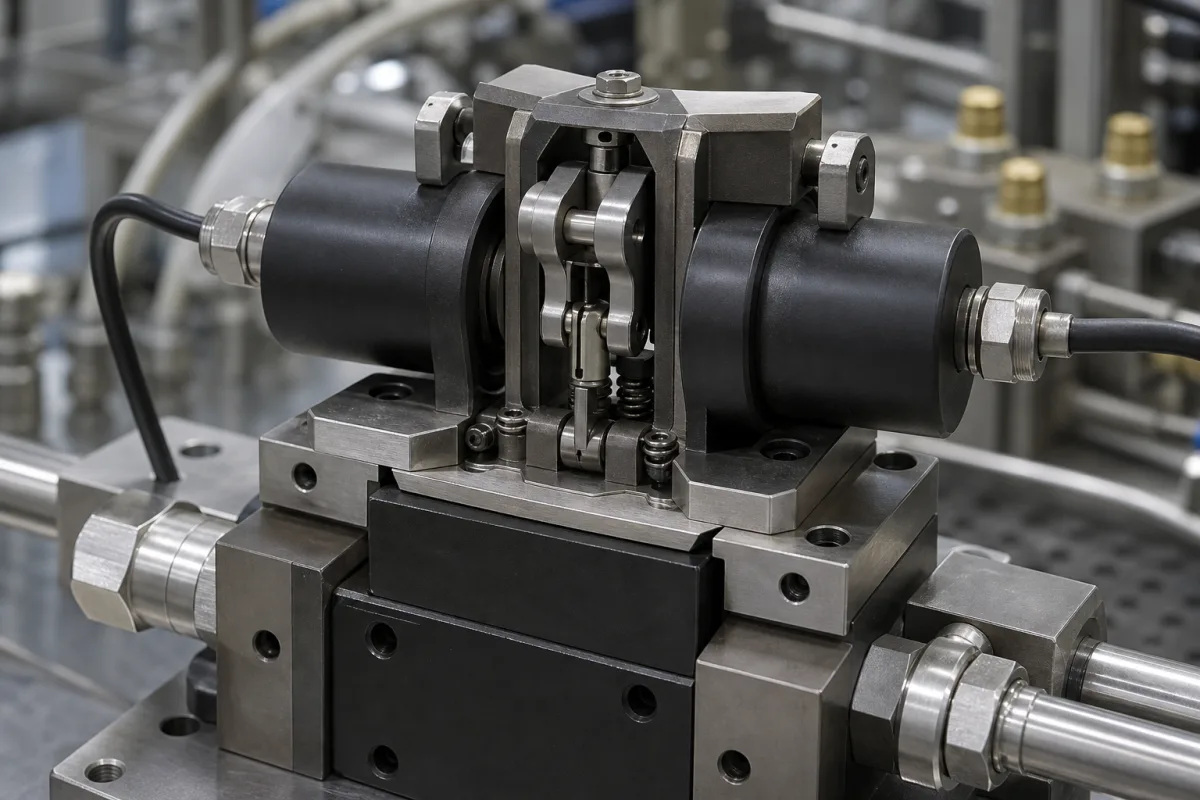
Representative product image. Confirm appearance and specifications with the manufacturer.

Product Specifications

Technical details and manufacturing context for Torque Motor / Solenoid

Definition
This component is a critical actuation element within servo control valves. It receives electrical control signals and generates precise rotational torque (torque motor) or linear force (solenoid) to position the valve spool or pilot stage, enabling accurate flow control in hydraulic or pneumatic systems. The device operates on electromagnetic principles: when electrical current flows through the coils, it creates magnetic fields that interact with permanent magnets or ferromagnetic cores, producing controlled mechanical motion proportional to the input current. Typical materials include copper windings, electrical steel laminations, permanent magnets (neodymium or samarium-cobalt), and a stainless steel housing. Key parameters to consider when selecting this component include rated torque (15–60 N·m), rated voltage (24 V DC ±10%), maximum current (1.2–2.5 A), response time (0.1–0.5 s to 90% of rated torque), position accuracy (±0.05% of full stroke), operating temperature (-40 to 85 °C), protection class (IP54–IP65 per IEC 60529), insulation class (F per IEC 60085), duty cycle (25–50% at rated torque), and weight (3.5–8.0 kg). These values are reference ranges and must be verified for the specific model and application. The component is intended for use in industrial machinery and equipment manufacturing, particularly in valve actuation systems. It is not a standalone product but a part that requires integration with a control system and valve assembly. For proper selection, the user must consider the valve's breakaway and running torque, as well as the required response time and accuracy. The actuator's performance is influenced by the electrical supply, ambient conditions, and the mechanical load. Maintenance signals may include erratic positioning, increased current draw, or reduced torque output, which could indicate coil degradation, magnet wear, or mechanical binding. Failure boundaries include operation beyond rated temperature, voltage, or duty cycle, which can lead to insulation breakdown or permanent magnet demagnetization. Always verify model-specific values and standards with the legal manufacturer or supplier before procurement.
Working Principle
The actuator operates on electromagnetic principles. When electrical current flows through the coils, it generates a magnetic field that interacts with permanent magnets or a ferromagnetic core. This interaction produces a mechanical force or torque that is proportional to the input current. The direction and magnitude of the motion are controlled by the polarity and amplitude of the current. This allows precise positioning of the valve spool or pilot stage, enabling accurate flow control in hydraulic or pneumatic systems.
Common Materials
Copper windings, Electrical steel laminations, Permanent magnets (neodymium/samarium-cobalt), Stainless steel housing
Technical Parameters
ParameterTypical rangeNotes & selection driver
Rated Torque15–60 N·mSelect based on valve breakaway and running torque.
Rated Voltage24 ±10% V DCOther voltages available on request.
Max Current1.2–2.5 AAt rated torque and locked rotor.
Response Time0.1–0.5 sFrom signal to 90% of rated torque.
Position Accuracy±0.05 %Of full stroke under stable conditions.
Operating Temperature-40–85 °CFor actuator body; electronics may be limited.
Protection ClassIP54–IP65Higher IP available with sealing options.IEC 60529
Insulation ClassFClass H available for high-temperature.IEC 60085
Duty Cycle25–50 %At rated torque; continuous duty optional.
Weight3.5–8.0 kgDepends on torque rating and options.

Ranges are indicative industry figures for RFQ preparation, not a supplier commitment. Confirm every value and standard with the legal manufacturer before ordering.

Components / BOM
  • Coil assembly
    Generates electromagnetic field when energized with current
    Material: Copper wire with insulation
  • Armature Part
    Ferromagnetic component that moves in response to magnetic field
    Material: Electrical steel
  • Permanent magnets Part
    Provide bias magnetic field for linear torque-current relationship
    Material: Rare-earth magnets
  • Housing Part
    Protects internal components and provides mounting interface
    Material: Stainless steel or aluminum

Applied To / Applications

This component is essential for the following industrial systems and equipment:

Industrial Ecosystem & Supply Chain Structure

Complementary Systems
Downstream Applications
Specialized Tooling

Application Fit & Sizing Matrix

Operational Limits
pressure: Up to 6000 psi (414 bar) depending on housing design
other spec: Response time: <50 ms, Duty cycle: 100% continuous, IP rating: IP67/IP69K available
temperature: -40°C to +150°C (standard), up to +200°C with special materials
Media Compatibility
✓ Hydraulic fluids (mineral oil, HFD, HFA) ✓ Process gases (air, nitrogen, natural gas) ✓ Clean process liquids (water, glycol, light oils)
Unsuitable: Highly abrasive slurries with >20% solids concentration
Sizing Data Required
  • Required torque/force (Nm or N)
  • Operating voltage and current limits (V DC/AC, A)
  • Valve stem travel/stroke length (mm)

Reliability & Engineering Risk Analysis

Failure Mode & Root Cause
Coil overheating and insulation breakdown
Cause: Excessive current due to voltage spikes, prolonged duty cycles beyond design limits, or poor ventilation causing thermal degradation of insulation materials
Mechanical binding or sticking
Cause: Contamination ingress (dust, moisture, metal particles), misalignment during installation, or wear of moving components leading to increased friction and seizure
Maintenance Indicators
  • Audible buzzing, humming, or chattering noises during operation indicating electrical arcing or mechanical interference
  • Visible discoloration, burning smell, or excessive heat from the coil housing suggesting thermal overload
Engineering Tips
  • Implement regular cleaning and inspection schedules to prevent contamination buildup, using appropriate seals or enclosures for harsh environments
  • Install surge protection devices and ensure proper voltage regulation to prevent electrical stress, while verifying duty cycles match manufacturer specifications

Indicative industry ranges for design and RFQ preparation. Confirm the exact figures and applicable standard with the manufacturer before specifying.

Compliance & Manufacturing Standards

Applicable Standards
IEC 60529 Degrees of Protection by Enclosures (IP Code) UL 1004 Standard for Electric Motors

Quoted from the published standard.

Manufacturing Precision
  • Bore Diameter: +/-0.01mm
  • Flatness of Mounting Surface: 0.05mm
Quality Inspection
  • Coil Resistance and Insulation Resistance Test
  • Torque Output Verification Test

Manufacturers of Torque Motor / Solenoid

Manufacturer profiles associated with Torque Motor / Solenoid.

Sourcing Torque Motor / Solenoid from China?
Tell us your specification and target quantity — we will match it against manufacturer records and come back with the factories that fit.
Request manufacturers We manufacture this

Manufacturer listings support early research and capability understanding. They are not certification, ranking, or transaction guarantees.

Technical documentation
Request current drawings, revision history, and a signed specification sheet.
Manufacturing capability
Verify equipment lists, process limits, capacity, and representative production evidence.
Inspection readiness
Confirm test methods, calibrated equipment, sampling plans, and traceable reports.
Supplier transparency
Check the legal entity, factory address, ownership, certifications, and direct contacts.

CNFX does not score or rank suppliers. Buyers must verify all claims and documents with the legal manufacturer before ordering.

Supply Chain Compatible Machinery & Devices

Hydraulic Press

Industrial machine using hydraulic pressure to compress, form, or assemble materials

Explore Specs →
Heavy-Duty CNC Plasma Cutting Machine

The Heavy-Duty CNC Plasma Cutting Machine is a standalone industrial device designed for cutting conductive metals such as steel, stainless steel, aluminum, and copper alloys.

Explore Specs →
Automated Powder Coating System

Integrated industrial system for applying dry powder coatings to metal substrates.

Explore Specs →
Centrifugal Pump Impeller

The centrifugal pump impeller is a critical rotating component that converts mechanical energy from the motor into kinetic energy in fluid systems.

Explore Specs →

Frequently Asked Questions

What is the difference between a torque motor and a solenoid?

A torque motor produces rotational torque, while a solenoid produces linear force. Both are used to position the valve spool or pilot stage in servo control valves, but the mechanical output differs.

How do I select the correct rated torque for my application?

Select the rated torque based on the valve's breakaway and running torque requirements. The actuator must provide sufficient torque to overcome friction and flow forces. Refer to the valve manufacturer's specifications and verify with the actuator supplier.

What are the typical operating temperature limits?

The operating temperature range is -40 to 85 °C for the actuator body. Electronics may have a more limited range. Always verify the actual limits for the specific model and application.

What does protection class IP54–IP65 mean?

IP54 and IP65 are ingress protection ratings per IEC 60529. IP54 protects against dust and water splashes, while IP65 provides dust-tight and water jet protection. Higher ratings may be available with sealing options.

Data Basis

Editorial classification, named public sources where available, and source-reviewed manufacturer records.

Preliminary Technical Classification
This page supports structured research, RFQ preparation, and supplier evaluation. It does not replace buyer-led supplier qualification, standards review, or technical approval.
Buyer enquiry

Request manufacturing insight for Torque Motor / Solenoid

Ask for use case, specification boundaries, supplier type, and RFQ preparation information for this product.

Where it goes
Straight to the CNFX editorial desk, and to the manufacturer if this product is linked to a claimed profile. Nothing is broadcast to a supplier list.
Your details stay here
We do not sell or rent enquiry data, and we do not add you to a mailing list. Used only to answer this request.
No commission, no middleman
CNFX is a directory. We take no cut of any order and never negotiate on a supplier's behalf.
What we don't claim
A listing is not an endorsement. Qualify every supplier and verify every figure yourself before ordering.

Your business information is used only to process this request.

Thank you! Your message has been sent. We'll respond within 1–3 business days.
Sorry, we couldn't send your message. Please try again, or email us at contact@cnfx.com.

Need to Manufacture Torque Motor / Solenoid?

Compare manufacturer profiles with relevant product and process capability.

Previous Product
Z-axis Ram/Spindle
Last Product
Get QuotesChat