Industry-Verified Manufacturing Data (2026)

Connector Interface

Based on aggregated insights from multiple verified factory profiles within the CNFX directory, the standard Connector Interface used in the Computer, Electronic and Optical Product Manufacturing sector typically supports operational capacities ranging from standard industrial configurations to heavy-duty production requirements.

Technical Definition & Core Assembly

A canonical Connector Interface is characterized by the integration of Housing and Contact Pins/Sockets. In industrial production environments, manufacturers listed on CNFX commonly emphasize Thermoplastic (e.g., PBT, PA) construction to support stable, high-cycle operation across diverse manufacturing scenarios.

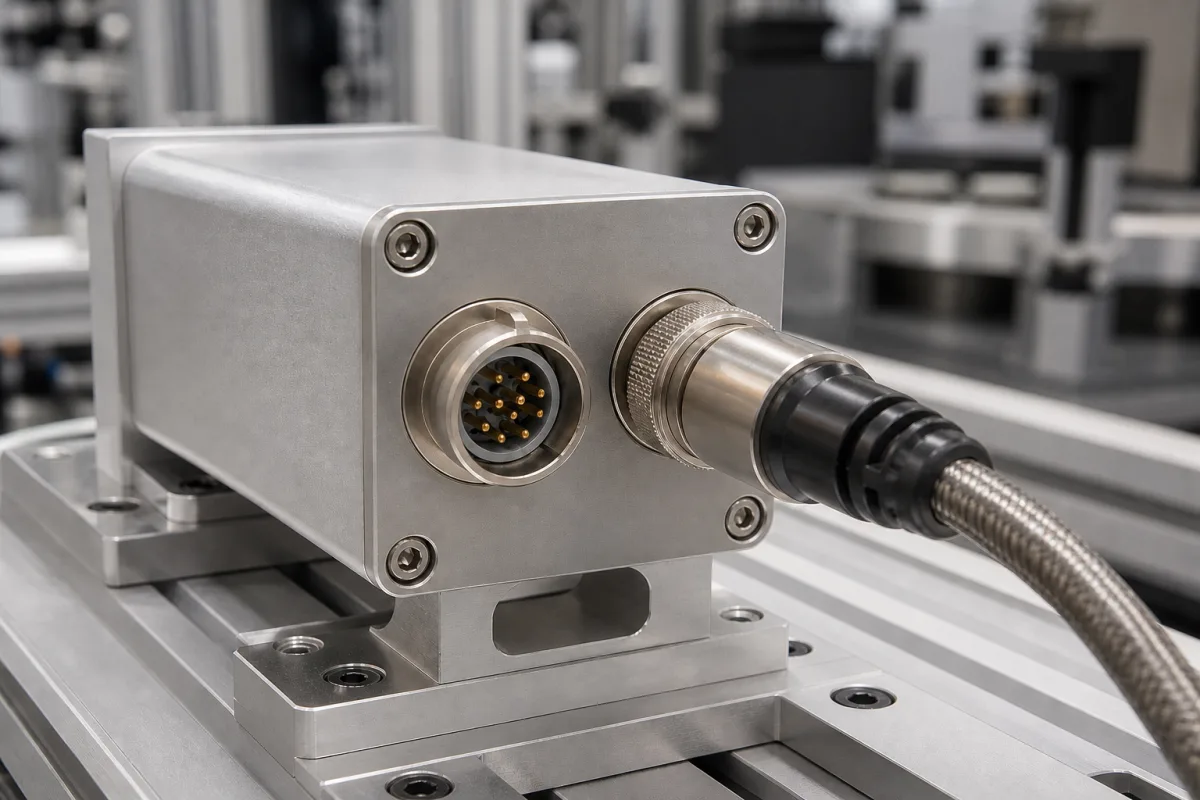
The standardized electrical and mechanical interface that enables the connection of a magnetic field sensor to external systems, cables, or other devices.
Product Specifications

Technical details and manufacturing context for Connector Interface

Definition
Within magnetic field sensors, the connector interface serves as the critical physical and electrical bridge between the sensor's internal circuitry and the external world. It provides secure mechanical attachment, ensures proper electrical contact for signal transmission and power supply, and often incorporates features for environmental protection (e.g., sealing against dust/moisture) and polarization to prevent incorrect mating. Its design directly impacts the sensor's reliability, ease of installation, and compatibility with industry-standard cabling and control systems.
Working Principle
The interface functions by providing a set of aligned conductive pins (male) and sockets (female) housed within a protective shell. When mated with a compatible plug, the pins establish electrical continuity for sensor output signals (e.g., analog voltage, digital PWM, or bus communication like I2C/SPI), power input, and sometimes ground or shielding connections. Mechanical latches, screws, or bayonet locks ensure a secure, vibration-resistant connection. The housing geometry and keying features enforce correct orientation and prevent mismating.
Common Materials
Thermoplastic (e.g., PBT, PA), Phosphor Bronze or Brass (contacts), Silicone (seals/gaskets)
Technical Parameters
  • Overall dimensions and pin spacing (pitch) critical for mechanical compatibility. (mm) Standard Spec
Components / BOM
  • Housing
    Provides structural integrity, environmental sealing, and keying/guidance for mating.
    Material: Thermoplastic (e.g., PBT, PA)
  • Contact Pins/Sockets
    Establish the electrical connection; typically gold-plated for low resistance and corrosion resistance.
    Material: Phosphor Bronze or Brass
  • Seal/Gasket
    Provides ingress protection (dust/water) at the mated interface.
    Material: Silicone or Rubber
  • Locking Mechanism
    Secures the mated connection against vibration and accidental disconnection (e.g., latch, screw, bayonet).
    Material: Thermoplastic or Metal
Engineering Reasoning
1-1000 V DC, -40°C to +125°C, 5000 mating cycles
Dielectric breakdown at 1200 V DC, contact resistance exceeding 50 mΩ, insertion force exceeding 80 N
Design Rationale: Dielectric breakdown due to electric field exceeding 3×10⁶ V/m in air gap, contact fretting corrosion at >5 μm displacement amplitude, plastic deformation of latch mechanism at >80 N force
Risk Mitigation (FMEA)
Trigger Electrochemical migration due to 85% RH at 85°C with 5 V bias
Mode: Short circuit between adjacent pins with resistance <1 Ω
Strategy: Conformal coating with 0.1 mm parylene-C layer, pin spacing >2.54 mm
Trigger Vibration at 200 Hz with 5 g acceleration causing contact resonance
Mode: Intermittent connection with contact resistance fluctuation >20 mΩ
Strategy: Spring-loaded dual-beam contacts with 1.5 N normal force, resonance damping with silicone gel fill

Industry Taxonomies & Aliases

Commonly used trade names and technical identifiers for Connector Interface.

Applied To / Applications

This component is essential for the following industrial systems and equipment:

Industrial Ecosystem & Supply Chain DNA

Complementary Systems
Downstream Applications
Specialized Tooling

Application Fit & Sizing Matrix

Operational Limits
pressure: 0 to 10 bar
other spec: IP67 ingress protection rating
temperature: -40°C to +125°C
Media Compatibility
✓ Industrial automation control systems ✓ Automotive sensor networks ✓ Process instrumentation cabling
Unsuitable: High-vibration environments without strain relief
Sizing Data Required
  • Number of electrical contacts/pins required
  • Cable diameter and connector mating type
  • Environmental sealing/IP rating needed

Reliability & Engineering Risk Analysis

Failure Mode & Root Cause
Contact fretting corrosion
Cause: Micro-motion between mated connector halves due to vibration or thermal cycling, leading to oxidation and increased electrical resistance.
Pin/socket deformation or misalignment
Cause: Improper mating force, repeated insertion/removal cycles, or mechanical shock causing bent pins, worn sockets, or misaligned connections.
Maintenance Indicators
  • Intermittent signal loss or electrical noise (audible crackling or visual flickering in connected systems)
  • Visible signs of overheating: discoloration, melting, or charring of connector housing or surrounding insulation
Engineering Tips
  • Apply appropriate contact lubricant (e.g., dielectric grease) to reduce friction, prevent oxidation, and maintain stable electrical contact under vibration.
  • Implement proper strain relief and secure cable routing to minimize mechanical stress on the connector interface during operation and maintenance.

Compliance & Manufacturing Standards

Reference Standards
ISO 9001:2015 Quality Management Systems ANSI/ESD S20.20 Electrostatic Discharge Control DIN EN 61984 Connectors - Safety requirements and tests
Manufacturing Precision
  • Pin alignment: +/-0.05mm
  • Contact resistance: <10 milliohms
Quality Inspection
  • Insertion/Withdrawal Force Test
  • Salt Spray Corrosion Test

Factories Producing Connector Interface

Verified manufacturers with capability to produce this product in China

✓ 97% Supplier Capability Match Found

P Project Engineer from Canada Jan 05, 2026
★★★★★
"Great transparency on the Connector Interface components. Essential for our Computer, Electronic and Optical Product Manufacturing supply chain."
Technical Specifications Verified
S Sourcing Manager from United States Jan 02, 2026
★★★★★
"The Connector Interface we sourced perfectly fits our Computer, Electronic and Optical Product Manufacturing production line requirements."
Technical Specifications Verified
P Procurement Specialist from United Arab Emirates Dec 30, 2025
★★★★★
"Found 35+ suppliers for Connector Interface on CNFX, but this spec remains the most cost-effective."
Technical Specifications Verified
Verification Protocol

“Feedback is collected from verified sourcing managers during RFQ (Request for Quote) and factory evaluation processes on CNFX. These reports represent historical performance data and technical audit summaries from our B2B manufacturing network.”

18 sourcing managers are analyzing this specification now. Last inquiry for Connector Interface from Brazil (41m ago).

Supply Chain Compatible Machinery & Devices

Modular Industrial Edge Computing Device

Rugged computing platform for industrial data processing at the network edge

Explore Specs →
Industrial Smart Camera Module

Embedded vision system for industrial automation and quality inspection.

Explore Specs →
Industrial Wireless Power Transfer Module

Wireless power transfer module for industrial equipment applications

Explore Specs →
Industrial Smart Sensor Module

Modular industrial sensor with embedded processing and wireless connectivity

Explore Specs →

Frequently Asked Questions

What materials are used in this connector interface for durability?

This connector interface uses thermoplastic (PBT or PA) for the housing, phosphor bronze or brass for contacts, and silicone for seals/gaskets, ensuring chemical resistance, reliable conductivity, and environmental sealing.

How does this interface ensure secure connections in electronic systems?

It features a locking mechanism and silicone seals/gaskets to prevent accidental disconnection and protect against moisture, dust, and vibration in computer and optical product manufacturing environments.

What are the key components in the BOM for this connector interface?

The bill of materials includes the housing, contact pins/sockets, seal/gasket, and locking mechanism, designed for easy assembly and compatibility with magnetic field sensors and external systems.

Can I contact factories directly on CNFX?

CNFX is an open directory, not a transaction platform. Each factory profile provides direct contact information and production details to help you initiate direct inquiries with Chinese suppliers.

Get Quote for Connector Interface

Request technical pricing, lead times, or customized specifications for Connector Interface directly from verified manufacturing units.

Your business information is encrypted and only shared with verified Connector Interface suppliers.

Thank you! Your message has been sent. We'll respond within 1–3 business days.

Need to Manufacture Connector Interface?

Connect with verified factories specializing in this product category

Add Your Factory Contact Us
Previous Product
Connector Assembly
Next Product
Constraint Memory Module