Industry-Verified Manufacturing Data (2026)

Isolation Barrier

Based on aggregated insights from multiple verified factory profiles within the CNFX directory, the standard Isolation Barrier used in the Computer, Electronic and Optical Product Manufacturing sector typically supports operational capacities ranging from standard industrial configurations to heavy-duty production requirements.

Technical Definition & Core Assembly

A canonical Isolation Barrier is characterized by the integration of Dielectric Layer and Isolation Transformer Core. In industrial production environments, manufacturers listed on CNFX commonly emphasize Dielectric Insulating Material construction to support stable, high-cycle operation across diverse manufacturing scenarios.

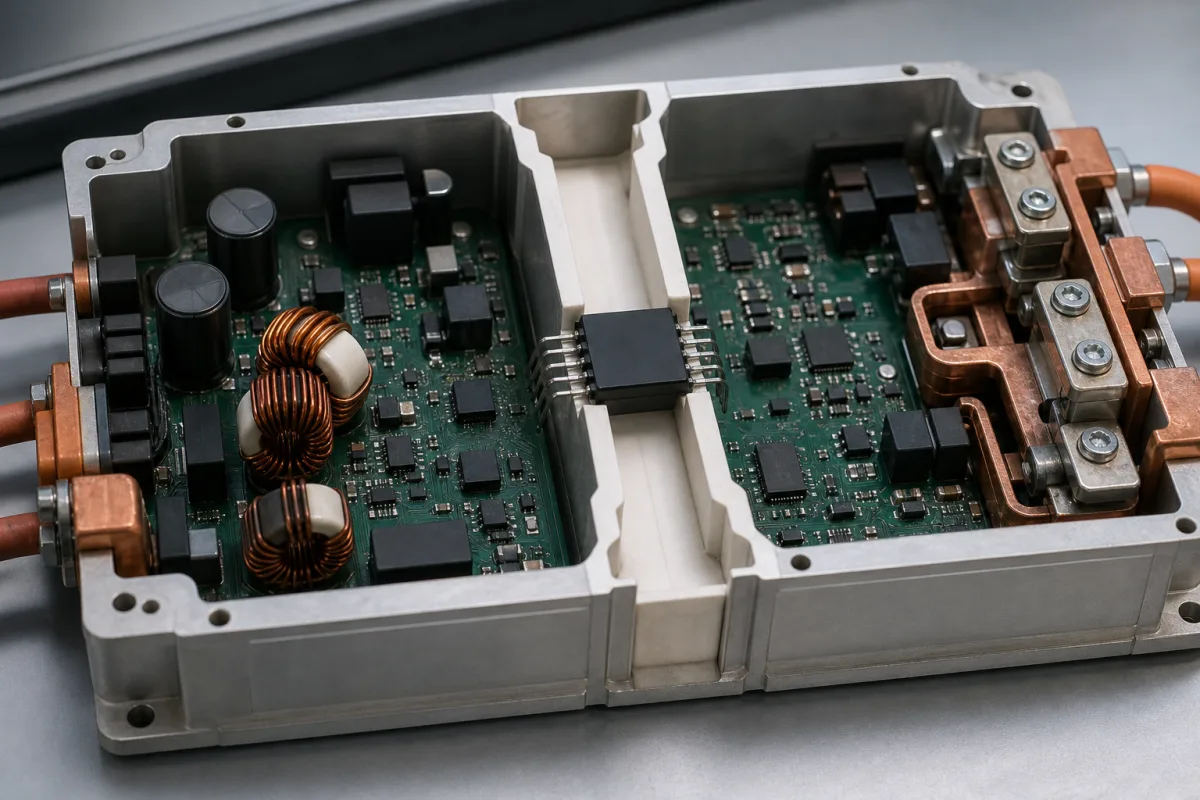
A protective component in I/O interface circuitry that electrically isolates sensitive electronic components from external signals and noise.
Product Specifications

Technical details and manufacturing context for Isolation Barrier

Definition
An isolation barrier is a critical safety and protection component within Input/Output (I/O) Interface Circuitry that creates electrical separation between different circuit sections. It prevents unwanted current flow, voltage spikes, and electrical noise from propagating between isolated domains, protecting sensitive electronics from damage while ensuring signal integrity and system reliability in industrial and electronic applications.
Working Principle
The isolation barrier operates by creating physical and electrical separation between circuit sections using dielectric materials, optical couplers, or magnetic transformers. It allows signal transmission (digital or analog) while blocking direct electrical connection, preventing ground loops, reducing electromagnetic interference (EMI), and providing protection against voltage transients and surges.
Common Materials
Dielectric Insulating Material, Ferrite Core, Optical Coupler Material
Technical Parameters
  • Isolation voltage rating indicating maximum voltage difference the barrier can withstand (kV) Standard Spec
Components / BOM
  • Dielectric Layer
    Provides electrical insulation and physical separation between conductive elements
    Material: Polyimide, Ceramic, or Silicon Dioxide
  • Isolation Transformer Core
    Enables magnetic coupling for signal transmission while maintaining electrical isolation
    Material: Ferrite or Nanocrystalline
  • Optical Coupler
    Uses light transmission through an optical barrier to transfer signals without electrical connection
    Material: LED and Phototransistor with Optical Barrier
  • Guard Ring
    Prevents surface leakage currents and enhances isolation performance
    Material: Conductive Material (typically metal)
Engineering Reasoning
1500-5000 Vrms isolation voltage, 100-1000 MHz bandwidth, -40°C to +125°C temperature range
Dielectric breakdown at 6000 Vrms (1-minute withstand), 150°C junction temperature, 1.5× rated current
Design Rationale: Dielectric breakdown due to exceeding 30 kV/mm electric field strength in isolation material, thermal runaway from 150°C junction temperature, galvanic corrosion at moisture ingress points
Risk Mitigation (FMEA)
Trigger Transient voltage surge exceeding 6000 Vpk
Mode: Dielectric breakdown causing permanent short circuit
Strategy: Integrated spark gap with 5000 V clamping voltage, 1000 pF isolation capacitance limit
Trigger Continuous 125°C ambient temperature with 1.2× rated current
Mode: Thermal runaway leading to insulation degradation
Strategy: Thermal shutdown at 140°C junction temperature, 0.5 W maximum power dissipation design

Industry Taxonomies & Aliases

Commonly used trade names and technical identifiers for Isolation Barrier.

Applied To / Applications

This component is essential for the following industrial systems and equipment:

Industrial Ecosystem & Supply Chain DNA

Complementary Systems
Downstream Applications
Specialized Tooling

Application Fit & Sizing Matrix

Operational Limits
pressure: Not applicable (electrical component)
other spec: Isolation Voltage: 1-5 kV, Bandwidth: DC to 100 kHz
temperature: -40°C to +85°C
Media Compatibility
✓ Process control signals (4-20 mA) ✓ Digital communication lines (RS-485) ✓ Low-voltage sensor interfaces
Unsuitable: High-frequency RF signals (>1 MHz) or environments with extreme electromagnetic interference
Sizing Data Required
  • Required isolation voltage rating
  • Signal type and bandwidth
  • Power supply requirements (input/output voltage/current)

Reliability & Engineering Risk Analysis

Failure Mode & Root Cause
Corrosion-induced leakage
Cause: Chemical attack from process fluids or atmospheric exposure, often accelerated by improper material selection, coating degradation, or exposure to chlorides/sulfides in the environment.
Mechanical seal failure
Cause: Wear from particulate contamination, misalignment during installation, thermal cycling causing seal hardening/cracking, or improper gasket compression leading to loss of isolation integrity.
Maintenance Indicators
  • Visible weeping or dripping at barrier interfaces, indicating loss of seal integrity
  • Unusual pressure differential readings across the barrier or audible hissing suggesting leakage
Engineering Tips
  • Implement regular non-destructive testing (e.g., ultrasonic thickness testing for metallic barriers, dye penetrant inspection) to detect early-stage degradation before functional failure
  • Establish strict installation protocols including torque specifications, alignment verification, and post-installation pressure testing to ensure proper barrier sealing and prevent premature failure

Compliance & Manufacturing Standards

Reference Standards
ISO 13849-1: Safety of machinery - Safety-related parts of control systems ANSI/UL 508: Standard for Industrial Control Equipment DIN EN 60529: Degrees of protection provided by enclosures (IP Code)
Manufacturing Precision
  • Clearance gap: +/-0.05mm
  • Surface flatness: 0.08mm per 100mm
Quality Inspection
  • High-potential (hipot) dielectric strength test
  • Insulation resistance measurement

Factories Producing Isolation Barrier

Verified manufacturers with capability to produce this product in China

✓ 92% Supplier Capability Match Found

P Project Engineer from United States Jan 17, 2026
★★★★★
"Impressive build quality. Especially the technical reliability is very stable during long-term operation."
Technical Specifications Verified
S Sourcing Manager from United Arab Emirates Jan 14, 2026
★★★★★
"As a professional in the Computer, Electronic and Optical Product Manufacturing sector, I confirm this Isolation Barrier meets all ISO standards."
Technical Specifications Verified
P Procurement Specialist from Australia Jan 11, 2026
★★★★★
"Standard OEM quality for Computer, Electronic and Optical Product Manufacturing applications. The Isolation Barrier arrived with full certification."
Technical Specifications Verified
Verification Protocol

“Feedback is collected from verified sourcing managers during RFQ (Request for Quote) and factory evaluation processes on CNFX. These reports represent historical performance data and technical audit summaries from our B2B manufacturing network.”

7 sourcing managers are analyzing this specification now. Last inquiry for Isolation Barrier from UAE (58m ago).

Supply Chain Compatible Machinery & Devices

Modular Industrial Edge Computing Device

Rugged computing platform for industrial data processing at the network edge

Explore Specs →
Industrial Smart Camera Module

Embedded vision system for industrial automation and quality inspection.

Explore Specs →
Industrial Wireless Power Transfer Module

Wireless power transfer module for industrial equipment applications

Explore Specs →
Industrial Smart Sensor Module

Modular industrial sensor with embedded processing and wireless connectivity

Explore Specs →

Frequently Asked Questions

What is the primary function of an isolation barrier in electronic manufacturing?

The isolation barrier electrically separates sensitive internal electronic components from external I/O signals and environmental noise, preventing damage and ensuring signal integrity.

What materials are commonly used in isolation barriers for optical coupling?

Optical coupler materials, dielectric insulating layers, and ferrite cores are key components that provide electrical isolation while allowing signal transmission through light or magnetic fields.

How does an isolation barrier protect against electrical noise in computer manufacturing?

Using dielectric insulation and ferrite cores, the barrier blocks conductive noise paths and suppresses electromagnetic interference, maintaining clean signal transmission in I/O interfaces.

Can I contact factories directly on CNFX?

CNFX is an open directory, not a transaction platform. Each factory profile provides direct contact information and production details to help you initiate direct inquiries with Chinese suppliers.

Get Quote for Isolation Barrier

Request technical pricing, lead times, or customized specifications for Isolation Barrier directly from verified manufacturing units.

Your business information is encrypted and only shared with verified Isolation Barrier suppliers.

Thank you! Your message has been sent. We'll respond within 1–3 business days.

Need to Manufacture Isolation Barrier?

Connect with verified factories specializing in this product category

Add Your Factory Contact Us
Previous Product
Ionization Chamber Array
Next Product
Isolation Barrier (Optocoupler/Transformer)