Industry-Verified Manufacturing Data (2026)

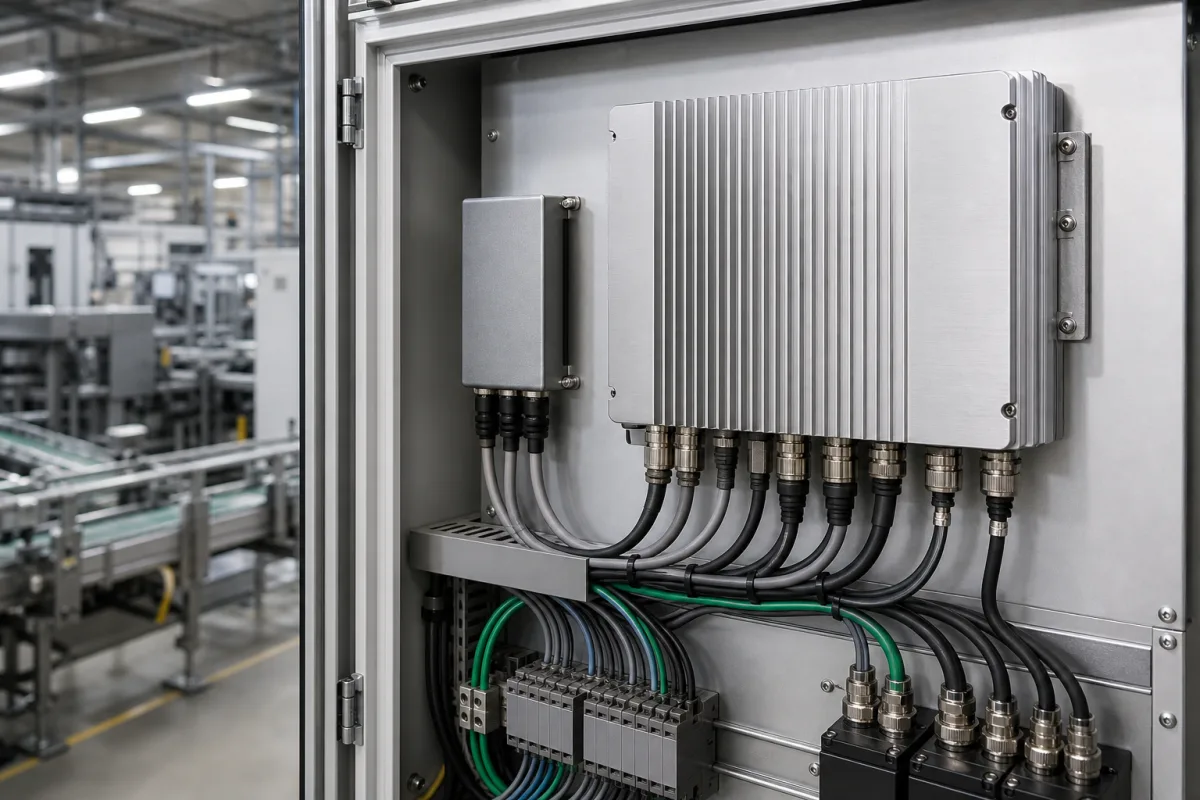
Supervisory Control Computer

Based on aggregated insights from multiple verified factory profiles within the CNFX directory, the standard Supervisory Control Computer used in the Machinery and Equipment Manufacturing sector typically supports operational capacities ranging from standard industrial configurations to heavy-duty production requirements.

Technical Definition & Core Assembly

A canonical Supervisory Control Computer is characterized by the integration of Central Processing Unit (CPU) and Memory Modules (RAM). In industrial production environments, manufacturers listed on CNFX commonly emphasize Electronic components (CPU, memory, chipsets) construction to support stable, high-cycle operation across diverse manufacturing scenarios.

A specialized computer system that monitors and controls industrial processes by collecting data from field devices and executing control algorithms.
Product Specifications

Technical details and manufacturing context for Supervisory Control Computer

Definition
The supervisory control computer is a critical component within a Process Control System (PCS) that serves as the central processing and command unit. It receives real-time data from sensors and instruments (field devices), processes this information using pre-programmed control logic and algorithms, and sends command signals to actuators and final control elements to maintain process variables within desired setpoints. It provides the human-machine interface (HMI) for operators to monitor process status, adjust parameters, and respond to alarms.
Working Principle
The computer operates by continuously executing a control loop: (1) Data Acquisition: reading analog/digital inputs from field sensors via communication interfaces (e.g., PLCs, I/O modules). (2) Data Processing: comparing process variables (PV) against setpoints (SP) using control algorithms (e.g., PID). (3) Control Output: generating and transmitting output signals to adjust final control elements (e.g., valves, motors). (4) Human Interface: displaying process data, trends, and alarms on HMI screens for operator supervision and intervention.
Common Materials
Electronic components (CPU, memory, chipsets), Printed circuit boards, Metal/plastic enclosure
Technical Parameters
  • Processing power (CPU speed, core count), memory capacity (RAM, storage), communication protocols supported (e.g., Modbus, Profinet, Ethernet/IP), I/O capacity, operating system, environmental ratings (temperature, humidity, ingress protection). Standard Spec
Components / BOM
  • Central Processing Unit (CPU)
    Executes control algorithms and processes data from field devices
    Material: Semiconductor silicon, metal heat sink
  • Memory Modules (RAM)
    Provides temporary storage for running programs and real-time data
    Material: Semiconductor chips, printed circuit board
  • Communication Interface Cards
    Enables data exchange with PLCs, sensors, and other field devices via industrial networks
    Material: Electronic components, connectors, PCB
  • Power Supply Unit (PSU)
    Converts AC mains power to regulated DC voltages required by internal components
    Material: Electronic components, transformers, capacitors, metal casing
Engineering Reasoning
0-60°C ambient temperature, 85-264 VAC input voltage, 47-63 Hz frequency
Ambient temperature >70°C sustained for >30 minutes, input voltage <80 VAC or >275 VAC, frequency <45 Hz or >65 Hz
Design Rationale: Semiconductor junction thermal runaway at >125°C die temperature, electrolytic capacitor electrolyte evaporation at >105°C case temperature, MOSFET gate oxide breakdown at >20 V gate-source voltage
Risk Mitigation (FMEA)
Trigger Power supply ripple >100 mVpp at switching frequency harmonics
Mode: Analog-to-digital converter reference voltage instability causing ±5% measurement error
Strategy: LC pi-filter with 100 μH inductor and 470 μF capacitor on 5 VDC rail, ferrite beads on signal lines
Trigger 64-bit floating-point arithmetic accumulation error exceeding 1×10⁻¹² per iteration in PID control loop
Mode: Control algorithm integral windup causing 15% overshoot in setpoint tracking
Strategy: Clamping integrator term at ±25% of output range, implementing anti-windup with back-calculation using 0.1 s time constant

Industry Taxonomies & Aliases

Commonly used trade names and technical identifiers for Supervisory Control Computer.

Applied To / Applications

This component is essential for the following industrial systems and equipment:

Industrial Ecosystem & Supply Chain DNA

Complementary Systems
Downstream Applications
Specialized Tooling

Application Fit & Sizing Matrix

Operational Limits
pressure: N/A (indoor installation)
other spec: Humidity: 10-90% non-condensing, Vibration: 0.5g max, Shock: 10g max
temperature: 0°C to 50°C (operating), -20°C to 70°C (storage)
Media Compatibility
✓ Clean air environments (control rooms) ✓ Processed water systems ✓ Non-corrosive gas monitoring
Unsuitable: Direct exposure to corrosive chemicals or explosive atmospheres
Sizing Data Required
  • Number of I/O points required
  • Processing speed needed for control algorithms
  • Communication protocol requirements (e.g., Modbus, Profibus, Ethernet/IP)

Reliability & Engineering Risk Analysis

Failure Mode & Root Cause
Hardware component failure
Cause: Thermal stress from inadequate cooling, power surges, or aging capacitors/resistors leading to motherboard or power supply unit malfunction.
Software/operating system corruption
Cause: Malware/virus infection, improper shutdowns, or corrupted updates causing system crashes, data loss, or control logic errors.
Maintenance Indicators
  • Frequent system crashes, blue screens, or unexplained reboots indicating hardware instability or software corruption.
  • Unusual fan noise (grinding, whining) or overheating alerts signaling cooling system failure or excessive thermal load.
Engineering Tips
  • Implement regular, automated backups of control logic and configurations, and maintain an isolated, tested spare unit for rapid replacement to minimize downtime.
  • Establish a preventive maintenance schedule including cleaning of air filters/vents, verifying power supply stability, and updating antivirus/software patches in a controlled, staged manner.

Compliance & Manufacturing Standards

Reference Standards
ISO 9001:2015 - Quality Management Systems IEC 61508 - Functional Safety of Electrical/Electronic/Programmable Electronic Safety-related Systems CE Marking - Compliance with EU Directives (e.g., EMC, Low Voltage)
Manufacturing Precision
  • Power Supply Voltage: +/-5% of nominal rating
  • Operating Temperature Range: -10°C to +55°C (specified tolerance)
Quality Inspection
  • Electromagnetic Compatibility (EMC) Testing
  • Functional Safety Integrity Level (SIL) Verification

Factories Producing Supervisory Control Computer

Verified manufacturers with capability to produce this product in China

✓ 92% Supplier Capability Match Found

P Procurement Specialist from United States Jan 23, 2026
★★★★★
"The technical documentation for this Supervisory Control Computer is very thorough, especially regarding technical reliability."
Technical Specifications Verified
T Technical Director from United Arab Emirates Jan 20, 2026
★★★★★
"Reliable performance in harsh Machinery and Equipment Manufacturing environments. No issues with the Supervisory Control Computer so far."
Technical Specifications Verified
P Project Engineer from Australia Jan 17, 2026
★★★★★
"Testing the Supervisory Control Computer now; the technical reliability results are within 1% of the laboratory datasheet."
Technical Specifications Verified
Verification Protocol

“Feedback is collected from verified sourcing managers during RFQ (Request for Quote) and factory evaluation processes on CNFX. These reports represent historical performance data and technical audit summaries from our B2B manufacturing network.”

16 sourcing managers are analyzing this specification now. Last inquiry for Supervisory Control Computer from Turkey (1h ago).

Supply Chain Compatible Machinery & Devices

Heavy-Duty CNC Plasma Cutting Machine

Industrial machine for precision metal cutting using plasma arc technology

Explore Specs →
Automated Assembly Line System

Integrated production system for sequential component assembly operations

Explore Specs →
Automated Powder Coating System

Integrated industrial system for applying dry powder coatings to metal substrates.

Explore Specs →
Centrifugal Pump Impeller

Rotating component that transfers energy to fluid in centrifugal pumps.

Explore Specs →

Frequently Asked Questions

What is the primary function of a Supervisory Control Computer in machinery manufacturing?

The Supervisory Control Computer monitors and controls industrial processes by collecting real-time data from field devices (like sensors and actuators) and executing control algorithms to optimize machinery operations, ensure safety, and maintain production efficiency.

What key components are included in the Bill of Materials (BOM) for this system?

The essential BOM components include a Central Processing Unit (CPU) for computation, Memory Modules (RAM) for data handling, Communication Interface Cards for device connectivity, and a Power Supply Unit (PSU) for reliable operation in industrial environments.

How does this system integrate with existing machinery and equipment?

It integrates via communication interfaces (such as Ethernet, serial ports, or industrial protocols like Modbus or PROFINET) to connect with field devices, PLCs, and SCADA systems, enabling seamless data exchange and centralized control within the manufacturing setup.

Can I contact factories directly on CNFX?

CNFX is an open directory, not a transaction platform. Each factory profile provides direct contact information and production details to help you initiate direct inquiries with Chinese suppliers.

Get Quote for Supervisory Control Computer

Request technical pricing, lead times, or customized specifications for Supervisory Control Computer directly from verified manufacturing units.

Your business information is encrypted and only shared with verified Supervisory Control Computer suppliers.

Thank you! Your message has been sent. We'll respond within 1–3 business days.

Need to Manufacture Supervisory Control Computer?

Connect with verified factories specializing in this product category

Add Your Factory Contact Us
Previous Product
Suction Strainer
Next Product
Supply Pump