Industry-Verified Manufacturing Data (2026)

Positioning Sensors

Based on aggregated insights from multiple verified factory profiles within the CNFX directory, the standard Positioning Sensors used in the Rubber and Plastic Product Manufacturing sector typically supports operational capacities ranging from standard industrial configurations to heavy-duty production requirements.

Technical Definition & Core Assembly

A canonical Positioning Sensors is characterized by the integration of Sensing Head and Electronic Circuit Board. In industrial production environments, manufacturers listed on CNFX commonly emphasize Stainless Steel Housing construction to support stable, high-cycle operation across diverse manufacturing scenarios.

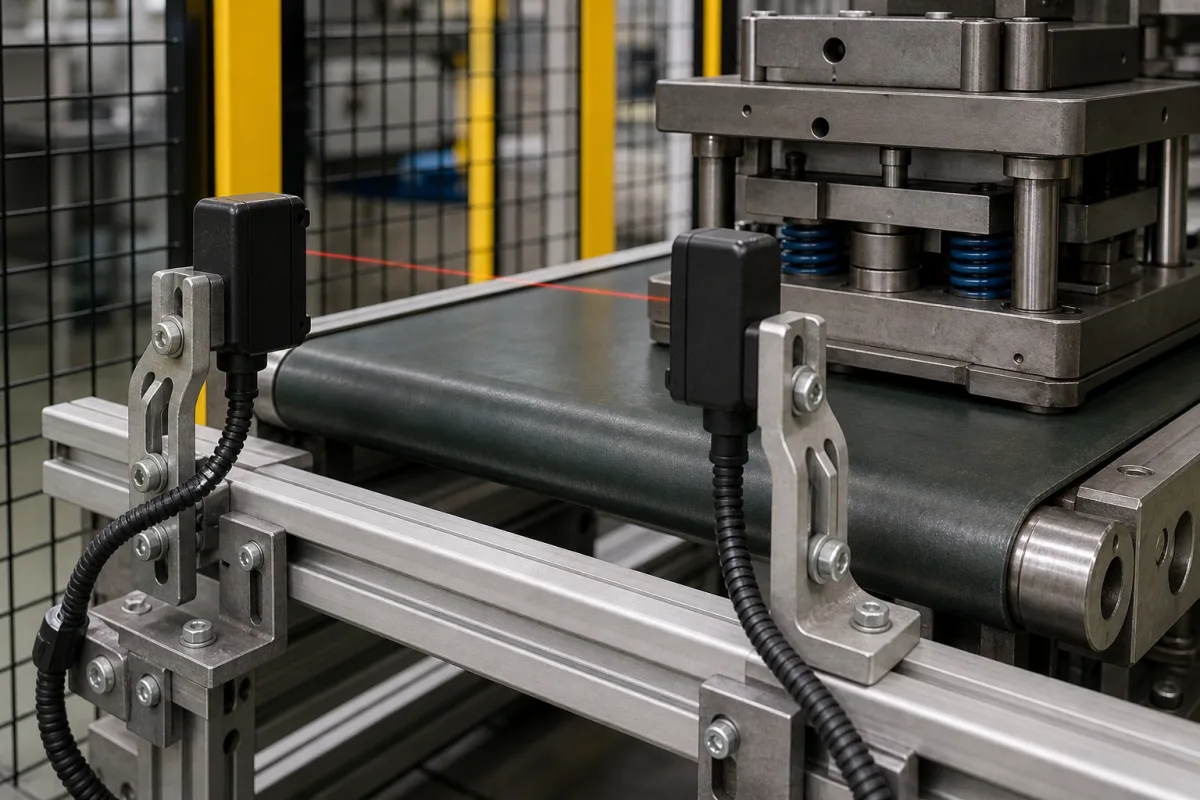
Electronic devices that detect and report the precise location of molds or mold carriers on a conveyor system.
Product Specifications

Technical details and manufacturing context for Positioning Sensors

Definition
Positioning sensors are critical components in mold conveyor systems that provide real-time feedback on the exact position of molds or mold carriers as they move along the conveyor. They enable precise control of mold movement, alignment, and positioning for various manufacturing operations such as injection molding, cooling, and ejection. These sensors ensure molds are correctly positioned at each station, preventing collisions and optimizing production efficiency.
Working Principle
Positioning sensors typically operate using technologies such as inductive proximity sensing, photoelectric detection, or magnetic field sensing. They detect the presence or absence of a mold at specific points along the conveyor and send electrical signals to the control system. The control system uses this information to track mold movement, coordinate operations at different stations, and maintain proper spacing between molds.
Common Materials
Stainless Steel Housing, Electronic Sensing Elements, Polymer Seals
Technical Parameters
  • Sensing distance range, typically 2-20mm for proximity sensors (mm) Standard Spec
Components / BOM
  • Sensing Head
    Detects the presence or position of molds through electromagnetic or optical means
    Material: Stainless Steel
  • Electronic Circuit Board
    Processes detection signals and generates output signals to the control system
    Material: Fiberglass with Copper Traces
  • Housing
    Protects internal components from environmental factors and mechanical damage
    Material: Stainless Steel or Engineering Plastic
  • Connection Interface
    Provides electrical connection to the conveyor control system
    Material: Brass with Nickel Plating
Engineering Reasoning
0.1-100 mm displacement, 0.01 mm resolution, -20°C to 85°C ambient temperature
±0.05 mm positional accuracy deviation, 85°C sensor temperature, 24V DC ±10% voltage tolerance
Design Rationale: Hall effect sensor magnetic field distortion from ferromagnetic debris accumulation, piezoelectric crystal thermal drift exceeding 0.001 mm/°C coefficient
Risk Mitigation (FMEA)
Trigger Electromagnetic interference from 50 Hz AC motors exceeding 100 V/m field strength
Mode: Signal-to-noise ratio degradation below 20 dB causing ±2 mm positional error
Strategy: Mu-metal shielding with 60 dB attenuation at 50-500 Hz, twisted-pair cabling with 100 Ω characteristic impedance
Trigger Condensation formation at 85% relative humidity with 10°C dew point differential
Mode: Optical encoder LED-phototransistor path obstruction causing complete signal loss
Strategy: IP67-rated enclosure with desiccant cartridge maintaining <30% internal humidity, conformal coating meeting MIL-I-46058C

Industry Taxonomies & Aliases

Commonly used trade names and technical identifiers for Positioning Sensors.

Applied To / Applications

This component is essential for the following industrial systems and equipment:

Industrial Ecosystem & Supply Chain DNA

Complementary Systems
Downstream Applications
Specialized Tooling

Application Fit & Sizing Matrix

Operational Limits
pressure: 0 to 1 bar (non-pressurized environment)
other spec: IP67 ingress protection, 24V DC power supply, 0.1mm positioning accuracy
temperature: -20°C to +85°C
Media Compatibility
✓ steel mold carriers ✓ aluminum molds ✓ plastic conveyor components
Unsuitable: high-pressure washdown environments with direct water jets
Sizing Data Required
  • conveyor speed (m/s)
  • required positioning accuracy (mm)
  • maximum detection distance (mm)

Reliability & Engineering Risk Analysis

Failure Mode & Root Cause
Signal Drift/Inaccuracy
Cause: Environmental contamination (dust, moisture, oil) on sensing surfaces, temperature fluctuations affecting electronics, or mechanical misalignment from vibration/impact.
Complete Signal Loss
Cause: Electrical connection failure (corroded terminals, broken wires), internal component burnout from voltage spikes, or physical damage to the sensing element.
Maintenance Indicators
  • Intermittent or erratic readings on the control system display
  • Unusual audible alarms from the sensor or control panel indicating fault conditions
Engineering Tips
  • Implement regular cleaning and inspection schedules to prevent contamination buildup on sensing surfaces and ensure proper environmental sealing.
  • Use shielded cables, proper grounding, and surge protection devices to safeguard against electrical interference and voltage spikes.

Compliance & Manufacturing Standards

Reference Standards
ISO 13849-1: Safety of machinery - Safety-related parts of control systems IEC 60947-5-2: Low-voltage switchgear and controlgear - Proximity switches EN 60529: Degrees of protection provided by enclosures (IP Code)
Manufacturing Precision
  • Repeatability: +/-0.01mm
  • Hysteresis: <0.5% of full scale
Quality Inspection
  • Environmental sealing test (IP rating verification)
  • Electrical performance verification (response time, output signal accuracy)

Factories Producing Positioning Sensors

Verified manufacturers with capability to produce this product in China

✓ 92% Supplier Capability Match Found

S Sourcing Manager from United States Jan 20, 2026
★★★★★
"Impressive build quality. Especially the technical reliability is very stable during long-term operation."
Technical Specifications Verified
P Procurement Specialist from United Arab Emirates Jan 17, 2026
★★★★☆
"As a professional in the Rubber and Plastic Product Manufacturing sector, I confirm this Positioning Sensors meets all ISO standards. (Delivery took slightly longer than expected, but technical support was excellent.)"
Technical Specifications Verified
T Technical Director from Australia Jan 14, 2026
★★★★★
"Standard OEM quality for Rubber and Plastic Product Manufacturing applications. The Positioning Sensors arrived with full certification."
Technical Specifications Verified
Verification Protocol

“Feedback is collected from verified sourcing managers during RFQ (Request for Quote) and factory evaluation processes on CNFX. These reports represent historical performance data and technical audit summaries from our B2B manufacturing network.”

18 sourcing managers are analyzing this specification now. Last inquiry for Positioning Sensors from Poland (11m ago).

Supply Chain Compatible Machinery & Devices

Industrial Conveyor Belt

A continuous loop of material used to transport goods in industrial settings.

Explore Specs →
Modular Injection Molded Plastic Pallet

Interlocking plastic pallet system for logistics and storage.

Explore Specs →
Multi-Layer Co-Extruded Barrier Film

Plastic film with multiple layers for superior barrier properties.

Explore Specs →
High-Precision Silicone Gasket

Custom-molded silicone seal for industrial equipment.

Explore Specs →

Frequently Asked Questions

How do positioning sensors improve efficiency in rubber and plastic manufacturing?

Positioning sensors provide real-time detection of molds and carriers on conveyor systems, enabling precise automation, reducing manual intervention, minimizing production errors, and optimizing cycle times in rubber and plastic manufacturing processes.

What makes these sensors suitable for harsh manufacturing environments?

These sensors feature stainless steel housings for corrosion resistance and polymer seals that protect electronic components from dust, moisture, and chemical exposure common in rubber and plastic production facilities.

Can these sensors integrate with existing conveyor control systems?

Yes, with standard connection interfaces and configurable electronic circuit boards, these positioning sensors can seamlessly integrate with most industrial PLCs and conveyor control systems used in rubber and plastic manufacturing.

Can I contact factories directly on CNFX?

CNFX is an open directory, not a transaction platform. Each factory profile provides direct contact information and production details to help you initiate direct inquiries with Chinese suppliers.

Get Quote for Positioning Sensors

Request technical pricing, lead times, or customized specifications for Positioning Sensors directly from verified manufacturing units.

Your business information is encrypted and only shared with verified Positioning Sensors suppliers.

Thank you! Your message has been sent. We'll respond within 1–3 business days.

Need to Manufacture Positioning Sensors?

Connect with verified factories specializing in this product category

Add Your Factory Contact Us
Previous Product
Polypropylene Injection Molded Gear Wheel
Next Product
Resin Storage Tank