Structured Manufacturing Data (2026)

Temperature Management Unit

Based on aggregated insights from structured factory profiles within the CNFX directory, the standard Temperature Management Unit used in the Food Manufacturing sector typically supports operational capacities ranging from standard industrial configurations to heavy-duty production requirements.

Technical Definition & Core Assembly

A canonical Temperature Management Unit is characterized by the integration of Temperature Sensor Array and Heating Element Module. In industrial production environments, manufacturers listed on CNFX commonly emphasize Stainless steel construction to support stable, high-cycle operation across diverse manufacturing scenarios.

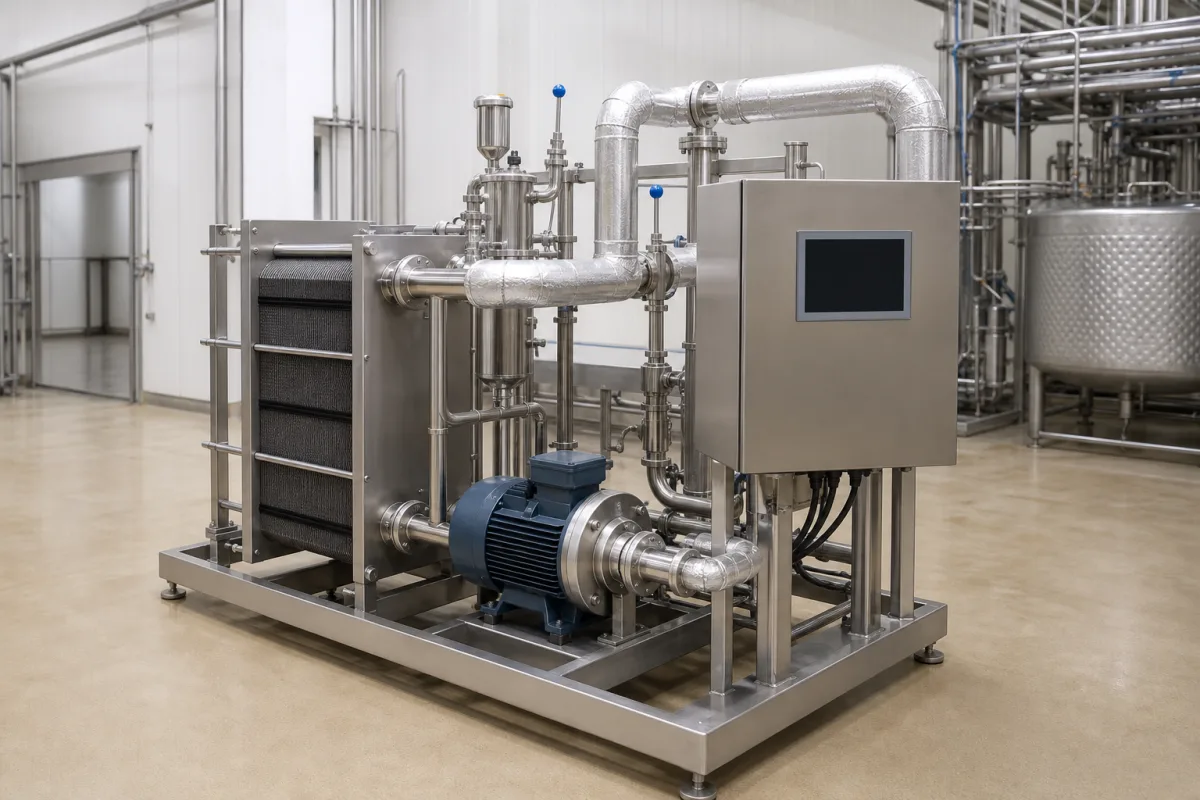
A precision temperature control component for industrial dough processing equipment
Product Specifications

Technical details and manufacturing context for Temperature Management Unit

Definition
A specialized temperature regulation component within an Industrial Dough Laminator that precisely controls and maintains optimal temperature conditions during dough sheeting and folding operations, ensuring consistent dough texture, gluten development, and final product quality in high-volume bakery production.
Working Principle
Utilizes integrated heating elements, cooling systems, and temperature sensors to monitor and adjust thermal conditions within the laminator's processing zones, maintaining precise temperature ranges through feedback control loops to optimize dough handling properties.
Common Materials
Stainless steel, Copper heating elements, Thermal insulation materials
Technical Parameters
  • Temperature range and precision control specifications (°C) Standard Spec
Components / BOM
  • Temperature Sensor Array
    Monitors temperature at multiple points within the laminator
    Material: Stainless steel with thermocouple elements
  • Heating Element Module
    Provides controlled heat to maintain optimal dough temperature
    Material: Copper alloy with ceramic insulation
  • Cooling System
    Removes excess heat to prevent dough overheating
    Material: Aluminum heat exchangers
  • Control Circuit Board
    Processes sensor data and regulates heating/cooling systems
    Material: Fiberglass PCB with electronic components

Industry Taxonomies & Aliases

Commonly used trade names and technical identifiers for Temperature Management Unit.

Industrial Ecosystem & Supply Chain Structure

Complementary Systems
Downstream Applications
Specialized Tooling

Application Fit & Sizing Matrix

Operational Limits
pressure: 0 to 10 bar
flow rate: 5 to 50 L/min
temperature: -20°C to 200°C
slurry concentration: Up to 40% solids by weight
Media Compatibility
✓ Food-grade glycol solutions ✓ Potable water ✓ Vegetable oil-based heat transfer fluids
Unsuitable: Corrosive chemical brines or abrasive particulate slurries
Sizing Data Required
  • Required heat transfer duty (kW)
  • Process fluid viscosity and specific heat
  • Available space envelope for installation

Reliability & Engineering Risk Analysis

Failure Mode & Root Cause
Heat Exchanger Fouling
Cause: Accumulation of scale, debris, or biological growth on heat transfer surfaces, reducing thermal efficiency due to poor water quality, inadequate filtration, or infrequent cleaning.
Refrigerant Leak
Cause: Loss of refrigerant charge from corrosion, vibration-induced fatigue, or seal degradation, leading to insufficient cooling capacity and potential compressor damage.
Maintenance Indicators
  • Abnormal temperature fluctuations or failure to maintain setpoint despite continuous operation
  • Unusual noises such as grinding, knocking, or hissing from the compressor or refrigerant lines
Engineering Tips
  • Implement a proactive water treatment and filtration program to minimize fouling and corrosion in heat exchangers and piping
  • Establish a vibration monitoring and alignment program for rotating components (compressors, pumps, fans) to prevent premature mechanical failures

Compliance & Manufacturing Standards

Reference Standards
ISO 9001:2015 - Quality management systems ANSI/ASHRAE 15 - Safety standard for refrigeration systems CE Marking - Compliance with EU directives for machinery safety
Manufacturing Precision
  • Temperature control accuracy: +/-0.5°C
  • Pressure tightness: Leak rate < 1x10^-6 mbar·L/s
Quality Inspection
  • Thermal performance verification test
  • Electrical safety and insulation resistance test

Factories Producing Temperature Management Unit

Manufacturer profiles with relevant production capability in China

Manufacturer listings support early research and capability understanding. They are not certification, ranking, or transaction guarantees.

Technical documentation
4/5
Manufacturing capability
4/5
Inspection readiness
5/5
Supplier transparency
3/5

These scores are example evaluation dimensions, not real customer ratings, country-specific buyer feedback, or live inquiry activity.

Supply Chain Compatible Machinery & Devices

Automated Food Packaging Integrity Tester

Automated system for non-destructive testing of food package seals and integrity.

Explore Specs →
Automated Food Moisture Analyzer

Automated system for precise moisture content measurement in food products

Explore Specs →
Automated Food Color Consistency Analyzer

Automated inline system for real-time color measurement and consistency control in food processing.

Explore Specs →
Control Panel

A centralized interface for monitoring and controlling industrial equipment and processes

Explore Specs →

Frequently Asked Questions

What makes this temperature management unit suitable for dough processing applications?

This unit features precision temperature control (±0.5°C accuracy) specifically calibrated for dough fermentation and proofing processes, with stainless steel construction that meets food safety standards and thermal insulation that maintains consistent temperatures throughout the processing cycle.

How does the heating element module ensure even temperature distribution?

The copper heating elements are strategically arranged in a multi-zone configuration, working with the temperature sensor array to provide real-time feedback to the control circuit board, which dynamically adjusts heating to eliminate hot spots and maintain uniform temperature across the entire dough processing surface.

What maintenance is required for the cooling system in food manufacturing environments?

The cooling system features food-grade components with easy-access panels for routine cleaning. Recommended maintenance includes monthly inspection of coolant levels, quarterly cleaning of heat exchange surfaces, and annual professional calibration to ensure optimal performance in high-humidity bakery environments.

Can I contact factories directly on CNFX?

CNFX is an open directory, not a transaction platform. Each factory profile provides direct contact information and production details to help you initiate direct inquiries with Chinese suppliers.

Data Basis

CNFX manufacturer profiles, technical classification, publicly available product information, and ongoing plausibility checks.

Preliminary Technical Classification
This page supports structured research, RFQ preparation, and supplier evaluation. It does not replace buyer-led supplier qualification, standards review, or technical approval.

Request Manufacturing Insight for Temperature Management Unit

Ask for use case, specification boundaries, supplier type, and RFQ preparation information for Temperature Management Unit.

Your business information is used only to process this request.

Thank you! Your message has been sent. We'll respond within 1–3 business days.

Need to Manufacture Temperature Management Unit?

Compare manufacturer profiles with relevant product and process capability.

Create Manufacturer Profile Contact Us
Previous Product
Temperature Control Module
Next Product
Temperature Monitoring System