Editorial Technical Reference

Air Circulation Fan

This page explains how Air Circulation Fan is classified within Machinery and Equipment Manufacturing. Technical values and manufacturer relationships are research references; confirm the current specification and supplier evidence for each order.

Technical Definition & Core Assembly

A fan component within a conditioning system that circulates air to maintain uniform temperature and humidity distribution.
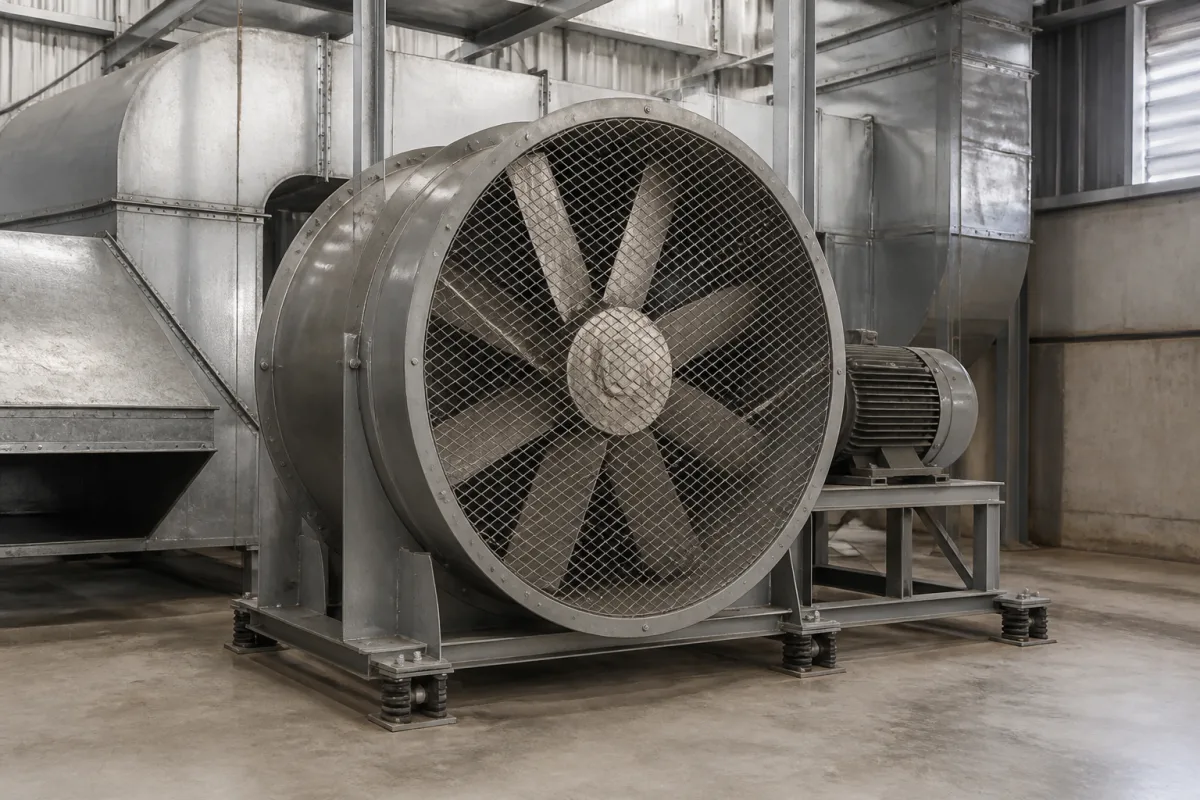
Air Circulation Fan in a manufacturing environment
Representative product image. Confirm appearance and specifications with the manufacturer.

Product Specifications

Technical details and manufacturing context for Air Circulation Fan

Definition
An air circulation fan is a mechanical component within conditioning systems that moves air throughout enclosed spaces to prevent stratification, eliminate hot/cold spots, and ensure consistent environmental conditions. It works in conjunction with heating, cooling, and ventilation elements to optimize system efficiency and comfort. The fan is typically installed in ductwork or as part of an air handling unit, drawing air from a return inlet and discharging it through supply outlets. Its operation relies on an electric motor that drives either axial or centrifugal impellers, generating a pressure difference that induces airflow. This forced convection distributes conditioned air from central units to all areas of the space, improving heat transfer and mixing. The fan's performance is characterized by parameters such as air flow rate, static pressure, fan speed, input power, supply voltage, noise level, operating temperature, ingress protection, blade diameter, and weight. These parameters are specified as reference ranges that must be confirmed for the actual model and application. For instance, the air flow rate typically ranges from 500 to 2000 m³/h, static pressure from 50 to 200 Pa, and fan speed from 800 to 1400 rpm. The fan is constructed from materials such as aluminum alloy, plastic polymers, and steel, which are selected for durability and performance. When selecting an air circulation fan, engineers must consider the space volume, duct resistance, ambient conditions, and required noise levels. Verification of model-specific values and compliance with relevant standards, such as ISO 5801 for performance testing and IEC 60335-1 for safety, is essential. The fan should be installed and maintained according to manufacturer guidelines to ensure reliable operation and longevity.
Working Principle
The fan uses an electric motor to rotate blades or impellers, creating airflow through centrifugal or axial movement. This forced convection distributes conditioned air from central units to all areas of the space, improving heat transfer and mixing. The motor converts electrical energy into mechanical rotation, which is transferred to the impeller. As the impeller spins, it accelerates air particles, increasing their kinetic energy and creating a pressure differential that drives air movement. In axial fans, air flows parallel to the shaft, while in centrifugal fans, air is drawn in axially and discharged radially. The resulting airflow overcomes duct resistance and delivers conditioned air to the desired zones, ensuring uniform temperature and humidity distribution.
Common Materials
Aluminum alloy, Plastic polymers, Steel
Technical Parameters
ParameterTypical rangeNotes & selection driver
Air Flow Rate500–2000 m³/hHigher flow for larger spacesISO 5801
Static Pressure50–200 PaOvercome duct resistanceISO 5801
Fan Speed800–1400 rpmAdjustable for airflow control
Input Power50–150 WEnergy consumption ratingIEC 60335-1
Supply Voltage220–240 V ACSingle phase 50/60 HzIEC 60038
Noise Level35–55 dB(A)Lower for quiet environmentsISO 3744
Operating Temperature-10–60 °COutside range may affect performanceIEC 60068-2-1
Ingress ProtectionIP44–IP54Higher for dusty/moist areasIEC 60529
Blade Diameter300–600 mmAffects airflow and footprint
Weight5–15 kgConsider mounting support

Ranges are indicative industry figures for RFQ preparation, not a supplier commitment. Confirm every value and standard with the legal manufacturer before ordering.

Components / BOM
  • Motor
    Provides rotational power to drive the fan blades
    Material: Copper windings, steel casing
  • Blades/Impeller Part
    Creates airflow through aerodynamic design
    Material: Aluminum alloy or plastic
  • Housing Part
    Encloses and directs airflow while providing structural support
    Material: Steel or plastic

Application & selection

Application Fit & Sizing Matrix

Operational Limits
pressure: 0 to 0.5 bar differential
flow rate: 100 to 10,000 CFM
temperature: -20°C to +80°C
humidity range: 10% to 95% RH non-condensing
Media Compatibility
✓ Clean air ✓ Conditioned air with standard HVAC filters ✓ Low-particulate industrial air
Unsuitable: Corrosive or abrasive particulate-laden environments
Sizing Data Required
  • Required airflow volume (CFM)
  • Static pressure drop across system (inches H₂O)
  • Available electrical power supply (V/Hz/phase)

Risk, maintenance & compliance

Reliability & Engineering Risk Analysis

Failure Mode & Root Cause
Bearing failure
Cause: Inadequate lubrication, contamination, or misalignment leading to overheating and wear
Blade imbalance or fatigue
Cause: Material fatigue from cyclic loading, corrosion, or foreign object damage altering aerodynamic balance
Maintenance Indicators
  • Unusual vibrations or wobbling during operation
  • Excessive noise such as grinding, squealing, or rattling
Engineering Tips
  • Implement a regular lubrication schedule using manufacturer-specified grease and monitor bearing temperatures
  • Conduct periodic dynamic balancing and blade inspections to detect and correct imbalance or erosion early

Indicative industry ranges for design and RFQ preparation. Confirm the exact figures and applicable standard with the manufacturer before specifying.

Compliance & Manufacturing Standards

Applicable Standards
ISO 5801:2017 - Industrial fans - Performance testing using standardized airways ANSI/AMCA 210-16 - Laboratory Methods of Testing Fans for Certified Aerodynamic Performance Rating CE Marking - Compliance with EU Directives (e.g., Low Voltage Directive 2014/35/EU, EMC Directive 2014/30/EU)

Quoted from the published standard.

Manufacturing Precision
  • Blade tip clearance: +/- 0.5 mm
  • Motor shaft runout: 0.05 mm maximum
Quality Inspection
  • Vibration analysis test (ISO 10816-3)
  • Electrical safety test (insulation resistance, dielectric strength)
Technical documentation
Request current drawings, revision history, and a signed specification sheet.
Manufacturing capability
Verify equipment lists, process limits, capacity, and representative production evidence.
Inspection readiness
Confirm test methods, calibrated equipment, sampling plans, and traceable reports.
Supplier transparency
Check the legal entity, factory address, ownership, certifications, and direct contacts.

Compare the published product scope and source details, then include your specifications and quantity in an enquiry.

Manufacturers of Air Circulation Fan

1 company lists this product among what they make. Company figures are quoted from each company's own website; every card states where the relationship came from.

Aosun
Foshan, Guangdong, CN
Listed on the company's own website · profile compiled by CNFX from public sources
Listed there as: “Air Circulation Fans”
View source page ↗ aosvents.com · recorded 2026-09-07

Explore company information and manufacturing capabilities, then discuss the scope of your project with a relevant supplier.

Buyer enquiry

Request manufacturing insight for Air Circulation Fan

Ask for use case, specification boundaries, supplier type, and RFQ preparation information for this product.

Where it goes
Straight to the CNFX editorial desk, and to the manufacturer if this product is linked to a claimed profile. Nothing is broadcast to a supplier list.
Your details stay here
We do not sell or rent enquiry data, and we do not add you to a mailing list. Used only to answer this request.
No commission, no middleman
CNFX is a directory. We take no cut of any order and never negotiate on a supplier's behalf.
What to include
Share your product specifications, quantity, destination and target delivery date.

Your business information is used only to process this request.

Thank you! Your message has been sent. We'll respond within 1–3 business days.
Sorry, we couldn't send your message. Please try again, or email us at [email protected].

Frequently Asked Questions

What is the typical air flow rate range for an air circulation fan?

According to the directory reference, the air flow rate typically ranges from 500 to 2000 m³/h, but the exact value depends on the specific model and application. Always verify with the manufacturer.

What materials are commonly used in air circulation fans?

Common materials include aluminum alloy, plastic polymers, and steel. These are selected for durability and performance, but specific material grades should be confirmed with the supplier.

Which standards apply to air circulation fans?

Relevant standards include ISO 5801 for performance testing, IEC 60335-1 for safety, and IEC 60529 for ingress protection. These are reference standards; compliance must be verified with the manufacturer.

How should I select an air circulation fan for my application?

Consider the space volume, duct resistance, required airflow, noise limits, and operating environment. Use the parameter ranges as a starting point, but confirm model-specific values with the manufacturer.

Related equipment

Applied To / Applications

This component is essential for the following industrial systems and equipment:

Industrial Ecosystem & Supply Chain Structure

Complementary Systems

Data Basis

Editorial classification, named public sources where available, and source-reviewed manufacturer records.

Preliminary Technical Classification
This page supports structured research, RFQ preparation, and supplier evaluation. It does not replace buyer-led supplier qualification, standards review, or technical approval.

Need to Manufacture Air Circulation Fan?

Compare manufacturer profiles with relevant product and process capability.

Previous Product
Z-axis Ram/Spindle
Last Product
Get QuotesChat