Process Analytics
View system integration details
This page explains how Data Acquisition System is classified within Machinery and Equipment Manufacturing. Technical values and manufacturer relationships are research references; confirm the current specification and supplier evidence for each order.
A system that collects, digitizes, and transmits measurement data from sensors and instruments in industrial calibration processes.
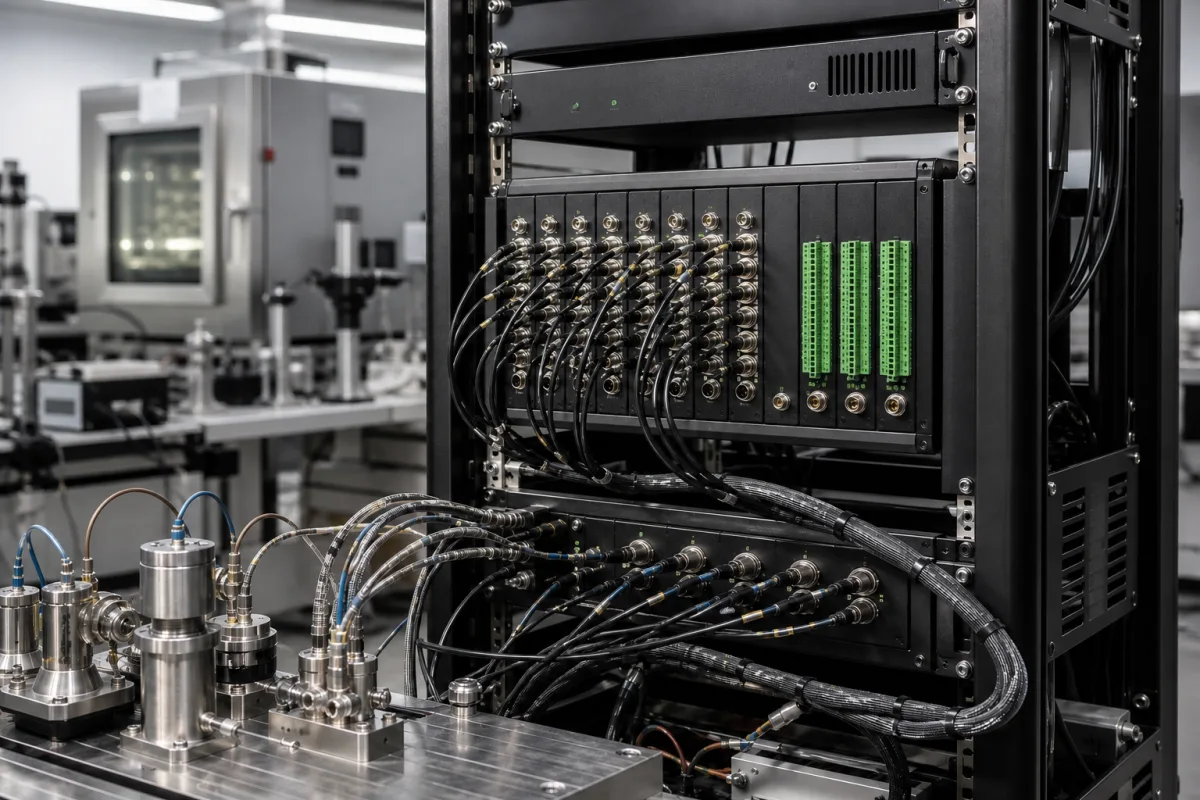
Technical details and manufacturing context for Data Acquisition System
What to specify in your RFQ
These are the quantities to specify to the manufacturer when sizing or requesting a quote. The manufacturer's own documentation governs the exact figures and applicable standard.
This component is essential for the following industrial systems and equipment:
| pressure: | 0 to 10 bar (absolute), 0 to 5 bar (differential) |
| input range: | ±10V, ±5V, ±2.5V, 0-20mA, 4-20mA programmable |
| temperature: | -40°C to +85°C (operational), -55°C to +125°C (storage) |
| sampling rate: | Up to 1 MS/s aggregate across all channels |
| isolation voltage: | 2500V RMS channel-to-ground |
Indicative industry ranges for design and RFQ preparation. Confirm the exact figures and applicable standard with the manufacturer before specifying.
Quoted from the published standard.
Manufacturer profiles associated with Data Acquisition System.
Manufacturer listings support early research and capability understanding. They are not certification, ranking, or transaction guarantees.
A practical evidence checklist for RFQ preparation and supplier evaluation.
CNFX does not score or rank suppliers. Buyers must verify all claims and documents with the legal manufacturer before ordering.
It acts as the interface between sensors and the control software, sampling analog signals, converting them to digital, and transmitting data for monitoring and analysis.
The number of simultaneous input channels is model-specific. Refer to the manufacturer's datasheet for the exact channel count.
The system can transmit data via Ethernet, USB, or RS-485, but the supported protocols depend on the specific model. Confirm with the supplier.
Signs such as drift in readings, communication errors, or channel failures may indicate the need for recalibration or hardware inspection.
Editorial classification, named public sources where available, and source-reviewed manufacturer records.
Ask for use case, specification boundaries, supplier type, and RFQ preparation information for this product.
Compare manufacturer profiles with relevant product and process capability.