Material Handling Crane
View system integration details
This page explains how End Trucks is classified within Machinery and Equipment Manufacturing. Technical values and manufacturer relationships are research references; confirm the current specification and supplier evidence for each order.
Structural components at the ends of a crane bridge that support the bridge girders and house the wheels for horizontal movement along the runway rails.
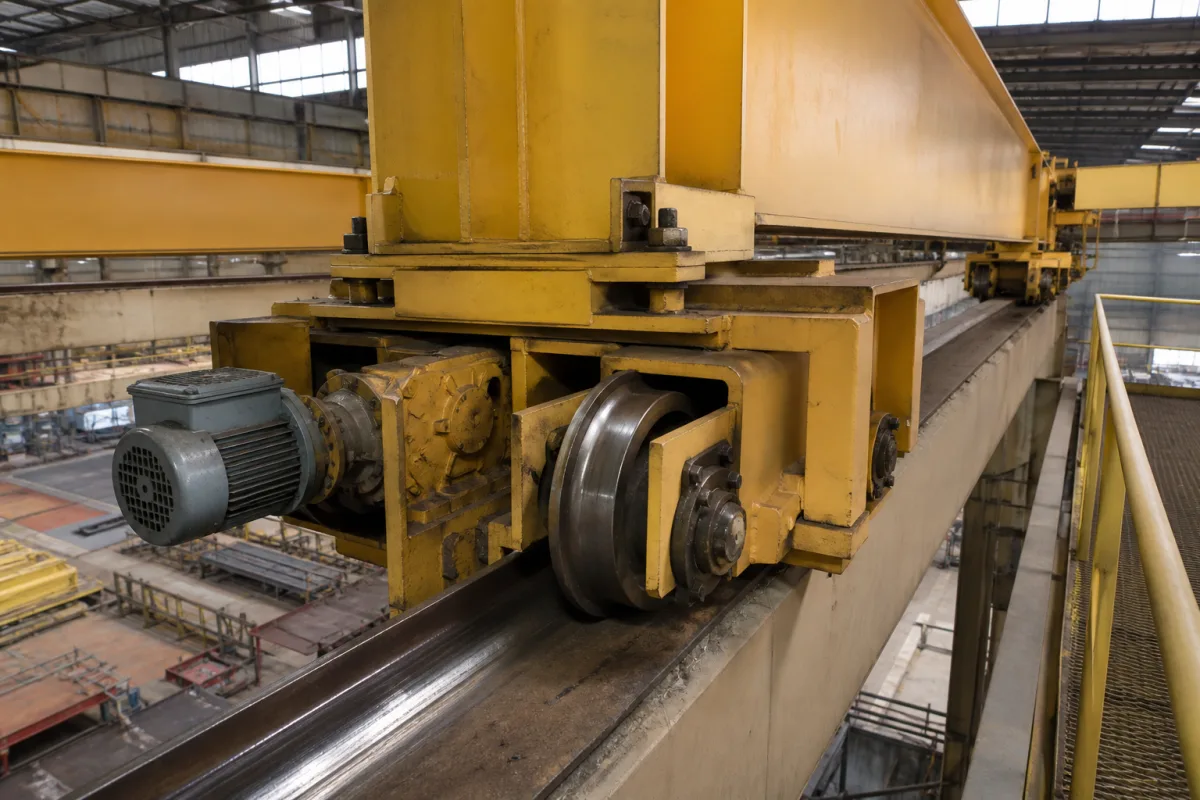
Technical details and manufacturing context for End Trucks
| Parameter | Typical range | Notes & selection driver |
|---|---|---|
| Rated Load Capacity | 5–50 t | Maximum load per end truck; above this, structural failure risk.GB/T 3811 |
| Span | 7.5–31.5 m | Distance between runway rails; affects bridge stiffness.GB/T 3811 |
| Wheel Diameter | 250–800 mm | Determines load distribution and rail compatibility.GB/T 4628 |
| Wheel Base | 2000–6000 mm | Longer base improves stability but increases footprint. |
| Rail Gauge | 1500–6000 mm | Must match runway rail spacing.GB/T 3811 |
| Maximum Wheel Load | 50–400 kN | Critical for runway design; exceeding may damage rails.GB/T 3811 |
| Travel Speed | 20–80 m/min | Affects productivity and motor sizing.GB/T 3811 |
| Motor Power | 1.5–15 kW | Per end truck; depends on load and speed.GB/T 3811 |
| Operating Temperature | -20–60 °C | Below -20°C requires low-temp steel; above 60°C reduces lubricant life.GB/T 3811 |
| Ingress Protection | IP54–IP65 | Higher IP for dusty or wet environments.IEC 60529 |
| Material Grade | Q235B–Q355B | Higher grade for heavier loads or low-temperature service.GB/T 700, GB/T 1591 |
| Weight | 500–5000 kg | Per end truck; affects shipping and installation. |
Ranges are indicative industry figures for RFQ preparation, not a supplier commitment. Confirm every value and standard with the legal manufacturer before ordering.
| pressure: | N/A (structural component, not pressure vessel) |
| other spec: | Max wheel load capacity: 10-500 tons (depending on configuration), Bridge span: 5-50 meters, Travel speed: 10-60 m/min |
| temperature: | -20°C to +60°C |
Indicative industry ranges for design and RFQ preparation. Confirm the exact figures and applicable standard with the manufacturer before specifying.
Quoted from the published standard.
A practical evidence checklist for RFQ preparation and supplier evaluation.
Compare the published product scope and source details, then include your specifications and quantity in an enquiry.
Manufacturer profiles associated with End Trucks.
Explore company information and manufacturing capabilities, then discuss the scope of your project with a relevant supplier.
Ask for use case, specification boundaries, supplier type, and RFQ preparation information for this product.
End trucks are structural components at the ends of the crane bridge. They support the bridge girders and house the wheel assemblies that allow the crane to travel horizontally along the runway rails. They transfer the crane's load to the runway system and provide mounting for drive and braking components.
Key parameters include rated load capacity, span, wheel diameter, wheel base, rail gauge, maximum wheel load, travel speed, motor power, operating temperature, ingress protection, material grade, and weight. These must be matched to the crane design and runway specifications, and verified with the manufacturer.
End trucks distribute the crane's load to the runway rails. Proper wheel base and rail gauge ensure even load distribution and stability. The wheel diameter and material grade affect load capacity and durability. Travel speed and motor power determine movement efficiency. Incorrect selection can lead to excessive wear, instability, or structural failure.
Unusual noise, vibration, or uneven wear on wheels or rails can indicate misalignment, bearing wear, or overloading. Regular inspection of wheel flanges, axles, and mounting bolts is recommended. If any abnormal conditions are observed, consult the manufacturer or a qualified engineer.
This component is essential for the following industrial systems and equipment:
Editorial classification, named public sources where available, and source-reviewed manufacturer records.
Compare manufacturer profiles with relevant product and process capability.