Industry-Verified Manufacturing Data (2026)

Gear Reduction System

Based on aggregated insights from multiple verified factory profiles within the CNFX directory, the standard Gear Reduction System used in the Machinery and Equipment Manufacturing sector typically supports operational capacities ranging from standard industrial configurations to heavy-duty production requirements.

Technical Definition & Core Assembly

A canonical Gear Reduction System is characterized by the integration of Input Pinion Gear and Output Gear. In industrial production environments, manufacturers listed on CNFX commonly emphasize Alloy Steel construction to support stable, high-cycle operation across diverse manufacturing scenarios.

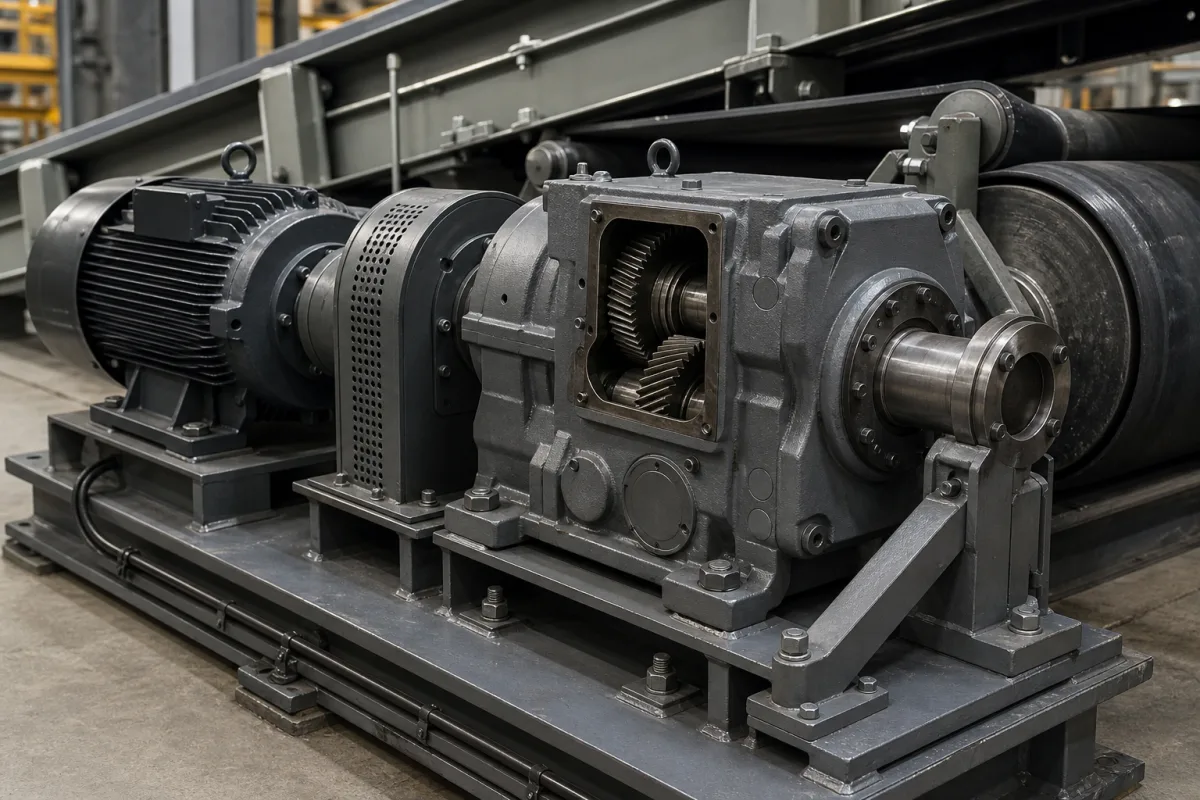
A mechanical system that reduces rotational speed while increasing torque within a tilting mechanism.
Product Specifications

Technical details and manufacturing context for Gear Reduction System

Definition
A gear reduction system is a critical component of a tilting mechanism that employs a series of gears to decrease the input rotational speed from a motor or power source while proportionally increasing the output torque. This allows for precise, controlled angular movement of the tilting platform or structure, enabling smooth operation under load.
Working Principle
The system operates on the principle of gear ratio. An input gear (pinion) with a smaller number of teeth drives a larger output gear, resulting in a reduction of rotational speed (RPM) and a corresponding increase in torque. This transformed power is then transmitted to the tilting arm or linkage to achieve the desired angular displacement.
Common Materials
Alloy Steel
Technical Parameters
  • Gear Reduction Ratio (e.g., 10:1, 20:1) (unitless) Customizable
Components / BOM
  • Input Pinion Gear
    Receives rotational force from the motor and initiates the speed reduction by meshing with a larger gear.
    Material: Case-Hardened Steel
  • Output Gear
    The larger gear driven by the pinion, providing reduced speed and increased torque to the tilting mechanism.
    Material: Alloy Steel
  • Gear Housing
    Encloses and supports the gear train, contains lubricant, and protects components from contamination.
    Material: Cast Iron or Aluminum Alloy
  • Input/Output Shafts
    Transmit rotational force into and out of the gear system, connecting to the motor and tilting linkage respectively.
    Material: Hardened Steel
Engineering Reasoning
Input speed: 1500-3000 RPM, Output torque: 500-2000 N·m, Temperature: -20°C to 120°C
Gear tooth bending stress exceeds 300 MPa (AGMA 2001-D04), Lubricant film thickness < 0.5 μm (Stribeck curve), Bearing L10 life < 10,000 hours
Design Rationale: Hertzian contact stress exceeding 1.5 GPa causes pitting fatigue (ISO 6336-2), Misalignment > 0.05 mm/m induces edge loading, Lubricant thermal degradation at >150°C viscosity index < 80
Risk Mitigation (FMEA)
Trigger Insufficient lubrication film thickness (λ < 1.5)
Mode: Gear tooth scuffing and adhesive wear (ISO 15243)
Strategy: Forced lubrication system with 0.1 μm filtration and temperature-controlled reservoir maintaining 40-60°C
Trigger Dynamic load factor Kv > 1.25 (AGMA 2001-C95)
Mode: Tooth root bending fatigue fracture at stress concentration factor Kf > 2.5
Strategy: Profile modification with tip relief of 0.02 mm and root fillet radius optimization to R > 0.3 × module

Industry Taxonomies & Aliases

Commonly used trade names and technical identifiers for Gear Reduction System.

Applied To / Applications

This component is essential for the following industrial systems and equipment:

Industrial Ecosystem & Supply Chain DNA

Complementary Systems
Downstream Applications
Specialized Tooling

Application Fit & Sizing Matrix

Operational Limits
pressure: Max 10 bar
other spec: Max input speed: 3000 RPM, Torque capacity: 500 Nm
temperature: -20°C to 120°C
Media Compatibility
✓ Industrial lubricants ✓ Hydraulic fluids ✓ Clean air environments
Unsuitable: High-concentration abrasive slurry
Sizing Data Required
  • Input speed (RPM)
  • Required output torque (Nm)
  • Reduction ratio

Reliability & Engineering Risk Analysis

Failure Mode & Root Cause
Gear tooth pitting and spalling
Cause: Surface fatigue due to cyclic loading, inadequate lubrication, or material defects leading to subsurface cracks that propagate to the surface.
Bearing failure in reduction housing
Cause: Contamination ingress (dust, moisture), lubricant degradation, misalignment, or excessive loading causing wear, overheating, or seizure.
Maintenance Indicators
  • Unusual grinding or knocking noises during operation indicating gear or bearing damage
  • Excessive vibration or heat detected on the gearbox housing during routine inspections
Engineering Tips
  • Implement a strict lubrication management program using manufacturer-specified oil grades, with scheduled oil analysis to monitor contamination and wear particles
  • Install vibration monitoring sensors and conduct regular alignment checks to detect early-stage mechanical issues before catastrophic failure

Compliance & Manufacturing Standards

Reference Standards
ISO 1328-1:2013 (Cylindrical gears - System of accuracy) ANSI/AGMA 2000-A88 (Gear Classification and Inspection Handbook) DIN 3962 (Tolerances for cylindrical gear teeth)
Manufacturing Precision
  • Gear tooth profile tolerance: ±0.02mm
  • Center distance tolerance between shafts: ±0.05mm
Quality Inspection
  • Gear tooth contact pattern test (using blue marking compound)
  • Hardness testing of gear teeth surfaces (Rockwell C scale)

Factories Producing Gear Reduction System

Verified manufacturers with capability to produce this product in China

✓ 94% Supplier Capability Match Found

S Sourcing Manager from United Arab Emirates Jan 24, 2026
★★★★★
"Reliable performance in harsh Machinery and Equipment Manufacturing environments. No issues with the Gear Reduction System so far."
Technical Specifications Verified
P Procurement Specialist from Australia Jan 21, 2026
★★★★☆
"Testing the Gear Reduction System now; the technical reliability results are within 1% of the laboratory datasheet. (Delivery took slightly longer than expected, but technical support was excellent.)"
Technical Specifications Verified
T Technical Director from Singapore Jan 18, 2026
★★★★★
"Impressive build quality. Especially the technical reliability is very stable during long-term operation."
Technical Specifications Verified
Verification Protocol

“Feedback is collected from verified sourcing managers during RFQ (Request for Quote) and factory evaluation processes on CNFX. These reports represent historical performance data and technical audit summaries from our B2B manufacturing network.”

17 sourcing managers are analyzing this specification now. Last inquiry for Gear Reduction System from Vietnam (1h ago).

Supply Chain Compatible Machinery & Devices

Hydraulic Press

Industrial machine using hydraulic pressure to compress, form, or assemble materials

Explore Specs →
Heavy-Duty CNC Plasma Cutting Machine

Industrial machine for precision metal cutting using plasma arc technology

Explore Specs →
Automated Assembly Line System

Integrated production system for sequential component assembly operations

Explore Specs →
Automated Powder Coating System

Integrated industrial system for applying dry powder coatings to metal substrates.

Explore Specs →

Frequently Asked Questions

What is the primary function of this gear reduction system?

This gear reduction system reduces rotational speed while simultaneously increasing torque output within tilting mechanisms, providing precise power transmission for industrial machinery applications.

Why is alloy steel used in this gear reduction system?

Alloy steel provides superior strength, durability, and wear resistance compared to standard steel, ensuring reliable performance under heavy loads and extended operational life in demanding industrial environments.

What components are included in this gear reduction system?

The system includes an input pinion gear, output gear, gear housing, and input/output shafts, all engineered to work together for efficient power transmission and torque multiplication.

Can I contact factories directly on CNFX?

CNFX is an open directory, not a transaction platform. Each factory profile provides direct contact information and production details to help you initiate direct inquiries with Chinese suppliers.

Get Quote for Gear Reduction System

Request technical pricing, lead times, or customized specifications for Gear Reduction System directly from verified manufacturing units.

Your business information is encrypted and only shared with verified Gear Reduction System suppliers.

Thank you! Your message has been sent. We'll respond within 1–3 business days.

Need to Manufacture Gear Reduction System?

Connect with verified factories specializing in this product category

Add Your Factory Contact Us
Previous Product
Gear Reduction Assembly
Next Product
Gear Reduction Unit