Industry-Verified Manufacturing Data (2026)

Pneumatic Conveyor

Based on aggregated insights from multiple verified factory profiles within the CNFX directory, the standard Pneumatic Conveyor used in the Machinery and Equipment Manufacturing sector typically supports operational capacities ranging from standard industrial configurations to heavy-duty production requirements.

Technical Definition & Core Assembly

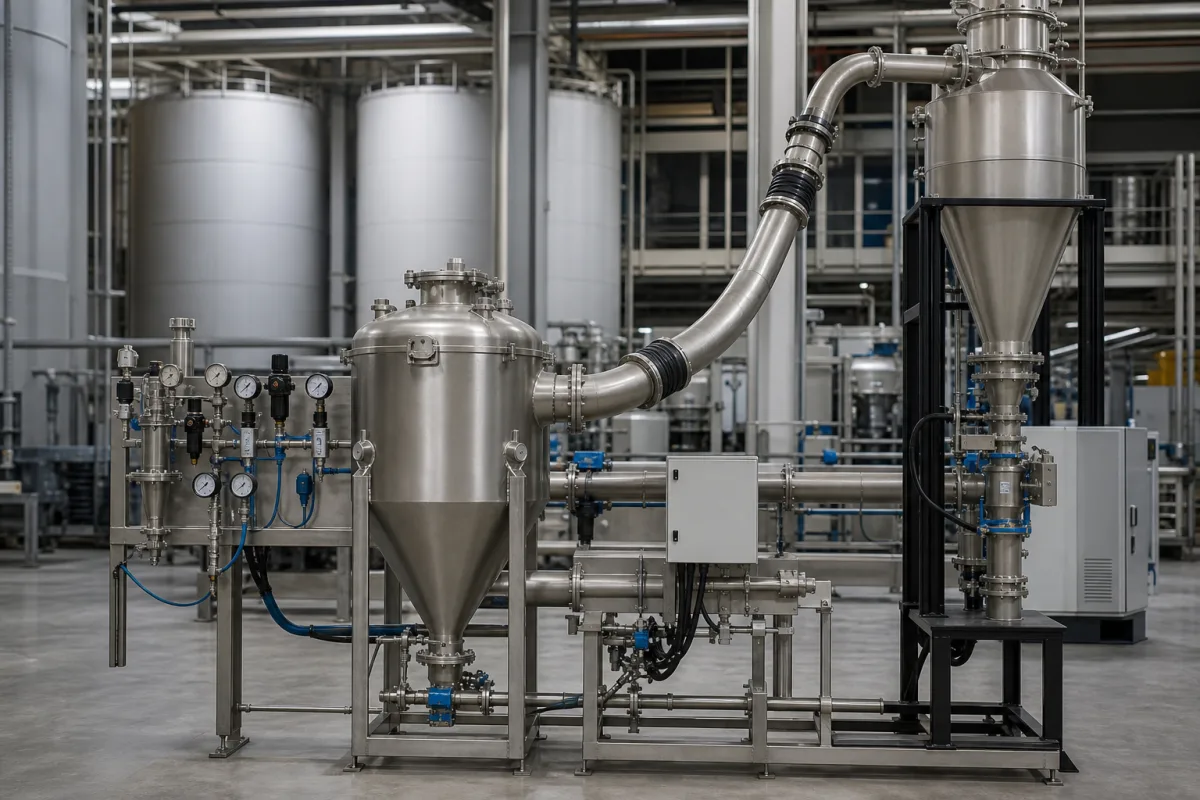
A canonical Pneumatic Conveyor is characterized by the integration of Air Compressor and Material Feeder. In industrial production environments, manufacturers listed on CNFX commonly emphasize Stainless Steel construction to support stable, high-cycle operation across diverse manufacturing scenarios.

A device that uses compressed air or gas to transport catalyst materials through enclosed pipelines in industrial systems.
Product Specifications

Technical details and manufacturing context for Pneumatic Conveyor

Definition
Within the Automated Catalyst Loading and Unloading System, the Pneumatic Conveyor is responsible for the controlled transportation of catalyst particles between storage vessels, reactors, and processing units. It enables dust-free, efficient material transfer while maintaining catalyst integrity and preventing contamination.
Working Principle
Operates by creating a pressure differential that moves catalyst particles through sealed pipelines using compressed air or inert gas. Material is entrained in the air stream and transported to the destination, where it is separated from the conveying medium through cyclones or filters.
Common Materials
Stainless Steel, Carbon Steel, Polyurethane
Technical Parameters
  • Material handling capacity of the pneumatic conveyor (kg/h) Standard Spec
Components / BOM
  • Air Compressor
    Generates compressed air for material transport
    Material: Cast Iron, Steel
  • Material Feeder
    Controls the entry of catalyst into the conveying line
    Material: Stainless Steel
  • Cyclone Separator
    Separates catalyst particles from the conveying air
    Material: Carbon Steel
Engineering Reasoning
0.5-6.0 bar (gauge pressure), 15-35 m/s conveying velocity
Material yield strength threshold: 250 MPa for carbon steel pipelines, 0.8 bar minimum pressure differential for dense phase conveying
Design Rationale: Pipeline erosion failure due to particle-wall collisions exceeding material fatigue limit at conveying velocities >40 m/s, causing wall thinning and eventual rupture
Risk Mitigation (FMEA)
Trigger Moisture ingress into compressed air supply exceeding 100 ppm water content
Mode: Catalyst material hydration and pipeline clogging at bends and reducers
Strategy: Install desiccant air dryer with dew point monitoring at -40°C and automatic regeneration cycle
Trigger Particle size distribution shift with >15% fines below 20 microns
Mode: Air filter blinding and system pressure drop exceeding 1.2 bar across filter assembly
Strategy: Implement inline particle size analyzer with automatic diverter valve to bypass oversize material to holding silo

Industry Taxonomies & Aliases

Commonly used trade names and technical identifiers for Pneumatic Conveyor.

Applied To / Applications

This component is essential for the following industrial systems and equipment:

Industrial Ecosystem & Supply Chain DNA

Complementary Systems
Downstream Applications
Specialized Tooling

Application Fit & Sizing Matrix

Operational Limits
pressure: Up to 6 bar (87 psi)
flow rate: 0.5 to 50 m³/h
temperature: -20°C to 150°C
slurry concentration: Up to 30% solids by weight
Media Compatibility
✓ Catalyst pellets (zeolite, alumina-based) ✓ Plastic resin beads (polyethylene, polypropylene) ✓ Food-grade powders (flour, starch)
Unsuitable: Highly abrasive materials (silica sand, metal shot) due to excessive wear on pipeline and components
Sizing Data Required
  • Required mass flow rate (kg/h)
  • Conveying distance and vertical lift (meters)
  • Material bulk density and particle size distribution (kg/m³, mm)

Reliability & Engineering Risk Analysis

Failure Mode & Root Cause
Pipeline abrasion and erosion
Cause: High-velocity particle impact and friction against pipe walls, especially at bends and elbows, leading to wall thinning, leaks, and eventual rupture.
Filter media blinding or rupture
Cause: Excessive dust loading, moisture, or improper cleaning cycles causing filter pores to clog (blinding) or material fatigue leading to tears (rupture), resulting in reduced airflow or product loss.
Maintenance Indicators
  • Audible hissing or whistling from pipeline joints or fittings, indicating air leaks that reduce conveying efficiency.
  • Visible dust emission from filter vents or connections, signaling filter failure or system overpressure.
Engineering Tips
  • Install wear-resistant liners (e.g., ceramic, urethane) at high-impact areas like bends and use gradual-radius elbows to reduce particle velocity and abrasion.
  • Implement condition-based monitoring with differential pressure gauges across filters and inline particle sensors to optimize cleaning cycles and detect abnormal wear early.

Compliance & Manufacturing Standards

Reference Standards
ISO 8573-1:2010 (Compressed air quality classes) ANSI/CEMA 550-2003 (Classification and definitions of bulk materials) DIN 24300-1 (Pneumatic fluid power - General rules and safety requirements)
Manufacturing Precision
  • Pipe alignment: +/- 1.5mm per meter
  • Pressure vessel weld seam: +/- 0.5mm deviation
Quality Inspection
  • Leakage test (pressure decay method)
  • Material composition verification (XRF analysis)

Factories Producing Pneumatic Conveyor

Verified manufacturers with capability to produce this product in China

✓ 93% Supplier Capability Match Found

P Project Engineer from Germany Feb 22, 2026
★★★★★
"The technical documentation for this Pneumatic Conveyor is very thorough, especially regarding Conveying Capacity (kg/h)."
Technical Specifications Verified
S Sourcing Manager from Brazil Feb 19, 2026
★★★★★
"Reliable performance in harsh Machinery and Equipment Manufacturing environments. No issues with the Pneumatic Conveyor so far."
Technical Specifications Verified
P Procurement Specialist from Canada Feb 16, 2026
★★★★★
"Testing the Pneumatic Conveyor now; the Conveying Capacity (kg/h) results are within 1% of the laboratory datasheet."
Technical Specifications Verified
Verification Protocol

“Feedback is collected from verified sourcing managers during RFQ (Request for Quote) and factory evaluation processes on CNFX. These reports represent historical performance data and technical audit summaries from our B2B manufacturing network.”

15 sourcing managers are analyzing this specification now. Last inquiry for Pneumatic Conveyor from Turkey (1h ago).

Supply Chain Compatible Machinery & Devices

Heavy-Duty CNC Plasma Cutting Machine

Industrial machine for precision metal cutting using plasma arc technology

Explore Specs →
Automated Assembly Line System

Integrated production system for sequential component assembly operations

Explore Specs →
Automated Powder Coating System

Integrated industrial system for applying dry powder coatings to metal substrates.

Explore Specs →
Centrifugal Pump Impeller

Rotating component that transfers energy to fluid in centrifugal pumps.

Explore Specs →

Frequently Asked Questions

What materials can the pneumatic conveyor handle?

This pneumatic conveyor is specifically designed for transporting catalyst materials in industrial systems, using compressed air or gas through enclosed pipelines.

What are the main components of this pneumatic conveyor system?

The system includes an air compressor, cyclone separator, and material feeder, working together to efficiently transport catalyst materials through the pipeline network.

What specifications should I consider when selecting a pneumatic conveyor?

Key specifications include conveying capacity (kg/h), pipe diameter (mm), and operating pressure (bar), which determine the system's performance for your specific industrial application.

Can I contact factories directly on CNFX?

CNFX is an open directory, not a transaction platform. Each factory profile provides direct contact information and production details to help you initiate direct inquiries with Chinese suppliers.

Get Quote for Pneumatic Conveyor

Request technical pricing, lead times, or customized specifications for Pneumatic Conveyor directly from verified manufacturing units.

Your business information is encrypted and only shared with verified Pneumatic Conveyor suppliers.

Thank you! Your message has been sent. We'll respond within 1–3 business days.

Need to Manufacture Pneumatic Conveyor?

Connect with verified factories specializing in this product category

Add Your Factory Contact Us
Previous Product
Pneumatic Actuator
Next Product
Pneumatic Cylinder