Product Collection Tank
View system integration details
This page explains how Pressure Relief Device is classified within Machinery and Equipment Manufacturing. Technical values and manufacturer relationships are research references; confirm the current specification and supplier evidence for each order.
A safety component that automatically releases excess pressure from a closed system to prevent equipment failure or rupture.
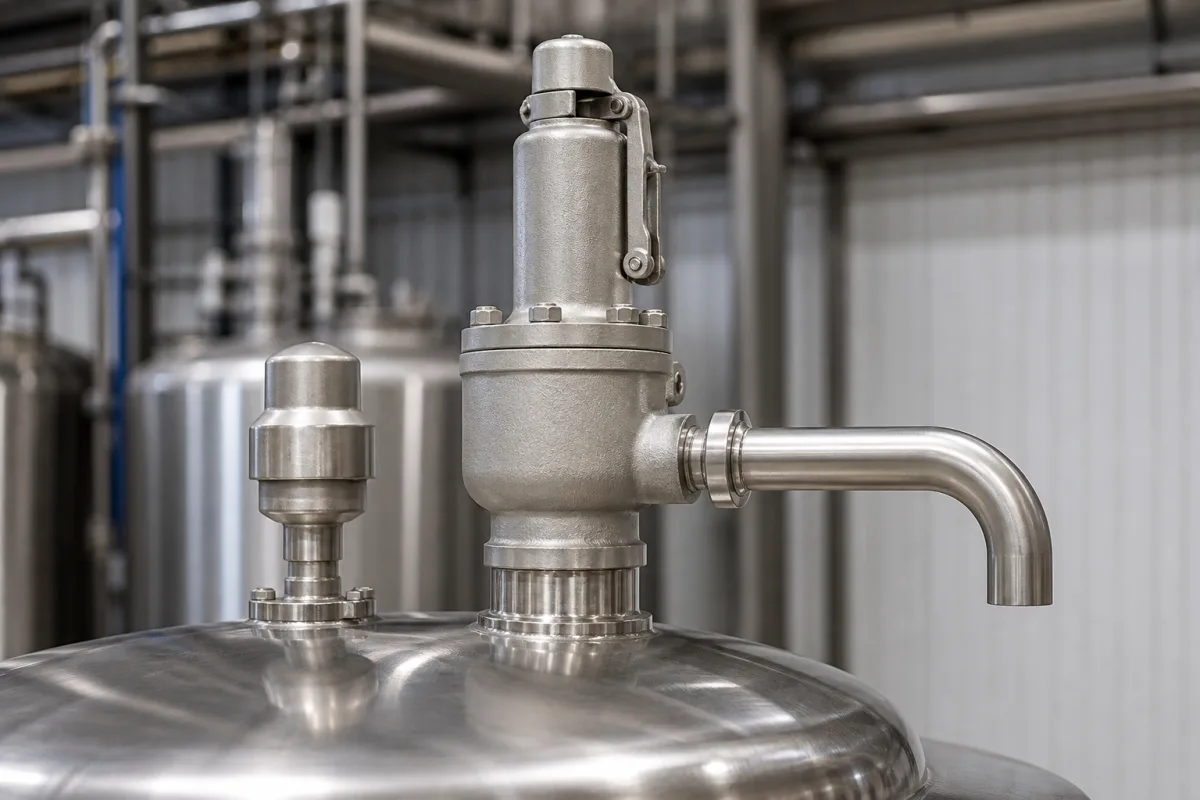
Technical details and manufacturing context for Pressure Relief Device
| Parameter | Typical range | Notes & selection driver |
|---|---|---|
| Set Pressure Range | 0.1–10 MPa | Adjustable within rangeAPI 520 |
| Relieving Capacity | 500–5000 kg/h | At set pressureISO 4126 |
| Operating Temperature | -40–200 °C | For standard elastomersASME B16.34 |
| Accuracy | ±5 % | Of set pressureAPI 520 |
| Leakage Rate | ≤0.5 mL/min | At 90% of set pressure |
| Connection Size | DN15–DN200 mm | Flanged or threadedDIN EN 1092-1 |
| Body Material | WCB/CF8/CF8M | Carbon steel or stainlessASTM A216/A351 |
| Seat Material | PTFE/PEEK | Chemical compatibilityASTM D4894 |
| Weight | 5–150 kg | Depends on size and material |
| IP Rating | IP65 | For electrical accessoriesIEC 60529 |
| Response Time | ≤0.1 s | Full lift within 10% overpressureISO 4126 |
Ranges are indicative industry figures for RFQ preparation, not a supplier commitment. Confirm every value and standard with the legal manufacturer before ordering.
This component is essential for the following industrial systems and equipment:
| pressure: | Up to 10,000 psi (690 bar) |
| flow rate: | 0.1 to 500 GPM (0.38 to 1893 L/min) |
| temperature: | -40°C to +200°C |
| slurry concentration: | Up to 40% solids by weight |
Indicative industry ranges for design and RFQ preparation. Confirm the exact figures and applicable standard with the manufacturer before specifying.
Quoted from the published standard.
Manufacturer profiles associated with Pressure Relief Device.
Manufacturer listings support early research and capability understanding. They are not certification, ranking, or transaction guarantees.
A practical evidence checklist for RFQ preparation and supplier evaluation.
CNFX does not score or rank suppliers. Buyers must verify all claims and documents with the legal manufacturer before ordering.
It automatically releases excess pressure from a closed system to prevent equipment failure, rupture, or explosion.
Stainless steel, carbon steel, and elastomer seals are commonly used, but specific materials depend on the application.
A spring-loaded valve reseats and closes after pressure drops, while a rupture disc bursts and must be replaced.
Common standards include ISO 4126, API 520, ASME B16.34, and, but verification with the manufacturer is required.
Editorial classification, named public sources where available, and source-reviewed manufacturer records.
Ask for use case, specification boundaries, supplier type, and RFQ preparation information for this product.
Compare manufacturer profiles with relevant product and process capability.