Industry-Verified Manufacturing Data (2026)

Torque Sensor

Based on aggregated insights from multiple verified factory profiles within the CNFX directory, the standard Torque Sensor used in the Machinery and Equipment Manufacturing sector typically supports operational capacities ranging from standard industrial configurations to heavy-duty production requirements.

Technical Definition & Core Assembly

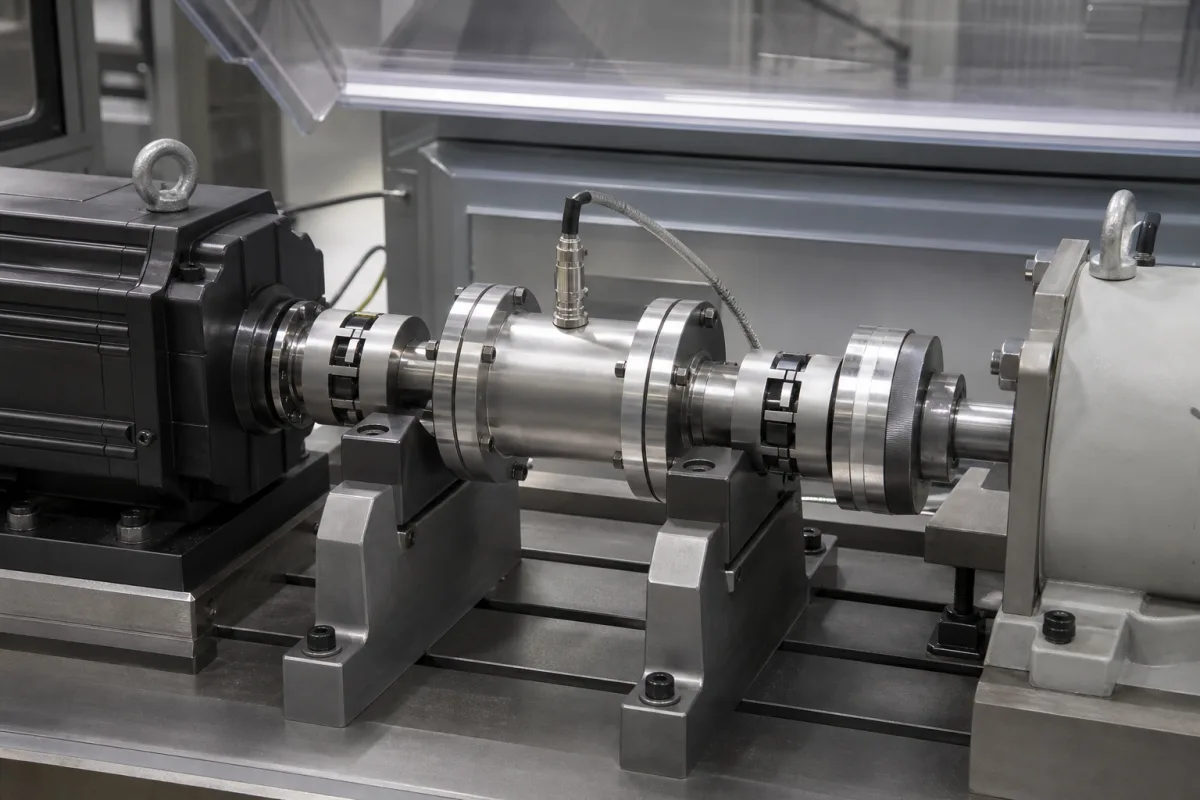
A canonical Torque Sensor is characterized by the integration of Sensing Shaft and Strain Gauges. In industrial production environments, manufacturers listed on CNFX commonly emphasize Stainless steel construction to support stable, high-cycle operation across diverse manufacturing scenarios.

A device that measures and converts torque (rotational force) into an electrical signal for monitoring and control purposes.
Product Specifications

Technical details and manufacturing context for Torque Sensor

Definition
A torque sensor is a critical component within a Torque Control System that precisely measures the rotational force applied to a shaft or rotating element. It converts mechanical torque into proportional electrical signals (typically voltage, current, or frequency) that are used by the system's controller to monitor, regulate, and maintain desired torque levels in machinery and equipment.
Working Principle
Torque sensors operate by measuring the torsional deformation (shear strain) of a shaft or sensing element when torque is applied. This deformation is detected using various technologies such as strain gauges (which change electrical resistance), magnetoelastic effects (changing magnetic properties), or optical methods. The resulting signal is amplified, conditioned, and transmitted to the control system.
Common Materials
Stainless steel, Alloy steel, Strain gauge foil, Electrical insulation materials
Technical Parameters
  • Nominal torque rating - the maximum torque the sensor can measure accurately without damage (Nm) Standard Spec
Components / BOM
  • Sensing Shaft
    Mechanical element that undergoes torsional deformation when torque is applied
    Material: Alloy steel
  • Strain Gauges
    Convert mechanical strain into electrical resistance changes
    Material: Constantan or Karma alloy foil
  • Signal Conditioning Circuit
    Amplifies and processes the weak electrical signals from strain gauges
    Material: Electronic components on PCB
  • Housing
    Protects internal components from environmental factors and provides mounting interface
    Material: Stainless steel or aluminum
Engineering Reasoning
0.1-1000 N·m
1200 N·m (20% over maximum rated torque)
Design Rationale: Shear stress exceeding material yield strength (τ_max > σ_y/√3 per von Mises criterion)
Risk Mitigation (FMEA)
Trigger Strain gauge fatigue at 10^7 cycles (S-N curve for constantan alloy)
Mode: Signal drift exceeding ±0.5% full-scale output
Strategy: Redundant Wheatstone bridge configuration with 3σ statistical monitoring
Trigger Thermal expansion mismatch (Δα = 23×10^-6 K^-1 between steel shaft and aluminum housing)
Mode: Zero-point shift of 0.1% per 10K temperature gradient
Strategy: Bimetallic compensation coupling with Invar alloy (α = 1.2×10^-6 K^-1)

Industry Taxonomies & Aliases

Commonly used trade names and technical identifiers for Torque Sensor.

Applied To / Applications

This component is essential for the following industrial systems and equipment:

Industrial Ecosystem & Supply Chain DNA

Complementary Systems
Downstream Applications
Specialized Tooling

Application Fit & Sizing Matrix

Operational Limits
pressure: 0 to 100 bar
other spec: Max torque range: 0.1 Nm to 50,000 Nm, Accuracy: ±0.1% to ±0.5% FS, Overload capacity: 150% of rated torque
temperature: -40°C to +125°C
Media Compatibility
✓ Industrial machinery shafts ✓ Electric motor test stands ✓ Automotive drivetrain components
Unsuitable: High-vibration environments with >10g shock loads
Sizing Data Required
  • Maximum torque requirement (Nm)
  • Shaft diameter and mounting configuration
  • Required accuracy and response frequency

Reliability & Engineering Risk Analysis

Failure Mode & Root Cause
Signal Drift/Inaccuracy
Cause: Strain gauge degradation due to thermal cycling, mechanical fatigue, or moisture ingress compromising electrical resistance stability.
Mechanical Overload Damage
Cause: Exceeding rated torque capacity causing permanent deformation of sensing elements (e.g., torsion bar, strain gauges) or shear failure of mounting components.
Maintenance Indicators
  • Erratic or zero output readings during operation despite normal load conditions
  • Audible creaking or cracking noises from sensor housing during torque application
Engineering Tips
  • Implement regular torque calibration cycles using traceable standards, accounting for operational temperature ranges to compensate for thermal drift effects.
  • Install mechanical torque limiters or overload protection devices upstream to prevent transient peak loads exceeding sensor specifications.

Compliance & Manufacturing Standards

Reference Standards
ISO 9001:2015 - Quality Management Systems ISO/IEC 17025:2017 - Testing and Calibration Laboratories CE Marking - EU Machinery Directive 2006/42/EC
Manufacturing Precision
  • Torque Accuracy: +/-0.5% of full scale
  • Temperature Drift: +/-0.02% FS/°C
Quality Inspection
  • Calibration Verification against NIST-traceable standards
  • Environmental Testing (Temperature, Humidity, Vibration)

Factories Producing Torque Sensor

Verified manufacturers with capability to produce this product in China

✓ 92% Supplier Capability Match Found

P Project Engineer from United States Jan 29, 2026
★★★★★
"The technical documentation for this Torque Sensor is very thorough, especially regarding technical reliability."
Technical Specifications Verified
S Sourcing Manager from United Arab Emirates Jan 26, 2026
★★★★★
"Reliable performance in harsh Machinery and Equipment Manufacturing environments. No issues with the Torque Sensor so far."
Technical Specifications Verified
P Procurement Specialist from Australia Jan 23, 2026
★★★★★
"Testing the Torque Sensor now; the technical reliability results are within 1% of the laboratory datasheet."
Technical Specifications Verified
Verification Protocol

“Feedback is collected from verified sourcing managers during RFQ (Request for Quote) and factory evaluation processes on CNFX. These reports represent historical performance data and technical audit summaries from our B2B manufacturing network.”

14 sourcing managers are analyzing this specification now. Last inquiry for Torque Sensor from USA (24m ago).

Supply Chain Compatible Machinery & Devices

Heavy-Duty CNC Plasma Cutting Machine

Industrial machine for precision metal cutting using plasma arc technology

Explore Specs →
Automated Assembly Line System

Integrated production system for sequential component assembly operations

Explore Specs →
Automated Powder Coating System

Integrated industrial system for applying dry powder coatings to metal substrates.

Explore Specs →
Centrifugal Pump Impeller

Rotating component that transfers energy to fluid in centrifugal pumps.

Explore Specs →

Frequently Asked Questions

What materials are used in the construction of this torque sensor?

Our torque sensor features a durable stainless steel and alloy steel housing, strain gauge foil for precise measurement, and electrical insulation materials for reliable performance in industrial environments.

How does the torque sensor convert rotational force into electrical signals?

The sensor uses strain gauges bonded to a sensing shaft that deform under torque. This deformation changes electrical resistance, which is then converted into precise voltage signals through the signal conditioning circuit for monitoring and control systems.

What industries commonly use this type of torque sensor?

This torque sensor is specifically designed for machinery and equipment manufacturing applications, including industrial automation, production line monitoring, quality control systems, and equipment performance testing where precise torque measurement is critical.

Can I contact factories directly on CNFX?

CNFX is an open directory, not a transaction platform. Each factory profile provides direct contact information and production details to help you initiate direct inquiries with Chinese suppliers.

Get Quote for Torque Sensor

Request technical pricing, lead times, or customized specifications for Torque Sensor directly from verified manufacturing units.

Your business information is encrypted and only shared with verified Torque Sensor suppliers.

Thank you! Your message has been sent. We'll respond within 1–3 business days.

Need to Manufacture Torque Sensor?

Connect with verified factories specializing in this product category

Add Your Factory Contact Us
Previous Product
Torque Motor / Solenoid
Next Product
Torque Sensor (if equipped)