Industry-Verified Manufacturing Data (2026)

Torque Control Unit

Based on aggregated insights from multiple verified factory profiles within the CNFX directory, the standard Torque Control Unit used in the Beverage Manufacturing sector typically supports operational capacities ranging from standard industrial configurations to heavy-duty production requirements.

Technical Definition & Core Assembly

A canonical Torque Control Unit is characterized by the integration of Torque Sensor and Control Processor. In industrial production environments, manufacturers listed on CNFX commonly emphasize Aluminum alloy housing construction to support stable, high-cycle operation across diverse manufacturing scenarios.

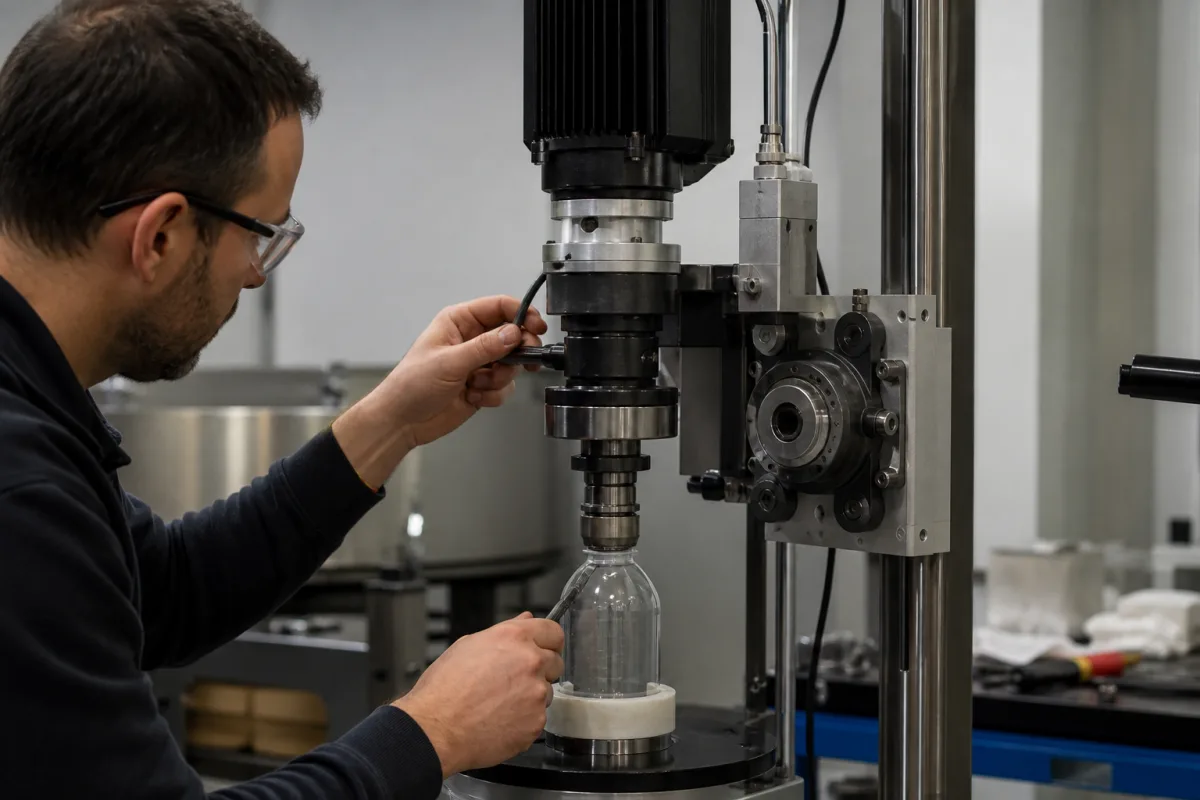
A precision control device that regulates and monitors the rotational force applied during bottle capping operations.
Product Specifications

Technical details and manufacturing context for Torque Control Unit

Definition
The Torque Control Unit is a critical component of the High-Speed Rotary Bottle Capping Machine that precisely manages the tightening torque applied to bottle caps. It ensures consistent seal integrity, prevents over-tightening that could damage bottles or caps, and maintains production quality standards by providing accurate torque measurement and control during high-speed packaging operations.
Working Principle
The unit typically uses a combination of sensors (such as torque transducers or strain gauges) to measure the rotational force being applied. This data is processed by a control system (often PLC-based) that compares the measured torque against preset values. Based on this comparison, the system adjusts the capping mechanism's operation through actuators or servo motors to achieve the desired torque level, ensuring each bottle is capped with consistent force.
Common Materials
Aluminum alloy housing, Stainless steel components, Electronic circuit boards, Precision bearings
Technical Parameters
  • Torque measurement and control range (N·m) Customizable
Components / BOM
  • Torque Sensor
    Measures the rotational force being applied during capping
    Material: Stainless steel with strain gauges
  • Control Processor
    Processes sensor data and controls torque adjustment
    Material: Electronic components on PCB
  • Servo Motor Interface
    Connects to and controls the capping mechanism's drive system
    Material: Aluminum housing with electrical connectors
  • HMI Display
    Provides user interface for setting and monitoring torque parameters
    Material: Touchscreen panel with protective glass
Engineering Reasoning
0.5-25.0 N·m
28.5 N·m continuous torque or 31.0 N·m peak torque for >100 ms
Design Rationale: Permanent magnet synchronous motor demagnetization at 150°C Curie temperature threshold
Risk Mitigation (FMEA)
Trigger Encoder signal loss for >10 ms due to EMI at 85 dBμV/m
Mode: Torque overshoot to 35 N·m during PID windup
Strategy: Shielded twisted-pair cabling with ferrite cores at 100 MHz cutoff
Trigger Harmonic distortion exceeding 8% THD at 600 Hz carrier frequency
Mode: Stator winding insulation breakdown at 1500 V/mm
Strategy: 3rd-order passive filter with 47 μF capacitance at 50 Ω impedance

Industry Taxonomies & Aliases

Commonly used trade names and technical identifiers for Torque Control Unit.

Applied To / Applications

This component is essential for the following industrial systems and equipment:

Industrial Ecosystem & Supply Chain DNA

Complementary Systems
Downstream Applications
Specialized Tooling

Application Fit & Sizing Matrix

Operational Limits
accuracy: ±1% of set torque
pressure: 0-10 bar hydraulic supply pressure
speed range: 100-3000 RPM
temperature: 5°C to 40°C (operating), -10°C to 60°C (storage)
torque range: 0.1-50 Nm (adjustable)
repeatability: ±0.5%
Media Compatibility
✓ PET plastic bottle caps ✓ Aluminum screw caps ✓ Glass bottle metal lids
Unsuitable: High-viscosity adhesive application environments (risk of contamination and torque measurement interference)
Sizing Data Required
  • Required torque range (Nm)
  • Production line speed (bottles/minute)
  • Bottle cap diameter and material

Reliability & Engineering Risk Analysis

Failure Mode & Root Cause
Torque sensor drift/calibration loss
Cause: Mechanical wear in sensor components, thermal expansion/contraction cycles, or contamination from lubricants/debris affecting measurement accuracy
Actuator/valve sticking or binding
Cause: Contaminant buildup in hydraulic/pneumatic lines, seal degradation allowing fluid ingress, or mechanical misalignment from vibration/impact damage
Maintenance Indicators
  • Inconsistent torque readings (>5% variation from setpoint during identical operations)
  • Unusual grinding/hissing noises during actuation or visible fluid leaks around seals/connections
Engineering Tips
  • Implement quarterly torque calibration verification using traceable standards and environmental compensation adjustments
  • Install dual-stage filtration in hydraulic/pneumatic supply lines and conduct vibration analysis biannually to detect early mechanical degradation

Compliance & Manufacturing Standards

Reference Standards
ISO 6789-1:2017 (Screwdrivers and torque wools - Requirements and test methods for design conformance testing and quality conformance testing) ANSI/ASME B107.300-2018 (Torque Tools - Safety Requirements) DIN EN ISO 5393:2017 (Rotary tools for threaded fasteners - Performance test method)
Manufacturing Precision
  • Torque output accuracy: +/- 2% of set value
  • Repeatability: +/- 1% of set value
Quality Inspection
  • Torque calibration verification using certified torque testers (per ISO 6789-2)
  • Electrical safety testing (insulation resistance, dielectric strength) for powered units

Factories Producing Torque Control Unit

Verified manufacturers with capability to produce this product in China

✓ 97% Supplier Capability Match Found

P Project Engineer from Canada Jan 09, 2026
★★★★★
"As a professional in the Beverage Manufacturing sector, I confirm this Torque Control Unit meets all ISO standards."
Technical Specifications Verified
S Sourcing Manager from United States Jan 06, 2026
★★★★★
"Standard OEM quality for Beverage Manufacturing applications. The Torque Control Unit arrived with full certification."
Technical Specifications Verified
P Procurement Specialist from United Arab Emirates Jan 03, 2026
★★★★★
"Great transparency on the Torque Control Unit components. Essential for our Beverage Manufacturing supply chain."
Technical Specifications Verified
Verification Protocol

“Feedback is collected from verified sourcing managers during RFQ (Request for Quote) and factory evaluation processes on CNFX. These reports represent historical performance data and technical audit summaries from our B2B manufacturing network.”

15 sourcing managers are analyzing this specification now. Last inquiry for Torque Control Unit from USA (1h ago).

Supply Chain Compatible Machinery & Devices

Automated Beverage Filling and Capping Machine

Automated machine for filling and sealing beverage containers at high speed.

Explore Specs →
Automated Beverage Batch Blending System

Automated system for precise multi-ingredient beverage batch preparation.

Explore Specs →
Automated Beverage Container Sterilization System

Automated system for sterilizing beverage containers before filling.

Explore Specs →
Automated Beverage Labeling and Coding System

Integrated system for applying labels and printing codes on beverage containers.

Explore Specs →

Frequently Asked Questions

How does the torque control unit improve bottle capping quality in beverage manufacturing?

The unit precisely regulates and monitors rotational force during capping, ensuring consistent seal integrity, preventing over-tightening or under-tightening, and reducing product waste and leakage risks.

What maintenance is required for the aluminum alloy housing and stainless steel components?

The aluminum alloy housing requires periodic cleaning to prevent corrosion from beverage residues, while stainless steel components need lubrication of moving parts and inspection for wear, typically during scheduled maintenance shutdowns.

Can this torque control unit integrate with existing beverage production line systems?

Yes, it features a servo motor interface and HMI display for seamless integration with most production line controls, and the torque sensor provides real-time data feedback for process optimization and quality assurance.

Can I contact factories directly on CNFX?

CNFX is an open directory, not a transaction platform. Each factory profile provides direct contact information and production details to help you initiate direct inquiries with Chinese suppliers.

Get Quote for Torque Control Unit

Request technical pricing, lead times, or customized specifications for Torque Control Unit directly from verified manufacturing units.

Your business information is encrypted and only shared with verified Torque Control Unit suppliers.

Thank you! Your message has been sent. We'll respond within 1–3 business days.

Need to Manufacture Torque Control Unit?

Connect with verified factories specializing in this product category

Add Your Factory Contact Us
Previous Product
Temperature-Controlled Storage Tank
Next Product
Torque Monitoring Sensor