Industry-Verified Manufacturing Data (2026)

Heater

Based on aggregated insights from multiple verified factory profiles within the CNFX directory, the standard Heater used in the Motor Vehicle Manufacturing sector typically supports operational capacities ranging from standard industrial configurations to heavy-duty production requirements.

Technical Definition & Core Assembly

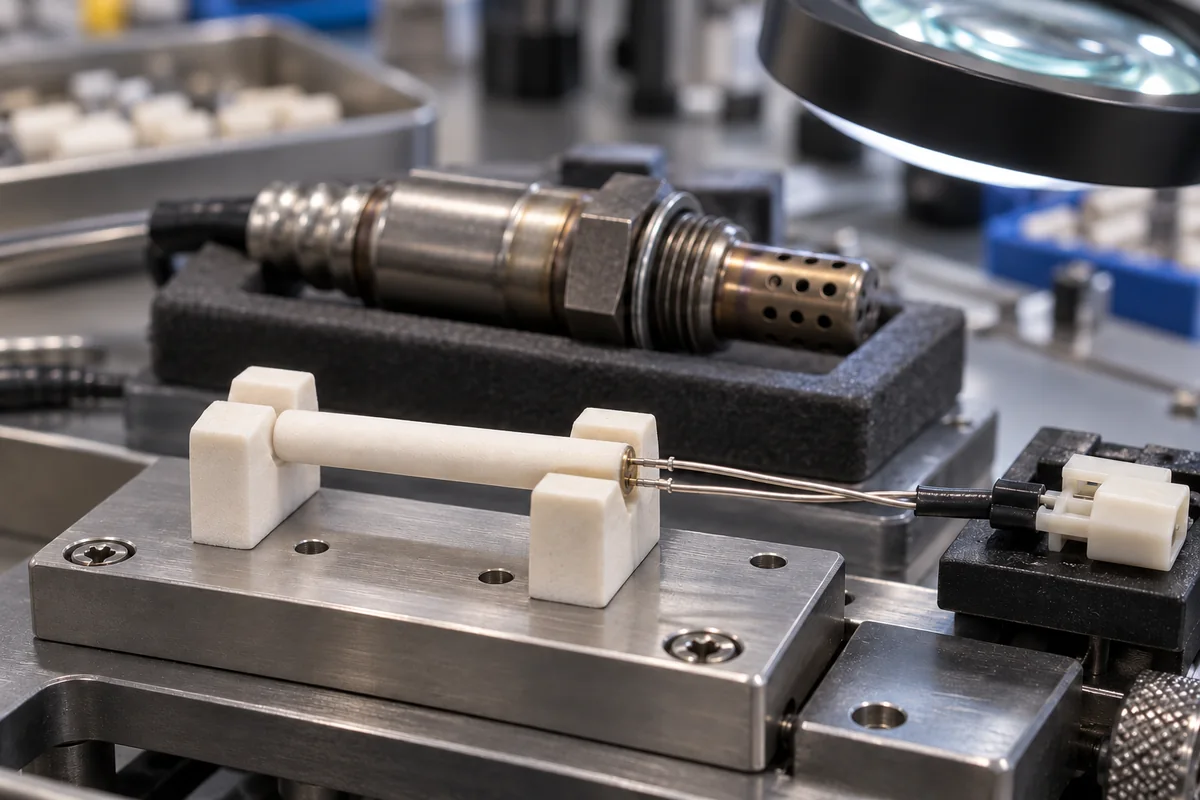
A canonical Heater is characterized by the integration of Heating Element and Ceramic Substrate. In industrial production environments, manufacturers listed on CNFX commonly emphasize Platinum wire construction to support stable, high-cycle operation across diverse manufacturing scenarios.

A component within an oxygen sensor that heats the sensing element to its optimal operating temperature.
Product Specifications

Technical details and manufacturing context for Heater

Definition
The heater is an integral part of an oxygen sensor, typically located near the sensing element. Its primary function is to rapidly elevate the temperature of the zirconia ceramic sensing element to its required operational range (typically 600-800°C) to ensure accurate measurement of oxygen concentration in exhaust gases, especially during cold engine starts.
Working Principle
The heater operates on electrical resistance heating. When voltage is applied, current flows through a resistive heating element (often made of platinum wire or a ceramic heater), converting electrical energy into thermal energy. This heat is conducted to the adjacent sensing element, bringing it to the necessary temperature for proper ionic conductivity and sensor function.
Common Materials
Platinum wire, Alumina ceramic substrate
Technical Parameters
  • Heater resistance at room temperature, typically ranging from 2 to 15 ohms depending on the sensor design and application. (Ω) Standard Spec
Components / BOM
  • Heating Element
    The resistive wire or printed circuit that generates heat when electrical current passes through it.
    Material: Platinum or platinum alloy
  • Ceramic Substrate
    Provides structural support and electrical insulation for the heating element, and conducts heat to the sensing element.
    Material: Alumina (Al2O3) ceramic
  • Lead Wires
    Conduct electrical power from the vehicle's wiring harness to the heating element.
    Material: Nickel-plated copper

Industry Taxonomies & Aliases

Commonly used trade names and technical identifiers for Heater.

Applied To / Applications

This component is essential for the following industrial systems and equipment:

Industrial Ecosystem & Supply Chain DNA

Complementary Systems
Downstream Applications
Specialized Tooling

Application Fit & Sizing Matrix

Operational Limits
pressure: Max pressure: 10 bar (145 psi), typical operating: 1-5 bar
other spec: Voltage range: 12-24V DC, power consumption: 10-25W, response time: <30 seconds to operating temp
temperature: Operating range: -40°C to 900°C, optimal heating: 600-800°C
Media Compatibility
✓ Automotive exhaust gases ✓ Industrial combustion flue gases ✓ Laboratory calibration gas mixtures
Unsuitable: Corrosive environments with high concentrations of sulfur compounds or halogens
Sizing Data Required
  • Required operating temperature of sensing element
  • Available electrical power supply voltage
  • Gas flow rate and composition in application

Reliability & Engineering Risk Analysis

Failure Mode & Root Cause
Thermal stress cracking
Cause: Rapid temperature cycling causing differential expansion in heating elements or refractory materials, leading to fatigue fractures.
Scale and fouling buildup
Cause: Mineral deposits from water or process fluids accumulating on heat transfer surfaces, reducing efficiency and causing localized overheating.
Maintenance Indicators
  • Unusual popping or cracking sounds during operation indicating thermal stress or moisture intrusion
  • Visible hot spots or discoloration on the heater casing suggesting insulation failure or uneven heating
Engineering Tips
  • Implement gradual startup/shutdown procedures to minimize thermal shock and extend heating element lifespan
  • Install and maintain proper water treatment systems to prevent scale formation and corrosion in heat exchangers

Compliance & Manufacturing Standards

Reference Standards
ISO 9001:2015 - Quality Management Systems IEC 60335-2-30 - Safety of household and similar electrical appliances EN 60335-2-30 - European harmonized standard for electric heaters
Manufacturing Precision
  • Temperature uniformity: +/- 5°C across heating surface
  • Electrical insulation resistance: >100 MΩ at 500 V DC
Quality Inspection
  • Thermal imaging test for heat distribution uniformity
  • Dielectric strength test at 1250 V AC for 1 minute

Factories Producing Heater

Verified manufacturers with capability to produce this product in China

✓ 97% Supplier Capability Match Found

P Project Engineer from Canada Feb 25, 2026
★★★★★
"The technical documentation for this Heater is very thorough, especially regarding technical reliability."
Technical Specifications Verified
S Sourcing Manager from United States Feb 22, 2026
★★★★★
"Reliable performance in harsh Motor Vehicle Manufacturing environments. No issues with the Heater so far."
Technical Specifications Verified
P Procurement Specialist from United Arab Emirates Feb 19, 2026
★★★★★
"Testing the Heater now; the technical reliability results are within 1% of the laboratory datasheet."
Technical Specifications Verified
Verification Protocol

“Feedback is collected from verified sourcing managers during RFQ (Request for Quote) and factory evaluation processes on CNFX. These reports represent historical performance data and technical audit summaries from our B2B manufacturing network.”

11 sourcing managers are analyzing this specification now. Last inquiry for Heater from Poland (1h ago).

Supply Chain Compatible Machinery & Devices

Automotive Wireless Power Transfer System

Wireless charging system for electric vehicles using electromagnetic induction.

Explore Specs →
Automotive Solid-State Battery Pack

High-energy-density solid-state battery system for electric vehicles

Explore Specs →
Automotive Active Grille Shutter System

Aerodynamic system with motorized shutters for vehicle thermal and efficiency management.

Explore Specs →
Automotive Active Suspension Damping System

Electronically controlled suspension system for vehicle stability and comfort.

Explore Specs →

Frequently Asked Questions

What is the purpose of the heater in an oxygen sensor?

The heater rapidly brings the oxygen sensor's sensing element to its optimal operating temperature (typically 600-800°C), ensuring accurate emissions monitoring and faster sensor activation during cold starts.

Why is platinum wire used in oxygen sensor heaters?

Platinum wire provides excellent electrical conductivity, high-temperature stability (up to 1000°C), and corrosion resistance in harsh exhaust environments, ensuring reliable performance throughout the sensor's lifespan.

How does the alumina ceramic substrate benefit the heater?

Alumina ceramic offers superior thermal insulation, electrical isolation, and structural stability at high temperatures, protecting the platinum heating element while maintaining precise temperature control.

Can I contact factories directly on CNFX?

CNFX is an open directory, not a transaction platform. Each factory profile provides direct contact information and production details to help you initiate direct inquiries with Chinese suppliers.

Get Quote for Heater

Request technical pricing, lead times, or customized specifications for Heater directly from verified manufacturing units.

Your business information is encrypted and only shared with verified Heater suppliers.

Thank you! Your message has been sent. We'll respond within 1–3 business days.

Need to Manufacture Heater?

Connect with verified factories specializing in this product category

Add Your Factory Contact Us
Previous Product
Heated Delivery Lines
Next Product
Housing and Connector