High-Pressure Homogenizer
View system integration details
This page explains how High Pressure Pump is classified within Machinery and Equipment Manufacturing. Technical values and manufacturer relationships are research references; confirm the current specification and supplier evidence for each order.
A positive-displacement pump that generates and maintains high fluid pressures for homogenization processes.
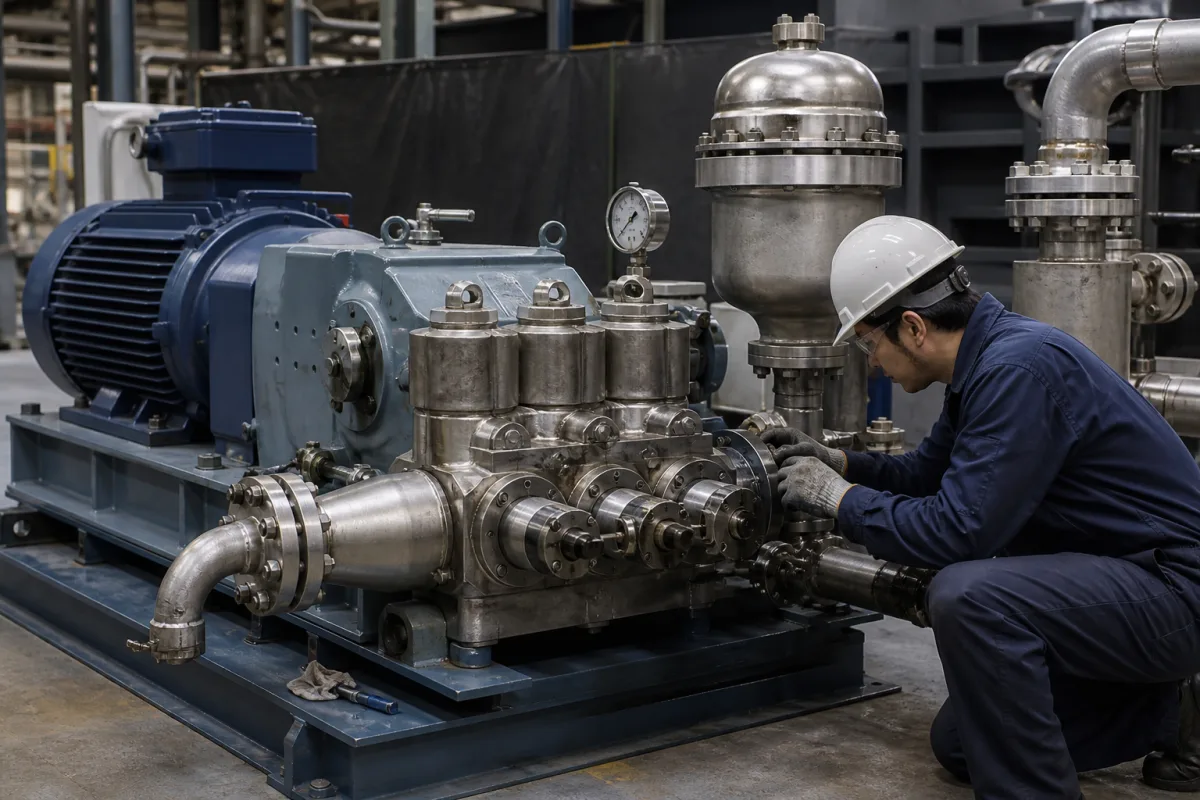
Technical details and manufacturing context for High Pressure Pump
| Parameter | Typical range | Notes & selection driver |
|---|---|---|
| Operating Pressure | 1.0–1.6 MPa | |
| Flow Rate | 5–50 m³/h | Depends on pump size and speed |
| Power Rating | 15–75 kW | Select motor size based on required pressure and flow |
| Voltage | 380–690 V AC | Three-phase, 50/60 HzIEC 60038 |
| Frequency | 50–60 Hz | Motor speed varies with frequencyIEC 60038 |
| Max Fluid Temperature | 80–120 °C | Above 120°C requires special seals |
| Ambient Temperature | -20–40 °C | Outside range may affect performance |
| Ingress Protection | IP54–IP65 | IP65 for dusty or wet environmentsIEC 60529 |
| Pump Efficiency | 75–90 % | Higher efficiency reduces operating costISO 9906 |
| Noise Level | 75–85 dB(A) | At 1 m distanceISO 3744 |
| Weight | 300–1500 kg | Depends on material and power |
| Dimensions (L×W×H) | 1200×800×1000 – 2500×1500×1800 mm | Footprint varies with model |
Ranges are indicative industry figures for RFQ preparation, not a supplier commitment. Confirm every value and standard with the legal manufacturer before ordering.
| pressure: | Up to 2000 bar |
| flow rate: | 50 to 5000 L/h |
| temperature: | 0°C to 150°C |
| slurry concentration: | Up to 40% solids by weight |
Indicative industry ranges for design and RFQ preparation. Confirm the exact figures and applicable standard with the manufacturer before specifying.
Quoted from the published standard.
A practical evidence checklist for RFQ preparation and supplier evaluation.
CNFX does not score or rank suppliers. Buyers must verify all claims and documents with the legal manufacturer before ordering.
12 companies list this product among what they make. Company figures are quoted from each company's own website; every card states where the relationship came from.
Manufacturer listings support early research and capability understanding. They are not certification, ranking, or transaction guarantees.
Ask for use case, specification boundaries, supplier type, and RFQ preparation information for this product.
The pump is designed to generate pressures typically between 100 and 2,000 bar for homogenization. However, the specific operating pressure range depends on the model and application. The directory lists a reference range of 1.0–1.6 MPa (approximately 10–16 bar) for the operating pressure parameter, but this is a general reference and must be confirmed with the manufacturer for the actual model.
The pump can be constructed with stainless steel (316L), ceramic, and high-strength alloys. The choice of material depends on the fluid being processed, its corrosiveness, and the required durability. Verify material compatibility with the manufacturer.
The pump typically requires a power rating between 15 and 75 kW, with a three-phase voltage of 380–690 V AC and a frequency of 50–60 Hz, according to IEC 60038. The exact requirements depend on the pump size and operating conditions. Confirm with the manufacturer.
The maximum fluid temperature is typically between 80 and 120°C. Above 120°C, special seals are required. The ambient temperature range is -20 to 40°C. Always verify these limits with the manufacturer for your specific application.
This component is essential for the following industrial systems and equipment:
Editorial classification, named public sources where available, and source-reviewed manufacturer records.
Compare manufacturer profiles with relevant product and process capability.