This page explains how Smart Continuous Casting System for Non-Ferrous Alloys is classified within Non-Ferrous Metal Production. Technical values and manufacturer relationships are research references; confirm the current specification and supplier evidence for each order.
The Smart Continuous Casting System for Non-Ferrous Alloys is an integrated industrial system designed for the continuous casting of non-ferrous metal alloys such as aluminum, copper, zinc, and lead-based compositions.
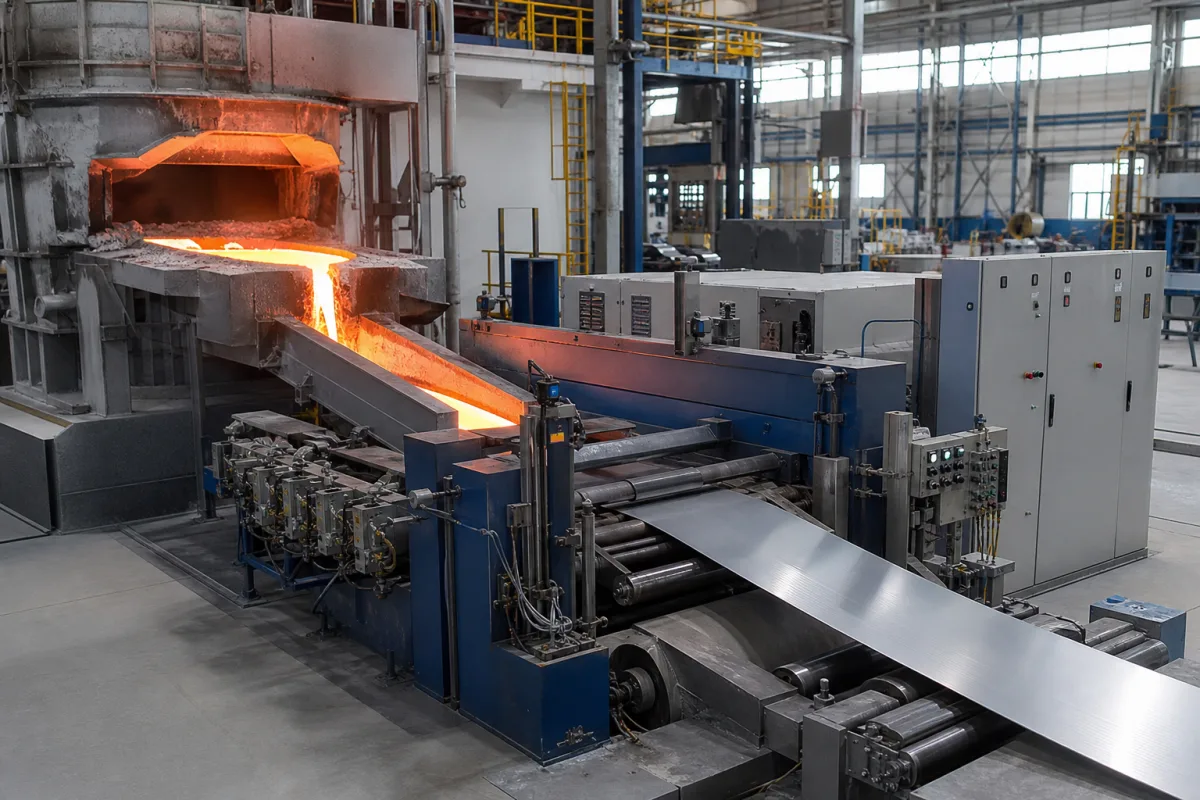
Technical details and manufacturing context for Smart Continuous Casting System for Non-Ferrous Alloys
| Parameter | Typical range | Notes & selection driver |
|---|---|---|
| Maximum Casting SpeedRequired | 5–15 m/min | Highest achievable linear extraction speed for the strand |
| Molten Metal CapacityRequired | 2–10 tons | Maximum weight of alloy the system can process per hour |
| Strand Diameter RangeRequired | 8–25 mm | Minimum and maximum producible strand diameters |
| Cooling Water Flow RateRequired | 50–200 m³/h | Required flow rate for primary and secondary cooling systems |
| Total Installed PowerRequired | 150–350 kW | Sum of electrical power required for all motors, heaters, and controls |
| System Footprint Length | 20–50 m | Approximate length required for installation |
| Casting Temperature Range | 650–950 °C | Depends on alloy type. |
| Casting Tolerance | ±0.5 mm | Tighter tolerance on request.ISO 8062 |
| Control System Voltage | 24 V DC | For PLC and sensors.IEC 61131-2 |
| Operating Temperature Range | 10–45 °C | For control cabinet environment. |
| Ingot Material Grade | EN AW-6060 | Aluminum alloy example; other alloys available.EN 573-3 |
| System Weight | 15–30 t | Foundation load must be considered. |
| Ingot Length Range | 3–6 m | Cut-to-length options available. |
Ranges are indicative industry figures for RFQ preparation, not a supplier commitment. Confirm every value and standard with the legal manufacturer before ordering.
Commonly used trade names and technical identifiers for Smart Continuous Casting System for Non-Ferrous Alloys.
| pressure: | 0.1-2.0 bar (mold pressure) |
| flow rate: | 5-50 kg/min (metal throughput) |
| temperature: | 600-1200°C (alloy dependent) |
| cooling rate: | 10-100°C/s (secondary cooling) |
| casting speed: | 0.5-5.0 m/min |
| slurry concentration: | Not applicable (molten metal system) |
Indicative industry ranges for design and RFQ preparation. Confirm the exact figures and applicable standard with the manufacturer before specifying.
Quoted from the published standard.
Manufacturer profiles associated with Smart Continuous Casting System for Non-Ferrous Alloys.
Manufacturer listings support early research and capability understanding. They are not certification, ranking, or transaction guarantees.
A practical evidence checklist for RFQ preparation and supplier evaluation.
CNFX does not score or rank suppliers. Buyers must verify all claims and documents with the legal manufacturer before ordering.
The system is designed for non-ferrous metal alloys such as aluminum, copper, zinc, and lead-based compositions. Specific alloy grades, such as EN AW-6060, are available as examples, but the actual compatibility must be confirmed with the manufacturer for your intended alloy.
The maximum casting speed is 5–15 m/min, depending on the alloy and strand size. This is a reference range; the achievable speed for a specific configuration must be verified with the supplier.
The system footprint length is approximately 20–50 meters, and the system weight is 15–30 tons. Foundation load must be considered. Exact dimensions and weight depend on the configuration and must be confirmed with the manufacturer.
The casting tolerance is per ISO 8062, and the control system voltage is per IEC 61131-2. Ingot material grade examples are per EN 573-3. These standards are for reference; compliance must be verified with the manufacturer for the specific model.
Editorial classification, named public sources where available, and source-reviewed manufacturer records.
Ask for use case, specification boundaries, supplier type, and RFQ preparation information for this product.
Compare manufacturer profiles with relevant product and process capability.