Industry-Verified Manufacturing Data (2026)

Injection Lance/System

Based on aggregated insights from multiple verified factory profiles within the CNFX directory, the standard Injection Lance/System used in the Chemical Manufacturing sector typically supports operational capacities ranging from standard industrial configurations to heavy-duty production requirements.

Technical Definition & Core Assembly

A canonical Injection Lance/System is characterized by the integration of Nozzle Assembly and Lance Body/Tube. In industrial production environments, manufacturers listed on CNFX commonly emphasize Stainless steel construction to support stable, high-cycle operation across diverse manufacturing scenarios.

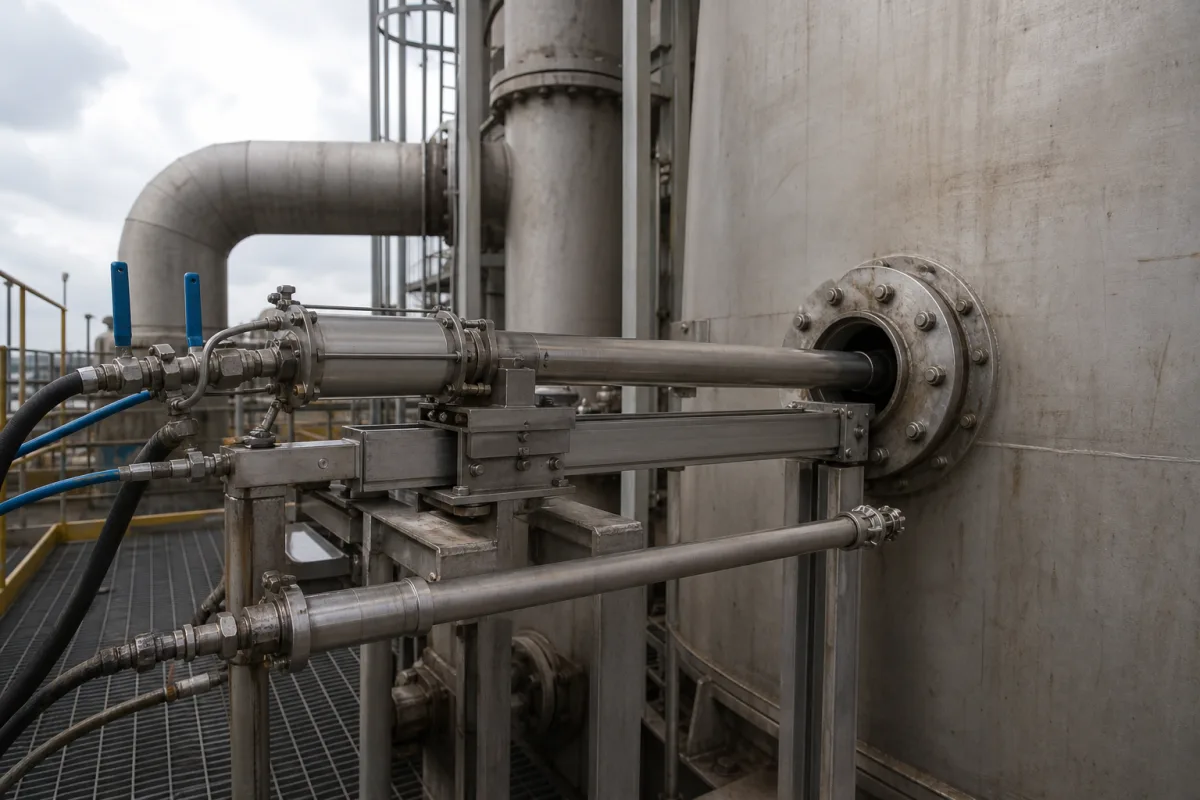
A specialized component of a desulfurization reactor that injects reagents into the reaction chamber.
Product Specifications

Technical details and manufacturing context for Injection Lance/System

Definition
The injection lance/system is a critical component of desulfurization reactors used in chemical manufacturing processes, particularly in flue gas desulfurization (FGD) systems. It precisely delivers desulfurization reagents (such as limestone slurry, lime, or ammonia) into the reactor chamber to facilitate chemical reactions that remove sulfur compounds from gas streams.
Working Principle
The injection lance/system operates by pumping desulfurization reagents through a nozzle or multiple nozzles at controlled pressures and flow rates. The lance is positioned strategically within the reactor to optimize reagent dispersion and contact with the gas stream, ensuring efficient mixing and reaction kinetics for sulfur removal.
Common Materials
Stainless steel, High-nickel alloys, Ceramic-lined steel
Technical Parameters
  • Nozzle diameter and lance length specifications (mm) Standard Spec
Components / BOM
  • Nozzle Assembly
    Controls and directs the flow of desulfurization reagent into the reactor chamber
    Material: Tungsten carbide or ceramic
  • Lance Body/Tube
    Main structural component that carries reagent from supply to nozzle
    Material: Stainless steel or corrosion-resistant alloy
  • Mounting Flange
    Secures the lance to the reactor structure and provides sealing
    Material: Carbon steel or stainless steel
  • Cooling Jacket
    Protects lance from high reactor temperatures (if applicable)
    Material: Stainless steel
  • Flow Control Valve
    Regulates reagent flow rate through the lance
    Material: Stainless steel with PTFE seals
Engineering Reasoning
15-35 bar injection pressure, 800-1200°C ambient temperature, 0.5-2.0 m³/min reagent flow rate
Pressure exceeding 40 bar causes nozzle erosion >0.5 mm/hr, temperature >1250°C initiates creep deformation >1% per 1000h
Design Rationale: High-velocity reagent flow (Mach 0.3-0.5) causes abrasive wear via particle impingement; thermal cycling between 200-1200°C induces low-cycle fatigue at stress concentrators
Risk Mitigation (FMEA)
Trigger Calcium carbonate particle size distribution shift to >150 μm median diameter
Mode: Nozzle throat erosion rate increases from 0.1 mm/1000h to 2.0 mm/1000h
Strategy: Install inline particle classifier with 100 μm cutoff and automatic bypass to holding tank
Trigger Thermal shock from 200°C to 900°C in <30 seconds during reactor startup
Mode: Crack initiation at nozzle-to-manifold weld joint due to coefficient of thermal expansion mismatch (Inconel 625: 12.8 μm/m·K vs. 316L SS: 16.0 μm/m·K)
Strategy: Implement controlled heating ramp of 50°C/min maximum with preheating to 400°C before reagent flow

Industry Taxonomies & Aliases

Commonly used trade names and technical identifiers for Injection Lance/System.

Applied To / Applications

This component is essential for the following industrial systems and equipment:

Industrial Ecosystem & Supply Chain DNA

Complementary Systems
Downstream Applications
Specialized Tooling

Application Fit & Sizing Matrix

Operational Limits
pressure: Up to 10 bar (145 psi) operating pressure, 15 bar (217.5 psi) design pressure
flow rate: 0.5-50 m³/h (2.2-220 gpm) depending on lance diameter
temperature: Up to 1500°C (2732°F) for lance tip, 400°C (752°F) for system components
slurry concentration: Up to 70% solids by weight, particle size <100 microns
Media Compatibility
✓ Calcium carbide slurry ✓ Magnesium-based reagents ✓ Soda ash solutions
Unsuitable: Hydrofluoric acid or fluoride-containing environments
Sizing Data Required
  • Required reagent injection rate (kg/h)
  • Reactor vessel diameter and geometry
  • Desulfurization target (ppm sulfur removal)

Reliability & Engineering Risk Analysis

Failure Mode & Root Cause
Thermal fatigue cracking
Cause: Rapid temperature cycling during injection/cooling cycles, especially with high-temperature media, leading to stress concentration and crack propagation in lance material.
Clogging and flow restriction
Cause: Accumulation of process residues, scale, or particulate matter inside the lance or nozzle, often due to improper media filtration, inadequate purging, or chemical reactions during injection.
Maintenance Indicators
  • Irregular spray pattern or pulsating flow during operation, indicating partial blockage or nozzle wear
  • Visible discoloration, warping, or localized hot spots on the lance exterior, suggesting internal degradation or overheating
Engineering Tips
  • Implement routine lance purging with clean, compatible gas or fluid between cycles to prevent residue buildup and thermal shock
  • Use sacrificial liners or replaceable nozzle tips in high-wear areas, and monitor injection pressure trends to schedule preventive replacements before failure

Compliance & Manufacturing Standards

Reference Standards
ISO 9001:2015 - Quality Management Systems ASTM A53/A53M-20 - Standard Specification for Pipe, Steel, Black and Hot-Dipped, Zinc-Coated, Welded and Seamless CE Marking - EU Directive 2014/68/EU (Pressure Equipment Directive)
Manufacturing Precision
  • Bore Diameter: +/-0.05mm
  • Surface Roughness: Ra ≤ 1.6μm
Quality Inspection
  • Hydrostatic Pressure Test
  • Ultrasonic Testing (UT) for Weld Integrity

Factories Producing Injection Lance/System

Verified manufacturers with capability to produce this product in China

✓ 98% Supplier Capability Match Found

P Procurement Specialist from Singapore Feb 05, 2026
★★★★★
"Great transparency on the Injection Lance/System components. Essential for our Chemical Manufacturing supply chain."
Technical Specifications Verified
T Technical Director from Germany Feb 02, 2026
★★★★★
"The Injection Lance/System we sourced perfectly fits our Chemical Manufacturing production line requirements."
Technical Specifications Verified
P Project Engineer from Brazil Jan 30, 2026
★★★★★
"Found 45+ suppliers for Injection Lance/System on CNFX, but this spec remains the most cost-effective."
Technical Specifications Verified
Verification Protocol

“Feedback is collected from verified sourcing managers during RFQ (Request for Quote) and factory evaluation processes on CNFX. These reports represent historical performance data and technical audit summaries from our B2B manufacturing network.”

19 sourcing managers are analyzing this specification now. Last inquiry for Injection Lance/System from Vietnam (1h ago).

Supply Chain Compatible Machinery & Devices

Modular Distillation Column System

Pre-engineered modular system for continuous separation of chemical mixtures via distillation.

Explore Specs →
Automated Batch Crystallization System

Automated system for controlled crystallization of chemical compounds in batch processes.

Explore Specs →
Automated pH Monitoring and Dosing System

Automated system for continuous pH monitoring and chemical dosing in process streams.

Explore Specs →
Automated Powder Dispensing and Blending System

Automated system for precise dispensing and homogeneous blending of powdered chemicals.

Explore Specs →

Frequently Asked Questions

What materials are best for injection lances in corrosive chemical environments?

Our injection lances use stainless steel, high-nickel alloys, and ceramic-lined steel for maximum corrosion resistance and durability in harsh chemical manufacturing processes.

How does the cooling jacket protect the injection lance system?

The integrated cooling jacket maintains optimal operating temperatures, preventing thermal degradation and extending the lifespan of lance components during continuous desulfurization reactions.

What maintenance is required for the nozzle assembly and flow control valve?

Regular inspection for wear and buildup is recommended. The modular design allows easy replacement of nozzle tips and valve components without dismantling the entire lance system.

Can I contact factories directly on CNFX?

CNFX is an open directory, not a transaction platform. Each factory profile provides direct contact information and production details to help you initiate direct inquiries with Chinese suppliers.

Get Quote for Injection Lance/System

Request technical pricing, lead times, or customized specifications for Injection Lance/System directly from verified manufacturing units.

Your business information is encrypted and only shared with verified Injection Lance/System suppliers.

Thank you! Your message has been sent. We'll respond within 1–3 business days.

Need to Manufacture Injection Lance/System?

Connect with verified factories specializing in this product category

Add Your Factory Contact Us
Previous Product
Injection Lance/Nozzle
Next Product
Injection Nozzles