Industry-Verified Manufacturing Data (2026)

Heating/Insulation System

Based on aggregated insights from multiple verified factory profiles within the CNFX directory, the standard Heating/Insulation System used in the Basic Metal Manufacturing sector typically supports operational capacities ranging from standard industrial configurations to heavy-duty production requirements.

Technical Definition & Core Assembly

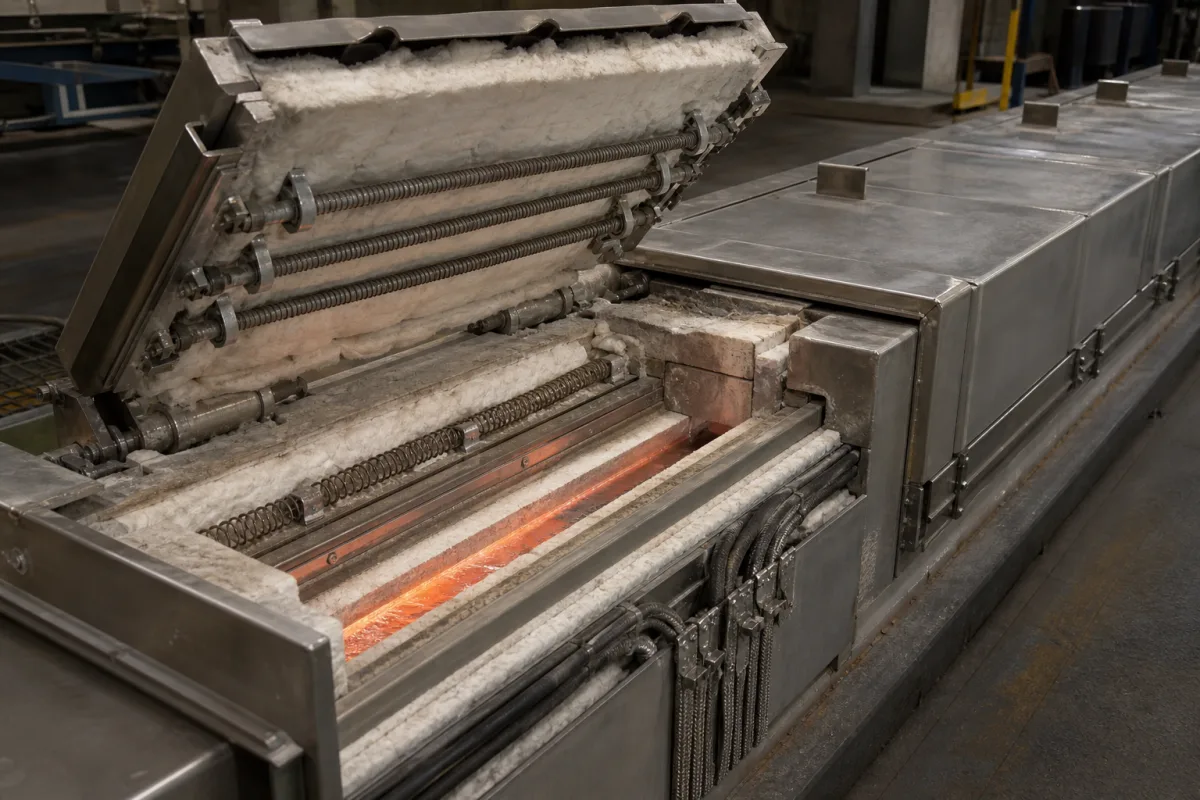
A canonical Heating/Insulation System is characterized by the integration of Heating Elements and Thermal Insulation Layer. In industrial production environments, manufacturers listed on CNFX commonly emphasize Ceramic fiber insulation construction to support stable, high-cycle operation across diverse manufacturing scenarios.

A system designed to maintain and regulate the temperature of molten metal within distribution channels to prevent solidification and ensure proper flow.
Product Specifications

Technical details and manufacturing context for Heating/Insulation System

Definition
The Heating/Insulation System is a critical component of the Molten Metal Distribution System that applies controlled heat and provides thermal insulation to maintain molten metal at optimal casting temperatures throughout the distribution network. It prevents premature solidification in runners, gates, and distribution channels, ensuring consistent metal flow to molds while minimizing heat loss and energy consumption.
Working Principle
The system typically uses electric resistance heaters, induction coils, or gas burners to generate heat, which is transferred to the molten metal through conduction. Insulation materials surround the distribution channels to minimize heat loss to the environment. Temperature sensors provide feedback to control systems that regulate heating elements to maintain precise temperature setpoints.
Common Materials
Ceramic fiber insulation, Refractory bricks, Stainless steel heating elements, High-temperature alloys
Technical Parameters
  • Operating temperature range for maintaining molten metal in liquid state (°C) Customizable
Components / BOM
  • Heating Elements
    Generate heat to maintain molten metal temperature
    Material: Nickel-chromium alloy or silicon carbide
  • Thermal Insulation Layer
    Minimize heat loss to surrounding environment
    Material: Ceramic fiber or refractory bricks
  • Temperature Sensors
    Monitor molten metal temperature for control feedback
    Material: Platinum resistance thermometers or thermocouples
  • Control System
    Regulate heating power based on temperature readings
    Material: Electronic components in protective housing
Engineering Reasoning
650-750°C
Below 620°C (eutectic temperature of Al-Si alloys)
Design Rationale: Latent heat of fusion exhaustion leading to nucleation and dendritic growth
Risk Mitigation (FMEA)
Trigger Resistive heating element degradation due to oxidation at 800°C
Mode: Thermal gradient exceeding 100°C/m causing localized solidification
Strategy: Molybdenum disilicide heating elements with alumina-silica composite insulation
Trigger Ceramic fiber insulation moisture absorption exceeding 5% by weight
Mode: Steam pressure buildup causing delamination at 0.7 MPa
Strategy: Hydrophobic silica aerogel insulation with vapor barrier

Industry Taxonomies & Aliases

Commonly used trade names and technical identifiers for Heating/Insulation System.

Applied To / Applications

This component is essential for the following industrial systems and equipment:

Industrial Ecosystem & Supply Chain DNA

Complementary Systems
Downstream Applications
Specialized Tooling

Application Fit & Sizing Matrix

Operational Limits
pressure: Max system pressure: 10 bar (designed for low-pressure distribution channels, not pressurized vessels)
flow rate: Channel flow rate: 0.5 to 5.0 m³/h (depends on channel cross-section and viscosity)
temperature: Operating range: 200°C to 800°C (typical for molten metals like aluminum, zinc, lead alloys)
slurry concentration: Not applicable - designed for pure molten metals, not slurries or suspensions
Media Compatibility
✓ Molten aluminum alloys (e.g., A356, 380) ✓ Molten zinc alloys (e.g., ZA-8, ZA-27) ✓ Molten lead alloys (e.g., for battery grids)
Unsuitable: Corrosive molten salts or chlorides (e.g., molten salt baths for heat treatment)
Sizing Data Required
  • Required temperature maintenance (ΔT from melting point)
  • Total channel length and geometry (diameter, bends)
  • Heat loss rate (based on ambient conditions and insulation quality)

Reliability & Engineering Risk Analysis

Failure Mode & Root Cause
Thermal degradation of insulation
Cause: Prolonged exposure to temperatures exceeding material limits, leading to loss of insulating properties and structural integrity.
Moisture ingress and corrosion
Cause: Water infiltration due to damaged seals, condensation, or environmental exposure, causing corrosion of underlying components and reduced thermal efficiency.
Maintenance Indicators
  • Visible condensation or ice formation on external surfaces indicating insulation failure
  • Audible hissing or whistling sounds from steam leaks in heated systems
Engineering Tips
  • Implement regular infrared thermography surveys to detect hot spots and insulation degradation before failure occurs
  • Establish a preventive maintenance schedule for inspecting and replacing seals, vapor barriers, and protective jacketing to prevent moisture ingress

Compliance & Manufacturing Standards

Reference Standards
ISO 9001:2015 - Quality Management Systems ASTM C177 - Standard Test Method for Steady-State Heat Flux Measurements CE Marking - EU Directive 2014/35/EU (Low Voltage Directive)
Manufacturing Precision
  • Insulation Thickness: +/- 2% of nominal dimension
  • Surface Flatness: 0.5mm per meter length
Quality Inspection
  • Thermal Conductivity Test (ASTM C518)
  • Leakage Current Test (IEC 60601-1)

Factories Producing Heating/Insulation System

Verified manufacturers with capability to produce this product in China

✓ 95% Supplier Capability Match Found

P Project Engineer from Brazil Jan 09, 2026
★★★★★
"As a professional in the Basic Metal Manufacturing sector, I confirm this Heating/Insulation System meets all ISO standards."
Technical Specifications Verified
S Sourcing Manager from Canada Jan 06, 2026
★★★★★
"Standard OEM quality for Basic Metal Manufacturing applications. The Heating/Insulation System arrived with full certification."
Technical Specifications Verified
P Procurement Specialist from United States Jan 03, 2026
★★★★★
"Great transparency on the Heating/Insulation System components. Essential for our Basic Metal Manufacturing supply chain."
Technical Specifications Verified
Verification Protocol

“Feedback is collected from verified sourcing managers during RFQ (Request for Quote) and factory evaluation processes on CNFX. These reports represent historical performance data and technical audit summaries from our B2B manufacturing network.”

17 sourcing managers are analyzing this specification now. Last inquiry for Heating/Insulation System from USA (1h ago).

Supply Chain Compatible Machinery & Devices

Continuous Casting Machine

Industrial machine for solidifying molten metal into continuous billets/blooms/slabs.

Explore Specs →
Electromagnetic Induction Heater

Industrial heating device using electromagnetic induction for metal processing

Explore Specs →
Vacuum Induction Melting Furnace

Industrial furnace for melting metals under vacuum using electromagnetic induction

Explore Specs →
Electroslag Remelting Furnace

Secondary refining furnace for high-quality metal ingots

Explore Specs →

Frequently Asked Questions

How does this heating/insulation system prevent molten metal from solidifying in distribution channels?

The system combines ceramic fiber insulation and refractory bricks to minimize heat loss, while stainless steel heating elements actively maintain optimal temperatures, ensuring continuous flow without solidification.

What materials make this system suitable for basic metal manufacturing environments?

Constructed with high-temperature alloys, ceramic fiber insulation, refractory bricks, and stainless steel heating elements, all designed to withstand extreme temperatures and harsh industrial conditions.

How does the control system regulate temperature in molten metal distribution?

Temperature sensors monitor real-time conditions, feeding data to the control system which automatically adjusts heating elements to maintain consistent temperatures throughout the distribution channels.

Can I contact factories directly on CNFX?

CNFX is an open directory, not a transaction platform. Each factory profile provides direct contact information and production details to help you initiate direct inquiries with Chinese suppliers.

Get Quote for Heating/Insulation System

Request technical pricing, lead times, or customized specifications for Heating/Insulation System directly from verified manufacturing units.

Your business information is encrypted and only shared with verified Heating/Insulation System suppliers.

Thank you! Your message has been sent. We'll respond within 1–3 business days.

Need to Manufacture Heating/Insulation System?

Connect with verified factories specializing in this product category

Add Your Factory Contact Us
Previous Product
Heating Element Bank
Next Product
Heavy-Duty Continuous Casting Mold Oscillator