Industry-Verified Manufacturing Data (2026)

Heating Elements

Based on aggregated insights from multiple verified factory profiles within the CNFX directory, the standard Heating Elements used in the Computer, Electronic and Optical Product Manufacturing sector typically supports operational capacities ranging from standard industrial configurations to heavy-duty production requirements.

Technical Definition & Core Assembly

A canonical Heating Elements is characterized by the integration of Resistive Wire/Coil and Insulation/Ceramic Core. In industrial production environments, manufacturers listed on CNFX commonly emphasize Nickel-chromium alloy (Nichrome) construction to support stable, high-cycle operation across diverse manufacturing scenarios.

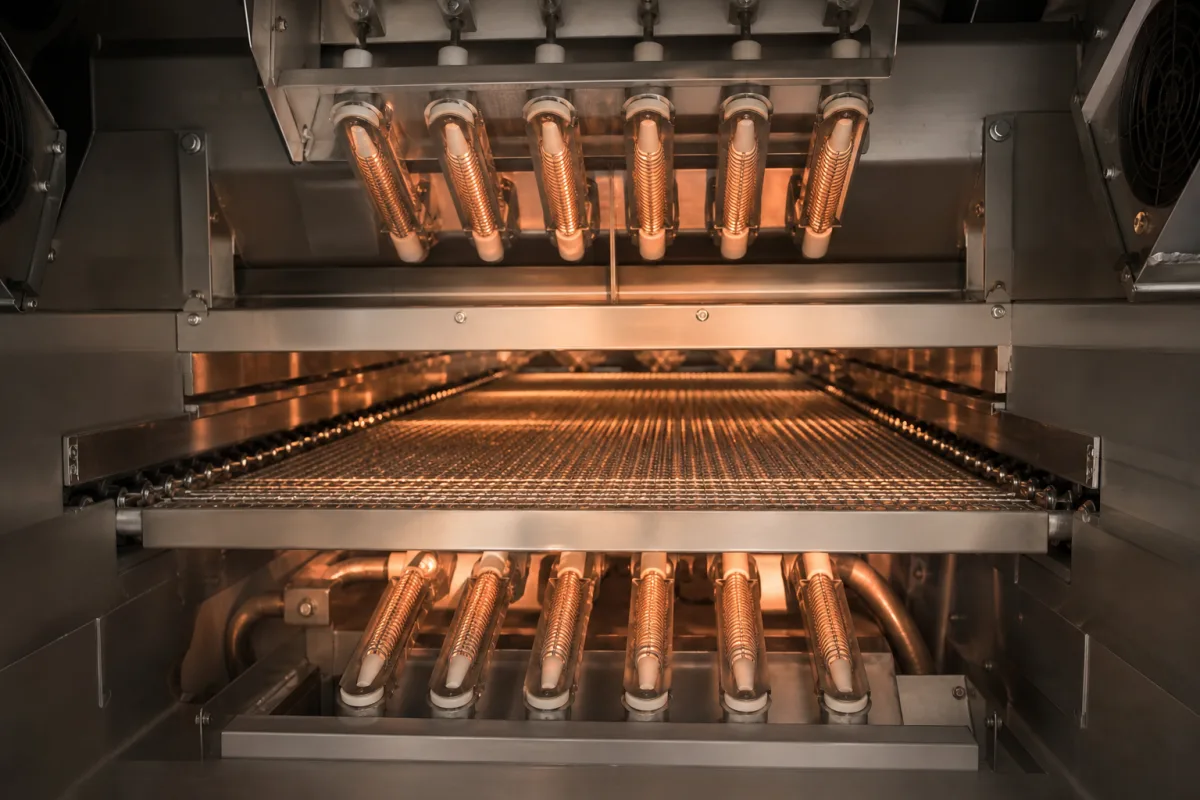
Electrical components that generate controlled heat for soldering processes in reflow ovens.
Product Specifications

Technical details and manufacturing context for Heating Elements

Definition
Heating elements are critical components within reflow ovens that convert electrical energy into precise thermal energy. They are strategically positioned to create controlled heating zones that melt solder paste on printed circuit boards (PCBs) during surface-mount technology (SMT) assembly processes, ensuring proper component attachment without thermal damage.
Working Principle
Heating elements operate by passing electrical current through resistive materials (typically metal alloys or ceramic), which generates heat through Joule heating (I²R effect). This heat is transferred to the oven chamber via radiation, convection, or conduction, creating precisely controlled temperature profiles required for solder reflow.
Common Materials
Nickel-chromium alloy (Nichrome), Silicon carbide, Molybdenum disilicide, Tungsten
Technical Parameters
  • Power rating indicating heat generation capacity (W) Standard Spec
Components / BOM
  • Resistive Wire/Coil
    Primary heat-generating component through electrical resistance
    Material: Nickel-chromium alloy
  • Insulation/Ceramic Core
    Provides electrical insulation and structural support for resistive elements
    Material: Ceramic (alumina, mullite)
  • Terminal Connections
    Electrical connection points for power supply wiring
    Material: Copper or nickel-plated steel
  • Protective Sheath
    Protects heating elements from oxidation and contamination
    Material: Stainless steel or Inconel alloy
Engineering Reasoning
200-300°C with 5°C tolerance, 220-240V AC at 50-60Hz, 500-2000W power input
Exceeds 350°C for >30 seconds, voltage >250V AC, current density >8 A/mm²
Design Rationale: Thermal fatigue from cyclic heating (20-300°C) at >1000 cycles, NiCr alloy oxidation above 350°C forming non-conductive Cr₂O₃ layer, electromigration at current densities >8 A/mm²
Risk Mitigation (FMEA)
Trigger Voltage surge >250V AC exceeding dielectric strength of MgO insulation
Mode: Insulation breakdown causing short circuit between heating coil and sheath
Strategy: Integrated MOV surge protector with 230V clamping voltage, 6000A surge current rating
Trigger Continuous operation at >300°C causing NiCr alloy oxidation rate >0.1 mm/1000h
Mode: Progressive resistance increase from 20Ω to >100Ω over 5000 hours
Strategy: K-type thermocouple feedback loop with PID control maintaining ±2°C, automatic shutdown at 320°C

Industry Taxonomies & Aliases

Commonly used trade names and technical identifiers for Heating Elements.

Applied To / Applications

This component is essential for the following industrial systems and equipment:

Industrial Ecosystem & Supply Chain DNA

Complementary Systems
Downstream Applications
Specialized Tooling

Application Fit & Sizing Matrix

Operational Limits
pressure: Atmospheric to 2 bar (sealed oven applications)
other spec: Power density: 5-50 W/in², Voltage: 120-480V AC, Response time: <30 seconds to setpoint
temperature: Ambient to 400°C (typical reflow range: 150-300°C)
Media Compatibility
✓ Nitrogen inert atmosphere ✓ Air (oxidation-controlled) ✓ Forming gas (N2/H2 mix)
Unsuitable: Chlorine or fluorine-containing atmospheres (corrosive to element materials)
Sizing Data Required
  • Required heat load (Watts)
  • Oven chamber volume (liters)
  • Maximum ramp rate (°C/second)

Reliability & Engineering Risk Analysis

Failure Mode & Root Cause
Hot spot formation and burnout
Cause: Localized overheating due to scale buildup, poor contact with heat transfer surface, or uneven electrical resistance from manufacturing defects or material degradation
Corrosion and oxidation
Cause: Chemical attack from process fluids, moisture ingress, or high-temperature oxidation in air, leading to thinning and eventual rupture of the element sheath
Maintenance Indicators
  • Visible hot spots or discoloration (bright orange/white spots) indicating localized overheating
  • Audible arcing or popping sounds from the electrical connections or element housing
Engineering Tips
  • Implement regular descaling/cleaning protocols to prevent insulating deposits that cause hot spots and reduce heat transfer efficiency
  • Use proper mounting torque and thermal compound to ensure optimal contact between the element and heat transfer surface, and install over-temperature protection devices

Compliance & Manufacturing Standards

Reference Standards
ISO 9001:2015 - Quality management systems IEC 60335-2-45 - Safety of household and similar electrical appliances ASTM B78-90 - Standard Test Method for Accelerated Life of Nickel-Chromium and Nickel-Chromium-Iron Alloys for Electrical Heating
Manufacturing Precision
  • Resistance: +/- 5% of nominal value at 20°C
  • Length: +/- 1.0% of specified dimension
Quality Inspection
  • Insulation Resistance Test (minimum 100 MΩ at 500 V DC)
  • Leakage Current Test (maximum 0.75 mA at rated voltage)

Factories Producing Heating Elements

Verified manufacturers with capability to produce this product in China

✓ 95% Supplier Capability Match Found

P Procurement Specialist from Brazil Feb 04, 2026
★★★★★
"Impressive build quality. Especially the technical reliability is very stable during long-term operation."
Technical Specifications Verified
T Technical Director from Canada Feb 01, 2026
★★★★★
"As a professional in the Computer, Electronic and Optical Product Manufacturing sector, I confirm this Heating Elements meets all ISO standards."
Technical Specifications Verified
P Project Engineer from United States Jan 29, 2026
★★★★★
"Standard OEM quality for Computer, Electronic and Optical Product Manufacturing applications. The Heating Elements arrived with full certification."
Technical Specifications Verified
Verification Protocol

“Feedback is collected from verified sourcing managers during RFQ (Request for Quote) and factory evaluation processes on CNFX. These reports represent historical performance data and technical audit summaries from our B2B manufacturing network.”

18 sourcing managers are analyzing this specification now. Last inquiry for Heating Elements from Brazil (49m ago).

Supply Chain Compatible Machinery & Devices

Modular Industrial Edge Computing Device

Rugged computing platform for industrial data processing at the network edge

Explore Specs →
Industrial Smart Camera Module

Embedded vision system for industrial automation and quality inspection.

Explore Specs →
Industrial Wireless Power Transfer Module

Wireless power transfer module for industrial equipment applications

Explore Specs →
Industrial Smart Sensor Module

Modular industrial sensor with embedded processing and wireless connectivity

Explore Specs →

Frequently Asked Questions

What are the advantages of Nichrome heating elements for reflow ovens?

Nichrome (nickel-chromium alloy) heating elements offer excellent oxidation resistance, consistent resistivity, and long service life at temperatures up to 1200°C, making them ideal for controlled soldering processes in electronics manufacturing.

How do I choose between silicon carbide and molybdenum disilicide heating elements?

Silicon carbide elements operate effectively up to 1600°C with good thermal shock resistance, while molybdenum disilicide elements can reach 1800°C with superior oxidation resistance. Choose based on your reflow oven's maximum temperature requirements and operating environment.

What maintenance do heating elements for reflow ovens require?

Regular inspection for oxidation, checking terminal connections for tightness, and monitoring resistance values are essential. Proper installation with adequate insulation and protective sheathing minimizes maintenance needs and extends element lifespan.

Can I contact factories directly on CNFX?

CNFX is an open directory, not a transaction platform. Each factory profile provides direct contact information and production details to help you initiate direct inquiries with Chinese suppliers.

Get Quote for Heating Elements

Request technical pricing, lead times, or customized specifications for Heating Elements directly from verified manufacturing units.

Your business information is encrypted and only shared with verified Heating Elements suppliers.

Thank you! Your message has been sent. We'll respond within 1–3 business days.

Need to Manufacture Heating Elements?

Connect with verified factories specializing in this product category

Add Your Factory Contact Us
Previous Product
Health Monitor
Next Product
Hierarchical Z/Stencil Culling Unit (optional)