Industry-Verified Manufacturing Data (2026)

Roof

Based on aggregated insights from multiple verified factory profiles within the CNFX directory, the standard Roof used in the Basic Metal Manufacturing sector typically supports operational capacities ranging from standard industrial configurations to heavy-duty production requirements.

Technical Definition & Core Assembly

A canonical Roof is characterized by the integration of Water-Cooled Panels and Refractory Lining. In industrial production environments, manufacturers listed on CNFX commonly emphasize Water-cooled steel panels construction to support stable, high-cycle operation across diverse manufacturing scenarios.

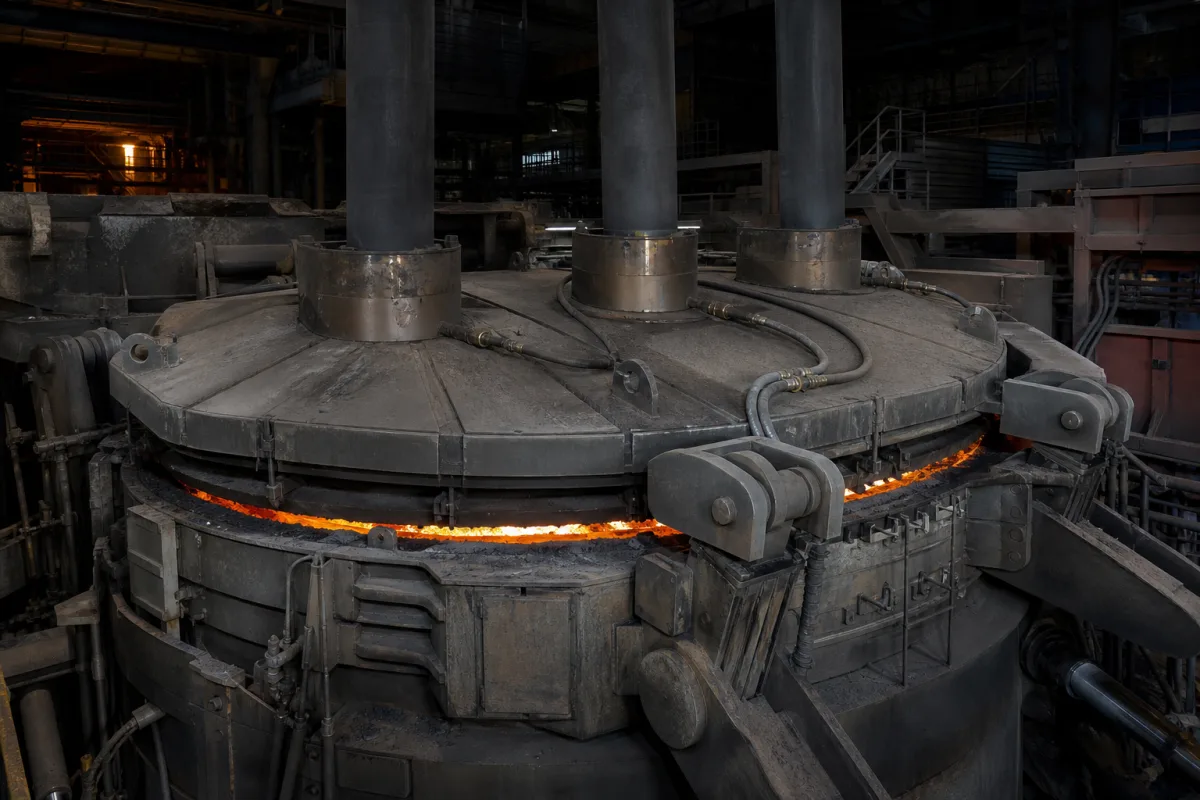
The top structural component of an electric arc furnace that contains the furnace interior and supports critical operational systems.
Product Specifications

Technical details and manufacturing context for Roof

Definition
The roof is a critical structural component of an electric arc furnace (EAF) that forms the top enclosure of the furnace vessel. It serves to contain the high-temperature melting process, support the electrode system, and provide openings for charging, fume extraction, and observation. The roof is subjected to extreme thermal cycling, chemical attack from furnace gases, and mechanical stress from electrode movement.
Working Principle
The roof functions as a sealed or semi-sealed barrier that maintains the furnace atmosphere and contains heat. It supports the electrodes that pass through it, allowing for precise positioning during the melting process. Cooling systems (typically water-cooled panels) integrated into the roof manage the intense radiant heat from the arc and molten metal. The roof also facilitates the removal of process gases through an offtake system.
Common Materials
Water-cooled steel panels, Refractory lining, High-temperature alloy structural supports
Technical Parameters
  • Diameter of the roof, corresponding to the furnace shell diameter it seals. (mm) Standard Spec
Components / BOM
  • Water-Cooled Panels
    Form the main structural body of the roof and provide primary heat removal through circulating water.
    Material: Carbon steel or low-alloy steel with internal water channels
  • Refractory Lining
    Insulates the steel structure from direct radiant heat and chemical attack from furnace atmosphere.
    Material: High-alumina or magnesia-based castables or bricks
  • Electrode Ports
    Circular openings that allow electrodes to enter the furnace; include seals and cooling rings.
    Material: Water-cooled copper or steel alloy rings
  • Charging Door Opening
    Opening for charging scrap and additives; often equipped with a water-cooled door.
    Material: Water-cooled steel frame and door
  • Fourth Hole (Offtake)
    Opening for the direct evacuation of furnace gases to the fume extraction system.
    Material: Water-cooled steel duct connection
  • Lifting Lugs / Trunnions
    Attachment points for the roof lifting and swinging mechanism.
    Material: Forged or cast steel
Engineering Reasoning
0-1800°C internal temperature, 0-5 bar internal pressure
Structural failure occurs at 1850°C (refractory melting point) or 6 bar internal pressure (yield strength threshold)
Design Rationale: Thermal fatigue from cyclic heating/cooling (ΔT=1600°C) and creep deformation at sustained high temperatures
Risk Mitigation (FMEA)
Trigger Water cooling system failure (flow rate < 50 L/min)
Mode: Refractory lining thermal shock and spalling
Strategy: Redundant cooling loops with independent pumps and flow sensors (dual 100 L/min capacity)
Trigger Electrode misalignment (>15 mm radial deviation)
Mode: Arc impingement causing localized refractory erosion (>20 mm/hour wear rate)
Strategy: Laser-guided electrode positioning system with real-time feedback control

Industry Taxonomies & Aliases

Commonly used trade names and technical identifiers for Roof.

Applied To / Applications

This component is essential for the following industrial systems and equipment:

Industrial Ecosystem & Supply Chain DNA

Complementary Systems
Downstream Applications
Specialized Tooling

Application Fit & Sizing Matrix

Operational Limits
pressure: Atmospheric to slight positive pressure (0-0.5 bar gauge), negative pressure not recommended
other spec: Water cooling flow rate: 50-200 m³/h depending on furnace size, refractory lining thickness: 300-600 mm
temperature: Up to 1800°C (3272°F) peak, continuous operation up to 1600°C (2912°F)
Media Compatibility
✓ High-temperature steelmaking environments ✓ Water-cooled copper panel systems ✓ Refractory-lined containment structures
Unsuitable: Chlorine-rich or highly corrosive gas environments (accelerates refractory degradation)
Sizing Data Required
  • Furnace shell diameter (m)
  • Electrode configuration and diameter
  • Required cooling capacity (kW)

Reliability & Engineering Risk Analysis

Failure Mode & Root Cause
Water Infiltration and Ponding
Cause: Roof membrane degradation due to UV exposure, thermal cycling, or physical damage from foot traffic or debris, leading to compromised waterproofing integrity and water accumulation that stresses the structure.
Structural Fatigue and Deck Deterioration
Cause: Corrosion of metal decking or fasteners from moisture ingress, combined with cyclic loading from environmental forces (wind, snow) and inadequate drainage, resulting in reduced load-bearing capacity and potential collapse.
Maintenance Indicators
  • Visible sagging, buckling, or deflection of the roof surface, indicating structural compromise or water retention.
  • Persistent water stains, mold growth, or active leaks on interior ceilings, signaling membrane failure or flashing issues.
Engineering Tips
  • Implement a biannual inspection regimen focusing on membrane seams, flashings, and drainage systems, using infrared thermography to detect moisture intrusion early.
  • Ensure proper slope design (minimum 1/4 inch per foot) and maintain clear scuppers and drains to prevent ponding, which accelerates degradation and adds structural load.

Compliance & Manufacturing Standards

Reference Standards
ISO 9001:2015 - Quality management systems ASTM D638 - Standard Test Method for Tensile Properties of Plastics CE EN 13859-1 - Flexible sheets for waterproofing - Bitumen sheets for roof waterproofing
Manufacturing Precision
  • Flatness: +/- 5mm per 3m
  • Seam alignment: +/- 2mm
Quality Inspection
  • Water penetration test (ASTM D5957)
  • Wind uplift resistance test (ASTM D3161)

Factories Producing Roof

Verified manufacturers with capability to produce this product in China

✓ 94% Supplier Capability Match Found

P Procurement Specialist from United Arab Emirates Feb 04, 2026
★★★★★
"Impressive build quality. Especially the technical reliability is very stable during long-term operation."
Technical Specifications Verified
T Technical Director from Australia Feb 01, 2026
★★★★★
"As a professional in the Basic Metal Manufacturing sector, I confirm this Roof meets all ISO standards."
Technical Specifications Verified
P Project Engineer from Singapore Jan 29, 2026
★★★★★
"Standard OEM quality for Basic Metal Manufacturing applications. The Roof arrived with full certification."
Technical Specifications Verified
Verification Protocol

“Feedback is collected from verified sourcing managers during RFQ (Request for Quote) and factory evaluation processes on CNFX. These reports represent historical performance data and technical audit summaries from our B2B manufacturing network.”

6 sourcing managers are analyzing this specification now. Last inquiry for Roof from Brazil (22m ago).

Supply Chain Compatible Machinery & Devices

Electromagnetic Induction Heater

Industrial heating device using electromagnetic induction for metal processing

Explore Specs →
Vacuum Induction Melting Furnace

Industrial furnace for melting metals under vacuum using electromagnetic induction

Explore Specs →
Electroslag Remelting Furnace

Secondary refining furnace for high-quality metal ingots

Explore Specs →
Molten Metal Flow Control Valve

Precision valve for regulating molten metal flow in casting and pouring operations.

Explore Specs →

Frequently Asked Questions

What materials are used in electric arc furnace roof construction?

Our furnace roofs feature water-cooled steel panels for heat management, refractory lining for thermal insulation, and high-temperature alloy structural supports for durability in extreme conditions.

How does the roof design support furnace operations?

The roof integrates critical components including electrode ports for power input, charging door openings for material loading, fourth hole offtake systems for gas extraction, and lifting lugs for safe installation and maintenance.

What maintenance considerations are important for furnace roofs?

Regular inspection of refractory lining wear, monitoring water-cooling system integrity, and checking structural supports for thermal stress are essential for optimal performance and extended service life.

Can I contact factories directly on CNFX?

CNFX is an open directory, not a transaction platform. Each factory profile provides direct contact information and production details to help you initiate direct inquiries with Chinese suppliers.

Get Quote for Roof

Request technical pricing, lead times, or customized specifications for Roof directly from verified manufacturing units.

Your business information is encrypted and only shared with verified Roof suppliers.

Thank you! Your message has been sent. We'll respond within 1–3 business days.

Need to Manufacture Roof?

Connect with verified factories specializing in this product category

Add Your Factory Contact Us
Previous Product
Rolls (Work Rolls)
Next Product
Rotary Gas Injector