Industry-Verified Manufacturing Data (2026)

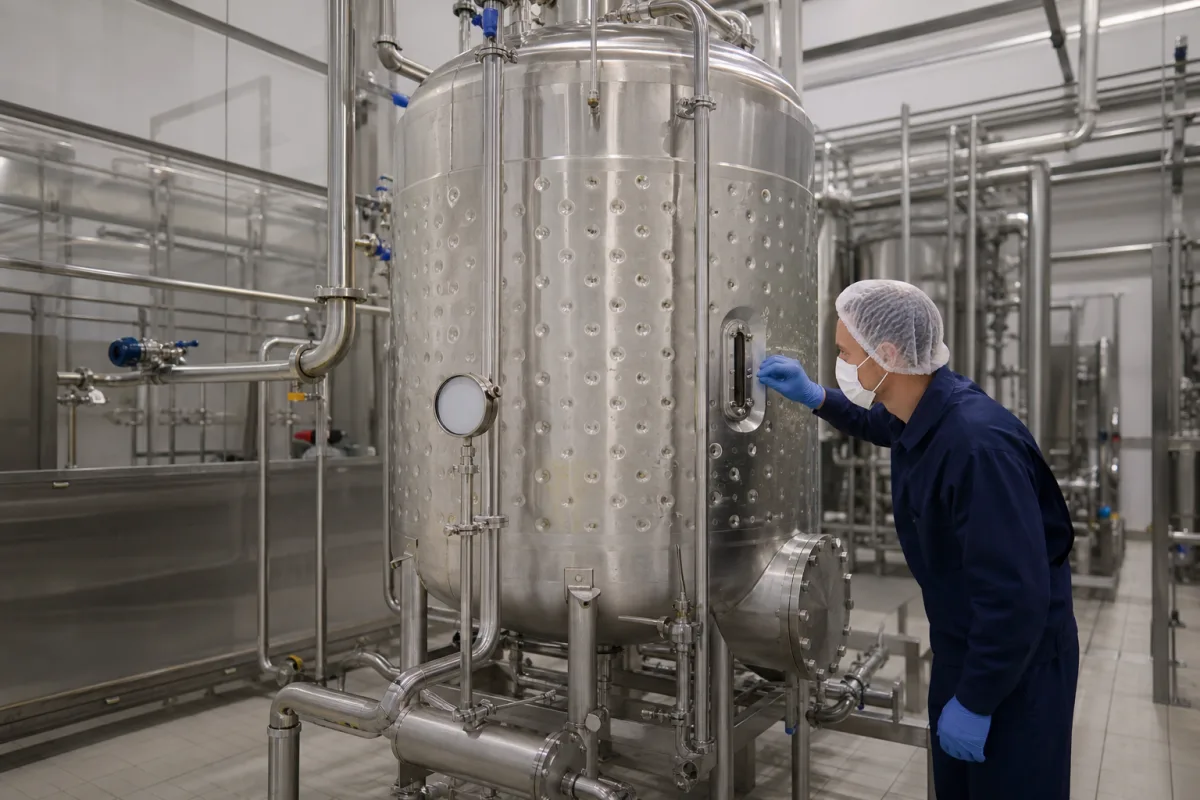
Carbonation Vessel

Based on aggregated insights from multiple verified factory profiles within the CNFX directory, the standard Carbonation Vessel used in the Beverage Manufacturing sector typically supports operational capacities ranging from standard industrial configurations to heavy-duty production requirements.

Technical Definition & Core Assembly

A canonical Carbonation Vessel is characterized by the integration of Pressure Relief Valve and Sparging System. In industrial production environments, manufacturers listed on CNFX commonly emphasize Stainless Steel 316L construction to support stable, high-cycle operation across diverse manufacturing scenarios.

A pressure vessel designed to dissolve carbon dioxide gas into liquids under controlled conditions.
Product Specifications

Technical details and manufacturing context for Carbonation Vessel

Definition
A specialized pressure vessel within an Automated Beverage Blending and Carbonation System where pre-mixed beverage liquid is saturated with carbon dioxide under precise temperature and pressure conditions to achieve desired carbonation levels, typically featuring agitation systems, pressure regulation, and temperature control mechanisms.
Working Principle
Liquid is introduced into the sealed vessel, carbon dioxide is injected under pressure, and agitation (mechanical or through sparging) increases gas-liquid contact area to enhance dissolution, with temperature control optimizing solubility and pressure maintaining carbonation levels until discharge.
Common Materials
Stainless Steel 316L, Food-grade elastomers
Technical Parameters
  • Working volume capacity (L) Per Request
Components / BOM
  • Pressure Relief Valve
    Prevents over-pressurization by releasing excess gas
    Material: Stainless steel
  • Sparging System
    Distributes CO2 gas as fine bubbles through liquid
    Material: Stainless steel
  • Temperature Probe
    Monitors and controls liquid temperature
    Material: Stainless steel with PTFE coating
Engineering Reasoning
2.0-6.0 bar at 4-10°C
8.5 bar internal pressure at 15°C
Design Rationale: Yield strength exceedance of ASME SA-240 316L stainless steel (205 MPa at 15°C) causing plastic deformation
Risk Mitigation (FMEA)
Trigger CO₂ injection pressure exceeding 7.0 bar
Mode: Pressure relief valve activation with product loss
Strategy: Dual-stage pressure regulation with 6.2 bar mechanical override
Trigger Temperature cycling between 2°C and 25°C at 15 cycles/hour
Mode: Stress corrosion cracking at weld seams
Strategy: Post-weld heat treatment to 1050°C with controlled cooling to 300°C over 2 hours

Industry Taxonomies & Aliases

Commonly used trade names and technical identifiers for Carbonation Vessel.

Industrial Ecosystem & Supply Chain DNA

Complementary Systems
Downstream Applications
Specialized Tooling

Application Fit & Sizing Matrix

Operational Limits
pressure: Up to 10 bar (145 psi)
flow rate: 5-500 L/min
temperature: -10°C to 150°C
slurry concentration: Up to 30% solids by weight
Media Compatibility
✓ Carbonated beverages (soft drinks, beer) ✓ Pharmaceutical solutions requiring CO2 saturation ✓ Water treatment systems for pH adjustment
Unsuitable: Highly corrosive acidic environments (e.g., concentrated sulfuric acid)
Sizing Data Required
  • Required CO2 absorption rate (kg/hr)
  • Liquid flow rate (L/min)
  • Desired carbonation level (volumes of CO2)

Reliability & Engineering Risk Analysis

Failure Mode & Root Cause
Stress corrosion cracking
Cause: Combination of tensile stress from internal pressure and corrosive environment from carbonated liquid, particularly in crevices or at weld seams, leading to crack initiation and propagation.
Fatigue failure at pressure cycling points
Cause: Repeated pressure fluctuations during carbonation cycles causing cyclic stress at vessel connections, nozzles, or support attachments, leading to crack growth over time.
Maintenance Indicators
  • Visible weeping or small leaks around gaskets, welds, or connections indicating seal failure or crack development
  • Unusual audible hissing or popping sounds during pressure cycles suggesting internal damage or imminent failure
Engineering Tips
  • Implement regular non-destructive testing (ultrasonic thickness testing and dye penetrant inspection) at high-stress areas to detect early-stage cracks before catastrophic failure
  • Maintain strict control over pressure cycling parameters and implement pressure relief systems to prevent over-pressurization during carbonation processes

Compliance & Manufacturing Standards

Reference Standards
ISO 11439:2013 (Gas cylinders - High pressure cylinders for the on-board storage of natural gas as a fuel for automotive vehicles) ASME BPVC Section VIII Division 1 (Rules for Construction of Pressure Vessels) PED 2014/68/EU (Pressure Equipment Directive)
Manufacturing Precision
  • Internal Diameter: +/- 0.5% of nominal dimension
  • Wall Thickness: -0%/+10% of specified thickness
Quality Inspection
  • Hydrostatic Pressure Test (to 1.5x design pressure)
  • Ultrasonic Thickness Testing (for wall thickness verification)

Factories Producing Carbonation Vessel

Verified manufacturers with capability to produce this product in China

✓ 94% Supplier Capability Match Found

P Project Engineer from United Arab Emirates Jan 01, 2026
★★★★★
"Testing the Carbonation Vessel now; the technical reliability results are within 1% of the laboratory datasheet."
Technical Specifications Verified
S Sourcing Manager from Australia Dec 29, 2025
★★★★★
"Impressive build quality. Especially the technical reliability is very stable during long-term operation."
Technical Specifications Verified
P Procurement Specialist from Singapore Dec 26, 2025
★★★★★
"As a professional in the Beverage Manufacturing sector, I confirm this Carbonation Vessel meets all ISO standards."
Technical Specifications Verified
Verification Protocol

“Feedback is collected from verified sourcing managers during RFQ (Request for Quote) and factory evaluation processes on CNFX. These reports represent historical performance data and technical audit summaries from our B2B manufacturing network.”

12 sourcing managers are analyzing this specification now. Last inquiry for Carbonation Vessel from Thailand (1h ago).

Supply Chain Compatible Machinery & Devices

Automated Beverage Container Sterilization System

Automated system for sterilizing beverage containers before filling.

Explore Specs →
Automated Beverage Labeling and Coding System

Integrated system for applying labels and printing codes on beverage containers.

Explore Specs →
Automated Beverage Ingredient Dispensing System

Automated system for precise dispensing of beverage ingredients into production lines.

Explore Specs →
Automated Beverage Container Deoxygenation System

Automated system for removing oxygen from beverage containers before filling.

Explore Specs →

Frequently Asked Questions

What materials are used in this carbonation vessel?

Constructed from Stainless Steel 316L with food-grade elastomers, ensuring durability and compliance with beverage safety standards.

How does the sparging system improve carbonation?

The sparging system creates fine CO2 bubbles that dissolve efficiently into liquids, providing consistent carbonation and reducing gas waste.

What safety features does this vessel include?

Includes a pressure relief valve to prevent over-pressurization and a temperature probe for monitoring conditions during carbonation processes.

Can I contact factories directly on CNFX?

CNFX is an open directory, not a transaction platform. Each factory profile provides direct contact information and production details to help you initiate direct inquiries with Chinese suppliers.

Get Quote for Carbonation Vessel

Request technical pricing, lead times, or customized specifications for Carbonation Vessel directly from verified manufacturing units.

Your business information is encrypted and only shared with verified Carbonation Vessel suppliers.

Thank you! Your message has been sent. We'll respond within 1–3 business days.

Need to Manufacture Carbonation Vessel?

Connect with verified factories specializing in this product category

Add Your Factory Contact Us
Previous Product
Capping Station
Next Product
Central Control Unit (PLC)