Industry-Verified Manufacturing Data (2026)

Container Inverter Mechanism

Based on aggregated insights from multiple verified factory profiles within the CNFX directory, the standard Container Inverter Mechanism used in the Beverage Manufacturing sector typically supports operational capacities ranging from standard industrial configurations to heavy-duty production requirements.

Technical Definition & Core Assembly

A canonical Container Inverter Mechanism is characterized by the integration of Gripper Assembly and Drive Motor. In industrial production environments, manufacturers listed on CNFX commonly emphasize Stainless steel 304/316 construction to support stable, high-cycle operation across diverse manufacturing scenarios.

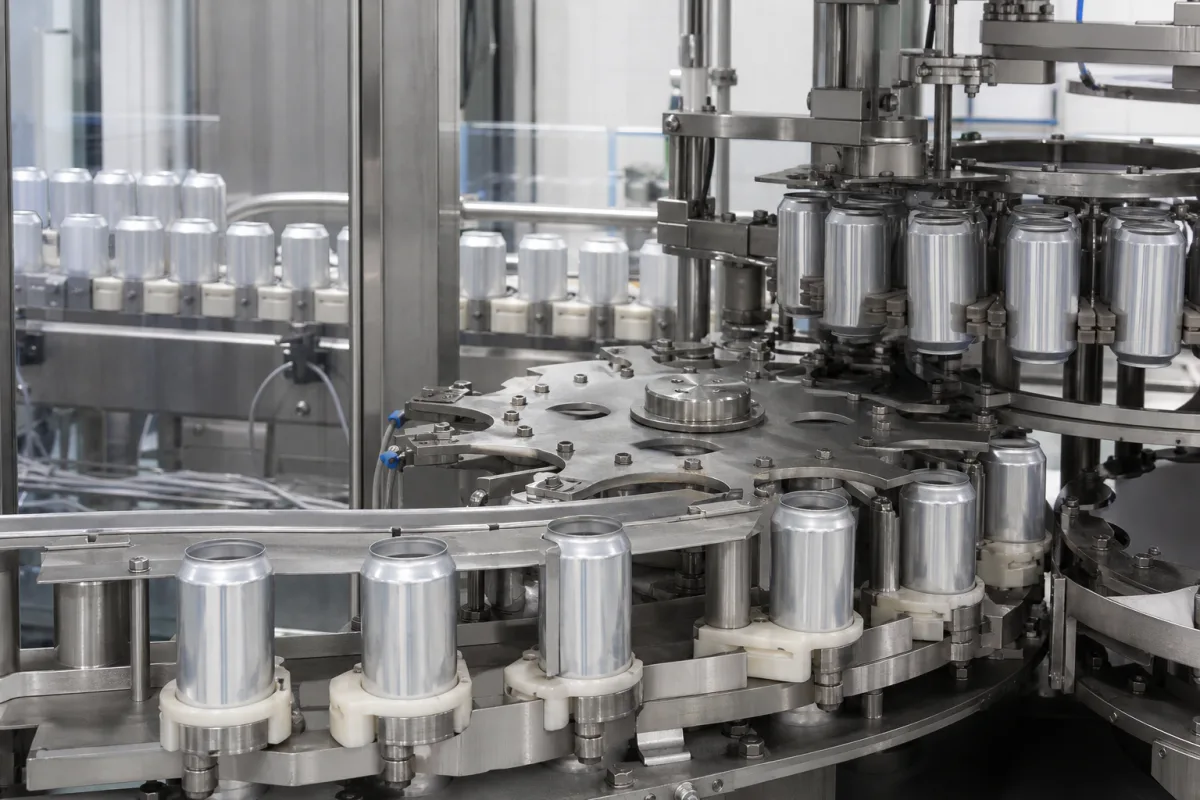
Mechanism that rotates beverage containers to facilitate complete rinsing and sanitizing
Product Specifications

Technical details and manufacturing context for Container Inverter Mechanism

Definition
A mechanical subsystem within Automated Beverage Container Rinsing and Sanitizing Machines that securely grips and rotates containers through controlled angles to ensure all interior surfaces are exposed to cleaning fluids during the rinsing and sanitizing process.
Working Principle
Utilizes motor-driven grippers or clamps to secure containers, then rotates them via gear systems or direct drive mechanisms at predetermined angles and speeds to achieve optimal fluid coverage and drainage.
Common Materials
Stainless steel 304/316, Food-grade polymers, Corrosion-resistant bearings
Technical Parameters
  • Maximum container diameter accommodated (mm) Customizable
Components / BOM
  • Gripper Assembly
    Securely holds containers during rotation
    Material: Food-grade rubber/polymer
  • Drive Motor
    Provides rotational power
    Material: Stainless steel housing
  • Rotation Shaft
    Transmits torque to gripper assembly
    Material: Stainless steel
  • Control Sensor
    Monitors rotation position and speed
    Material: Electronic components with protective coating
Engineering Reasoning
0.5-3.0 N·m torque at 15-60 rpm rotational speed
Exceeds 4.2 N·m torque or operates below 10 rpm for >30 seconds
Design Rationale: Bearing seizure due to insufficient lubricant film thickness below 10 rpm (Stribeck curve boundary) causing adhesive wear
Risk Mitigation (FMEA)
Trigger Misalignment exceeding 0.05 mm radial runout
Mode: Coupling vibration at 120 Hz harmonic frequency
Strategy: Laser-aligned mounting with 0.01 mm tolerance shims
Trigger Corrosive sanitizer pH <2.5 or >12.5
Mode: 316L stainless steel pitting corrosion at >0.1 mm/year rate
Strategy: Electropolished surface finish Ra <0.4 μm with passivation layer

Industry Taxonomies & Aliases

Commonly used trade names and technical identifiers for Container Inverter Mechanism.

Applied To / Applications

This component is essential for the following industrial systems and equipment:

Industrial Ecosystem & Supply Chain DNA

Complementary Systems
Downstream Applications
Specialized Tooling

Application Fit & Sizing Matrix

Operational Limits
pressure: Atmospheric to 2 bar (29 psi) internal pressure
flow rate: Not applicable (batch process)
temperature: Ambient to 85°C (185°F) for standard seals, up to 120°C (248°F) with high-temp seals
rotation speed: 5-30 RPM standard, up to 60 RPM with heavy-duty drive
container size range: 100 mL to 20 L capacity
slurry concentration: Up to 15% solids by weight for standard models, 25% with reinforced components
Media Compatibility
✓ Food-grade cleaning solutions (CIP chemicals) ✓ Potable water/hot water sanitizing ✓ Aqueous-based sanitizers (peracetic acid, chlorine solutions)
Unsuitable: Abrasive particulate slurries with hardness >6 Mohs scale
Sizing Data Required
  • Maximum container volume and weight
  • Required cycle time (containers per hour)
  • Available installation footprint and utility connections

Reliability & Engineering Risk Analysis

Failure Mode & Root Cause
Bearing fatigue and seizure
Cause: Inadequate lubrication leading to metal-to-metal contact, contamination ingress, or misalignment causing uneven load distribution and overheating.
Electrical insulation breakdown
Cause: Thermal cycling, moisture ingress, or voltage spikes causing degradation of insulation materials, leading to short circuits or ground faults.
Maintenance Indicators
  • Unusual high-pitched whining or grinding noises from the inverter housing
  • Visible arcing, smoke, or discoloration around electrical terminals or windings
Engineering Tips
  • Implement condition-based lubrication with high-temperature grease and monitor bearing temperatures with infrared thermography to prevent dry running.
  • Install surge protection devices and maintain proper sealing to prevent moisture ingress, ensuring regular insulation resistance testing.

Compliance & Manufacturing Standards

Reference Standards
ISO 668:2020 - Series 1 freight containers - Classification, dimensions and ratings ASTM A370-24 - Standard Test Methods and Definitions for Mechanical Testing of Steel Products CE Marking - Machinery Directive 2006/42/EC for safety and essential health requirements
Manufacturing Precision
  • Gear backlash: +/-0.05mm
  • Shaft alignment: 0.1mm per meter
Quality Inspection
  • Hardness testing (Rockwell C scale) for wear resistance
  • Functional load test with 125% rated capacity for safety verification

Factories Producing Container Inverter Mechanism

Verified manufacturers with capability to produce this product in China

✓ 97% Supplier Capability Match Found

T Technical Director from Canada Feb 23, 2026
★★★★★
"Reliable performance in harsh Beverage Manufacturing environments. No issues with the Container Inverter Mechanism so far."
Technical Specifications Verified
P Project Engineer from United States Feb 20, 2026
★★★★☆
"Testing the Container Inverter Mechanism now; the technical reliability results are within 1% of the laboratory datasheet. (Delivery took slightly longer than expected, but technical support was excellent.)"
Technical Specifications Verified
S Sourcing Manager from United Arab Emirates Feb 17, 2026
★★★★★
"Impressive build quality. Especially the technical reliability is very stable during long-term operation."
Technical Specifications Verified
Verification Protocol

“Feedback is collected from verified sourcing managers during RFQ (Request for Quote) and factory evaluation processes on CNFX. These reports represent historical performance data and technical audit summaries from our B2B manufacturing network.”

17 sourcing managers are analyzing this specification now. Last inquiry for Container Inverter Mechanism from Vietnam (1h ago).

Supply Chain Compatible Machinery & Devices

Automated Beverage Filling and Capping Machine

Automated machine for filling and sealing beverage containers at high speed.

Explore Specs →
Automated Beverage Batch Blending System

Automated system for precise multi-ingredient beverage batch preparation.

Explore Specs →
Automated Beverage Container Sterilization System

Automated system for sterilizing beverage containers before filling.

Explore Specs →
Automated Beverage Labeling and Coding System

Integrated system for applying labels and printing codes on beverage containers.

Explore Specs →

Frequently Asked Questions

What materials are used in the container inverter mechanism to ensure food safety?

The mechanism uses stainless steel 304/316 for structural components, food-grade polymers for contact surfaces, and corrosion-resistant bearings to maintain hygiene and durability in beverage manufacturing environments.

How does the container inverter mechanism improve sanitizing efficiency?

By precisely rotating beverage containers through 360 degrees, the mechanism ensures complete exposure of all interior surfaces to rinsing and sanitizing solutions, eliminating blind spots and improving cleaning effectiveness.

What maintenance is required for the container inverter mechanism?

Regular inspection of corrosion-resistant bearings, cleaning of food-grade polymer components, and verification of control sensor calibration are recommended. The stainless steel construction minimizes corrosion-related maintenance in wet beverage production environments.

Can I contact factories directly on CNFX?

CNFX is an open directory, not a transaction platform. Each factory profile provides direct contact information and production details to help you initiate direct inquiries with Chinese suppliers.

Get Quote for Container Inverter Mechanism

Request technical pricing, lead times, or customized specifications for Container Inverter Mechanism directly from verified manufacturing units.

Your business information is encrypted and only shared with verified Container Inverter Mechanism suppliers.

Thank you! Your message has been sent. We'll respond within 1–3 business days.

Need to Manufacture Container Inverter Mechanism?

Connect with verified factories specializing in this product category

Add Your Factory Contact Us
Previous Product
Container Infeed Starwheel
Next Product
Control System (PLC/HMI)