Industry-Verified Manufacturing Data (2026)

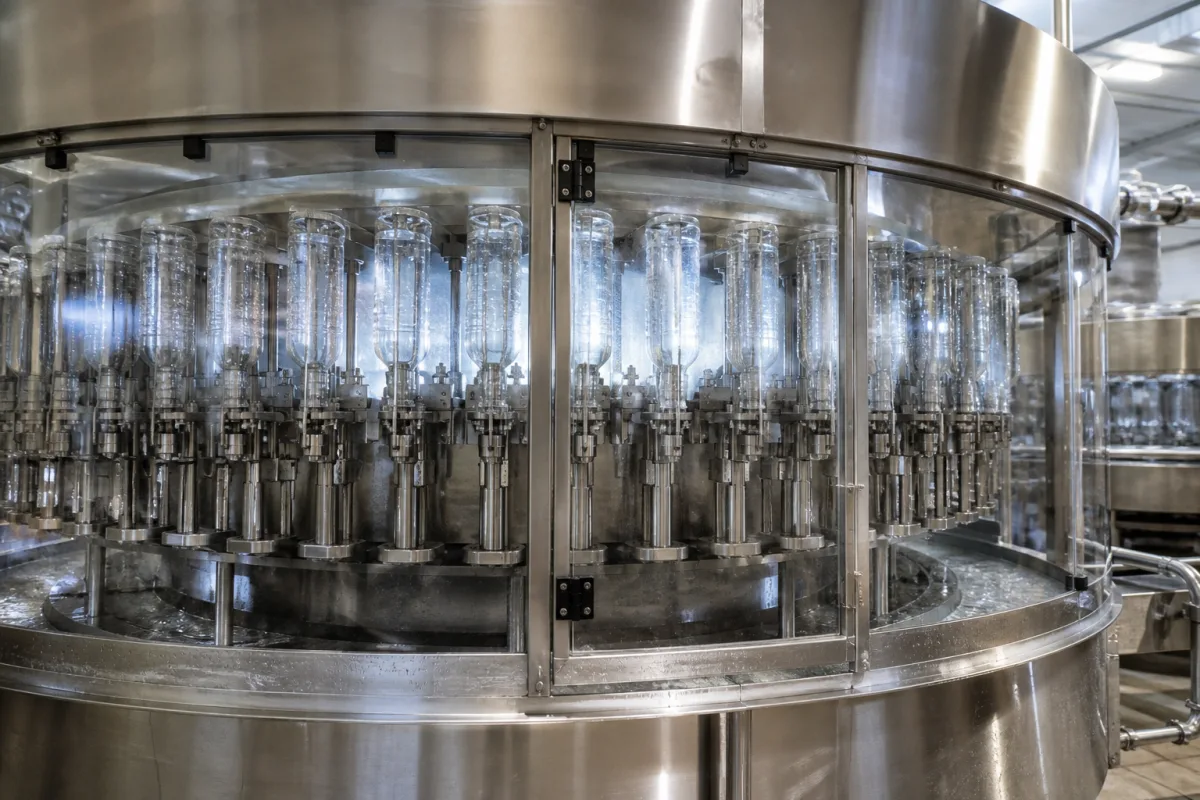
Automated Beverage Container Rinsing and Sanitizing Machine

Based on aggregated insights from multiple verified factory profiles within the CNFX directory, the standard Automated Beverage Container Rinsing and Sanitizing Machine used in the Beverage Manufacturing sector typically supports operational capacities ranging from standard industrial configurations to heavy-duty production requirements.

Technical Definition & Core Assembly

A canonical Automated Beverage Container Rinsing and Sanitizing Machine is characterized by the integration of Infeed Conveyor and Rinsing Nozzle Array. In industrial production environments, manufacturers listed on CNFX commonly emphasize Stainless Steel 316L construction to support stable, high-cycle operation across diverse manufacturing scenarios.

Industrial machine for automated cleaning and sanitization of empty beverage containers prior to filling
Product Specifications

Technical details and manufacturing context for Automated Beverage Container Rinsing and Sanitizing Machine

Definition
A standalone industrial machine designed to automatically rinse and sanitize empty beverage containers such as bottles, cans, or kegs on a production line. It ensures the removal of contaminants, dust, and microorganisms from container interiors and exteriors to meet stringent food safety and hygiene standards. The machine typically integrates multiple stages including pre-rinse, chemical sanitizer application, and final rinse with purified water. It is critical for preventing product contamination and maintaining beverage quality and shelf life in both alcoholic and non-alcoholic beverage manufacturing.
Working Principle
Containers are conveyed through sequential stations where they are inverted and subjected to high-pressure jets of cleaning and sanitizing fluids. A programmable logic controller (PLC) manages the timing, pressure, and fluid selection for each stage, ensuring complete coverage and contact time.
Common Materials
Stainless Steel 316L, Food-Grade Plastics, Chemical-Resistant Seals
Technical Parameters
  • Maximum processing capacity (containers/hour) Per Request
  • Minimum and maximum container volumes accommodated (ml) Per Request
Components / BOM
  • Infeed Conveyor
    Transports empty containers into the machine
    Material: Stainless steel with food-grade belt
  • Rinsing Nozzle Array
    Sprays high-pressure water and sanitizer into containers
    Material: Stainless steel 316L
  • Container Inverter Mechanism
    Rotates and inverts containers to ensure complete drainage
    Material: Stainless steel with food-grade bearings
  • PLC Control Panel
    Programs and monitors washing cycles, pressure, and timing
    Material: Stainless steel enclosure
  • Chemical Dosing System Optional
    Meters and injects sanitizing chemicals into rinse water
    Material: Chemical-resistant plastics and seals
Engineering Reasoning
0.5-3.0 bar spray pressure, 60-85°C sanitizing temperature, 10-30 containers/minute throughput
Spray pressure below 0.3 bar causes insufficient cleaning; temperature above 90°C damages plastic containers; throughput exceeding 35 containers/minute causes mechanical overload
Design Rationale: Fluid dynamics boundary layer separation at low pressure reduces cleaning efficacy; polymer glass transition temperature (Tg) of PET containers at 70-80°C causes deformation; mechanical resonance at 35+ containers/minute exceeds gearbox fatigue limit of 10^7 cycles
Risk Mitigation (FMEA)
Trigger Sanitizing solution concentration deviation below 1.5% sodium hypochlorite
Mode: Microbial biofilm formation on spray nozzles
Strategy: Integrated conductivity sensor with PID-controlled chemical dosing system maintaining 2.0±0.2% concentration
Trigger Conveyor belt tension loss below 150 N/m
Mode: Container misalignment causing spray bypass and incomplete sanitization
Strategy: Laser alignment sensors with servo-controlled tensioning system maintaining 180±10 N/m belt tension

Industry Taxonomies & Aliases

Commonly used trade names and technical identifiers for Automated Beverage Container Rinsing and Sanitizing Machine.

Industrial Ecosystem & Supply Chain DNA

Complementary Systems
Downstream Applications
Specialized Tooling

Application Fit & Sizing Matrix

Operational Limits
pressure: Up to 6 bar (87 psi) for spray nozzles
flow rate: 10-100 L/min (2.6-26.4 gal/min) per rinse station
temperature: Ambient to 85°C (185°F) for sanitizing rinse
slurry concentration: Not applicable (typically uses liquid sanitizers, not slurries)
Media Compatibility
✓ Food-grade sanitizers (e.g., peracetic acid, chlorine-based solutions) ✓ Potable water (for rinse cycles) ✓ PET, glass, or aluminum beverage containers
Unsuitable: Abrasive or corrosive particulate slurries (e.g., sandblasting media, concentrated acids)
Sizing Data Required
  • Container throughput (units per hour)
  • Container dimensions (diameter and height)
  • Required sanitizer contact time (seconds)

Reliability & Engineering Risk Analysis

Failure Mode & Root Cause
Corrosion and pitting in stainless steel components
Cause: Exposure to chlorinated sanitizing chemicals and acidic beverage residues leading to localized breakdown of passive oxide layer, especially at welds and crevices
Pump seal and bearing failure
Cause: Intermittent dry running during container transfer cycles combined with particulate contamination from beverage residues, causing overheating and abrasive wear
Maintenance Indicators
  • Visible pitting or rust-colored streaks on stainless steel surfaces, particularly around spray nozzles and tank welds
  • Unusual high-pitched whining or grinding noise from pump/motor assembly during rinse cycles, indicating bearing wear or cavitation
Engineering Tips
  • Implement routine water quality testing and chemical concentration monitoring to maintain sanitizer levels within manufacturer's specified ranges, preventing both under-dosing (microbial risk) and over-concentration (accelerated corrosion)
  • Establish preventive maintenance schedule for pump lubrication and seal inspection every 500 operating hours, including verification of proper liquid levels before startup to prevent dry running conditions

Compliance & Manufacturing Standards

Reference Standards
ISO 22000:2018 - Food safety management systems ANSI/NSF 18 - Manual food and beverage dispensing equipment CE - Machinery Directive 2006/42/EC
Manufacturing Precision
  • Spray nozzle alignment: +/-0.5°
  • Conveyor belt speed variation: +/-2%
Quality Inspection
  • Microbiological swab test for sanitization efficacy
  • Leak pressure test at 1.5x operating pressure

Factories Producing Automated Beverage Container Rinsing and Sanitizing Machine

Verified manufacturers with capability to produce this product in China

✓ 95% Supplier Capability Match Found

S Sourcing Manager from Brazil Feb 09, 2026
★★★★★
"Standard OEM quality for Beverage Manufacturing applications. The Automated Beverage Container Rinsing and Sanitizing Machine arrived with full certification."
Technical Specifications Verified
P Procurement Specialist from Canada Feb 06, 2026
★★★★☆
"Great transparency on the Automated Beverage Container Rinsing and Sanitizing Machine components. Essential for our Beverage Manufacturing supply chain. (Delivery took slightly longer than expected, but technical support was excellent.)"
Technical Specifications Verified
T Technical Director from United States Feb 03, 2026
★★★★★
"The Automated Beverage Container Rinsing and Sanitizing Machine we sourced perfectly fits our Beverage Manufacturing production line requirements."
Technical Specifications Verified
Verification Protocol

“Feedback is collected from verified sourcing managers during RFQ (Request for Quote) and factory evaluation processes on CNFX. These reports represent historical performance data and technical audit summaries from our B2B manufacturing network.”

15 sourcing managers are analyzing this specification now. Last inquiry for Automated Beverage Container Rinsing and Sanitizing Machine from Poland (1h ago).

Supply Chain Commonly Integrated Components

Sanitary Flow Meter

A precision instrument designed to measure the volumetric or mass flow rate of liquids in hygienic processing environments, featuring smooth surfaces and cleanable designs to prevent contamination.

Explore Specs →
Ingredient Inlet Valve Manifold

A multi-port valve assembly that controls and directs the flow of liquid ingredients into an automated beverage blending system.

Explore Specs →
In-line Mixer/Static Mixer

A stationary mixing device installed directly in a pipeline that blends beverage ingredients through geometric flow manipulation without moving parts.

Explore Specs →
Human-Machine Interface (HMI)

A hardware and software interface that allows human operators to monitor, control, and interact with the automated beverage blending system.

Explore Specs →

Frequently Asked Questions

What materials are used in the construction of this rinsing machine?

The machine is constructed with Stainless Steel 316L for corrosion resistance, food-grade plastics for safety, and chemical-resistant seals for durability in sanitizing environments.

What is the maximum throughput of this automated rinsing system?

The system has a maximum throughput measured in containers per hour, designed to integrate seamlessly with high-speed beverage filling lines while maintaining consistent sanitization quality.

How does the PLC control panel optimize the sanitization process?

The PLC control panel allows precise adjustment of operating pressure, sanitizer contact time, and chemical dosing, ensuring consistent results while minimizing water and chemical consumption per container.

Can I contact factories directly on CNFX?

CNFX is an open directory, not a transaction platform. Each factory profile provides direct contact information and production details to help you initiate direct inquiries with Chinese suppliers.

Get Quote for Automated Beverage Container Rinsing and Sanitizing Machine

Request technical pricing, lead times, or customized specifications for Automated Beverage Container Rinsing and Sanitizing Machine directly from verified manufacturing units.

Your business information is encrypted and only shared with verified Automated Beverage Container Rinsing and Sanitizing Machine suppliers.

Thank you! Your message has been sent. We'll respond within 1–3 business days.

Need to Manufacture Automated Beverage Container Rinsing and Sanitizing Machine?

Connect with verified factories specializing in this product category

Add Your Factory Contact Us
Previous Product
Automated Beverage Container Pressure Testing System
Next Product
Automated Beverage Container Sterilization System