Editorial Technical Reference

Analytical Sensor Array

This page explains how Analytical Sensor Array is classified within Chemical Manufacturing. Technical values and manufacturer relationships are research references; confirm the current specification and supplier evidence for each order.

Technical Definition & Core Assembly

A multi-sensor system integrated within Process Analytical Technology (PAT) modules for simultaneous monitoring of multiple process parameters.
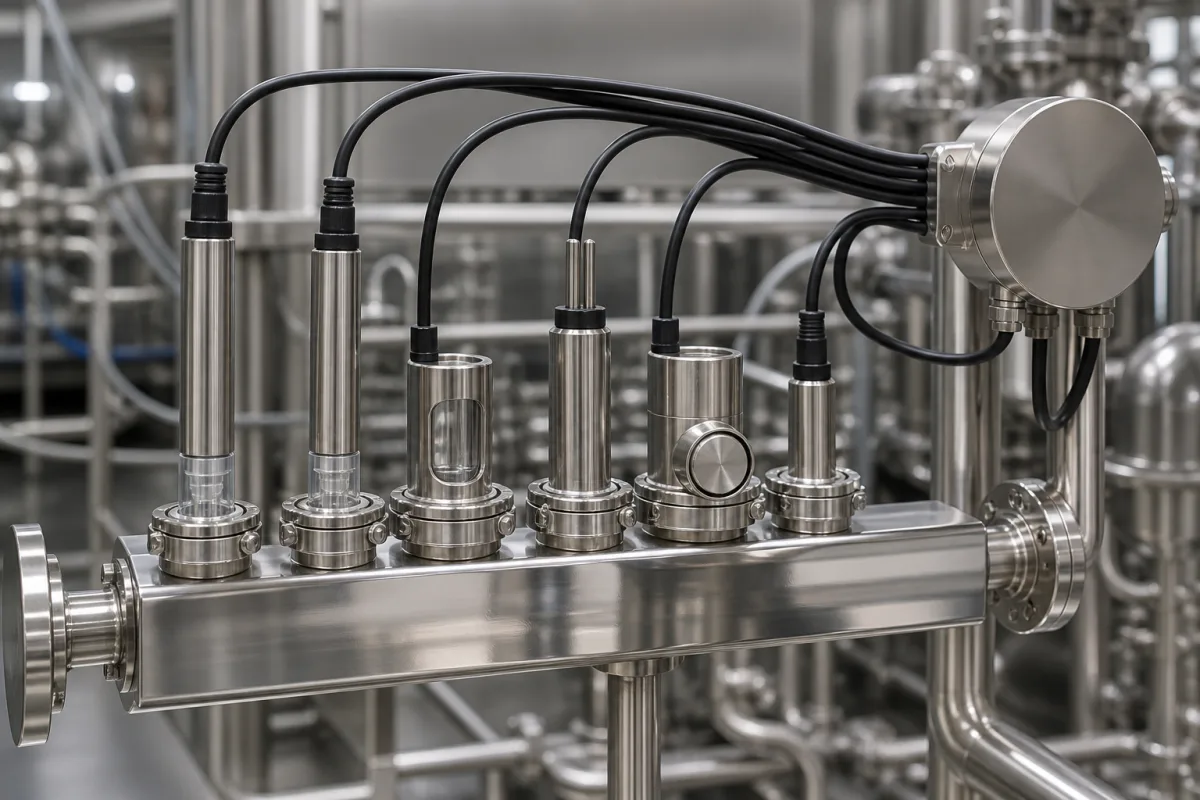
Representative product image. Confirm appearance and specifications with the manufacturer.

Product Specifications

Technical details and manufacturing context for Analytical Sensor Array

Definition
The Analytical Sensor Array is a component used in Process Analytical Technology (PAT) modules within chemical manufacturing. It integrates multiple specialized sensors in a coordinated configuration to enable real-time, in-line measurement of various chemical, physical, and biological parameters during production. This supports quality-by-design principles and continuous process verification by providing comprehensive data for process control and optimization. The array typically includes sensors such as spectroscopic, electrochemical, optical, or thermal types, which simultaneously detect different analytes or parameters. Data from individual sensors is collected and processed through a central control system, allowing for multivariate analysis and holistic process monitoring. The system is designed to be configurable, with the number of sensors ranging from 4 to 8 channels, depending on the process requirements. Key specifications include a pH measurement range of 0–14 with an accuracy of ±0.02 pH at calibration point, and a temperature measurement range of -40 to 150 °C with an accuracy of ±0.5 °C over the full range. The response time for 90% of the final value is ≤5 seconds. The operating temperature for the electronics is -20 to 60 °C, while the operating pressure range is 1.0–1.6 MPa. The enclosure offers ingress protection rated IP65–IP67 (per IEC 60529). The supply voltage is 24 V DC ±10% with reverse polarity protection, and typical power consumption is ≤15 W. The output signal is 4–20 mA, with HART protocol available. Wetted parts are typically made of 316L stainless steel (per ASTM A240), with optional Hastelloy C-276. The weight ranges from 5 to 10 kg depending on configuration. Materials used in the sensor array include silicon, stainless steel (316L), optical glass, and polymer composites. These materials are selected for compatibility with chemical processes and durability. It is important to verify model-specific values and standards with the legal manufacturer or supplier, as the listed parameters are reference ranges for directory purposes.
Working Principle
The sensor array operates by deploying multiple sensing elements—such as spectroscopic, electrochemical, optical, or thermal sensors—that simultaneously detect different analytes or parameters. Each sensor generates a signal proportional to the measured parameter. These signals are collected and processed by a central control system, which integrates the data to provide a comprehensive view of the process. The integrated data enables multivariate analysis, allowing operators to monitor process stability and detect deviations in real time. The array is designed for in-line operation, meaning it is directly installed in the process stream, providing continuous measurements without the need for sampling. The central control system can be configured to trigger alarms or adjust process parameters based on the sensor readings, supporting automated process control.
Common Materials
Silicon, Stainless Steel (316L), Optical Glass, Polymer Composites
Technical Parameters
ParameterTypical rangeNotes & selection driver
Number of Sensors4–8 channelsConfigurable based on process parameters
Measurement Range (pH)0–14 pHFor pH sensors
Measurement Range (Temperature)-40–150 °CFor temperature sensors
Accuracy (pH)±0.02 pHAt calibration point
Accuracy (Temperature)±0.5 °COver full range
Response Time≤5 sFor 90% of final value
Operating Temperature-20–60 °CElectronics; sensors may have wider range
Ingress ProtectionIP65–IP67For enclosureIEC 60529
Supply Voltage24 ±10% V DCReverse polarity protected
Power Consumption≤15 WTypical
Output Signal4–20 mAHART protocol available
Material (Wetted Parts)316LOptional Hastelloy C-276ASTM A240
Weight5–10 kgDepending on configuration

Ranges are indicative industry figures for RFQ preparation, not a supplier commitment. Confirm every value and standard with the legal manufacturer before ordering.

Components / BOM
  • Sensor Elements Part
    Individual sensing units that detect specific chemical, physical, or biological parameters
    Material: Silicon/Stainless Steel
  • Signal Conditioning Circuitry
    Amplifies and filters raw sensor signals for accurate data acquisition
    Material: Printed Circuit Board (PCB)
  • Array Housing
    Protective enclosure that maintains sensor alignment and provides environmental sealing
    Material: Stainless Steel 316L
  • Data Interface Module
    Connects the sensor array to PAT module control systems for data transmission
    Material: Polymer Composites with Metal Connectors

Applied To / Applications

This component is essential for the following industrial systems and equipment:

Industrial Ecosystem & Supply Chain Structure

Complementary Systems
Downstream Applications
Specialized Tooling

Application Fit & Sizing Matrix

Operational Limits
pressure: 0 to 10 bar (gauge)
flow rate: 0.1 to 5.0 m/s
temperature: -20°C to 150°C
slurry concentration: Up to 40% solids by weight
Media Compatibility
✓ Aqueous solutions ✓ Organic solvents (non-corrosive) ✓ Pharmaceutical slurries
Unsuitable: Hydrofluoric acid or highly corrosive halogenated compounds
Sizing Data Required
  • Process flow rate range
  • Required measurement parameters (e.g., pH, conductivity, turbidity)
  • Installation space constraints and mounting configuration

Reliability & Engineering Risk Analysis

Failure Mode & Root Cause
Signal Drift/Calibration Loss
Cause: Sensor element degradation due to prolonged exposure to process media, temperature cycling, or contamination buildup on sensing surfaces, leading to inaccurate readings over time.
Electrical/Connection Failure
Cause: Corrosion or moisture ingress at cable terminations/connectors, vibration-induced wire fatigue, or PCB component failure from thermal stress or power surges.
Maintenance Indicators
  • Erratic or inconsistent readings compared to process expectations or redundant sensors
  • Visible corrosion, moisture, or physical damage at sensor housing or cable entry points
Engineering Tips
  • Implement regular calibration checks using traceable standards and document drift trends to predictively schedule recalibration or replacement before critical accuracy loss occurs.
  • Ensure proper sealing of enclosures and cable glands, use vibration-resistant mounting, and install surge protection on power/signal lines to prevent environmental and electrical damage.

Indicative industry ranges for design and RFQ preparation. Confirm the exact figures and applicable standard with the manufacturer before specifying.

Compliance & Manufacturing Standards

Applicable Standards
IEC 60751:2022 - Industrial Platinum Resistance Thermometers and Platinum Temperature Sensors CE Marking - Directive 2014/35/EU (Low Voltage Directive) and 2014/30/EU (EMC Directive)

Quoted from the published standard.

Manufacturing Precision
  • Sensor Calibration Accuracy: +/-0.1% of full scale
  • Inter-Sensor Alignment: +/-0.05mm positional tolerance
Quality Inspection
  • Environmental Stress Screening (ESS) - Temperature Cycling and Vibration Testing
  • Metrological Calibration Verification against NIST-traceable standards

Manufacturers of Analytical Sensor Array

Manufacturer profiles associated with Analytical Sensor Array.

Sourcing Analytical Sensor Array from China?
Tell us your specification and target quantity — we will match it against manufacturer records and come back with the factories that fit.
Request manufacturers We manufacture this

Manufacturer listings support early research and capability understanding. They are not certification, ranking, or transaction guarantees.

Technical documentation
Request current drawings, revision history, and a signed specification sheet.
Manufacturing capability
Verify equipment lists, process limits, capacity, and representative production evidence.
Inspection readiness
Confirm test methods, calibrated equipment, sampling plans, and traceable reports.
Supplier transparency
Check the legal entity, factory address, ownership, certifications, and direct contacts.

CNFX does not score or rank suppliers. Buyers must verify all claims and documents with the legal manufacturer before ordering.

Supply Chain Compatible Machinery & Devices

Continuous Flow Reactor System

A modular, automated chemical processing system designed for continuous flow synthesis of chemical products.

Explore Specs →
Automated Batch Crystallization System

Automated system for controlled crystallization of chemical compounds in batch processes.

Explore Specs →
Automated pH Monitoring and Dosing System

Automated system for continuous pH monitoring and chemical dosing in process streams.

Explore Specs →
Automated Powder Dispensing and Blending System

Automated system for precise dispensing and homogeneous blending of powdered chemicals.

Explore Specs →

Frequently Asked Questions

What is the typical number of sensors in the array?

The array is configurable with 4 to 8 sensor channels, depending on the process parameters to be monitored. The exact configuration should be confirmed with the manufacturer for your specific application.

What is the operating pressure range?

The operating pressure range is 1.0 to 1.6 MPa. Verify suitability for your process conditions.

What output signals are available?

The standard output signal is 4–20 mA, with HART protocol available as an option. This allows integration with process control systems. Confirm the required output type with the manufacturer.

What materials are used for wetted parts?

Wetted parts are typically made of 316L stainless steel (per ASTM A240), with optional Hastelloy C-276 for more corrosive environments. Other materials in the array include silicon, optical glass, and polymer composites. Always verify material compatibility with your process chemicals.

Data Basis

Editorial classification, named public sources where available, and source-reviewed manufacturer records.

Preliminary Technical Classification
This page supports structured research, RFQ preparation, and supplier evaluation. It does not replace buyer-led supplier qualification, standards review, or technical approval.
Buyer enquiry

Request manufacturing insight for Analytical Sensor Array

Ask for use case, specification boundaries, supplier type, and RFQ preparation information for this product.

Where it goes
Straight to the CNFX editorial desk, and to the manufacturer if this product is linked to a claimed profile. Nothing is broadcast to a supplier list.
Your details stay here
We do not sell or rent enquiry data, and we do not add you to a mailing list. Used only to answer this request.
No commission, no middleman
CNFX is a directory. We take no cut of any order and never negotiate on a supplier's behalf.
What we don't claim
A listing is not an endorsement. Qualify every supplier and verify every figure yourself before ordering.

Your business information is used only to process this request.

Thank you! Your message has been sent. We'll respond within 1–3 business days.
Sorry, we couldn't send your message. Please try again, or email us at contact@cnfx.com.

Need to Manufacture Analytical Sensor Array?

Compare manufacturer profiles with relevant product and process capability.

Previous Product
Twin-Screw Polymer Compounding Extruder
Last Product
Get QuotesChat