Editorial Technical Reference

Flow Meter/Sensor

This page explains how Flow Meter/Sensor is classified within Chemical Manufacturing. Technical values and manufacturer relationships are research references; confirm the current specification and supplier evidence for each order.

Technical Definition & Core Assembly

A device that measures and monitors the flow rate of chemicals within a dosing system.
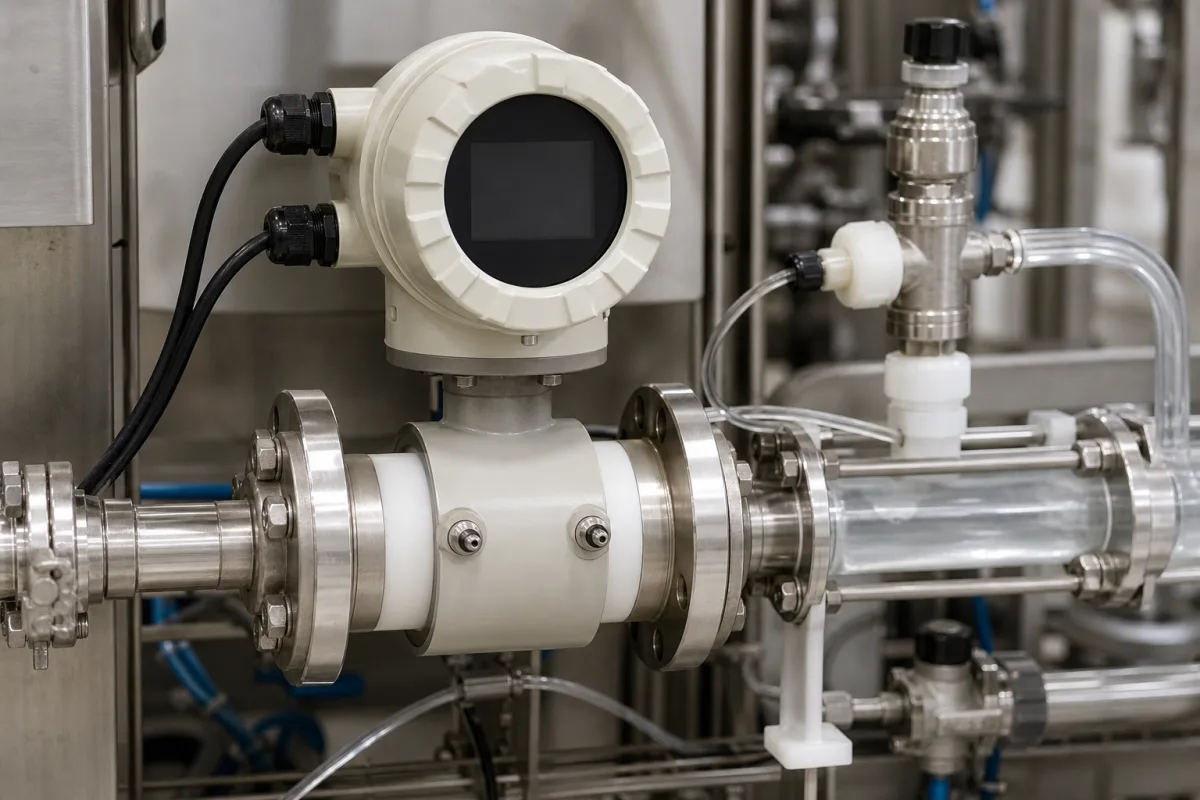
Representative product image. Confirm appearance and specifications with the manufacturer.

Product Specifications

Technical details and manufacturing context for Flow Meter/Sensor

Definition
This flow meter/sensor is a component used in chemical dosing systems to measure and monitor the flow rate of chemicals being dispensed. It provides real-time feedback to control systems, ensuring accurate dosing for processes such as water treatment, pharmaceutical production, or industrial manufacturing. The device operates by detecting flow through various methods, including electromagnetic induction, ultrasonic waves, turbine rotation, or differential pressure measurement. It converts the physical flow into an electrical signal (e.g., 4-20 mA, pulse, or digital output) transmitted to the system controller.

Key specifications include a nominal diameter of 15–50 mm (ISO 6708), a flow range of 0.1–10 m³/h with a turndown ratio of 10:1, and an accuracy of ±0.5% of rate (ISO 11631) for liquids with conductivity >5 µS/cm. Repeatability is ±0.1% of rate under constant operating conditions. Operating pressure ranges from 1.0 to 1.6 MPa. Operating temperature is -20 to 80 °C for PTFE-lined sensors. Ambient humidity is ≤95% RH (non-condensing). Ingress protection is IP65–IP67 (IEC 60529), with IP67 for submersible versions. Power supply is 24 V DC ±10% with reverse polarity protection. Output signal is 4–20 mA (IEC 60381-1), with HART protocol available. Electrical connection is M20×1.5 (IEC 60079-0) for 6–12 mm cable. Wetted materials include PTFE, PFA, and 316L (ASTM A240), resistant to most chemicals. Weight ranges from 2.5 to 8.0 kg depending on size and flange rating.

Materials on file include Stainless Steel 316L, PTFE, and Ceramic. These specifications are reference ranges; verify model-specific values and standards with the legal manufacturer or supplier before procurement or installation.
Working Principle
The flow meter/sensor operates by detecting flow through methods such as electromagnetic induction, ultrasonic waves, turbine rotation, or differential pressure measurement. It converts the physical flow into an electrical signal (e.g., 4-20 mA, pulse, or digital output) that is transmitted to the system controller. The sensor provides real-time feedback to ensure accurate chemical dosing.
Common Materials
Stainless Steel 316L, PTFE (Polytetrafluoroethylene), Ceramic
Technical Parameters
ParameterTypical rangeNotes & selection driver
Nominal Diameter15–50 mmSelect based on pipe size and flow range.ISO 6708
Flow Range0.1–10 m³/hTurndown ratio 10:1.
Accuracy±0.5 % of rateFor liquids with conductivity >5 µS/cm.ISO 11631
Repeatability±0.1 % of rateUnder constant operating conditions.
Operating Temperature-20–80 °CFor PTFE-lined sensors.
Ambient Humidity≤95 % RHNon-condensing.
Ingress ProtectionIP65–IP67IP67 for submersible versions.IEC 60529
Power Supply24 ±10% V DCReverse polarity protected.
Output Signal4–20 mAHART protocol available.IEC 60381-1
Electrical ConnectionM20×1.5Cable gland for 6–12 mm cable.IEC 60079-0
Wetted MaterialsPTFE, PFA, 316LResistant to most chemicals.ASTM A240
Weight2.5–8.0 kgDepends on size and flange rating.

Ranges are indicative industry figures for RFQ preparation, not a supplier commitment. Confirm every value and standard with the legal manufacturer before ordering.

Components / BOM
  • Sensor Element
    Detects flow through physical interaction (e.g., turbine, ultrasonic transducer, magnetic field)
    Material: Stainless Steel or Ceramic
  • Signal Converter
    Converts physical measurement into standardized electrical signal
    Material: Electronic Components in Epoxy Housing
  • Housing/Body Part
    Protects internal components and provides connection to piping
    Material: Stainless Steel 316L
  • Seals/Gaskets Part
    Prevents leakage at connection points
    Material: PTFE or Viton

Applied To / Applications

This component is essential for the following industrial systems and equipment:

Industrial Ecosystem & Supply Chain Structure

Complementary Systems
Downstream Applications
Specialized Tooling

Application Fit & Sizing Matrix

Operational Limits
pressure: 0 to 16 bar
flow rate: 0.1 to 100 L/min
temperature: -20°C to 80°C
slurry concentration: Up to 10% solids by weight
Media Compatibility
✓ Water-based solutions ✓ Acids (pH 2-10) ✓ Corrosion inhibitors
Unsuitable: Abrasive slurries with high solids content
Sizing Data Required
  • Required flow rate range (L/min)
  • Fluid viscosity (cP)
  • Pipe diameter (mm)

Reliability & Engineering Risk Analysis

Failure Mode & Root Cause
Sensor Drift/Calibration Loss
Cause: Contamination of sensing elements (e.g., buildup, coating), electronic component aging, or environmental factors (temperature, humidity) affecting signal accuracy.
Mechanical Wear/Blockage
Cause: Abrasive particles in the fluid eroding internal components, or solid deposits obstructing flow paths and moving parts (e.g., impellers, pistons).
Maintenance Indicators
  • Erratic or inconsistent flow readings compared to system expectations (e.g., sudden drops/spikes without process changes)
  • Unusual audible noises (e.g., grinding, clicking) or visible leaks/condensation around the sensor housing
Engineering Tips
  • Implement regular calibration schedules based on process criticality and manufacturer guidelines, using traceable standards to maintain measurement integrity.
  • Install upstream filtration (e.g., strainers, filters) appropriate for the fluid type and particle size, and ensure proper piping alignment to minimize stress on the meter.

Indicative industry ranges for design and RFQ preparation. Confirm the exact figures and applicable standard with the manufacturer before specifying.

Compliance & Manufacturing Standards

Applicable Standards
ISO 4064-1:2014 (Water meters for cold potable water and hot water) ANSI/ASME MFC-3M (Measurement of Fluid Flow in Pipes Using Orifice, Nozzle, and Venturi) DIN EN 1434 (Heat meters)

Quoted from the published standard.

Manufacturing Precision
  • Bore diameter: +/-0.02mm
  • Flow rate accuracy: +/-0.5% of reading
Quality Inspection
  • Calibration test against traceable standards
  • Pressure test for leak integrity

Manufacturers of Flow Meter/Sensor

Manufacturer profiles associated with Flow Meter/Sensor.

Sourcing Flow Meter/Sensor from China?
Tell us your specification and target quantity — we will match it against manufacturer records and come back with the factories that fit.
Request manufacturers We manufacture this

Manufacturer listings support early research and capability understanding. They are not certification, ranking, or transaction guarantees.

Technical documentation
Request current drawings, revision history, and a signed specification sheet.
Manufacturing capability
Verify equipment lists, process limits, capacity, and representative production evidence.
Inspection readiness
Confirm test methods, calibrated equipment, sampling plans, and traceable reports.
Supplier transparency
Check the legal entity, factory address, ownership, certifications, and direct contacts.

CNFX does not score or rank suppliers. Buyers must verify all claims and documents with the legal manufacturer before ordering.

Supply Chain Compatible Machinery & Devices

Continuous Flow Reactor System

A modular, automated chemical processing system designed for continuous flow synthesis of chemical products.

Explore Specs →
Automated Batch Crystallization System

Automated system for controlled crystallization of chemical compounds in batch processes.

Explore Specs →
Automated pH Monitoring and Dosing System

Automated system for continuous pH monitoring and chemical dosing in process streams.

Explore Specs →
Automated Powder Dispensing and Blending System

Automated system for precise dispensing and homogeneous blending of powdered chemicals.

Explore Specs →

Frequently Asked Questions

What is the operating principle of this flow meter/sensor?

It detects flow using methods like electromagnetic induction, ultrasonic waves, turbine rotation, or differential pressure. The physical flow is converted into an electrical signal (e.g., 4-20 mA) for the controller.

What are the key specifications to consider?

Nominal diameter 15-50 mm, flow range 0.1-10 m³/h, accuracy ±0.5% of rate, operating pressure 1.0-1.6 MPa, temperature -20 to 80 °C, and IP65-IP67 protection. Verify with manufacturer.

Which materials are used for wetted parts?

Wetted materials include PTFE, PFA, and 316L stainless steel, resistant to most chemicals. Also, materials on file include 316L, PTFE, and ceramic.

What output signals are available?

The standard output is 4-20 mA (IEC 60381-1), with HART protocol available. Other outputs like pulse or digital may be possible; confirm with supplier.

Data Basis

Editorial classification, named public sources where available, and source-reviewed manufacturer records.

Preliminary Technical Classification
This page supports structured research, RFQ preparation, and supplier evaluation. It does not replace buyer-led supplier qualification, standards review, or technical approval.
Buyer enquiry

Request manufacturing insight for Flow Meter/Sensor

Ask for use case, specification boundaries, supplier type, and RFQ preparation information for this product.

Where it goes
Straight to the CNFX editorial desk, and to the manufacturer if this product is linked to a claimed profile. Nothing is broadcast to a supplier list.
Your details stay here
We do not sell or rent enquiry data, and we do not add you to a mailing list. Used only to answer this request.
No commission, no middleman
CNFX is a directory. We take no cut of any order and never negotiate on a supplier's behalf.
What we don't claim
A listing is not an endorsement. Qualify every supplier and verify every figure yourself before ordering.

Your business information is used only to process this request.

Thank you! Your message has been sent. We'll respond within 1–3 business days.
Sorry, we couldn't send your message. Please try again, or email us at contact@cnfx.com.

Need to Manufacture Flow Meter/Sensor?

Compare manufacturer profiles with relevant product and process capability.

Previous Product
Twin-Screw Polymer Compounding Extruder
Last Product
Get QuotesChat