High-Speed Spindle
View system integration details
This page explains how Cooling Jacket is classified within Machinery and Equipment Manufacturing. Technical values and manufacturer relationships are research references; confirm the current specification and supplier evidence for each order.
A cooling component that surrounds and regulates the temperature of a high-speed spindle to prevent overheating during operation.
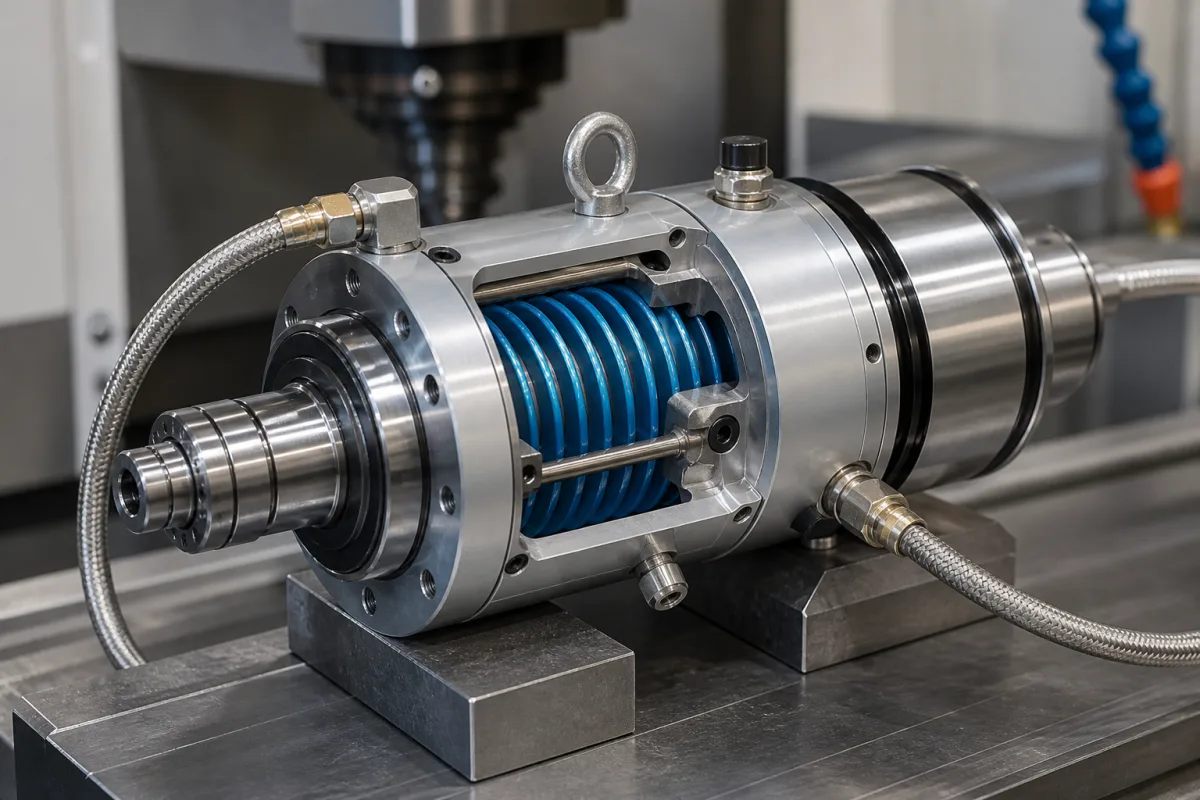
Technical details and manufacturing context for Cooling Jacket
What to specify in your RFQ
These are the quantities to specify to the manufacturer when sizing or requesting a quote. The manufacturer's own documentation governs the exact figures and applicable standard.
| pressure: | Max working pressure: 6 bar, Max burst pressure: 12 bar |
| flow rate: | Recommended: 10-25 L/min, Max: 30 L/min |
| temperature: | Operating range: -20°C to +80°C, Coolant temperature: 5°C to 40°C |
| slurry concentration: | Not recommended for slurry applications; clean coolant only |
Indicative industry ranges for design and RFQ preparation. Confirm the exact figures and applicable standard with the manufacturer before specifying.
Quoted from the published standard.
A practical evidence checklist for RFQ preparation and supplier evaluation.
Compare the published product scope and source details, then include your specifications and quantity in an enquiry.
Manufacturer profiles associated with Cooling Jacket.
Explore company information and manufacturing capabilities, then discuss the scope of your project with a relevant supplier.
Ask for use case, specification boundaries, supplier type, and RFQ preparation information for this product.
The primary function is to regulate the temperature of a high-speed spindle by circulating coolant around the housing, preventing overheating and thermal expansion, which can affect machining accuracy and component lifespan.
Common materials include stainless steel, aluminum alloy, and copper. Each offers different thermal conductivity and corrosion resistance, and the choice depends on the application requirements.
Selection is based on the spindle housing's outer diameter, which determines the jacket's inner diameter. You must also consider the coolant type, flow rate, and operating conditions. Always verify compatibility with the spindle manufacturer.
Regular maintenance includes checking for coolant leaks, ensuring proper flow, and cleaning the channels to prevent blockages. If temperature issues arise, inspect the coolant supply, pump, and heat exchanger.
This component is essential for the following industrial systems and equipment:
Editorial classification, named public sources where available, and source-reviewed manufacturer records.
Compare manufacturer profiles with relevant product and process capability.