Structured Manufacturing Data (2026)

Reactor Module

Based on aggregated insights from structured factory profiles within the CNFX directory, the standard Reactor Module used in the Chemical Manufacturing sector typically supports operational capacities ranging from standard industrial configurations to heavy-duty production requirements.

Technical Definition & Core Assembly

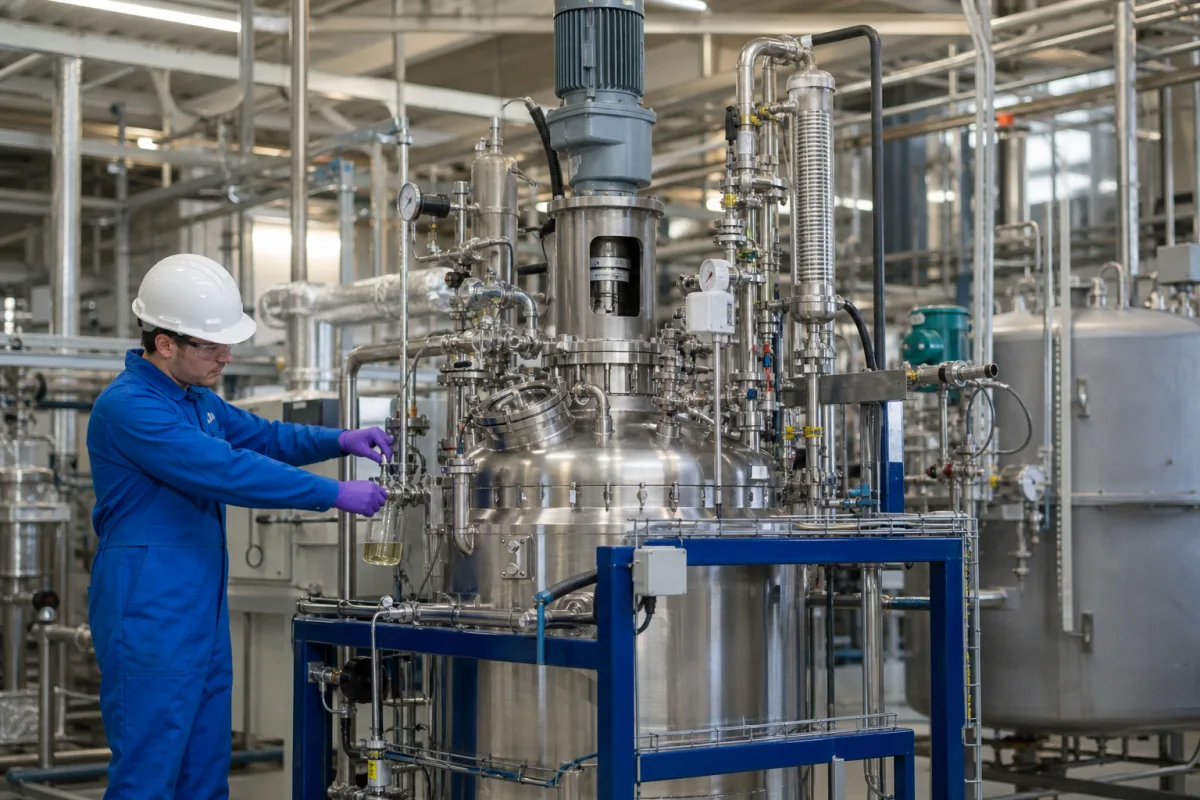
A canonical Reactor Module is characterized by the integration of Reaction Vessel and Heating/Cooling Jacket. In industrial production environments, manufacturers listed on CNFX commonly emphasize Stainless Steel 316L construction to support stable, high-cycle operation across diverse manufacturing scenarios.

A modular unit within a continuous flow chemical reactor system designed for controlled chemical reactions under specific conditions.
Product Specifications

Technical details and manufacturing context for Reactor Module

Definition
The Reactor Module is a critical component of a Continuous Flow Chemical Reactor System, serving as the primary vessel where chemical reactions occur under precisely controlled parameters such as temperature, pressure, and residence time. It facilitates continuous processing of reactants to produce desired chemical products efficiently and safely.
Working Principle
Reactants are continuously fed into the module, where they undergo chemical transformation under controlled conditions (e.g., temperature, pressure, catalysis). The design ensures optimal mixing, heat transfer, and reaction kinetics for consistent output in a flow-through configuration.
Common Materials
Stainless Steel 316L, Hastelloy, Glass-Lined Steel
Technical Parameters
  • Internal volume capacity of the reactor module (L) Per Request
Components / BOM

Industry Taxonomies & Aliases

Commonly used trade names and technical identifiers for Reactor Module.

Industrial Ecosystem & Supply Chain Structure

Complementary Systems
Downstream Applications
Specialized Tooling

Application Fit & Sizing Matrix

Operational Limits
pressure: 0 to 50 bar (g)
flow rate: 0.1 to 100 L/min
temperature: -20°C to 300°C
slurry concentration: Up to 40% solids by weight
Media Compatibility
✓ Aqueous solutions with pH 2-12 ✓ Organic solvents (e.g., ethanol, acetone) ✓ Catalyst slurries with inert carriers
Unsuitable: Hydrofluoric acid or highly concentrated halide solutions
Sizing Data Required
  • Required residence time (minutes)
  • Maximum heat transfer duty (kW)
  • Desired production capacity (kg/h)

Reliability & Engineering Risk Analysis

Failure Mode & Root Cause
Corrosion fatigue cracking
Cause: Cyclic thermal and pressure stresses combined with corrosive process fluids, particularly at weld joints and heat-affected zones
Catalyst bed channeling and hot spots
Cause: Uneven catalyst loading, particle size degradation, or improper flow distribution leading to localized overheating and thermal stress
Maintenance Indicators
  • Abnormal temperature gradients across reactor shell (visual/IR detection)
  • Sudden pressure fluctuations or unusual vibration patterns (audible/control system alarms)
Engineering Tips
  • Implement phased thermal cycling during startups/shutdowns to minimize thermal shock stress on pressure boundary components
  • Install real-time corrosion monitoring probes at critical locations and establish predictive maintenance based on corrosion rate data

Compliance & Manufacturing Standards

Reference Standards
ISO 9001:2015 - Quality Management Systems ASME BPVC Section VIII - Rules for Construction of Pressure Vessels PED 2014/68/EU - Pressure Equipment Directive
Manufacturing Precision
  • Wall Thickness: +/-5% of nominal thickness
  • Nozzle Alignment: +/-1.5mm from centerline
Quality Inspection
  • Hydrostatic Pressure Test
  • Ultrasonic Testing (UT) for weld integrity

Factories Producing Reactor Module

Manufacturer profiles with relevant production capability in China

Manufacturer listings support early research and capability understanding. They are not certification, ranking, or transaction guarantees.

Technical documentation
4/5
Manufacturing capability
4/5
Inspection readiness
5/5
Supplier transparency
3/5

These scores are example evaluation dimensions, not real customer ratings, country-specific buyer feedback, or live inquiry activity.

Supply Chain Compatible Machinery & Devices

Automated Batch Crystallization System

Automated system for controlled crystallization of chemical compounds in batch processes.

Explore Specs →
Automated pH Monitoring and Dosing System

Automated system for continuous pH monitoring and chemical dosing in process streams.

Explore Specs →
Automated Powder Dispensing and Blending System

Automated system for precise dispensing and homogeneous blending of powdered chemicals.

Explore Specs →
Automated Solvent Recovery and Purification System

Automated system for recovering and purifying industrial solvents.

Explore Specs →

Frequently Asked Questions

What materials are available for the Reactor Module construction?

Our Reactor Modules are constructed from corrosion-resistant materials including Stainless Steel 316L, Hastelloy, and Glass-Lined Steel to withstand various chemical processes and ensure durability.

What components are included in the Reactor Module BOM?

Each Reactor Module includes an agitation system for mixing, heating/cooling jacket for temperature control, inlet/outlet ports for continuous flow, and the primary reaction vessel for chemical processing.

How does the modular design benefit chemical manufacturing processes?

The modular design allows for scalability, easy maintenance, and flexibility in chemical production. Modules can be added or reconfigured to adapt to different reaction requirements and production volumes.

Can I contact factories directly on CNFX?

CNFX is an open directory, not a transaction platform. Each factory profile provides direct contact information and production details to help you initiate direct inquiries with Chinese suppliers.

Data Basis

CNFX manufacturer profiles, technical classification, publicly available product information, and ongoing plausibility checks.

Preliminary Technical Classification
This page supports structured research, RFQ preparation, and supplier evaluation. It does not replace buyer-led supplier qualification, standards review, or technical approval.

Request Manufacturing Insight for Reactor Module

Ask for use case, specification boundaries, supplier type, and RFQ preparation information for Reactor Module.

Your business information is used only to process this request.

Thank you! Your message has been sent. We'll respond within 1–3 business days.

Need to Manufacture Reactor Module?

Compare manufacturer profiles with relevant product and process capability.

Create Manufacturer Profile Contact Us
Previous Product
Reactor Core
Next Product
Reactor Shell/Vessel