Industry-Verified Manufacturing Data (2026)

Reference electrode

Based on aggregated insights from multiple verified factory profiles within the CNFX directory, the standard Reference electrode used in the Chemical Manufacturing sector typically supports operational capacities ranging from standard industrial configurations to heavy-duty production requirements.

Technical Definition & Core Assembly

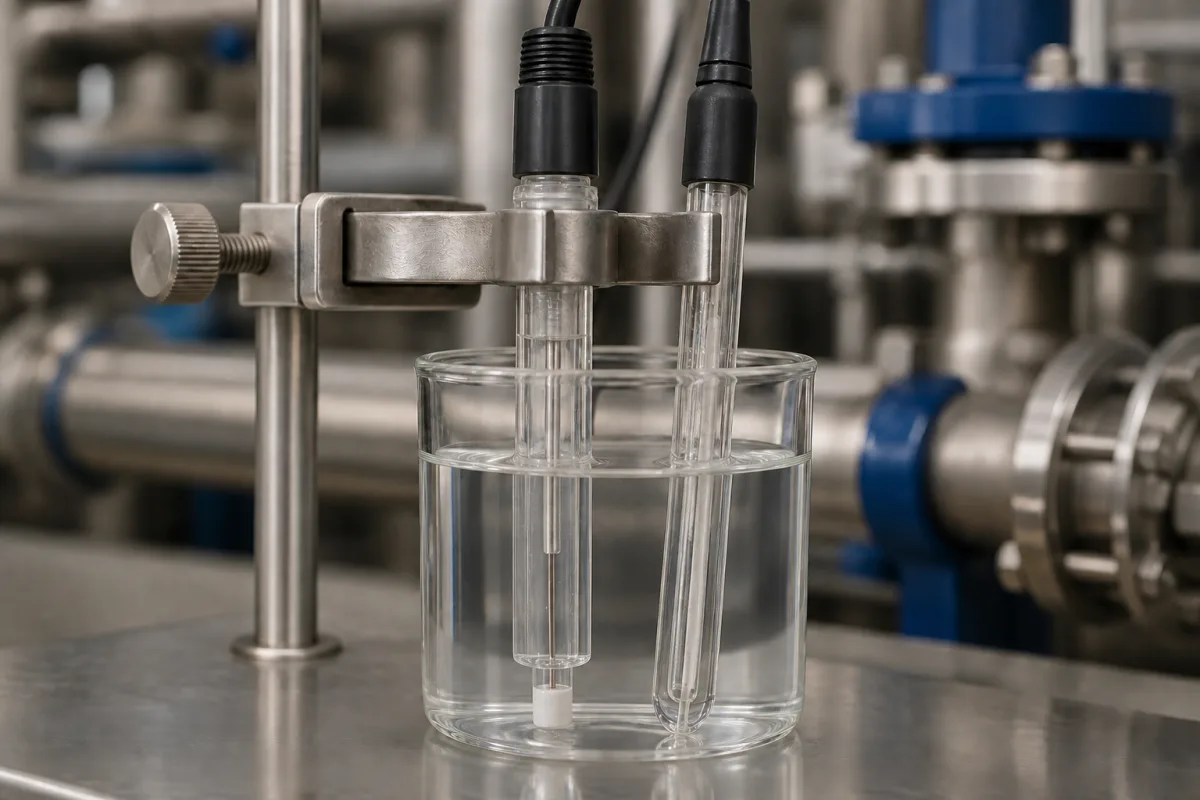
A canonical Reference electrode is characterized by the integration of Reference element and Electrolyte chamber. In industrial production environments, manufacturers listed on CNFX commonly emphasize Silver/silver chloride construction to support stable, high-cycle operation across diverse manufacturing scenarios.

A stable electrode with a known and constant electrochemical potential used as a reference point in pH measurement systems.
Product Specifications

Technical details and manufacturing context for Reference electrode

Definition
In pH monitoring sensors, the reference electrode provides a stable, reproducible electrical potential against which the measuring (glass) electrode's potential is compared. It maintains electrical continuity with the solution being measured through a liquid junction, allowing current to flow while preventing contamination of the internal reference solution. This enables accurate determination of hydrogen ion concentration by completing the electrochemical cell.
Working Principle
The reference electrode operates based on a redox reaction with a fixed potential. It typically contains an internal element (like silver/silver chloride) immersed in a stable electrolyte solution (like KCl). This creates a constant potential that doesn't change with the solution's pH. When connected to a measuring electrode through the solution, the potential difference between them correlates to pH via the Nernst equation.
Common Materials
Silver/silver chloride, Potassium chloride electrolyte, Ceramic or porous polymer junction, Glass or plastic body
Technical Parameters
  • Reference potential stability (typically ±2 mV) (mV) Standard Spec
Components / BOM
  • Reference element
    Provides stable electrochemical potential through redox reaction
    Material: Silver/silver chloride wire
  • Electrolyte chamber
    Holds stable reference electrolyte solution
    Material: Glass or plastic
  • Liquid junction
    Allows electrical contact while preventing electrolyte mixing
    Material: Ceramic, porous polymer, or glass frit
  • Reference fill solution
    Maintains constant ionic strength and potential
    Material: Potassium chloride solution
Engineering Reasoning
0-14 pH at 0-100°C with potential stability ±0.1 mV over 24 hours
Electrode potential drift exceeding ±30 mV from reference value or internal electrolyte contamination >5% by volume
Design Rationale: Electrolyte diffusion through porous junction causing liquid junction potential instability exceeding Nernst equation predictions
Risk Mitigation (FMEA)
Trigger Silver chloride layer depletion below 0.1 mm thickness
Mode: Reference potential drift exceeding 2 mV/hour
Strategy: Double-junction design with 3M KCl outer electrolyte reservoir maintaining Ag/AgCl electrode at 25°C ±0.5°C
Trigger Glass membrane cracking at stress concentrations exceeding 50 MPa
Mode: Electrolyte leakage causing measurement circuit short circuit
Strategy: Annealed borosilicate glass with 1.5 mm minimum wall thickness and PTFE protective sleeve

Industry Taxonomies & Aliases

Commonly used trade names and technical identifiers for Reference electrode.

Applied To / Applications

This component is essential for the following industrial systems and equipment:

Industrial Ecosystem & Supply Chain DNA

Complementary Systems
Downstream Applications
Specialized Tooling

Application Fit & Sizing Matrix

Operational Limits
pressure: 0-10 bar (standard), up to 16 bar for pressurized systems
flow rate: 0-3 m/s (to prevent mechanical stress and potential damage)
temperature: -5°C to 80°C (typical), up to 130°C for high-temperature variants
slurry concentration: Not recommended for high-solids slurries (>5% solids by weight); use in clear to low-turbidity solutions
Media Compatibility
✓ Potassium chloride (KCl) electrolyte solutions ✓ Aqueous process streams (e.g., drinking water, wastewater) ✓ Non-aggressive chemical solutions (e.g., buffers, dilute acids/bases)
Unsuitable: Hydrofluoric acid (HF) or fluoride-containing media (attacks glass components)
Sizing Data Required
  • Process connection type and size (e.g., 1/2" NPT, 3/4" NPT, flange)
  • Required reference electrode type (e.g., Ag/AgCl, calomel, double junction)
  • Installation environment (submersion depth, orientation, proximity to measuring electrode)

Reliability & Engineering Risk Analysis

Failure Mode & Root Cause
Electrode contamination
Cause: Deposition of process media, scaling, or fouling on the electrode surface, leading to inaccurate potential measurements and signal drift.
Reference junction blockage
Cause: Clogging of the porous junction by solids, precipitates, or viscous fluids, disrupting ionic contact and causing unstable or erroneous readings.
Maintenance Indicators
  • Drifting or unstable potential readings despite stable process conditions
  • Visible buildup, discoloration, or physical damage on the electrode tip or junction
Engineering Tips
  • Implement routine cleaning and calibration schedules using manufacturer-recommended solutions to prevent contamination and maintain accuracy.
  • Ensure proper installation with adequate flow across the junction to minimize fouling and use protective sleeves or guards in abrasive or high-solids environments.

Compliance & Manufacturing Standards

Reference Standards
ISO 9001:2015 (Quality Management Systems) ASTM E70-19 (Standard Test Method for pH of Aqueous Solutions with the Glass Electrode) CE (Conformité Européenne) marking for electrical safety and EMC compliance
Manufacturing Precision
  • Electrode potential stability: +/- 0.1 mV over 24 hours
  • Reference junction potential: +/- 3 mV maximum deviation
Quality Inspection
  • Calibration verification against certified buffer solutions (e.g., pH 4.01, 7.00, 10.01)
  • Leak test (pressure/vacuum method) to ensure electrolyte integrity

Factories Producing Reference electrode

Verified manufacturers with capability to produce this product in China

✓ 92% Supplier Capability Match Found

P Project Engineer from United States Feb 22, 2026
★★★★★
"Great transparency on the Reference electrode components. Essential for our Chemical Manufacturing supply chain."
Technical Specifications Verified
S Sourcing Manager from United Arab Emirates Feb 19, 2026
★★★★★
"The Reference electrode we sourced perfectly fits our Chemical Manufacturing production line requirements."
Technical Specifications Verified
P Procurement Specialist from Australia Feb 16, 2026
★★★★★
"Found 57+ suppliers for Reference electrode on CNFX, but this spec remains the most cost-effective."
Technical Specifications Verified
Verification Protocol

“Feedback is collected from verified sourcing managers during RFQ (Request for Quote) and factory evaluation processes on CNFX. These reports represent historical performance data and technical audit summaries from our B2B manufacturing network.”

16 sourcing managers are analyzing this specification now. Last inquiry for Reference electrode from Turkey (46m ago).

Supply Chain Compatible Machinery & Devices

Modular Distillation Column System

Pre-engineered modular system for continuous separation of chemical mixtures via distillation.

Explore Specs →
Automated Batch Crystallization System

Automated system for controlled crystallization of chemical compounds in batch processes.

Explore Specs →
Automated pH Monitoring and Dosing System

Automated system for continuous pH monitoring and chemical dosing in process streams.

Explore Specs →
Automated Powder Dispensing and Blending System

Automated system for precise dispensing and homogeneous blending of powdered chemicals.

Explore Specs →

Frequently Asked Questions

What makes this reference electrode suitable for chemical manufacturing applications?

This reference electrode is designed with durable materials like ceramic junctions and robust glass/plastic bodies to withstand harsh chemical environments, while maintaining stable electrochemical potential for accurate pH measurements in manufacturing processes.

How often should the reference fill solution be replaced in industrial settings?

In chemical manufacturing environments, the potassium chloride electrolyte fill solution should typically be replaced every 3-6 months, or according to manufacturer recommendations, to maintain optimal performance and prevent contamination that could affect measurement accuracy.

Can this reference electrode handle high-temperature chemical processes?

Yes, our reference electrodes are designed with temperature-resistant materials and proper junction designs to maintain stability in various chemical manufacturing conditions, though specific temperature limits depend on the model and should be verified against your process requirements.

Can I contact factories directly on CNFX?

CNFX is an open directory, not a transaction platform. Each factory profile provides direct contact information and production details to help you initiate direct inquiries with Chinese suppliers.

Get Quote for Reference electrode

Request technical pricing, lead times, or customized specifications for Reference electrode directly from verified manufacturing units.

Your business information is encrypted and only shared with verified Reference electrode suppliers.

Thank you! Your message has been sent. We'll respond within 1–3 business days.

Need to Manufacture Reference electrode?

Connect with verified factories specializing in this product category

Add Your Factory Contact Us
Previous Product
Reagent Storage Tank
Next Product
Reflux Drum