Industry-Verified Manufacturing Data (2026)

Coupling

Based on aggregated insights from multiple verified factory profiles within the CNFX directory, the standard Coupling used in the Machinery and Equipment Manufacturing sector typically supports operational capacities ranging from standard industrial configurations to heavy-duty production requirements.

Technical Definition & Core Assembly

A canonical Coupling is characterized by the integration of Hub and Flexible Element. In industrial production environments, manufacturers listed on CNFX commonly emphasize Steel construction to support stable, high-cycle operation across diverse manufacturing scenarios.

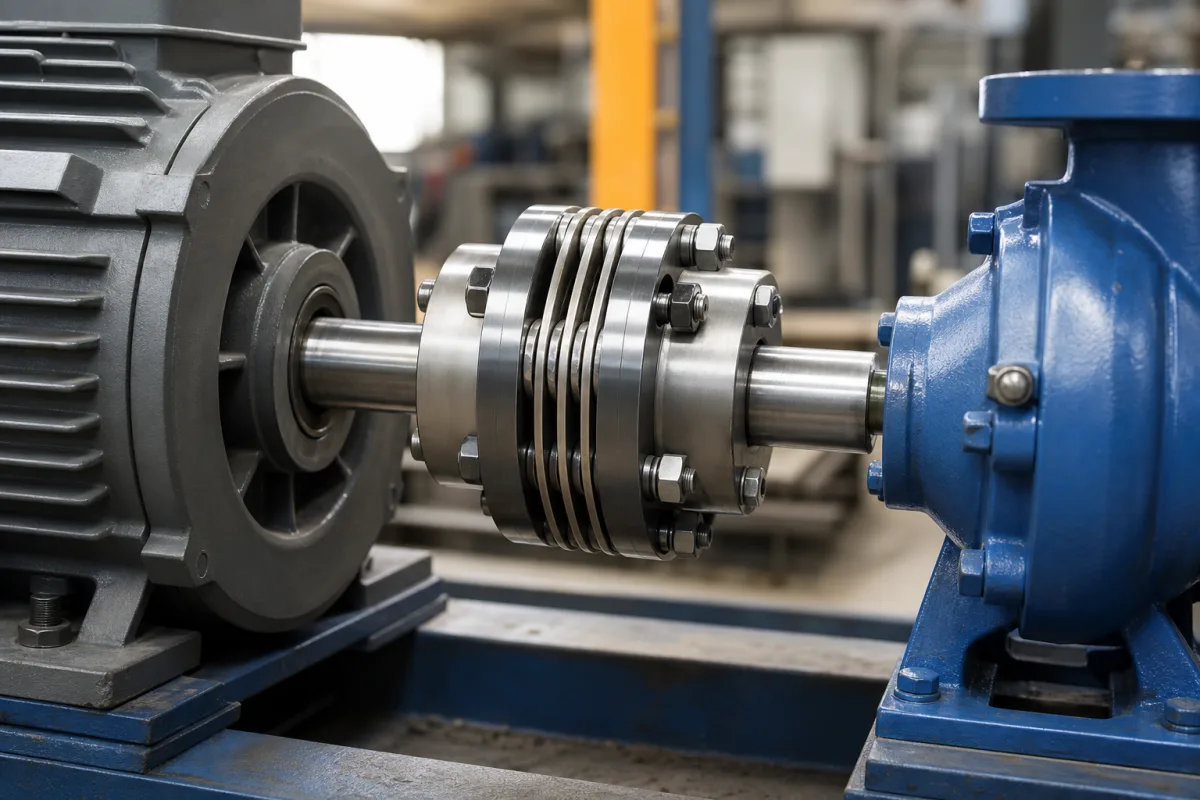
A mechanical device used to connect two shafts together at their ends for the purpose of transmitting power.
Product Specifications

Technical details and manufacturing context for Coupling

Definition
A coupling is a critical component in power transmission systems that connects two rotating shafts to transmit torque and rotational motion from one shaft to another while accommodating minor misalignments, reducing shock loads, and providing overload protection.
Working Principle
Couplings work by physically connecting two shafts through various mechanisms (rigid, flexible, or fluid) to transmit rotational power while compensating for axial, radial, and angular misalignments between connected shafts.
Common Materials
Steel, Cast Iron, Aluminum, Polymer
Technical Parameters
  • Bore diameter for shaft connection (mm) Per Request
Components / BOM
  • Hub
    Connects to the shaft and transmits torque
    Material: steel
  • Flexible Element
    Absorbs misalignment and vibration between shafts
    Material: rubber/polymer
  • Fasteners
    Secures the coupling components together
    Material: steel
Engineering Reasoning
0-6000 rpm rotational speed, 0-500 Nm torque transmission, -40°C to 120°C ambient temperature
Shear stress exceeding 350 MPa in coupling material, angular misalignment exceeding 3°, axial displacement exceeding 2 mm
Design Rationale: Fatigue failure due to cyclic torsional loading exceeding material endurance limit (S-N curve), fretting corrosion at mating surfaces under misalignment conditions, resonance-induced vibration at critical speeds matching system natural frequency
Risk Mitigation (FMEA)
Trigger Torsional vibration amplitude exceeding 0.15 rad at 2x operating frequency
Mode: Fatigue crack initiation at keyway stress concentration (Kt=2.8)
Strategy: Dynamic vibration absorber tuned to 0.8x critical frequency, finite element analysis-optimized fillet radius (r/d=0.06) at stress concentration points
Trigger Parallel misalignment exceeding 0.05 mm/mm shaft length
Mode: Bending moment-induced pitting wear on gear teeth (Hertzian contact stress > 1500 MPa)
Strategy: Laser-aligned installation to 0.01 mm/mm tolerance, crowned gear tooth profile with 0.002 mm/mm crowning factor

Industry Taxonomies & Aliases

Commonly used trade names and technical identifiers for Coupling.

Applied To / Applications

This component is essential for the following industrial systems and equipment:

Industrial Ecosystem & Supply Chain DNA

Complementary Systems
Downstream Applications
Specialized Tooling

Application Fit & Sizing Matrix

Operational Limits
pressure: Up to 100 bar
other spec: Max torque: 5000 Nm, Max speed: 5000 rpm, Misalignment tolerance: ±3° angular, ±2 mm parallel
temperature: -40°C to 150°C
Media Compatibility
✓ Water-based fluids ✓ Hydraulic oils ✓ Industrial gases
Unsuitable: Highly corrosive acids (e.g., concentrated sulfuric acid)
Sizing Data Required
  • Shaft diameter (mm)
  • Required torque (Nm)
  • Operating speed (rpm)

Reliability & Engineering Risk Analysis

Failure Mode & Root Cause
Misalignment fatigue
Cause: Angular, parallel, or axial misalignment exceeding manufacturer specifications, leading to cyclic stress and premature material failure in flexing elements or bolts.
Lubrication failure in gear couplings
Cause: Contamination, drying out, or incorrect lubricant type causing increased friction, wear, and eventual seizure or tooth breakage.
Maintenance Indicators
  • Excessive vibration or audible knocking during operation, indicating imbalance, misalignment, or component wear.
  • Visible grease leakage or accumulation of metallic debris (shiny particles) around the coupling guard, signaling seal failure or internal wear.
Engineering Tips
  • Implement precision laser alignment during installation and after major maintenance, and conduct periodic alignment checks with dial indicators to ensure tolerances are maintained.
  • Establish a rigorous lubrication schedule per OEM specifications, using the correct grease type and quantity, and inspect seals regularly for integrity to prevent contamination.

Compliance & Manufacturing Standards

Reference Standards
ISO 9001:2015 - Quality Management Systems ANSI/AGMA 9000-D94 - Flexible Couplings DIN 740-2 - Shaft Couplings
Manufacturing Precision
  • Bore Diameter: +/-0.025mm
  • Parallelism of Flanges: 0.05mm
Quality Inspection
  • Hardness Testing (Rockwell C)
  • Dynamic Balancing Test

Factories Producing Coupling

Verified manufacturers with capability to produce this product in China

✓ 98% Supplier Capability Match Found

S Sourcing Manager from Singapore Jan 04, 2026
★★★★★
"Standard OEM quality for Machinery and Equipment Manufacturing applications. The Coupling arrived with full certification."
Technical Specifications Verified
P Procurement Specialist from Germany Jan 01, 2026
★★★★☆
"Great transparency on the Coupling components. Essential for our Machinery and Equipment Manufacturing supply chain. (Delivery took slightly longer than expected, but technical support was excellent.)"
Technical Specifications Verified
T Technical Director from Brazil Dec 29, 2025
★★★★★
"The Coupling we sourced perfectly fits our Machinery and Equipment Manufacturing production line requirements."
Technical Specifications Verified
Verification Protocol

“Feedback is collected from verified sourcing managers during RFQ (Request for Quote) and factory evaluation processes on CNFX. These reports represent historical performance data and technical audit summaries from our B2B manufacturing network.”

5 sourcing managers are analyzing this specification now. Last inquiry for Coupling from Vietnam (21m ago).

Supply Chain Compatible Machinery & Devices

Automated Assembly Line System

Integrated production system for sequential component assembly operations

Explore Specs →
Automated Powder Coating System

Integrated industrial system for applying dry powder coatings to metal substrates.

Explore Specs →
Centrifugal Pump Impeller

Rotating component that transfers energy to fluid in centrifugal pumps.

Explore Specs →
High-Precision CNC Laser Cutting Machine

Computer-controlled industrial machine using focused laser beams to cut sheet metal with micron-level accuracy.

Explore Specs →

Frequently Asked Questions

What are the main advantages of using steel couplings in machinery manufacturing?

Steel couplings offer superior strength, durability, and high torque capacity, making them ideal for heavy-duty industrial applications where reliability and long service life are critical.

How do flexible element couplings accommodate shaft misalignment?

Flexible element couplings use elastomeric or metallic flexible components that can bend and flex, allowing them to compensate for angular, parallel, and axial misalignment between connected shafts while maintaining power transmission.

When should I choose polymer couplings over metal couplings?

Polymer couplings are ideal for applications requiring corrosion resistance, electrical insulation, reduced weight, or where chemical exposure is a concern. They also provide vibration damping and require less maintenance than metal alternatives.

Can I contact factories directly on CNFX?

CNFX is an open directory, not a transaction platform. Each factory profile provides direct contact information and production details to help you initiate direct inquiries with Chinese suppliers.

Get Quote for Coupling

Request technical pricing, lead times, or customized specifications for Coupling directly from verified manufacturing units.

Your business information is encrypted and only shared with verified Coupling suppliers.

Thank you! Your message has been sent. We'll respond within 1–3 business days.

Need to Manufacture Coupling?

Connect with verified factories specializing in this product category

Add Your Factory Contact Us
Previous Product
Counting Register
Next Product
Coupling / Drive Mechanism