Powder Feeder
View system integration details
This page explains how Hopper is classified within Machinery and Equipment Manufacturing. Technical values and manufacturer relationships are research references; confirm the current specification and supplier evidence for each order.
The hopper is a key component of powder feeder systems, designed to store bulk powder materials and regulate their flow into downstream processes.
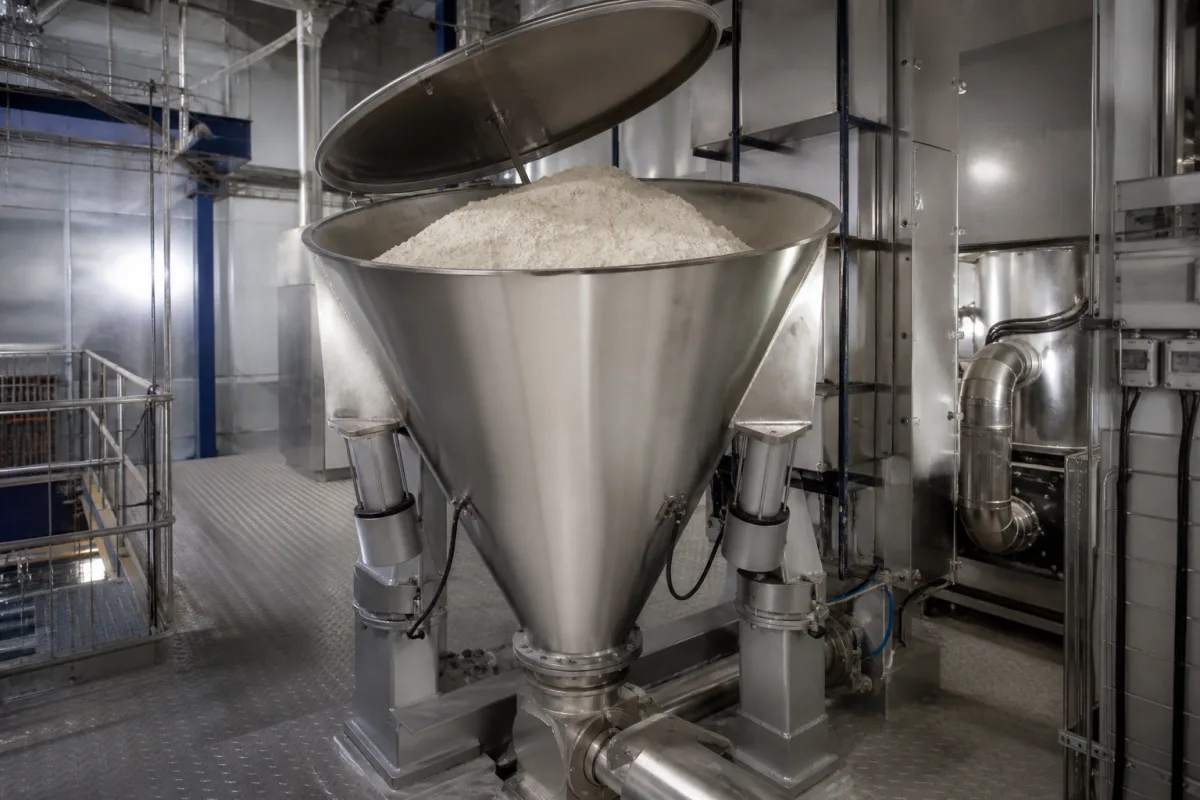
Technical details and manufacturing context for Hopper
| Parameter | Typical range | Notes & selection driver |
|---|---|---|
| Hopper Capacity | 50–5000 L | Select based on material throughput and batch size. |
| Discharge Rate | 0.5–10 t/h | Adjustable via flow control valve or screw feeder. |
| Material of Construction | 304/316L | 316L for corrosive or food-grade applications.ASTM A240 |
| Wall Thickness | 2–6 mm | Thicker for high pressure or abrasive materials. |
| Hopper Angle | 45–60 ° | Steeper angle ensures complete discharge of cohesive powders. |
| Operating Temperature | -20–80 °C | Above 80°C may require special seals and gaskets. |
| Operating Pressure | 0.1–0.6 MPa | Below 0.1 MPa the discharge flow may be unstable. |
| Surface Roughness | 0.8–1.6 μm Ra | Lower roughness for food or pharmaceutical use. |
| Overall Dimensions | 1000–3000 mm | Diameter or width; height varies with capacity. |
| Weight | 100–2000 kg | Depends on material and capacity. |
Ranges are indicative industry figures for RFQ preparation, not a supplier commitment. Confirm every value and standard with the legal manufacturer before ordering.
| pressure: | 0 to 2 bar (gauge) |
| flow rate: | 0.1 to 50 m³/h |
| temperature: | -20°C to +80°C |
| slurry concentration: | Up to 70% solids by weight |
Indicative industry ranges for design and RFQ preparation. Confirm the exact figures and applicable standard with the manufacturer before specifying.
Quoted from the published standard.
A practical evidence checklist for RFQ preparation and supplier evaluation.
Compare the published product scope and source details, then include your specifications and quantity in an enquiry.
Manufacturer profiles associated with Hopper.
Explore company information and manufacturing capabilities, then discuss the scope of your project with a relevant supplier.
Ask for use case, specification boundaries, supplier type, and RFQ preparation information for this product.
Hoppers can be made from stainless steel (304 or 316L), carbon steel, or food-grade plastic. 316L is recommended for corrosive or food-grade applications. The choice depends on the material being handled and the required hygiene standards.
The discharge rate is typically controlled using a flow control valve or a screw feeder. These devices regulate the flow of powder from the hopper outlet, allowing adjustment from 0.5 to 10 tons per hour. The specific method depends on the application and material characteristics.
The standard operating temperature range is -20°C to 80°C. For temperatures above 80°C, special seals and gaskets may be required. Always confirm the temperature limits with the manufacturer for your specific application.
Hopper capacity ranges from 50 to 5000 liters. Selection should be based on material throughput and batch size. Consider the required storage volume and the frequency of refilling. Confirm the exact capacity needed with your process requirements.
This component is essential for the following industrial systems and equipment:
Editorial classification, named public sources where available, and source-reviewed manufacturer records.
Compare manufacturer profiles with relevant product and process capability.